
Why 3GPP Drives Mission-Critical Communications (MCX)
3GPP has become the organizing framework for how public safety, utilities, transportation and enterprise security adopt LTE/5G for mission-critical communications (MCX).
From Cellular Evolution to 3GPP MCX
The 3rd Generation Partnership Project (3GPP) coordinates the technical specifications that underpin mobile systems from 3G to 5G and beyond. For mission-critical users, 3GPP’s scope includes capabilities such as push-to-talk, data and video designed for high availability, priority, pre-emption and end-to-end security. As the standards evolve across releases, they provide a common language for devices, networks and applications to interoperate in mixed environments that often span narrowband (e.g., TETRA), broadband (LTE/5G) and satellite backhaul.

Interoperability, Security and Lifecycle Alignment for MCX
For agencies and enterprises, the value of 3GPP is practical: it lowers integration risk, clarifies feature expectations and aligns multi-year investment roadmaps. Standards-based MCX helps ensure that critical voice fits alongside broadband data and video, that interworking across legacy and next-generation systems is feasible, and that cybersecurity controls are implemented consistently. In short, 3GPP is the baseline for resilient, interoperable operations.
Airbus Agnet: Functional Compliance Over Box-Ticking
Airbus positions its mission-critical platform, Agnet, to track 3GPP closely while prioritizing real-world performance, resiliency and security outcomes.
Agnet Roadmap and 3GPP Alignment
Airbus has contributed to 3GPP working groups for years, helping shape how MCX capabilities mature. In its product approach, the company emphasizes “functionality compliance” rather than narrow clause-by-clause certification. That reflects an operational reality: no single vendor implements the entire corpus of 3GPP features at once, and customers rarely need them all on day one. The strategic objective is clear alignment to 3GPP where it matters most, delivered through a roadmap that brings priority features to market without compromising stability.
Reliability, Resilience and Cybersecurity as North Stars
Mission-critical use cases tolerate no downtime. Airbus stresses that Agnet must perform in routine and crisis conditions, scale across agencies, and defend against evolving threats. That means rigorous engineering around redundancy, prioritization, encryption and monitoring, while validating behavior under stress and at scale. Standards are the foundation; operational reliability is the measure of success.
Open MCX Ecosystems and Integration Paths
Enterprises want standardized building blocks, but they also need open interfaces that fit their processes, devices and data flows.
APIs, Partner Integrations and Hybrid TETRA/LTE/5G Networks
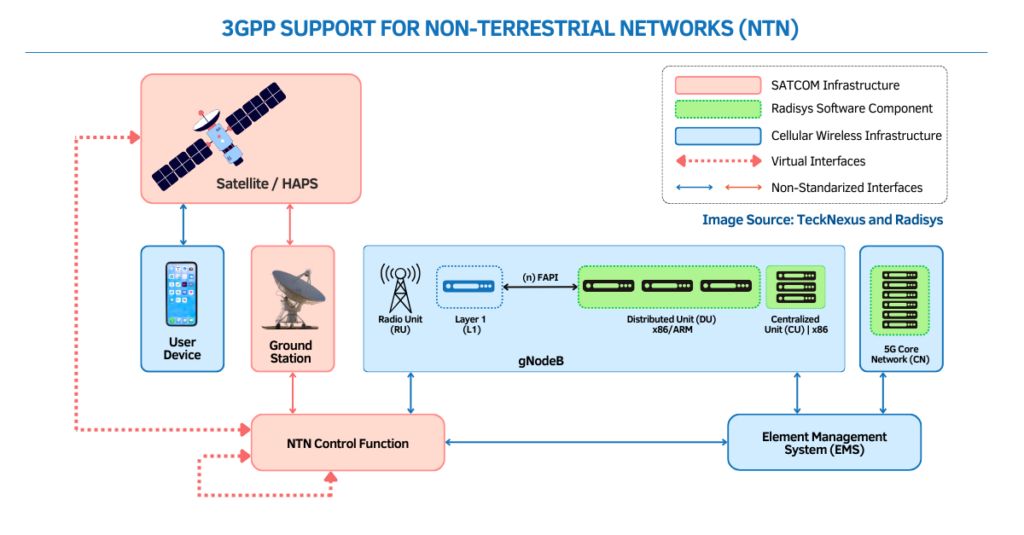
Agnet is positioned as an open ecosystem, with well-defined APIs to integrate dispatch, location services, video analytics, sensors and enterprise IT. Openness matters most in hybrid topologies that combine TETRA with LTE/5G and, when needed, SATCOM for continuity. This approach lets organizations augment baseline 3GPP features with domain-specific workflows, from computer-aided dispatch to AI-assisted video detection in large venues or retail estates.
Lessons from Nationwide and Large-Scale MCX Deployments
Airbus highlights experience from nationwide MCX programs and complex transitions, such as support for France’s Réseau Radio du Futur (RRF) project. The takeaway is consistent: success depends on more than feature parity. It requires migration planning, user training, interworking with legacy systems, and field-ready support that shortens the learning curve for first responders and operational teams.
What to Watch in the Next 12–24 Months for MCX
Recent and upcoming 3GPP releases and deployment patterns point to clear priorities for public safety and critical enterprises.
3GPP Standards Trajectory and MCX Maturity
Enhancements to mission-critical services continue in 3GPP, including refinements for group communications, multimedia, interworking and performance on modern 5G cores. Leaders should align roadmaps to the features that materially improve operations, track SA6 progress on MCX application enablers, and validate interoperability through multi-vendor testing.
Private LTE/5G, Edge, and Sector-Specific Adoption
Enterprises in security, transport, energy and logistics are accelerating private LTE/5G pilots to support controlled coverage, QoS and data sovereignty. Expect tighter integration between MCX applications and edge analytics, cameras and IoT sensors, with APIs playing a larger role in automating incident response and compliance reporting.
Operations, Skills and User-Centered Design for Adoption
Technology shifts only succeed if the user experience improves. Airbus underscores user-centered design, iterative testing with field personnel and targeted training as key to adoption. Organizations should budget as much for change management and cyber hardening as for licenses and devices, and bake resilience drills into runbooks.
Learn from Experts: Airbus “Experts to Experts” Series
Airbus curates practical insights from practitioners to demystify standards, deployment trade-offs and real-world performance.
3GPP and Functionality-First Compliance Explained
In a recent episode focused on the 3GPP standard, Airbus experts unpack how to balance global standardization with mission-critical robustness. The discussion clarifies why functionality-first compliance is the pragmatic target today and how Agnet evolves in step with standards while meeting safety and cybersecurity requirements.
Agnet in Action: TETRA, SATCOM and Vertical Use Cases
Other episodes explore Agnet with TETRA interworking, resilience over satellite links during disasters and modernization of private security operations using digital tools and AI-assisted video. Airbus also shares program practices from nationwide rollouts, covering business analysis, trainer enablement and on-the-ground support. New episodes are released on a regular cadence to keep teams current.
Action Checklist for Telecom and Enterprise Leaders
A structured approach will de-risk transitions and accelerate value from 3GPP-aligned MCX deployments.
Assess, Integrate and Secure
First, map critical workflows and gaps where MCX will improve outcomes, then prioritize 3GPP features that matter most. Second, evaluate vendors on functional compliance, API maturity and proven interworking with TETRA, LTE/5G and SATCOM. Third, implement a security-by-design posture—identity, encryption, logging, monitoring—and test at scale under failure scenarios. Finally, invest in user-centered design and field training to lock in adoption and resilience.