
AI Agent Competitive
Intelligence
Intelligence
Private Network
Intelligence
Intelligence
Intelligence Journeys
Utilities Private Broadband Planning
AI Use Case Planning for Utilities
Intelligence Tools
By Tool Type
▼
By Industry
▼
Access Type
▼
Resources
▼
Technology Hubs
▼
Partner Hubs
▼
Monthly Trackers
▼


6G
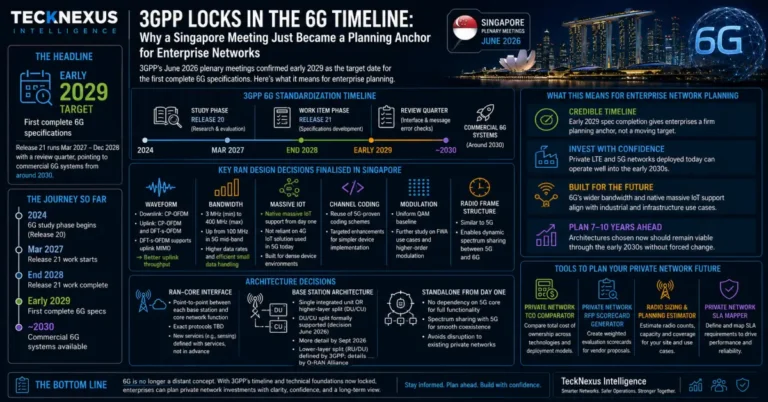
6G is the next generation of cellular technology, still in research and standardization rather than commercial use. 3GPP is targeting its first complete specifications around early 2029, with commercial deployments widely expected near 2030, making the current period one of design choices rather than rollouts. Early work centers on new spectrum including upper-mid-band and sub-terahertz frequencies, AI-native architecture built into the standard from the start, integrated sensing and communication, and native non-terrestrial integration. For operators and enterprises, 6G matters now because decisions about 5G-Advanced investment, spectrum, and architecture increasingly anchor to the 6G timeline. This channel follows 6G standardization, research milestones, spectrum debates, and vendor positioning as the industry moves from concept toward a defined standard, with analysis aimed at planning rather than hype.
- Tech News & Insight
- June 2, 2026
- Hema Kadia
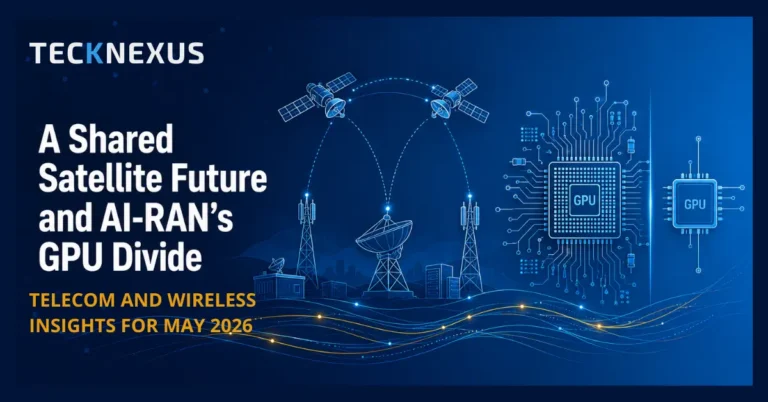
May 2026's roundup: AT&T, T-Mobile, and Verizon explore a joint satellite D2D venture, Ericsson tests GPU-free AI-RAN against Nvidia's GPU-embedded approach at the same two operators, 5G-Advanced sensing moves into live security deployments, and fiber capital both consolidates and expands.
- Tech News & Insight
- May 13, 2026
- Hema Kadia
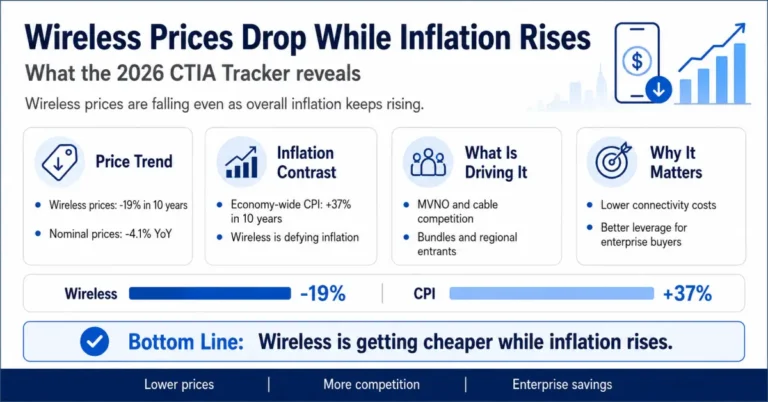
Wireless services are defying U.S. inflation trends in a way virtually no other sector is. According to CTIA's newly released More for Less: 2026 Wireless Affordability Tracker, nominal wireless prices have declined 4.1% over the past year and 19% over the past decade, while the economy-wide CPI rose more than 37% over the same period. Adjusted for inflation, postpaid unlimited plans are down roughly 10% year-over-year, and prepaid options have fallen more than 50% over five years. For enterprise decision-makers, this pricing trajectory represents a structurally favorable condition for mobile workforce and IoT connectivity planning.
- Tech News & Insight
- May 11, 2026
- Hema Kadia
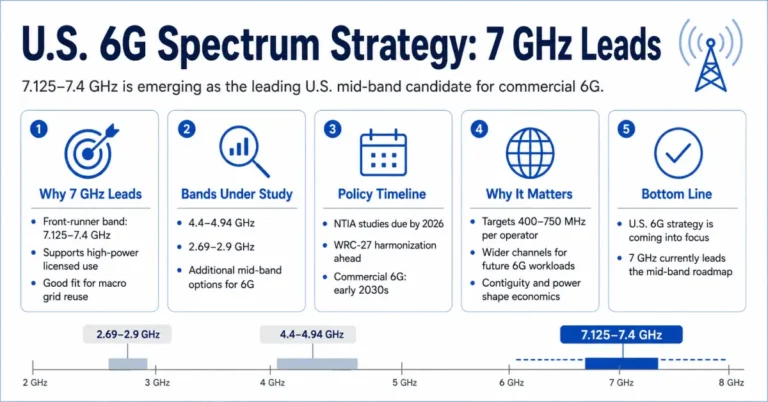
Washington and industry have synchronized timelines and targets to identify, clear, and harmonize the mid-band spectrum that will underpin commercial 6G deployments in the early 2030s. The Administration’s National Security Presidential Memorandum on 6G directs NTIA to reallocate 7.125–7.4 GHz for full‑power, licensed commercial use and to study federal relocation to 7.4–8.4 GHz where feasible; it also orders immediate feasibility studies in 2.69–2.9 GHz and 4.4–4.94 GHz. The 7.125–7.4 GHz range is the U.S. front‑runner for high‑power licensed 6G, with NTIA studying federal relocation to clear contiguous bandwidth and enable 400–750 MHz per operator in a single swath.
- Tech News & Insight
- May 2, 2026
- Hema Kadia
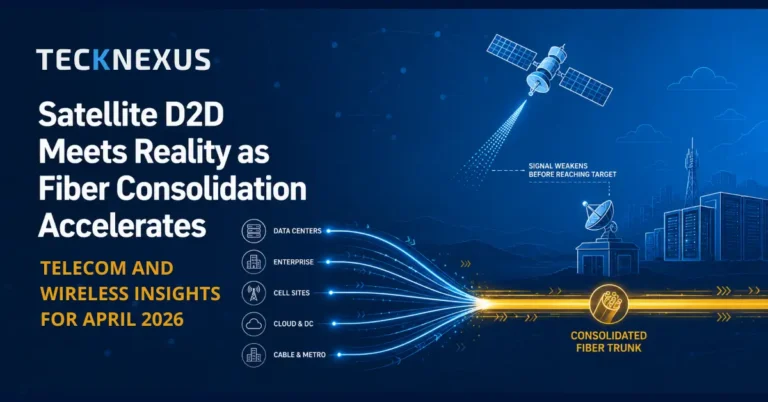
April 2026's roundup: T-Mobile admits satellite direct-to-device usage is falling short of expectations, fiber consolidation accelerates through new JVs and a potential €20B SFR deal, 6G's timeline gets murkier rather than clearer, and optical networking rides the AI supercycle.
- Tech News & Insight
- April 2, 2026
- Hema Kadia

March 2026's inaugural roundup: AT&T commits $250B to fiber, 5G, and AI-era infrastructure through 2030, Ericsson and Nokia diverge on AI-RAN strategy at MWC Barcelona, 6G's roadmap firms up around a 2029 target, and satellite direct-to-device edges toward commercial launch.
- Tech News & Insight
- March 19, 2026
- Hema Kadia
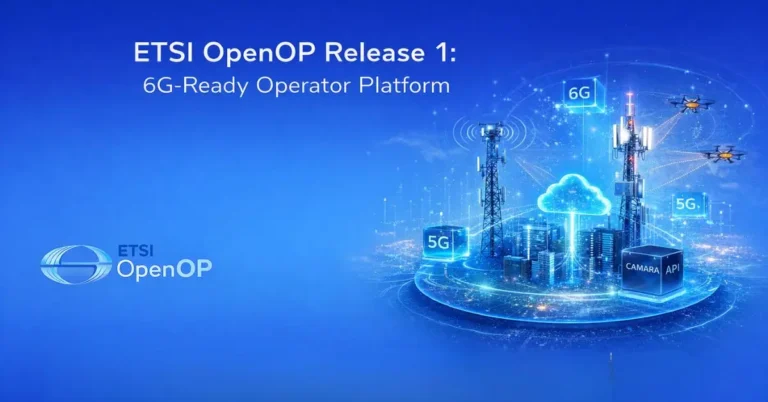
ETSI has introduced OpenOP Release 1 as an open-source operator platform for telco cloud, designed to standardize capability exposure and federation at the edge while creating a practical bridge from 5G-Advanced to early 6G experimentation. Networks are becoming software-first and distributed, but operators still face fragmented exposure of network capabilities and inconsistent approaches to multi-operator edge. OpenOP targets this gap with a standards-aligned, open implementation that lets developers consume telecom capabilities via CAMARA APIs and deploy applications across federated edge zones. Release 1 provides a working, end-to-end baseline with integrated components for exposure, orchestration, federation, and AI-assisted intent, suitable for hands-on testing and integration.
- Tech News & Insight
- March 19, 2026
- Hema Kadia
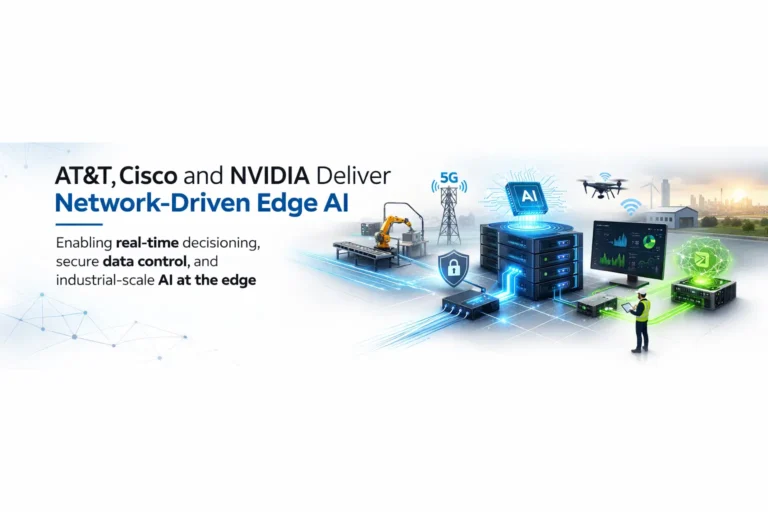
AT&T’s new collaboration with Cisco and NVIDIA signals a decisive shift from cloud-centric AI to network-driven edge intelligence for enterprise operations. Enterprises want real-time decisioning without shipping sensitive data to distant clouds, and operators need a scalable way to deliver it. By combining AT&T’s dedicated IoT core with Cisco’s mobility services platform and NVIDIA-powered AI infrastructure, the trio is packaging deterministic connectivity, near-device inference, and policy enforcement into a single, operator-grade platform. The promise: lower latency, tighter data control, and a path to production for AI at industrial scale.
- Tech News & Insight
- March 5, 2026
- Hema Kadia
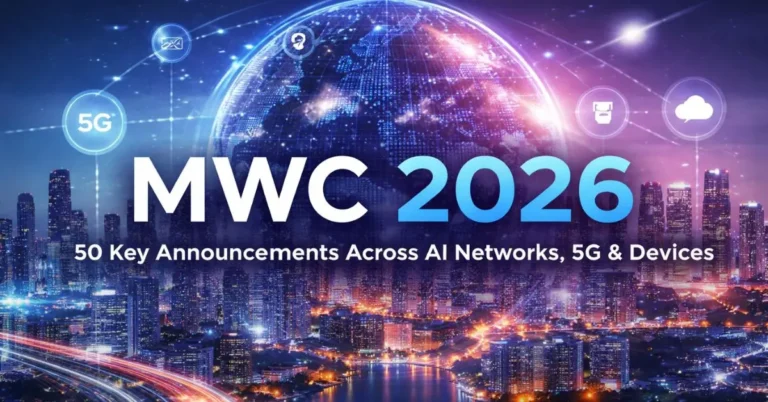
Mobile World Congress 2026 showcased major developments across AI-native networks, enterprise private 5G, device innovation, and early 6G research. This recap highlights 50 key announcements and trends shaping the future of global connectivity.
- Tech News & Insight
- February 25, 2026
- Hema Kadia
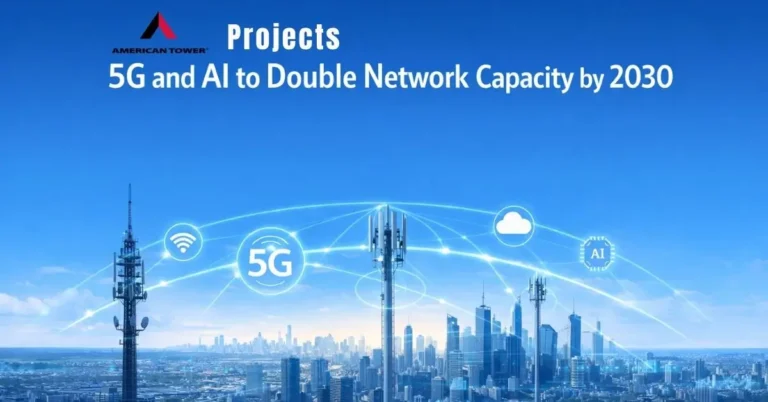
American Tower’s latest outlook puts a hard number on a trend most operators feel on the ground: the network needs to double by the end of the decade to absorb 5G, fixed wireless access, and AI-driven traffic. Mobile data growth remains the primary engine for new network investment. As 5G adoption scales and fixed wireless access expands, capacity pressure is shifting from coverage to throughput. The next leg comes from AI. New applications—from on-device inference to computer vision at the edge—demand more bandwidth, tighter latency, and stronger uplink. That profile is different from today’s downlink-heavy usage and will stress radios, backhaul, and site power.
- Tech News & Insight
- February 25, 2026
- Hema Kadia

A new collaboration between GSMA Foundry and Singapore’s National University Health System (NUHS) aims to operationalize connected health at scale, with Ericsson and Singtel anchoring the 5G foundation. Healthcare digitization has moved from pilots to production, but most sites still struggle with deterministic connectivity, secure data exchange and workflow integration. The program combines private 5G with digital twin, XR, IoT and ambient AI to improve outcomes and operational resilience across care pathways. Early focus areas include 5G-enabled remote surgical assistance with ultra-reliable, low-latency links; immersive XR training and simulation that compress learning curves; autonomous and semi-autonomous robotics for logistics and point-of-care tasks; and AI-guided imaging such as vein visualization.
- Tech News & Insight
- February 25, 2026
- Hema Kadia
SK Telecom introduced ATHENA—an architecture grounded in AI-native operations, Zero Trust security, hyper-connectivity, openness, and cloud-native design—to guide mid- to long-term evolution across RAN, core, transport, and network data platforms. The operator positions “AI for network” and “network for AI” as dual tracks: the former embeds AI into decision loops for autonomous optimization, while the latter tunes the network fabric to serve AI workloads efficiently. SK Telecom will showcase related technologies at MWC Barcelona 2026, including AI agents for networks, AI-RAN for combined connectivity and compute, device-side AI for antenna tuning, and integrated sensing-and-communications.
Download from External Sources
- SK Telecom Whitepaper
- Bharat’s(India) 6G Vision
- 5GPP – The 6G Architecture Landscape
- NTT Docomo
- Samsung
- Ericsson
- The 5G Infrastructure Association (5GIA)
- 6GChannel
- Next Generation Mobile Networks (NGMN)
- Next G Alliance (NGA)
- IEEE – Survey on Explainable AI for 6G O-RAN
- IMDEA – Orchestration Procedures for the Network Intelligence Stratum in 6G Networks
- MDPI – Role of Optical Transport Networks in 6G and Beyond
- 6G Use Cases & Analysis (NGMN)
- Next G Alliance Report: Channel Measurements and Modeling for Joint/Integrated Communication and Sensing
Frequently Asked Questions
Is 6G available yet, or is it still just a concept?
6G is not available anywhere yet, though it is more concrete than a vague concept. The ITU published its IMT-2030 framework in 2024, defining broad target capabilities like higher data rates, denser device support, improved mobility, and better positioning accuracy. Since then, 3GPP has moved into a structured study phase inside Release 20, where multiple working groups are testing candidate technologies and collecting performance data rather than writing final specifications. The first concrete 6G specifications are expected as part of Release 21, with the actual spec-work timeline decided around mid-2026 and completion targeted for late 2028. Commercial 6G networks are expected to follow around 2030, consistent with how each prior wireless generation has taken roughly a decade from initial vision to first deployment.
What makes 2026 specifically a pivotal year for 6G standardization?
Until 2026, most 6G work centered on defining use cases, requirements, and a broad technology vision, deciding what 6G should be capable of rather than how to build it. That changes this year. 3GPP officially launched its technical studies under Release 20 in mid-2025, and that work, lasting roughly 18 to 21 months, is the phase where engineers actually test and validate candidate technologies, like sub-terahertz spectrum use, integrated sensing, and AI-native architecture, that could become part of the formal standard. Industry commentators describe this as moving from ‘what could be possible’ to ‘what will actually be built.’ The decision on Release 21’s actual specification timeline is expected around June 2026, making this year the hinge point between conceptual 6G and engineering-stage 6G.
How is 6G different from 5G-Advanced, and why does that distinction matter?
5G-Advanced is best understood as a mid-generation upgrade: improved uplink performance, more sophisticated MIMO antenna techniques, and early sensing capabilities, built on top of existing 5G infrastructure and falling under later 3GPP releases within the 5G specification family. 6G is a wholly new generation with its own dedicated 3GPP release track, expected to be engineered from the ground up around AI-native operation, integrated sensing, and quantum-resistant security rather than having those capabilities added later. Major equipment vendors, including Ericsson, Huawei, and Nokia, all describe 5G-Advanced as the technical and commercial foundation 6G will be built on, even though each vendor frames that relationship somewhat differently. For operators, the practical takeaway is that 5G-Advanced spending happening now is not throwaway investment.
What are the core technology pillars defining the 6G vision?
Standards bodies and vendor roadmaps converge on four recurring themes. First, AI-native architecture, meaning intelligence is embedded directly into the network’s design rather than bolted on afterward, enabling self-optimizing radios and predictive resource allocation. Second, sensing-enabled networks, where the radio signal itself becomes a sensing instrument able to detect object position and motion alongside its communication role, sometimes called integrated sensing and communication. Third, quantum-secure design, building resistance to future quantum-computing attacks into the network’s cryptography from day one. Fourth, sustainability and energy efficiency as a core design requirement, reflecting the industry’s growing focus on the environmental cost of running ever-denser, ever-faster networks.
Which countries and companies are shaping the direction of 6G research?
6G standardization happens primarily through 3GPP, a global body, but national priorities still shape the conversation. The U.S., China, Japan, South Korea, and the Gulf Cooperation Council countries are widely expected to be early commercial adopters, following the same pattern seen with 5G rollout leadership. On the vendor side, Ericsson, Nokia, and Huawei are the most vocal about their 6G research, each publishing detailed roadmaps, while companies like Qualcomm and Samsung contribute heavily on the chipset and device side. Government-backed research programs, including the U.S.’s NextG Alliance and various EU-funded initiatives, also shape early requirements, though the technical specifications are ultimately decided through the 3GPP process rather than any single country acting alone.
Will 6G require entirely new spectrum bands?
Likely, at least in part. 6G research is actively exploring frequencies in the sub-terahertz range, well above the millimeter-wave bands used in today’s high-band 5G, because higher frequencies offer dramatically more available bandwidth for very high data rates. Like 5G before it, though, 6G is expected to operate across a mix of bands, including some lower and mid-band spectrum already used for 4G and 5G, to balance very high speeds in dense urban areas with broader, more reliable coverage elsewhere. Spectrum allocation is decided by national regulators in coordination with the ITU, so exact bands available for 6G will likely vary by country once the standard solidifies, similar to how 5G spectrum allocation differs between the U.S., Europe, and Asia today.
What’s the realistic timeline between now and a commercial 6G network?
Based on the current 3GPP roadmap: technical studies under Release 20 continue through 2026, with the specification approach for Release 21 decided around mid-2026; Release 21 itself, containing the first actual 6G specifications, is targeted for completion around late 2028; and the first commercial deployments are expected to follow in 2030, consistent with the roughly decade-long cycle seen between 4G’s debut and 5G’s 2019 launch. Industry voices caution against expecting a single dramatic ‘6G launch moment,’ since releases beyond Release 21 will continue refining the standard for years afterward, much like 5G has continued evolving through 5G-Advanced well after its initial rollout.
Will I need to replace my phone or network equipment once 6G launches?
Not immediately, and likely not all at once. Given that commercial 6G isn’t expected before 2030, current-generation 5G and 5G-Advanced devices and infrastructure will remain useful and supported for years to come. Historically, generation transitions have been gradual: new networks launch in limited markets and frequency bands first, older devices continue working on existing infrastructure that typically stays operational for a decade or more after a new generation’s debut, and new devices supporting the latest generation arrive over time as chipsets and handsets catch up. Enterprises and operators investing in 5G-Advanced infrastructure today are generally building on technology expected to carry forward into the 6G era rather than be discarded.




Telco AI Agent Leadership

