


Skymirr’s Mission to Redefine Wireless Connectivity in IoT and 5G
Skymirr is an IoT solution company that delivers integrated hardware, software, and platform services designed to improve wireless connectivity and enhance user experience across the broader IoT ecosystem.
Skymirr: Solving Real-World Wireless Problems
Skymirr was founded with a clear purpose shaped by deep industry experience. Before establishing the company, Eric Jo, its founder, held multiple executive leadership roles across various organizations, including VP, CEO, COO, CTO, and other senior positions. These roles provided broad exposure to diverse industries and real-world operational challenges.

Despite billions of dollars invested by large enterprises in wireless and IoT infrastructure, significant gaps remain. End users often continue to experience poor connectivity, and nearly 30% of the global population still lacks reliable internet access. These challenges persist across regions, industries, and use cases, highlighting fundamental limitations in existing wireless architectures.
Building Scalable, Reliable Connectivity for Next-Gen IoT
Skymirr was established to address these challenges through its proprietary RF technologies. The company is built on the belief that advanced antenna and system-level innovation can significantly improve overall wireless connectivity and support the evolving requirements of the IoT industry. This vision forms the foundation of Skymirr’s long-term strategy.
Using Wireless Innovation to Bridge the Global Connectivity Gap
In parallel with its commercial objectives, Skymirr is driven by a broader mission to create a positive global impact. Millions of people still lack access to reliable internet connectivity, while others face challenges related to inadequate health monitoring, poor healthcare infrastructure, and rising security risks.
Skymirr aims to develop products and solutions that help address these issues, enabling enterprises to improve operational visibility, security, and access to critical services. By doing so, the company seeks not only to advance wireless technology but also to contribute meaningfully to improving the quality of life worldwide.
The Antenna Design Flaws Limiting Today’s Wireless Devices
Modern smartphones provide a clear illustration of the antenna challenge facing wireless devices today. Regardless of whether a device is a Galaxy smartphone, an iPhone, or another brand, most users are unaware of how many antennas are packed inside a single device. Many assume a smartphone contains just one or two small metal antennas. In reality, there are often six, eight, or even more antennas integrated into a modern handset.
Why Modern Devices Need More Antennas Than Ever
This complexity exists because smartphones must support multiple wireless technologies simultaneously. Devices support 4G LTE and 5G sub-6, and enabling 5G typically requires 4×4 MIMO, which alone demands four dedicated antennas. Additional antennas are required to support combined 4G and 5G operation.
Wi-Fi also relies on MIMO, usually requiring at least two antennas. Bluetooth uses a separate antenna, GPS functionality requires its own antenna, and NFC, used for payments and secure transactions, adds another. As manufacturers continue to add new features and services, the antenna count continues to increase.
Why Antennas Determine Up to 40% of Wireless Performance
A complete wireless link consists of several components: the base station network, intermediate infrastructure such as small cells or repeaters, and end-user equipment like smartphones and IoT devices.
While service providers and enterprises have invested billions of dollars into improving network infrastructure, antenna performance remains a critical and often overlooked factor. Industry analysis shows that up to 40% of overall wireless connectivity performance depends on antennas. This is supported by traditional wireless link budget equations, which include five primary terms – two of which are antenna-related. Regardless of how advanced or expensive the network infrastructure may be, poor antenna performance can undermine the entire system.
How Conventional Hardware Design Undermines Antenna Efficiency
In traditional smartphone and IoT device development, antenna performance is often compromised by the design process itself. Product teams typically begin by defining form factors, features, and aesthetics. Once those decisions are finalized, the device housing is designed accordingly. Next, internal components, sockets, and software systems are developed. Antenna design is usually addressed at the very end of the process. By that point, little usable space remains, and the available locations are rarely optimal for antenna performance.
As a result, antennas are often placed near noise sources, or multiple antennas are positioned too close to one another. This leads to significant interference, signal degradation, and in many cases, severely compromised connectivity. This structural limitation is a fundamental issue across many modern wireless and IoT devices.
Skymirr’s Antenna-First Approach with MuLCAT®
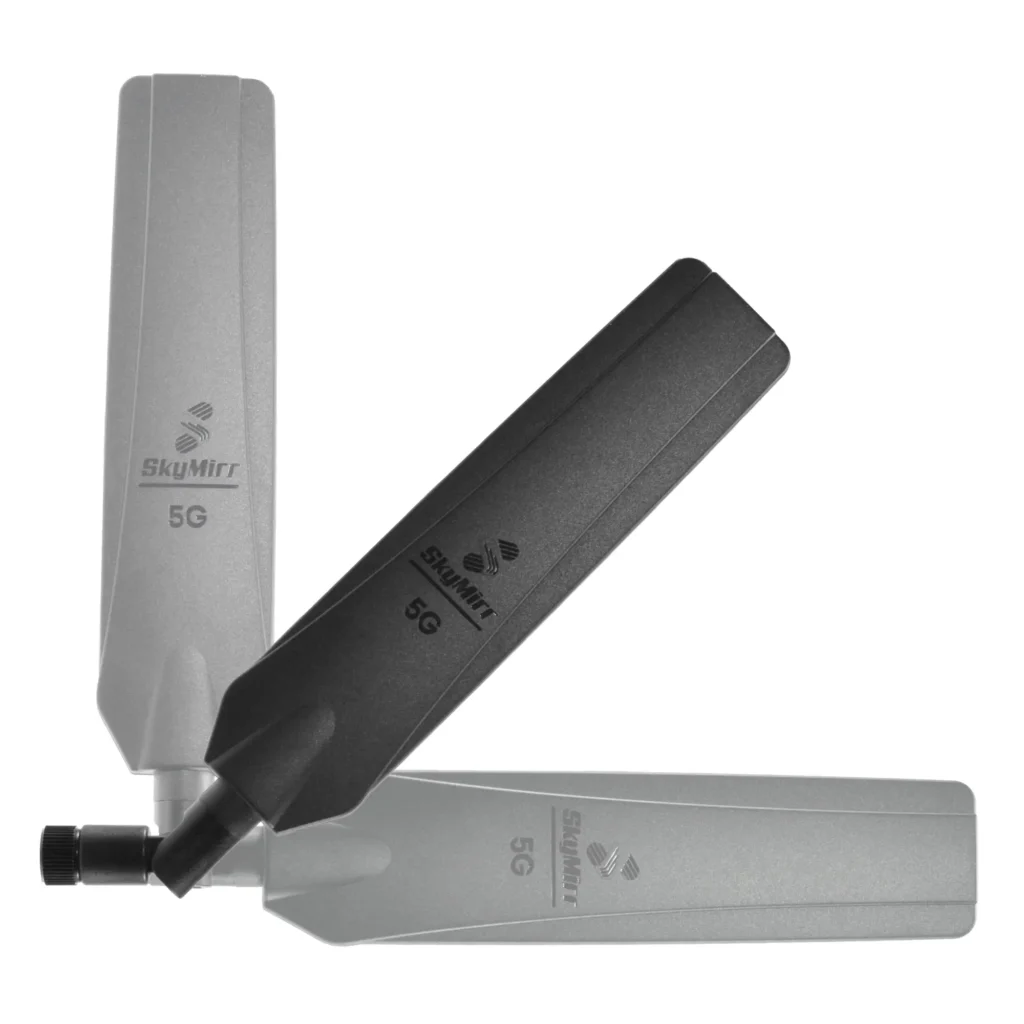
Skymirr takes a fundamentally different approach. The company developed a proprietary antenna technology called MuLCAT®, designed to significantly improve performance within the same physical form factor.
MuLCAT® enhances frequency bandwidth, radiation efficiency, and antenna gain without increasing size. This enables substantially better performance compared to conventional antenna designs constrained by traditional hardware layouts.
Reversing the Design Process to Maximize Antenna Performance
Beyond antenna innovation, Skymirr also redefines the product design process itself. Instead of treating antennas as an afterthought, products are designed starting with the antenna. The housing, PCB layout, and surrounding environment are then engineered specifically to maximize antenna performance. By maintaining this antenna-first philosophy throughout development, Skymirr achieves consistently superior results.
Real-World Results: How Sky5G™ Doubles Range and Speed
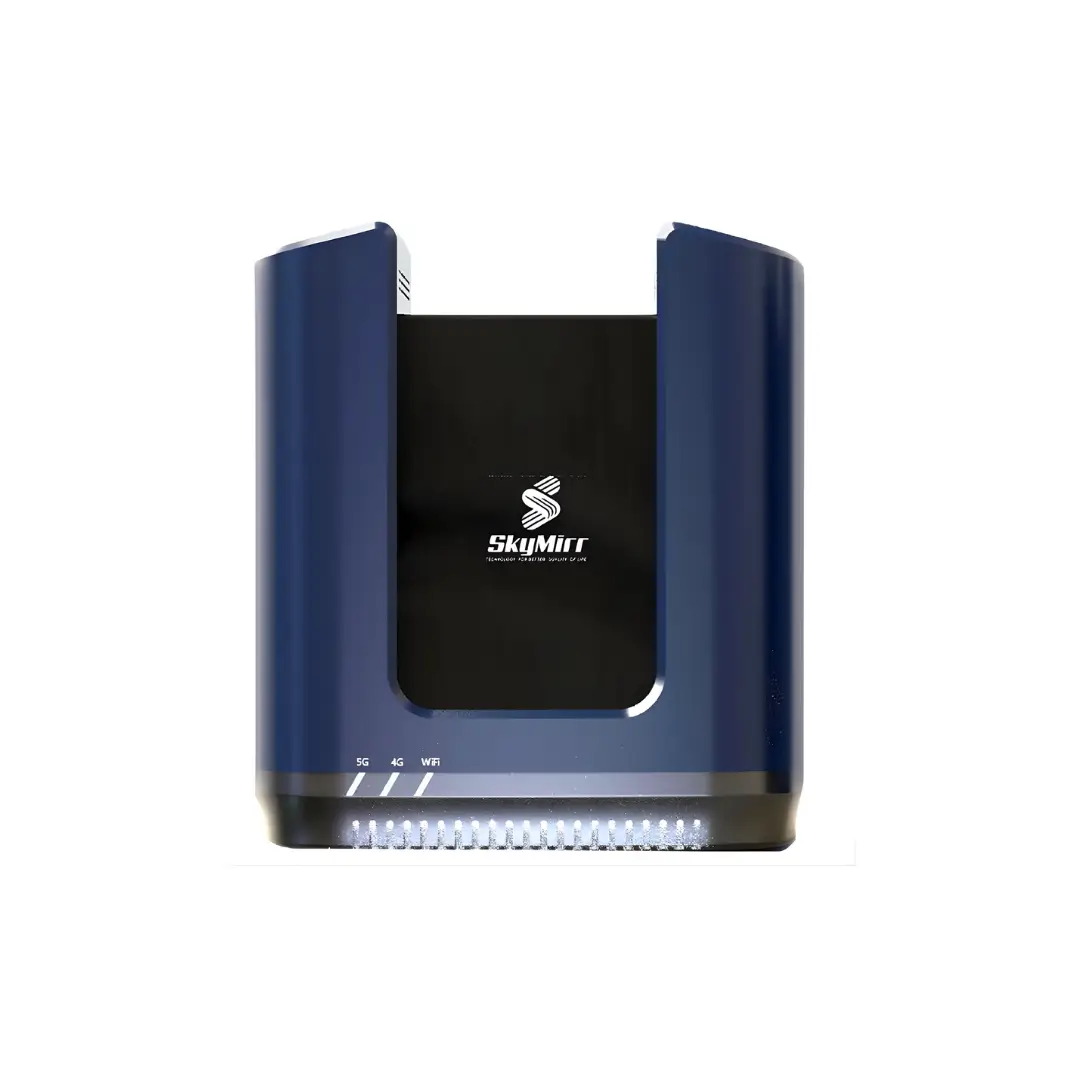
This approach is demonstrated in Sky5G™, Skymirr’s 5G CPE and wireless router. In real-world performance, Sky5G™ delivers significantly wider coverage, often approaching twice the range of competing products, along with faster and more reliable download performance.
These results are not theoretical. Performance has been tested, verified, and certified, which is why Sky5G™ is now commercially available in the market.
Inside MuLCAT®: Boosting Throughput and Reliability in 5G Devices
MuLCAT® is built on a deep understanding of antenna physics. In many cases, antenna performance is directly tied to surface current behavior. Although surface current is not visible, it flows across the antenna structure and directly influences how energy is radiated.
When conflicts occur within this surface current flow, the resulting radiated fields can interfere with one another. This interference can weaken the signal or, in some cases, cause radiated fields to cancel each other out entirely. This phenomenon is a primary reason conventional antennas often fail to deliver optimal performance.
The Cost of Interference: Why Wireless Devices Underperform
In multi-antenna environments, each antenna generates its own electric field. In an ideal scenario, these fields combine constructively to enhance performance. However, because electric fields cannot be directly observed during operation, they frequently end up conflicting or cancelling one another instead.
This unintended interaction significantly degrades antenna performance and is a common issue in modern devices where multiple antennas are placed in close proximity within constrained form factors.
Field Alignment: Skymirr’s Secret to Eliminating Antenna Interference
MuLCAT® addresses this challenge by focusing on antenna structures that align radiated fields in the same direction. When multiple antennas or multiple current paths are present, MuLCAT® ensures that the radiated fields from each source are oriented consistently.
By aligning these fields, the radiated energy adds together constructively rather than cancelling out. When combined, these aligned fields generate significantly stronger radiated energy within the same physical form factor used by conventional antenna designs. This field-alignment strategy is one of the most powerful differentiators of the MuLCAT® approach.
Flexible Antenna Integration: MuLCAT® Across IoT and 5G Devices
Another key advantage of MuLCAT® is its flexibility. The underlying theory can be applied across a wide range of devices and form factors. In the Sky5G™ platform, MuLCAT® was implemented across multiple antenna technologies within a single system.
How Sky5G™ Uses MuLCAT® to Minimize Antenna Interference
The Sky5G™ 5G CPE incorporates eight antennas in total: four dedicated to 4G/5G connectivity and four supporting Wi-Fi 7. Before adopting MuLCAT®, significant interference occurred between antennas, particularly among the 4G and 5G elements, which severely limited overall performance.
By integrating MuLCAT®, antenna-to-antenna interference was significantly reduced or eliminated. This resulted in dramatic improvements in system-level performance, stability, and reliability.
2× Antenna Efficiency: Comparing MuLCAT® to Legacy Designs
When benchmarked against other CPEs on the market, Sky5G™ demonstrated a substantial improvement in antenna efficiency. While many competing products operate at efficiencies around 40%, Sky5G™ achieved approximately 80% efficiency.
This represents a 40% or greater improvement—effectively more than doubling antenna performance—and serves as a clear point of differentiation from conventional solutions.
Lab-Proven: MuLCAT® Increases Radiated Power by Over 3 dB
Performance gains were also validated through laboratory testing using metrics such as Total Radiated Power (TRP). Measurements showed more than a 3 dB improvement compared to competing products. A 3 dB increase corresponds to a doubling of radiated power. In practical terms, this means Sky5G™ delivers approximately twice the effective radiated energy, directly translating into superior range, higher throughput, and improved reliability in real-world deployments.
Fastest Growing Markets for High-Performance RF and Antenna Tech: Fixed Wireless Access and Logistics
Fixed wireless access (FWA) is emerging as the fastest-growing market for high-performance RF solutions. Industry data indicates approximately 40% year-over-year growth on average, with forecasts suggesting this pace could continue for the next decade. This sustained growth positions fixed wireless access as one of the most significant opportunities for advanced RF technologies, particularly as operators and enterprises seek scalable alternatives to traditional wired broadband.
Logistics and Supply Chains: A New Frontier for RF Solutions
Logistics represents the second major growth area for high-performance RF solutions. The global disruption caused by COVID exposed fundamental weaknesses in logistics and supply chains, with many operations slowed or brought to a halt entirely. During this period, delivery timelines for goods that once took one to two weeks extended to four or five months due to overseas shipping delays. In some cases, customers were forced to choose between extended wait times and paying higher prices for limited inventory. These experiences underscored how logistics has evolved into a critical global challenge with far-reaching economic impact.
Modern logistics is no longer limited to moving goods from one location to another. It requires continuous oversight, especially when transporting high-value or sensitive products. Organizations need assurance that shipments arrive undamaged, remain secure, and are not lost or stolen. In worst-case scenarios, theft can occur, making real-time location visibility essential. Beyond location tracking, companies increasingly require insight into the condition of goods during transit. All of this depends on reliable wireless connectivity, as tracking, monitoring, and data transmission must operate over wireless communication networks across global routes.
Enabling Global Logistics Visibility Through High-Performance IoT Tracking
To address these challenges, SkyMirr delivers solutions that enhance overall wireless connectivity while enabling advanced IoT-based tracking. The company has introduced an IoT Tracker designed to deliver best-in-class performance within the industry. This solution enables continuous, global monitoring of goods in transit, providing customers with real-time visibility and peace of mind. By reducing the risk of loss, theft, and blind spots during shipment, the combination of high-performance RF connectivity and advanced IoT tracking is driving strong demand and accelerating growth in the logistics sector.
How AI Is Transforming RF Design and System-Level Optimization
AI is being applied across many industries, and SkyMirr is leveraging it in multiple areas of its technology stack. One of the most impactful applications is in antenna design and overall product development.
MuLCAT® technology is centered on designing antennas that improve radiation efficiency and electric field energy. However, these physical phenomena are not directly visible, making it difficult to determine whether a design is truly optimized using conventional methods alone. This inherent limitation makes AI an essential tool for advancing RF performance.
Using AI to Optimize Antenna Structures and Radiation Efficiency
AI plays a critical role in optimizing antenna parameters and structural configurations to maximize radiation efficiency. Even though electric fields and radiation behavior cannot be directly observed, AI—through deep learning techniques—can analyze complex patterns and identify the best-performing configurations under specific operating conditions.
By training AI models on large and diverse datasets, SkyMirr enables its systems to identify optimal antenna structures more efficiently. This approach accelerates the design process while improving overall performance, making AI a core component of next-generation RF and antenna development.
Applying AI to Large-Scale IoT Data Analysis and Insights
Beyond hardware innovation, SkyMirr is also applying AI to data management and analytics. The company delivers not only hardware but also software platforms and services, many of which generate massive volumes of operational data.
When dealing with millions of data points, manual analysis is impractical. AI systems can process and analyze this data at scale, delivering actionable insights based on the specific needs of users and administrators. This capability enhances system visibility, operational efficiency, and decision-making across IoT deployments.
Scaling AI Across SkyMirr’s Hardware and Software Platform
These applications represent only a portion of how AI is being integrated across SkyMirr’s portfolio. The company continues to explore additional opportunities to embed AI throughout its hardware and software platforms. With a strong technical team and experienced AI experts within its advisory group, SkyMirr is well-positioned to expand its use of AI across RF design, system-level optimization, and data-driven services—driving continued innovation and performance leadership.

What’s Next for Skymirr After $7.3M Series A: Scaling to CES 2026
Following the successful close of its $7.3 million Series A funding, SkyMirr’s initial priority was to develop the best-performing product in the market—a milestone the company has achieved. The next phase focuses on ensuring broad market awareness and accelerating customer adoption. As a result, SkyMirr’s immediate priorities are centered on scaling sales efforts, expanding customer acquisition, and driving deeper market penetration across targeted segments.

While market expansion is a near-term focus, SkyMirr continues to invest heavily in innovation. Product development remains a parallel priority, ensuring that the company maintains its technological leadership while scaling commercially. Early-stage research and development for next-generation products is already underway. These upcoming solutions are being designed to meet more specific customer requirements and will represent advanced iterations of SkyMirr’s current product portfolio.
Details of these next-generation offerings remain confidential. However, they are intended to further elevate performance benchmarks and optimize wireless solutions for evolving market needs. When introduced, these products are expected to once again set new standards and reinforce SkyMirr’s position as a leader in high-performance RF and wireless innovation.