


How AI, Industrial Scale, and Hybrid Models Are Reshaping Mission-Critical Connectivity
Derived from a conversation with Peter Cappiello, CEO of Future Technologies
Private cellular networks are entering a decisive phase. What began as targeted pilots is now evolving into a large-scale, mission-critical connectivity transformation, supporting AI modernization, automation, and digital transformation across energy, manufacturing, ports, logistics, and other critical sectors, often by extending and modernizing existing enterprise networks rather than replacing them.
Based on a recent conversation with Peter Cappiello from Future Technologies, it is clear that enterprise demand, network architecture, and deployment models are all maturing simultaneously, creating both urgency and opportunity for organizations investing in private LTE and 5G as part of broader private network modernization efforts. Rather than replacing existing private networks, private cellular is increasingly deployed as a strategic extension, enabling mobility, scale, and reliability that legacy systems alone cannot deliver.
From Connectivity to Transformation: Why Demand Is Accelerating
Enterprise demand for private cellular networks is no longer about incremental connectivity improvements. It is about connectivity transformation, extending existing LAN, OT, and wireless environments with cellular capabilities that enable scale, mobility, and determinism.
At a macro level, this shift is being fueled by massive investments in AI and computing across the United States, with over a trillion dollars tied to AI modernization initiatives. These investments are driving large-scale device deployments and real-time data requirements that traditional connectivity models struggle to support.
Over the past year alone, private cellular adoption, including private LTE and private 5G, has scaled rapidly across multiple vertical markets, marking a record period of growth. This acceleration reflects not just demand, but readiness. The ecosystem has matured across radio access networks, core platforms, and critically, device availability, enabling enterprises to deploy private cellular networks with greater confidence.
Looking ahead, the modernization of critical U.S. infrastructure through AI is expected to further intensify this momentum. Secure, reliable, and resilient private cellular networks are becoming a foundational layer for enabling these transformations.
Experience, Process, and Partnership: What Differentiates Successful Integrators
As private cellular networks move from pilots to production, most often in brownfield environments with existing private infrastructure, experience matters.
Future Technologies’ approach is grounded in more than 25 years of connectivity transformation experience and over 15 years of deep vertical expertise delivering private cellular networks across critical U.S. infrastructure sectors. That experience informs not only design decisions but also how networks are deployed, scaled, and supported over time.
Equally important is process maturity. The industry has crossed the chasm from experimentation to scale, and repeatable processes are now essential. Moving from proof of concept to single-site production, and then to multi-site deployments, requires disciplined execution, not just technical capability.
Underlying both is a trusted-partner mindset. Enterprises deploying private cellular networks as part of broader private network environments are focused on running energy plants, manufacturing facilities, ports, and logistics operations, and not managing connectivity complexity. The role of the integrator is to modernize the network while allowing the customer to stay focused on their core business.
A clear example is the Hyundai Motor Group greenfield manufacturing site in Savannah, Georgia, where an end-to-end private 5G network was designed and deployed. Once fully complete, the network will cover five million square feet indoors and support up to 1,000 autonomous mobile robots, illustrating how experience, process, and partnership converge in sophisticated industrial environments.
Architecting for Six Nines: Designing Networks That Cannot Fail
Mission-critical environments demand a different architectural mindset. Private cellular networks must be designed from a total lifecycle management perspective, often interoperating with existing wired and wireless systems, balancing performance, resiliency, and total cost of ownership over time.
Coverage, capacity, and resiliency are foundational design considerations. Because most private cellular deployments are dedicated to enterprise use, resiliency is engineered from the start, often through RF frequency diversity, high-availability core architectures, and, in CBRS environments, on-premises domain proxies to reduce dependency on external systems.
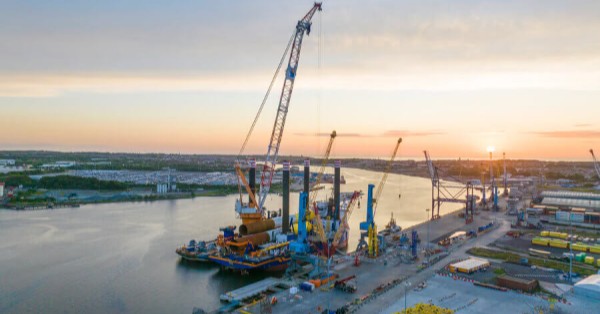
These principles become especially important in complex settings such as ports. At the Port of Long Beach, for example, RF planning must account for proximity to the U.S. Navy, constantly shifting metallic container stacks, and mission-critical terminal operating systems that orchestrate every container movement.
Architecture extends beyond RF and core design. Device-level considerations, such as mounting industrial routers on outdoor lift vehicles exposed to saltwater, wind, and extreme conditions, are equally critical.
When these layers come together, combining RF resiliency, core redundancy, application awareness, and ruggedized device design, the result is uptime approaching six nines of availability.
Where Private Cellular Networks Are Delivering the Most Impact Today
The strongest business impact from private cellular networks is emerging where they directly enable digital transformation at scale.
- Ports are leveraging private cellular networks to extend terminal operating systems beyond the limits of Wi-Fi and wired connectivity, connecting lift equipment and enabling more efficient container movement.
- Manufacturing facilities are using private 5G alongside existing industrial networks to support autonomous mobile robots, where low-latency, reliable mobility is essential.
- Energy and petrochemical sites, which are often dense, metallic, and highly controlled, use private cellular networks to drive operational efficiency while enhancing worker safety.
- Warehousing and logistics operations rely on private cellular connectivity to support warehouse management systems, connected workers, asset tracking, and forklift operations, particularly in environments where Wi-Fi coverage and reliability fall short.
Across all these environments, success depends on designing networks that are fit for purpose, delivering high performance while maintaining the lowest possible total cost of ownership over the network’s lifespan.
Bridging IT and OT: The Interoperability Challenge
OT/IT interoperability remains one of the most complex challenges enterprises face.
In less mature environments, private cellular networks are often deployed as extensions of the IT LAN, led primarily by IT and cybersecurity teams. In more advanced deployments, enterprises are increasingly adopting 5G Standalone and network slicing to support both IT and OT workloads on a shared infrastructure.
This convergence requires careful alignment across IT, OT, and cybersecurity stakeholders, each with distinct priorities around performance, reliability, and risk. As 5G Standalone continues to mature, slicing is proving its value by improving ROI, reducing the need for parallel networks, and accelerating adoption without compromising security.
From Pilot to Platform: Scaling Private Cellular Networks with Confidence
Private cellular network deployment within broader private network environments is best understood as a journey, not a one-time project.
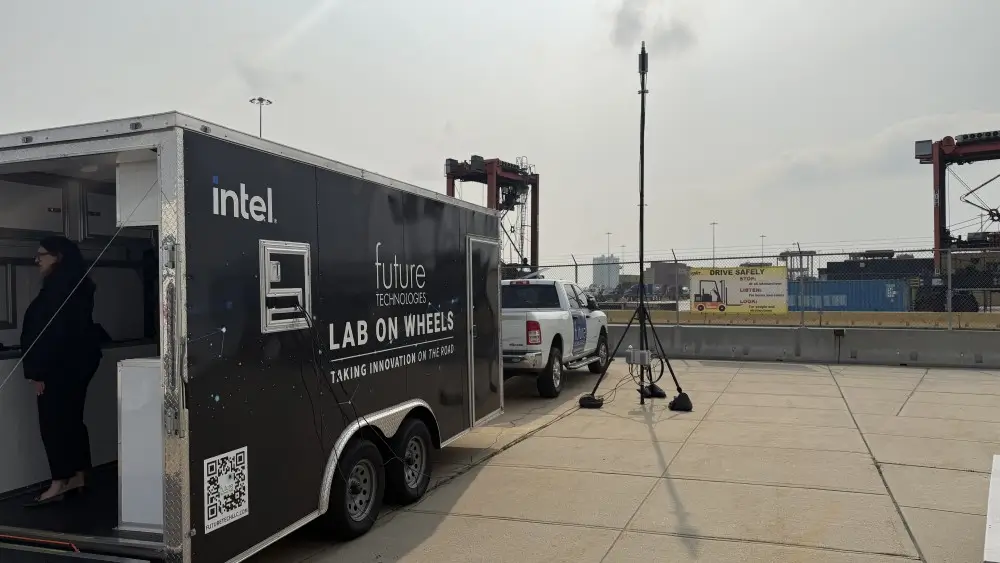
To accelerate that journey, Future Technologies invested several million dollars in a living lab in Atlanta designed to replicate real-world brownfield environments. Supported by decades of customer-side operational experience, the lab allows enterprises to quickly see what connectivity transformation looks like in practice. This concept was extended through a “lab on wheels,” bringing live demonstrations directly to customer sites. In one port deployment near New York City, a working system was stood up and integrated into operations within 90 minutes—helping flatten the learning curve by mapping cellular concepts to familiar Wi-Fi architectures.
By investing upfront, customers enter proofs of concept with clearly defined success and exit criteria. Once a single production site is stabilized, use cases, architecture, devices, and operational models are refined into a repeatable blueprint that supports multi-site scaling—a trend gaining strong momentum as the market matures.
Looking to 2026: AI and Hybrid Models Take Center Stage
Two forces are set to shape the evolution of private cellular networks in 2026.
The first is AI modernization. Mission-critical industries will require secure, resilient connectivity to support increasing device density, real-time data exchange, and AI-driven operations across critical infrastructure.
The second is carrier collaboration. While many private cellular deployments today rely on a single licensed spectrum band, hybrid private–public models using carrier-provided spectrum are beginning to mature. Technologies such as MORAN (Multi-Operator Radio Access Network) and MOCN (Multi-Operator Core Network) enable shared infrastructure while preserving the performance and reliability required for mission-critical use cases. As these hybrid models evolve, closer coordination between enterprises and carriers will unlock greater scale, flexibility, and economic efficiency, marking the next phase of private cellular adoption.