Private Network
Intelligence
Intelligence Journeys
Utilities Private Broadband Planning
AI Use Case Planning for Utilities

Spectrum

Enterprises need indoor mobile coverage that works like the macro, integrates with private wireless, and sets a path to 5G and AI without ripping-and-replacing infrastructure. InfiniG’s Neutral Host as a Service turns a CBRS shared-spectrum deployment into an extension of public mobile networks using a 3GPP MOCN architecture. Employees, contractors, and visitors get native service from AT&T, T-Mobile, and Verizon on their existing SIMs—no apps, no plan changes. The Nokia RAN is 5G-ready out of the box, protecting investments as operators certify 5G Standalone and VoNR on neutral host. Radios and gateways are software-upgradable, so enterprises can deploy today for LTE and move to 5G without swapping hardware.
The European Commission has approved Orange’s plan to acquire the remaining stake in MasOrange, signaling limited competitive impact and clearing the path for full control in Spain. Orange will purchase the roughly 50% it does not already own in MasOrange from the Lorca consortium for about €4.3 billion. MasOrange was created in 2024 by combining Orange Spain and MásMóvil, and the new deal converts the joint venture into a wholly owned Orange subsidiary. The Commission used its simplified merger review, indicating no structural change in market concentration. Closing is expected before July 2026, after which MasOrange will be integrated into Orange’s operations and financial reporting.
European regulators have cleared the path for Telecom Italia (TIM) to offload its global wholesale arm, Sparkle, advancing a restructuring with implications for sovereignty, subsea capacity, and wholesale competition. The European Commission has approved the acquisition of Sparkle by Italy’s Ministry of Economy and Finance (MEF) and infrastructure provider Retelit, valuing the asset at €700 million and granting joint control to the two buyers. TIM had initially targeted closing in late 2025, but now guides to completion in the first half of 2026. Brussels found the deal would not materially distort competition in the relevant wholesale markets.
Amazon will acquire Globalstar to accelerate Amazon Leo’s direct-to-device (D2D) roadmap, secure midband MSS spectrum, and extend satellite coverage to smartphones and IoT beyond terrestrial reach. Amazon is acquiring Globalstar in a cash-and-stock deal valued at roughly $11.5 billion, with Globalstar shareholders able to elect $90 per share in cash or Amazon stock subject to a cash cap and proration. Closing is targeted after regulatory approvals and satellite milestones, with Amazon guiding to 2027. Amazon plans to deploy a next-generation D2D system starting in 2028, delivering voice, messaging, and data to unmodified mobile devices.
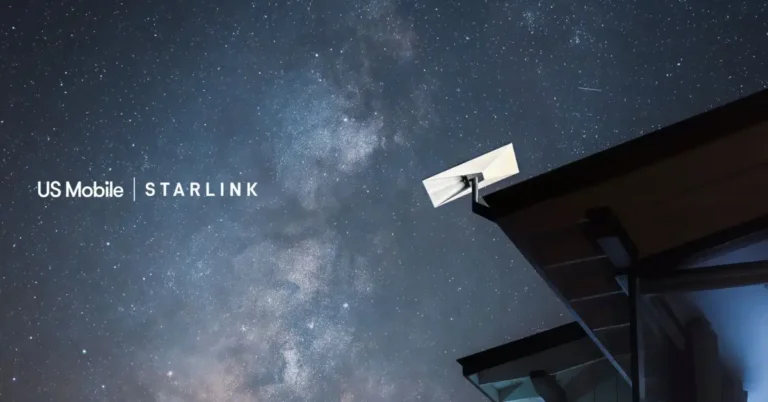
US Mobile and Starlink have launched limited-time bundles that combine Starlink residential service with US Mobile’s unlimited mobile plans under a single account and bill. Entry pricing starts at $47 per month, which effectively blends a $30 Starlink residential tier (targeted around 100 Mbps) with a $17 US Mobile base unlimited plan. Higher Starlink speed tiers are available at $77 per month for a 200 Mbps option and $117 per month for a “Max” service that targets 400 Mbps or more. Compared with Starlink’s typical standalone rates of $50, $80, and $120 for the same speed tiers, the bundles represent meaningful savings for households that want both mobile and home internet.
March 2026's roundup: GSMA, Google Cloud, Huawei, and AWS all converge on an "agentic telco" framing at MWC Barcelona, SoftBank and SK Telecom build proprietary telecom-specific AI models and infrastructure, and physical AI reaches airports, drones, and network edge sites — with AI-RAN and connectivity infrastructure covered separately in our companion Advanced Connectivity Insights, March 2026.
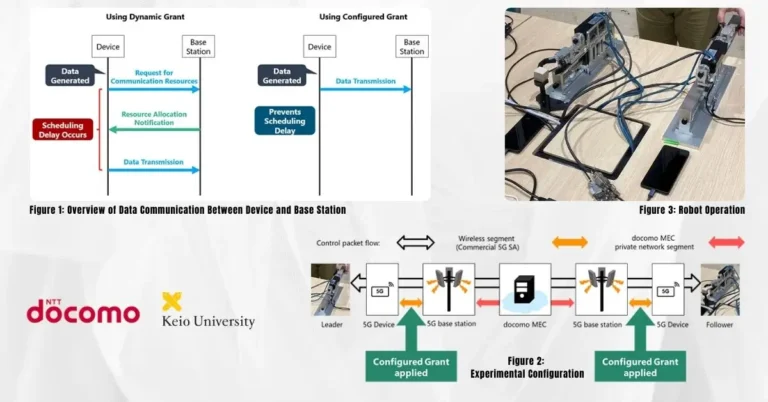
NTT DOCOMO and Keio University have validated that commercial 5G Standalone (SA) can stably support haptic-grade robot teleoperation using network slicing and configured grant—turning years of URLLC theory into practical results. By pairing 3GPP-configured grant scheduling with a low-latency slice and Keio’s Real Haptics technology, DOCOMO showed that public 5G SA can carry force and tactile feedback with the determinism required for safe, precise manipulation. The KPIs demonstrate material improvements in latency stability, force fidelity, and motion smoothness—indicators that the control loop is resilient enough for practical tasks.
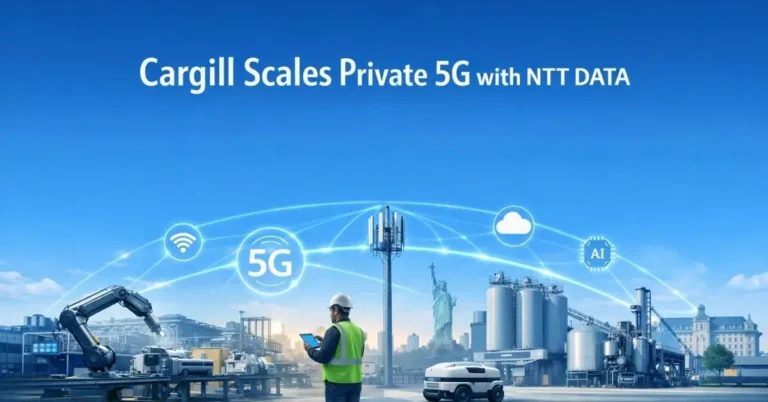
NTT DATA’s private 5G rollout across 50 Cargill facilities signals that industrial connectivity is moving from pilot projects to standardized, multi-site execution. NTT DATA has deployed private 5G at Cargill manufacturing and processing locations worldwide—mostly in the United States with live sites in Europe—enabling a connected workforce, robotics, and edge AI across plants that are often too large and complex for conventional Wi‑Fi or wired networks to cover reliably. Manufacturers are consolidating on common digital platforms and need predictable, low-latency wireless for operational data, mobile human–machine interfaces, and autonomous systems; private 5G—built on 3GPP standards with SIM-based security and policy-based QoS—offers deterministic performance at scale where legacy networks struggle.
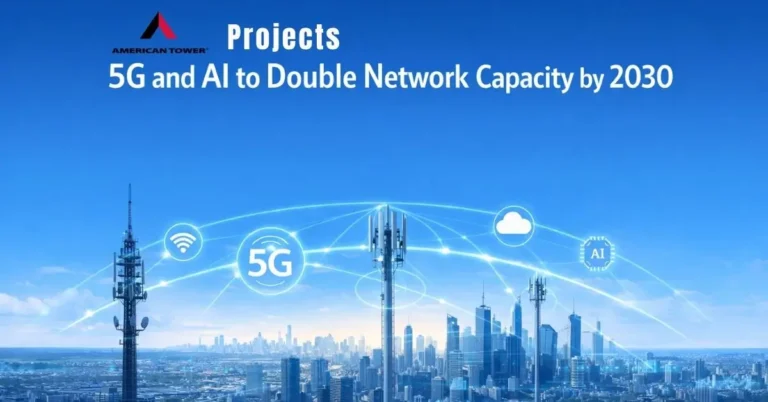
American Tower’s latest outlook puts a hard number on a trend most operators feel on the ground: the network needs to double by the end of the decade to absorb 5G, fixed wireless access, and AI-driven traffic. Mobile data growth remains the primary engine for new network investment. As 5G adoption scales and fixed wireless access expands, capacity pressure is shifting from coverage to throughput. The next leg comes from AI. New applications—from on-device inference to computer vision at the edge—demand more bandwidth, tighter latency, and stronger uplink. That profile is different from today’s downlink-heavy usage and will stress radios, backhaul, and site power.
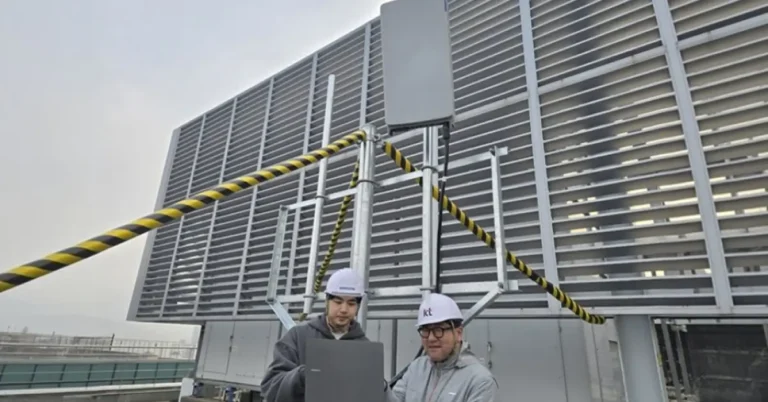
Samsung Electronics, working with KT Corporation and Keysight Technologies, has demonstrated 3 Gbps peak downlink in outdoor tests using an ultra‑dense antenna system and X‑MIMO in the 7 GHz band. The field trial took place at Samsung’s Seoul R&D Campus and pushed eight concurrent spatial streams from a base station to a single user device. The key enabler was a radio unit that packs roughly four times the antenna elements of today’s 5G massive MIMO gear into a similar physical footprint. Shorter wavelengths at 7 GHz make that density feasible without expanding the radio size.

Partner Hubs

Telco AI Agent Leadership

Telco AI Agent Leadership Landscape - Network Equipment Vendors
Network Equipment Vendor Report
How are Amdocs, Salesforce, Comarch, Totogi, Qvantel, Oracle and other OSS/BSS vendors deploying telecom AI agents?
OSS/BSS Vendor Report
How are Amdocs, Salesforce, Comarch, Totogi, Qvantel, Oracle and other OSS/BSS vendors deploying telecom AI agents?
System Integrator Report
Scroll to Top