Monetization

Monetization covers how operators turn networks and capabilities into revenue beyond traditional connectivity. As 5G investment has outpaced obvious new revenue, the industry is pursuing fresh models: network slicing, private networks, fixed wireless access, edge services, network APIs, and enterprise solutions. The recurring challenge is that consumers often perceive limited difference between strong 4G and 5G, making it hard to charge premiums for speed alone and pushing operators toward differentiated, enterprise, and platform-based revenue. For operators, monetization strategy increasingly determines whether network investment pays off; for vendors and enterprises, it shapes which capabilities get built and bought. This channel tracks telecom monetization across slicing, private networks, APIs, FWA, and enterprise services, with analysis of which models are generating real revenue and which remain aspirational, grounded in evidence rather than projection.

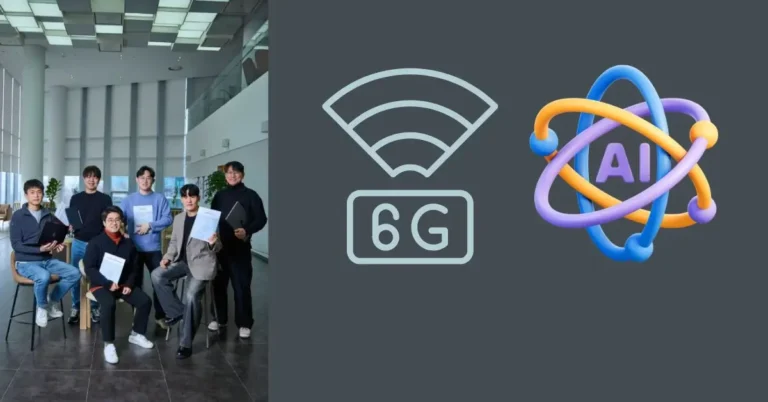
SK Telecom introduced ATHENA—an architecture grounded in AI-native operations, Zero Trust security, hyper-connectivity, openness, and cloud-native design—to guide mid- to long-term evolution across RAN, core, transport, and network data platforms. The operator positions “AI for network” and “network for AI” as dual tracks: the former embeds AI into decision loops for autonomous optimization, while the latter tunes the network fabric to serve AI workloads efficiently. SK Telecom will showcase related technologies at MWC Barcelona 2026, including AI agents for networks, AI-RAN for combined connectivity and compute, device-side AI for antenna tuning, and integrated sensing-and-communications.
Nokia and Amazon Web Services (AWS) are bringing agentic AI to 5G-Advanced network slicing, moving closed‑loop, intent-based services from PowerPoint to live pilots with du and Orange. The partners unveiled an agentic AI-powered slicing solution that fuses Nokia’s RAN-to-core slicing, AirScale radio, and MantaRay SMO with AWS’s Bedrock AI platform and EKS Hybrid Nodes to turn external context—events, traffic, maps, weather—and live network KPIs into real-time policy decisions. The result is adaptive, premium slices provisioned when and where they’re needed, without manual reconfiguration.
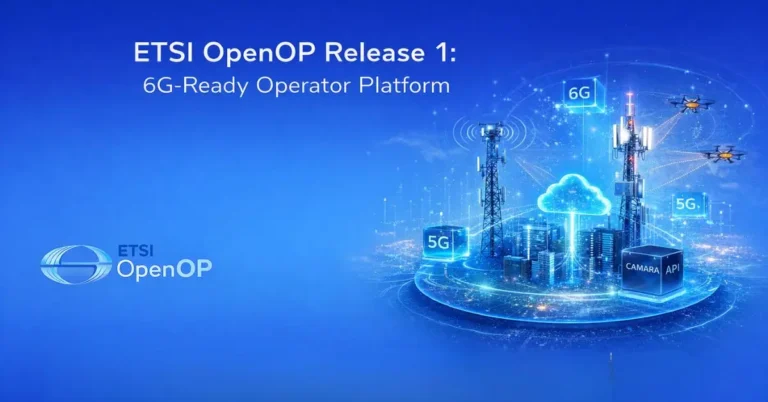
Telefónica and Nokia are piloting agentic AI to make network APIs easier to expose, discover, and consume, aligning with GSMA Open Gateway’s push for interoperable, developer-ready telecom capabilities. Industry efforts like GSMA Open Gateway and CAMARA have raised awareness of standardized network APIs, but uptake hinges on practical tooling that abstracts network complexity while preserving telco-grade security and control. Telefónica and Nokia are now testing agent-to-agent orchestration and context-sharing protocols to let AI “agents” reliably find, chain, and call network functions in a repeatable way.
T-Mobile is introducing a network-native AI translation service that activates during voice calls, signaling a new phase where AI runs inside the mobile network rather than on apps or devices. T-Mobile announced a beta of Live Translation, a voice-call feature that translates conversations in over 50 languages by activating an AI agent within its 5G Advanced network. The service is initiated by the T-Mobile subscriber using *87* during a call; only one caller needs to be on T-Mobile, and it also works while roaming on supported networks.
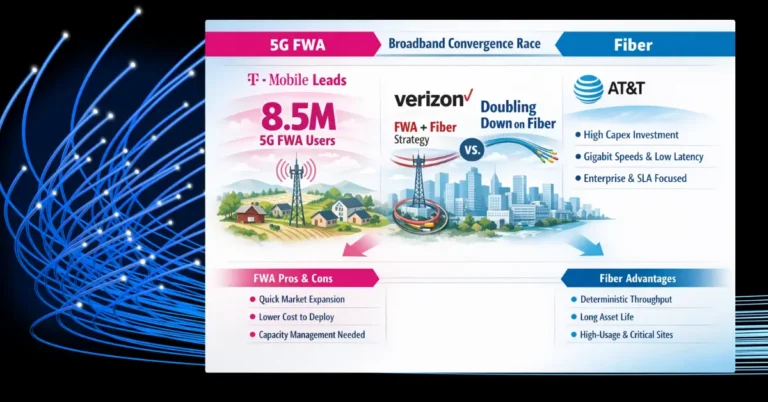
FWA is capex-light and fast to deploy, especially in mid-band-rich markets, which makes it ideal for quick share gains, addressable market expansion, and rural or underserved pockets. Its constraint is shared capacity: as mobile traffic grows, operators must manage prioritization, peak congestion, and plan mix to preserve experience. Fiber demands higher upfront capital but delivers deterministic throughput, low latency, and long asset life that underpins premium ARPU, enterprise SLAs, and wholesale opportunities. Expect operators to steer FWA toward segments with favorable traffic profiles and use fiber for high-usage clusters and enterprise-critical sites.
A surprise endorsement from President Trump has thrust Nexstar’s proposed takeover of Tegna back into the spotlight, with implications that cut across broadcast consolidation, streaming competition, and FCC ownership policy. After criticizing large media combinations late last year, the President is now urging regulators to approve Nexstar’s bid for Tegna, framing it as a way to bolster competition against national TV networks and Big Tech platforms. Regulatory outcomes hinge on how the FCC treats national reach limits, market overlaps, and public‑interest conditions. The combined footprint would touch a supermajority of U.S. TV households—well beyond today’s national audience reach cap absent discounts or divestitures.
Start: April 21, 2026
End: April 22, 2026
Venue: Intercontinental O2 London
Location: London, UK
OpenAI introduced Frontier as an enterprise platform to build, govern, and monitor AI agents—positioning agent management as core infrastructure rather than a feature. Frontier is an end-to-end platform for creating and managing AI agents that can connect to external data and applications, execute tasks, and operate under enterprise controls. OpenAI is emphasizing an open architecture: organizations can manage agents built on Frontier and agents constructed with third-party frameworks.
Liberty Global and Google Cloud have signed a five-year agreement to deploy AI at scale across Liberty Global’s European footprint and to advance hybrid cloud, autonomous networks, and new go-to-market plays. The partnership spans roughly 80 million fixed and mobile connections across Liberty Global’s operating companies, including Virgin Media O2 in the UK, Telenet in Belgium, VodafoneZiggo in the Netherlands, Virgin Media in Ireland, and Sunrise in Switzerland. On the network side, the companies will co-develop AI-first programs aimed at reliability, security, scalability, and cost efficiency. Commercially, the parties will target SMEs with a joint portfolio that combines connectivity with cloud, cybersecurity, and AI services.
Amdocs is launching aOS, an agentic operating system for telecom, to move CSPs from AI pilots to production-scale, cross-domain automation. Amdocs’ aOS targets that gap with a multi-agent architecture that automates complex workflows while keeping humans in the loop for policy and final decisions. At the foundation is a “Cognitive Core” that manages telco-specific knowledge, agent libraries, and guardrails. aOS pricing will lean on outcome-based SLAs, tying spend to measurable business impact such as resolution rates, handle-time reductions, activation velocity, or assurance KPIs. aOS is Amdocs’ bid to make agentic AI the connective tissue of telco operations.
With the Union Budget around the corner, the Cellular Operators Association of India (COAI) is asking for a structural fix to spectrum pricing, statutory levies, and GST that is designed to restore sector health and accelerate digital infrastructure build-out. COAI’s agenda centers on spectrum affordability, regulatory levy rationalization, and GST reform to unlock liquidity frozen as input tax credit. COAI argues for spending the sizable unused corpus first, holding the DBN levy in abeyance, and trimming license fees to roughly 0.5–1% to cover administrative costs. Cutting GST on regulatory payments from 18% to 5% would reduce the pace of new ITC build-up and meaningfully ease liquidity pressure.
The next wave of digital transformation will be defined by AI workloads riding on cloud and edge infrastructure over 5G networks, and that shift will change how networks are built, monetized, and secured. Generative and agentic AI move more compute into the network, creating persistent, uplink-heavy, low-latency flows rather than the mostly downlink, best-effort traffic of the smartphone era. Video from cameras, glasses, and sensors feeds models at the edge and in the cloud; results return in milliseconds to people and machines. That means tighter latency budgets, deterministic jitter control, and stronger guarantees for both throughput and reliability.

Frequently Asked Questions

Is 5G actually making money for carriers yet?
It’s a mixed picture. Coverage and subscriptions have scaled massively, with global 5G subscriptions surpassing 3.1 billion in early 2026 after 162 million new subscriptions were added in just the first quarter, but the industry narrative has shifted from how fast networks can be built to how to make money from them, with revenue uplift and enterprise monetization still uneven across regions and operators. Some specific monetization avenues, like fixed wireless access, are showing clearer financial traction than others, like consumer-facing network slicing, which remains earlier in its commercial maturity. The honest summary is that 5G has succeeded as infrastructure far more decisively than it has yet succeeded as a profitable new revenue category.
What strategy are carriers using to monetize 5G right now?
The shift is from selling bandwidth to selling outcomes: using network slicing to offer guaranteed-performance services tailored to specific use cases, exposing network capabilities like location data or quality-of-service controls through APIs that outside developers can build on and pay for, and offering speed-based fixed wireless access tariff tiers that let customers pay more for guaranteed higher performance rather than a single flat-rate plan. Industry commentary from major vendors at events like Mobile World Congress 2026 has repeatedly emphasized this framing, arguing that simply selling faster connectivity at a similar price point doesn’t capture the genuine value 5G’s more advanced capabilities can actually provide to specific customer segments willing to pay a premium.
What are ‘network APIs,’ and how do they relate to monetization?
Network APIs let third-party developers tap into specific network capabilities, like verified location, fraud detection, or guaranteed bandwidth for a specific session, typically through aggregator platforms that combine APIs across multiple carriers so developers can build once and scale across markets rather than negotiating separate integrations with every individual operator. The operator-backed Aduna platform, for example, was specifically created to pull together network APIs from multiple operators into a single access point. This model lets operators monetize specific network capabilities directly, charging developers and businesses for access to things like quality-on-demand connectivity, rather than relying purely on consumers paying for basic data plans.
How much are carriers spending on network upgrades relative to what they’re earning back?
Capital intensity remains very high even as the industry pushes harder on monetization. Verizon alone guided $16 to $16.5 billion in U.S. network capital spending for 2026, explicitly tied to continued network investment rather than a pullback in spending despite monetization pressure. Whether that level of ongoing investment generates a proportionate financial return depends heavily on whether newer capabilities like 5G Standalone, network slicing, and enterprise API-driven services actually scale into substantial revenue streams, since basic connectivity revenue alone hasn’t grown enough to justify that scale of continued infrastructure spending without these newer revenue categories maturing significantly further.
Will 6G repeat the same monetization struggle as 5G?
Industry voices are explicitly framing current 5G Standalone monetization as a prerequisite for justifying 6G investment, arguing that proving sustainable, scaled revenue streams from 5G’s more advanced capabilities now is necessary before the industry can credibly justify the next full generational upgrade cycle to investors and regulators. This represents a meaningful shift in industry thinking compared to the 4G-to-5G transition, where rollout speed and coverage milestones were treated as the primary success metrics largely independent of immediate monetization proof. Whether the industry actually breaks this pattern before 6G arrives around 2030, or repeats a similar build-first, monetize-later cycle, remains an open and actively debated question.
Why has 5G monetization been harder than carriers initially expected?
Several factors made 5G monetization harder than many carriers initially expected. Consumers proved largely unwilling to pay significantly more for faster speeds alone once a good-enough connectivity experience was already widely available on 4G, undermining the simple charge-more-for-faster model many operators initially assumed would work. The more advanced, genuinely differentiated capabilities 5G enables, like network slicing and ultra-low latency services, required not just network infrastructure but also new billing systems and device ecosystem support that all took longer to mature than the radio network itself did. Enterprise customers, who represent much of the more promising opportunity, also require longer sales cycles than consumer mass-market products, slowing how quickly that revenue could scale.
What’s the difference between consumer and enterprise 5G monetization strategies?
Consumer 5G monetization has leaned heavily on tiered data plans, modest premium pricing for unlimited or higher-priority data, and fixed wireless access as a new product category competing with home cable and fiber broadband, generally still resembling familiar telecom pricing models. Enterprise monetization looks meaningfully different, focused on customized, often contractually negotiated services like dedicated network slices with guaranteed performance, private 5G networks built for a single organization’s exclusive use, and network API access sold to developers and businesses. Enterprise deals tend to be fewer in number but potentially much higher value per customer, and generally require more direct sales engagement and customization than the largely self-service consumer model.
Are any specific monetization strategies actually proving successful so far?
Some specific strategies are showing clearer success than others. Fixed wireless access has proven to be one of the more concretely successful 5G monetization stories, with the share of FWA offered specifically over 5G rather than 4G rising from 57 percent to 71 percent of providers in under a year, reflecting genuine, measurable revenue growth from a product carriers can sell with relatively straightforward positioning against existing home broadband competitors. Network slicing and API-based monetization, while generating real commercial deployments and partnerships, remain earlier in their maturity curve, with most market analyses describing them as still in the early stages of commercialization rather than fully scaled, proven revenue categories comparable to FWA’s more straightforward consumer success.
Sponsored by Palo Alto Networks
⚡ Utilities ⏱ 8 min ✓ Free
This tool is built and hosted by TeckNexus.
Launch Tool →
Whitepaper
Neutral host, network slicing, and autonomous ground vehicles look like three unrelated topics — but they share the same hidden security risk. See what 100 airport deployments reveal about securing the components with the broadest reach across the network....
Palo Alto Networks
Whitepaper
Airports are deploying AI surveillance, biometrics, and autonomous vehicles faster than most networks can secure them. See what 100 real-world airport deployments reveal about the airside/landside security gap — and the 4-layer framework built to close it....
Palo Alto Networks
Scroll to Top