Google

A new partnership between Infosys and Anthropic brings agentic AI into regulated, process-heavy industries, with telecom squarely in scope. Infosys will integrate Anthropic’s Claude models and Claude Code with its Topaz portfolio to build and operate enterprise-grade AI solutions across telecom, financial services, manufacturing, and software engineering. The collaboration emphasizes agentic AI—systems that can plan, call tools, and execute multi-step workflows with oversight—delivered with the controls, auditability, and policy enforcement that regulated sectors demand. Pairing Infosys’s domain depth with Claude’s reasoning and long-context capabilities gives operators a path to pragmatic automation that respects regulatory, safety, and transparency requirements.
OpenAI is reportedly building a portfolio of AI-native devices, signaling a push beyond software and into ambient, multimodal computing that will touch homes, workplaces, and networks. Multiple reports indicate OpenAI has over 200 people developing a family of AI-enabled hardware, with a smart speaker expected to debut first. Early guidance points to a price in the $200–$300 range and a ship window no earlier than February 2027. The device is said to include a camera to capture contextual information about users and surroundings—an explicit bet on multimodal AI that fuses voice, vision, and environment for richer interactions.
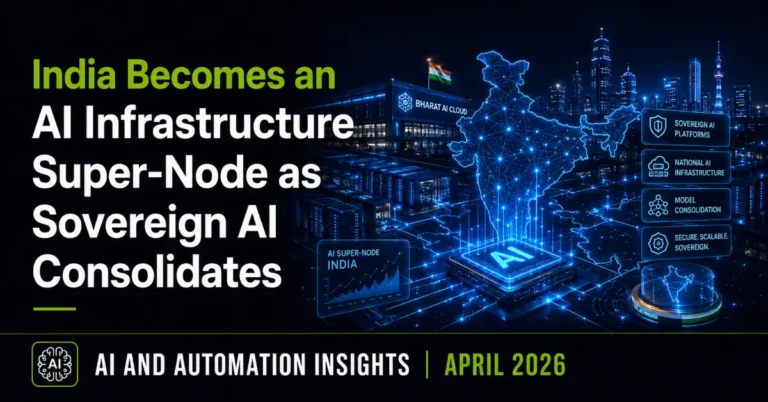
India is moving to anchor a larger slice of global AI compute by pairing policy incentives with large-scale private capital and renewable power. New Delhi has outlined plans to attract more than $200 billion for AI infrastructure over the next two years, positioning the country as a production base for compute, data, and advanced applications rather than a pure consumer market. The policy stack aims to reduce friction for export-oriented AI services while widening access to shared compute for startups and enterprises. Adani Group plans to invest $100 billion through 2035 to build renewable-powered, AI-optimized data centers across India.
Cognizant is expanding its partnership with Google Cloud around Gemini Enterprise and Google Workspace, and it is putting real skin in the game by rolling out this stack internally to boost productivity and delivery velocity. The company is forming a dedicated Gemini Enterprise Center of Excellence and codifying repeatable delivery with an Agent Development Lifecycle that embeds AI across design, build, validation, and production. It is also packaging accelerators—Cognizant Ignition for discovery and data readiness and Cognizant Agent Foundry for no-code, pre-configured agents targeting use cases like AI-powered contact centers and intelligent order management.
A new cross-industry consortium is forming to codify how trusted technology should be built, operated, and governed across borders. On February 13, 2026, fifteen companies spanning cloud, networks, semiconductors, software, and AI launched the Trusted Tech Alliance during the Munich Security Conference. The goal: define verifiable, provider-agnostic practices for a trustworthy technology stack—from connectivity and cloud infrastructure to chips, software, and AI—so customers and governments can rely on secure, resilient services regardless of where solutions are developed or deployed. Trust, sovereignty, and resilience are now gating factors for growth as AI scales and geopolitical risk reshapes supply chains.
Blackstone will take a majority stake in Neysa through up to $600 million in primary equity, alongside Teachers’ Venture Growth, TVS Capital, 360 ONE Asset, and Nexus Venture Partners; the company also plans up to $600 million in debt to accelerate buildout. The raise is a step change from Neysa’s earlier $50 million and positions the Mumbai-headquartered startup to scale domestic GPU clusters for enterprises, public sector agencies, and AI developers.
The plan centers on Visakhapatnam, a port city on India’s east coast, as a tightly coupled zone for data centers, subsea cable landings, power, water, and the digital supply chain. State leadership wants the cluster to be more than rack space. It aims to bring in server assemblers, power and cooling vendors, and specialized logistics to create end-to-end capability. The city is also being pitched as a landing point for new subsea systems toward Singapore, which would diversify India’s international connectivity beyond Chennai and Mumbai and lower latency into Southeast Asia.
T-Mobile is introducing a network-native AI translation service that activates during voice calls, signaling a new phase where AI runs inside the mobile network rather than on apps or devices. T-Mobile announced a beta of Live Translation, a voice-call feature that translates conversations in over 50 languages by activating an AI agent within its 5G Advanced network. The service is initiated by the T-Mobile subscriber using *87* during a call; only one caller needs to be on T-Mobile, and it also works while roaming on supported networks.
Anthropic’s latest financing round resets the competitive map for enterprise AI and raises the stakes for telecom, cloud, and large-scale IT buyers planning agentic automation. Anthropic closed a $30 billion Series G at a $380 billion post-money valuation, led by GIC and Coatue with participation from D. E. Shaw Ventures, Dragoneer, Founders Fund, ICONIQ, and MGX, alongside a broad cohort that includes Accel, General Catalyst, Jane Street, and the Qatar Investment Authority. The raise follows sustained commercial momentum and arrives as competitive intensity with OpenAI deepens, signaling that AI platform consolidation and scale economics will define the next phase of the market.
Singapore has confirmed an attempted cyber‑espionage campaign against its national telecom backbone, highlighting a rising class of APT activity aimed at network devices and virtualized cores rather than traditional IT endpoints. Singapore’s Cyber Security Agency (CSA) and Infocomm Media Development Authority (IMDA) disclosed that all four major operators—Singtel, StarHub, M1 and Simba Telecom—were targeted by UNC3886 in incidents last year. The threat actor gained limited access to segments of telco systems and exfiltrated a small volume of network‑related technical data. There was no service disruption, no personal data exposure and, critically, sensitive and segregated systems (including 5G networks) were not compromised.
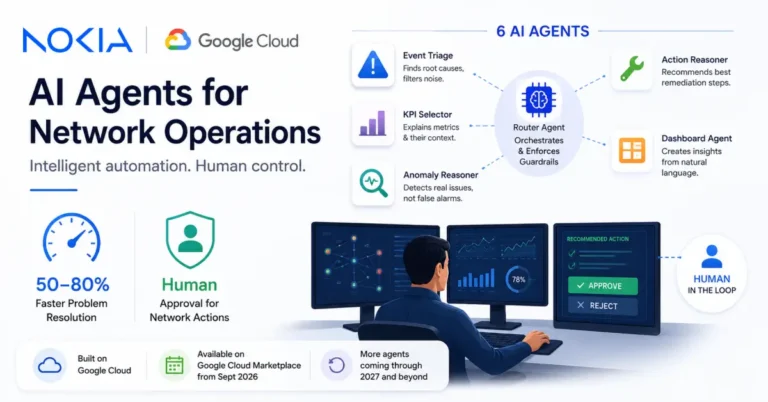
Virgin Media O2 has broadened its partnership with Zinkworks to deploy AI-driven monitoring and automation across its mobile footprint, designed to spot anomalies earlier, resolve incidents faster, and prevent customer-impacting outages. The rollout targets multiple network domains and operational workflows, advancing the operator’s move toward autonomous operations with engineers maintaining full oversight. The capabilities span radio access, core network systems, and network operations centers, combining real-time telemetry with intelligent automation. The stack runs on Google Cloud and taps services such as Vertex AI and Gemini to analyze patterns, orchestrate responses, and augment decision-making for operations teams.
Amazon and Google currently lead the AI capex race, with Microsoft and Meta not far behind, and the prize is control over scarce compute, power, and network resources that define the next decade of cloud and AI services. For telecom and infrastructure players, the opportunity is immediate: deliver power-adjacent, fiber-rich, AI-ready capacity with speed and predictable SLAs. For enterprises, the mandate is pragmatic: secure capacity, design for portability across heterogeneous silicon, and enforce cost governance as inference scales. The winners will be those who pair aggressive buildouts with disciplined execution—turning record capex into durable platforms and customer outcomes.
Sponsored by Palo Alto Networks
⚡ Utilities ⏱ 8 min ✓ Free
This tool is built and hosted by TeckNexus.
Launch Tool →
Whitepaper
Neutral host, network slicing, and autonomous ground vehicles look like three unrelated topics — but they share the same hidden security risk. See what 100 airport deployments reveal about securing the components with the broadest reach across the network....
Whitepaper
Airports are deploying AI surveillance, biometrics, and autonomous vehicles faster than most networks can secure them. See what 100 real-world airport deployments reveal about the airside/landside security gap — and the 4-layer framework built to close it....
Scroll to Top