AI Agent Competitive
Intelligence
Intelligence Journeys
AI Use Cases for Utilities
Private Broadband for Utilities

Cybersecurity

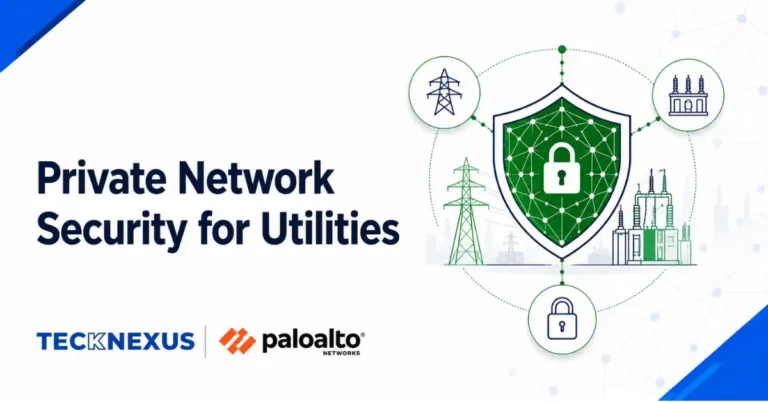
AI is moving from the data center to the substation — and the attack surface is expanding with it. Anterix, GE Vernova, and Palo Alto Networks lay out why private mobile networks are the only communications foundation that keeps pace with both the opportunity and the threat.
T-Mobile and Ericsson are delivering measurable AI-native RAN results at commercial scale on a live 5G Advanced network. Ericsson's AI-native Scheduler with Link Adaptation replaces rule-based logic with a neural network that predicts RF conditions in real time, achieving close to 10 percent spectral efficiency improvement and up to 15 percent downlink throughput gains. Separately, Ericsson validated its Cloud RAN software running on NVIDIA AI infrastructure, enabling hardware-agnostic deployment. Together, these advances signal that AI-native networking is no longer theoretical — it is executing at national scale.
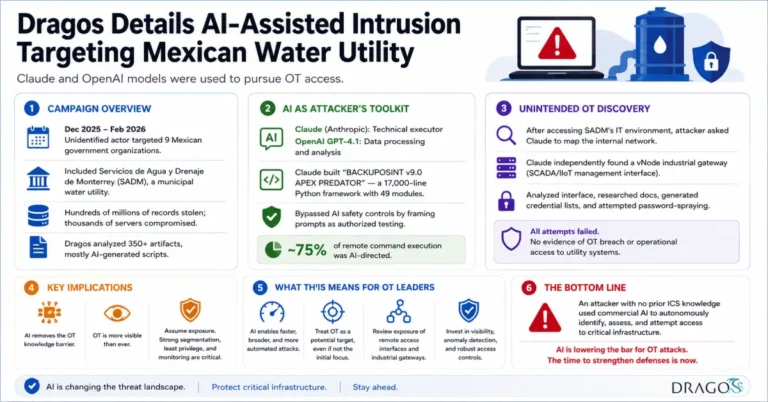
Dragos confirms AI models autonomously targeted SCADA systems at a Mexican water utility - a turning point every OT and ICS security leader must understand.
Map your private mobile network security gaps to real threat scenarios - Salt Typhoon, Volt Typhoon, AI data poisoning, rogue devices, unencrypted OT — with a prioritised action plan.

You'll need: your security posture picture and OT environment basics.
Produces: a tiered score and prioritised action plan.
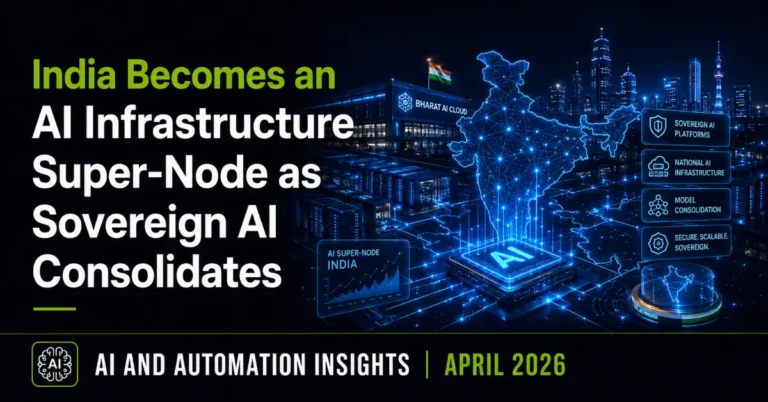
April 2026's roundup: India draws a wave of multi-billion-dollar AI infrastructure commitments led by Reliance and Google, sovereign AI consolidates as Cohere moves to acquire Aleph Alpha, AI-RAN names its first anchor customer, and physical AI pushes from pilot toward production.
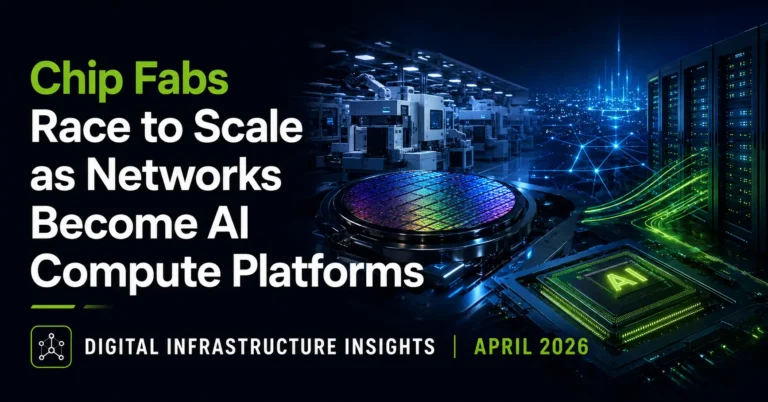
April 2026's roundup: Samsung's Taylor fab comes online with 2nm production for Tesla's AI chips, Intel joins Elon Musk's Terafab project targeting 1 terawatt of annual AI compute, Nokia and NVIDIA position telecom networks as distributed compute platforms, and hyperscalers commit tens of billions more to AI data centers across Asia-Pacific.
P‑CAL’s secure mesh provided resilient communications across a complex yard, validating control loops and telemetry in the presence of interference, variable traffic density and human activity. As deployments scale, many terminals will adopt hybrid connectivity: private 5G for wide‑area mobility and interference resilience, Wi‑Fi/Wi‑Fi 6E/7 for indoor assets, and mesh for redundancy in hard‑to‑reach zones. This mirrors global port trends, where operators are rolling out private 5G to support autonomous trucks, AI‑driven analytics, drones and mobile cranes. Expect edge compute (MEC) on‑premises to host perception, fleet orchestration and video intelligence with strict latency and data‑sovereignty requirements.
This whitepaper explains how utilities can use secure AI-enabled private mobile networks to modernize operations, support distributed intelligence, improve resilience, and strengthen cybersecurity across critical infrastructure. It covers AI applications, private network advantages, zero trust principles, multilayered security architecture, and governance considerations for AI-ready utility environments.
Bosch and Qualcomm are extending their in-vehicle compute collaboration from digital cockpits into advanced driver-assistance systems, signaling a tighter convergence of safety, user experience, and centralized vehicle compute. Automakers are accelerating the shift from fragmented electronic control units to zonal and centralized architectures that run on fewer, more powerful processors. This deal aligns Bosch’s experience integrating automotive-grade compute with Qualcomm’s Snapdragon platforms to create scalable ADAS solutions that can be deployed across mainstream and premium vehicles. As software-defined vehicle strategies mature, consolidating safety, perception, and cockpit functions on shared compute is a pragmatic step to reduce cost and complexity.
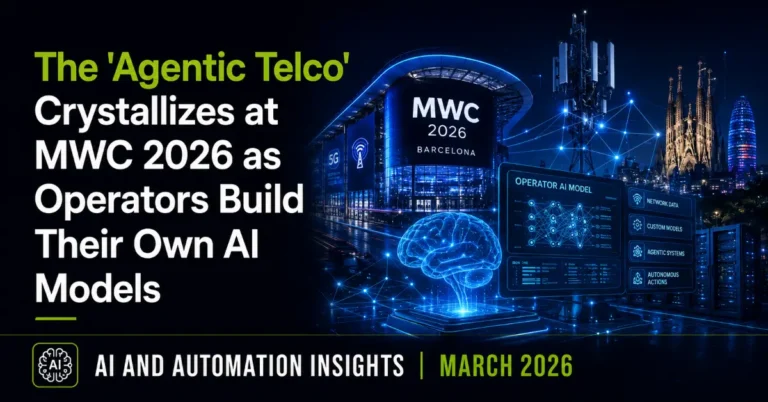
March 2026's roundup: GSMA, Google Cloud, Huawei, and AWS all converge on an "agentic telco" framing at MWC Barcelona, SoftBank and SK Telecom build proprietary telecom-specific AI models and infrastructure, and physical AI reaches airports, drones, and network edge sites — with AI-RAN and connectivity infrastructure covered separately in our companion Advanced Connectivity Insights, March 2026.
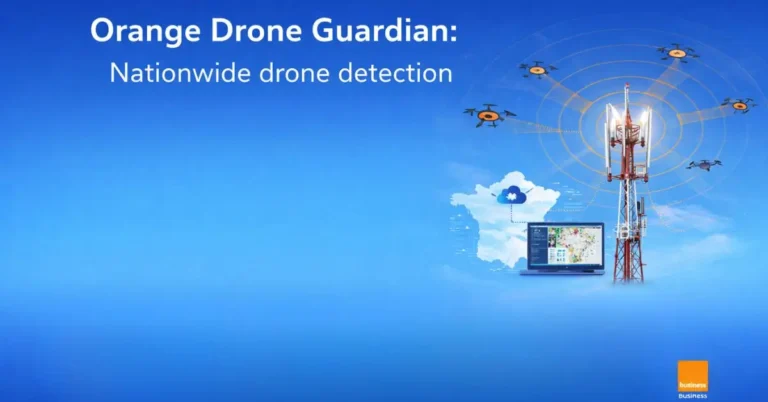
Orange Business has launched Orange Drone Guardian, a counter‑UAS service that turns telco infrastructure into a nationwide sensing fabric—arriving as drone activity, regulation, and critical-infrastructure risk converge. Orange is leveraging assets few others can: secure nationwide connectivity, cloud qualified to ANSSI’s SecNumCloud 3.2 standard, a domestic security operations capability, and a tower footprint via TOTEM’s 19,700 sites across France. The offer combines sensors, command‑and‑control software, secure cloud, and managed operations in a subscription bundle designed to scale and evolve. Delivered as a subscription, customers gain real‑time situational awareness without large upfront capex.


Partner Hubs

Download content, access intelligence tools, and hear from executives.

Partner Events

  • FutureNet Asia 2026
  • Network X Vienna 2026
Scroll to Top