Ericsson

France’s three other mobile network operators—Bouygues Telecom, Free-iliad and Orange—have reopened negotiations with Altice to carve up most of SFR, reviving a complex deal that could reshape competition, capex and customer experience across the market. The operators confirmed they are conducting due diligence with Altice after re-engaging in early January 2026, stressing that legal and financial terms remain undecided and that there is no assurance of a transaction. A successful transaction would compress the French market from four to three MNOs, with material consequences for pricing power, 5G/fiber investment, vendor ecosystems and enterprise buyers. Consolidation momentum is building across Europe, evidenced by recent approvals of large transactions with stringent remedies. Altice has been under sustained pressure to reduce debt following restructurings and asset sales.
CEO Börje Ekholm indicated the company will keep trimming headcount after cutting roughly 5,000 positions over the last year. In Sweden, Ericsson has notified authorities and begun union talks that could affect about 1,600 roles, part of a multi‑year restructuring program. The move follows a 2023 plan to remove around 8,500 jobs worldwide—about 8% of its workforce—with further reductions last year in markets such as Spain and Canada. The rationale remains consistent: reset the cost base, protect profitability, and keep investment firepower for strategic bets amid a slower operator capex cycle.
Ericsson is signaling a strategic shift toward defence, mission-critical, and AI-era network architectures as traditional RAN spending stays flat. Management expects the global RAN market to remain flat in 2026, sustaining a multi-year trend that now pegs annual spend at roughly the low-$30 billions. Ericsson is building for a traffic mix shift where AI applications push uplink throughput and latency to the forefront. Defence, utilities, transport, and public safety are moving from proprietary systems to standards-based 3GPP networks.
Enterprises are moving fast to private 5G to digitize operations, but the payoff only materializes if security scales with the new connectivity footprint. Private 5G brings deterministic wireless to factories, hospitals, ports, and energy sites, connecting robots, AGVs, cameras, and critical control systems. Security must follow identities and workloads, not subnets. Adopt a Zero‑Trust approach aligned to NIST SP 800‑207 with a single source of truth for identity and policy. Shift from perimeter controls to context-driven segmentation. Build on open standards and APIs to avoid lock‑in and simplify operations. Security must be foundational, measurable, and auditable from day one.
AI-driven experiences are flipping the traffic mix, pulling more capacity demand toward the uplink than U.S. mobile networks have historically planned for. Generative and vision-based AI are shifting usage from predominantly downloads to more continuous and bandwidth-heavy uploads. Recent benchmarking shows U.S. 5G networks prioritize downlink KPIs more than peers in Asia, even as uplink usage climbs. RootMetrics’ drive testing in late 2025 found all three U.S. carriers set roughly one-fifth of their midband Time Division Duplex (TDD) frame resources for uplink. That gap becomes material as AI, livestreaming, and enterprise camera workloads expand. U.S. carriers continued to win experience awards in early 2026, even as their uplink allocations trailed global leaders.
CHU Bordeaux, in collaboration with Bouygues Telecom Business and Ericsson, has launched the 5MART HO5PITAL initiative—one of France’s first 5G-enabled smart hospitals. Funded under the EU’s Connecting Europe Facility, the project aims to modernize digital healthcare infrastructure using 5G and Edge Computing to improve patient care, staff efficiency, and crisis preparedness.
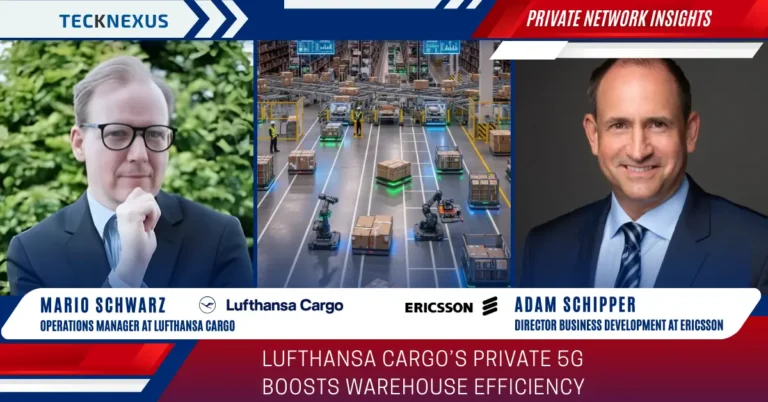
Lufthansa Cargo, in partnership with Ericsson and Lufthansa Industry Solutions, replaced 17 Wi-Fi access points with just two Private 5G radios at its LAX facility. The result: 97% fewer scanning delays, instant digital workflows, and edge-powered AI inspections. This strategic shift boosts efficiency and sets a new standard for scalable, connected logistics using private 5G.
Jaguar Land Rover's Solihull plant is now a model smart factory, thanks to Ericsson's private 5G deployment. The high-speed, low-latency network replaces traditional Wi-Fi and wired systems to support real-time data, AI automation, and scalable production. With collaboration from Ericsson, Fujitsu, and Litmus, the project boosts operational efficiency and showcases how private 5G is transforming the future of automotive manufacturing.
Private Mobile Networks (PMNs), powered by LTE and 5G, are driving enterprise digital transformation across manufacturing, logistics, utilities, and public safety. With nearly 1,850 deployments worldwide as of mid-2025, and data from GSA showing rapid adoption, PMNs offer secure, low-latency, and high-performance connectivity. This article explores technical architectures, deployment trends, spectrum policies, and vendor strategies shaping the future of private networks.
This article highlights the top 10 private 5G and LTE deployments transforming energy and utility operations globally. From U.S. electric utilities to offshore rigs and oilfields in Africa and Asia, these real-world examples show how private networks deliver secure, resilient communications that improve reliability, safety, and operational intelligence—laying the foundation for scalable grid modernization, edge analytics, and automation.
Private Mobile Networks (PMNs), powered by LTE and 5G, are driving enterprise digital transformation across manufacturing, logistics, utilities, and public safety. With nearly 1,850 deployments worldwide as of mid-2025, and data from GSA showing rapid adoption, PMNs offer secure, low-latency, and high-performance connectivity. This article explores technical architectures, deployment trends, spectrum policies, and vendor strategies shaping the future of private networks.
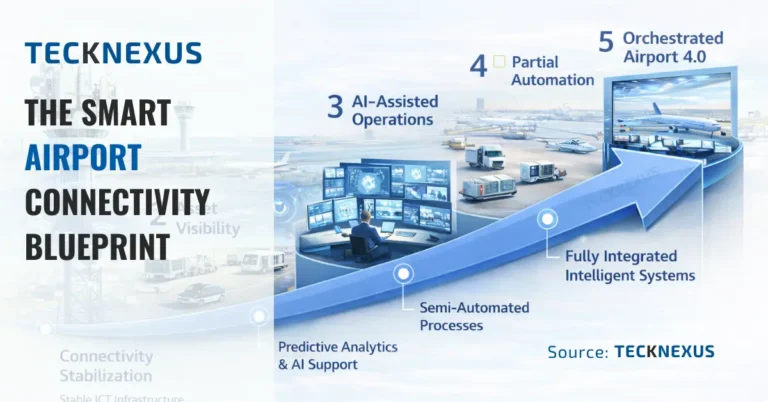
From Singapore to Schiphol, airports are embracing private networks for airports alongside AI and digital twins to drive operational efficiency, predictive maintenance, sustainability, and smarter passenger flows. This article explores 12 real-world deployments showcasing how private network deployments for aviation are shaping the future of Airport 4.0 globally.

Partner Hubs

Download content, access intelligence tools, and hear from executives.

Partner Events

  • M360 ASEAN
  • FutureNet Asia 2026
  • Network X Vienna 2026
Scroll to Top