

AI Agent Competitive
Intelligence
Intelligence
Private Network
Intelligence
Intelligence
Intelligence Journeys
Utilities Private Broadband Planning
AI Use Case Planning for Utilities
Intelligence Tools
By Tool Type
▼
By Industry
▼
Access Type
▼
Monthly Trackers
▼
Resources
▼
Technology Hubs
▼
Partner Hubs
▼


Home » Open RAN
Open RAN
Open RAN disaggregates the radio access network, separating hardware from software and standardizing the interfaces between components so operators can mix equipment from multiple vendors rather than buying a single integrated stack. The aim is more competition, lower cost, and greater flexibility, with the O-RAN Alliance defining the key specifications. Adoption has progressed from trials toward commercial deployments, though integration complexity, performance parity, and energy efficiency remain active challenges. Open RAN intersects with virtualization, cloud-native RAN, and AI-driven optimization, and is increasingly applied to 5G and private-network builds. For operators, it reshapes vendor strategy and supply chains; for new entrants, it lowers barriers to the RAN market. This channel covers Open RAN standards, deployments, and ecosystem developments, with analysis of where disaggregation is delivering on its promises and where it still falls short.
- Tech News & Insight
- June 2, 2026
- Hema Kadia

May 2026's roundup: AT&T, T-Mobile, and Verizon explore a joint satellite D2D venture, Ericsson tests GPU-free AI-RAN against Nvidia's GPU-embedded approach at the same two operators, 5G-Advanced sensing moves into live security deployments, and fiber capital both consolidates and expands.
- Tech News & Insight
- April 2, 2026
- Hema Kadia

March 2026's inaugural roundup: AT&T commits $250B to fiber, 5G, and AI-era infrastructure through 2030, Ericsson and Nokia diverge on AI-RAN strategy at MWC Barcelona, 6G's roadmap firms up around a 2029 target, and satellite direct-to-device edges toward commercial launch.
- Tech News & Insight
- March 5, 2026
- Hema Kadia

Mobile World Congress 2026 showcased major developments across AI-native networks, enterprise private 5G, device innovation, and early 6G research. This recap highlights 50 key announcements and trends shaping the future of global connectivity.
- Tech News & Insight
- February 25, 2026
- Hema Kadia

American Tower’s latest outlook puts a hard number on a trend most operators feel on the ground: the network needs to double by the end of the decade to absorb 5G, fixed wireless access, and AI-driven traffic. Mobile data growth remains the primary engine for new network investment. As 5G adoption scales and fixed wireless access expands, capacity pressure is shifting from coverage to throughput. The next leg comes from AI. New applications—from on-device inference to computer vision at the edge—demand more bandwidth, tighter latency, and stronger uplink. That profile is different from today’s downlink-heavy usage and will stress radios, backhaul, and site power.
- Tech News & Insight
- February 25, 2026
- Hema Kadia
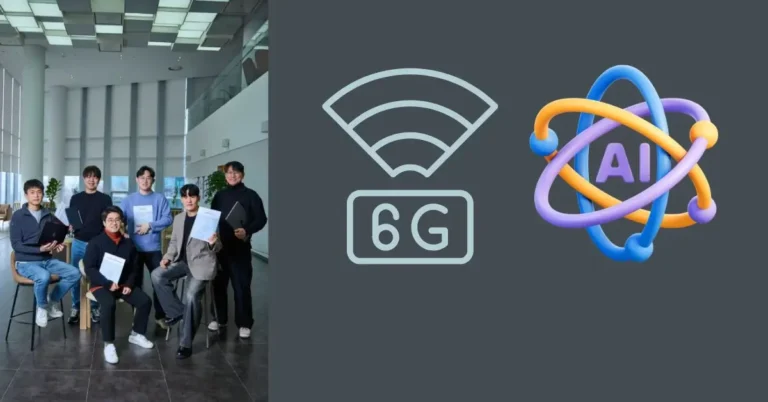
SK Telecom introduced ATHENA—an architecture grounded in AI-native operations, Zero Trust security, hyper-connectivity, openness, and cloud-native design—to guide mid- to long-term evolution across RAN, core, transport, and network data platforms. The operator positions “AI for network” and “network for AI” as dual tracks: the former embeds AI into decision loops for autonomous optimization, while the latter tunes the network fabric to serve AI workloads efficiently. SK Telecom will showcase related technologies at MWC Barcelona 2026, including AI agents for networks, AI-RAN for combined connectivity and compute, device-side AI for antenna tuning, and integrated sensing-and-communications.
- Tech News & Insight
- February 17, 2026
- Hema Kadia

Ericsson has introduced an agentic rApp delivered as a cloud service on Amazon Web Services (AWS), aiming to speed operators’ shift from manual automation toward truly autonomous networks. By offering an “Agentic rApp as a Service” on AWS, Ericsson is packaging policy-driven and AI-assisted RAN optimization as a managed, cloud-delivered capability. Agentic capabilities bring reasoning, planning, and action-taking to operations. Running rApps on AWS offers elasticity, global reach, and faster release cadence. The goal: faster onboarding, lower integration friction, and a more repeatable path to closed-loop assurance across multi-vendor 4G/5G networks.
- Tech News & Insight
- February 16, 2026
- Hema Kadia

SpaceX’s anticipated 2026 IPO is not just a space-launch story; it is a capital and scale inflection that could reorder parts of the mobile and broadband value chain. Market chatter pegs SpaceX’s IPO valuation around the trillion-plus mark with a potential multibillion-dollar primary raise, a war chest that would dwarf most rivals’ balance sheets. For telecom, the same cash advantage accelerates Starlink’s network deployment, ground infrastructure, and device partnerships—compressing the window for incumbents to respond. Starlink reports more than 9,000 satellites in orbit, 9.2 million paying customers, and over $10 billion in annual revenue.
- Tech News & Insight
- February 9, 2026
- Hema Kadia

Imec is scaling its R&D footprint and inaugurating a NanoIC pilot line to accelerate sub‑2nm and 3D system innovation under a roughly €2.5 billion European semiconductor push. Imec, the Leuven-based semiconductor research hub, is expanding lab capacity and bringing a new NanoIC pilot line online to speed learning cycles for logic beyond 2nm and advanced 3D integration. The goal is clear: shorten the path from materials and device research to system‑level demonstrators that de-risk future foundry nodes and packaging flows. For vendors and operators, this is about getting sooner access to manufacturable building blocks—ultra‑efficient logic tiles, memory stacks, and optical I/O—that cut TCO and footprint across networks and data centers.
- Tech News & Insight
- February 5, 2026
- Hema Kadia

Colombia has cleared a milestone consolidation: Tigo has taken operational control of Movistar, creating a second national-scale incumbent to challenge Claro. The Superintendence of Industry and Commerce (SIC) approved the integration through Resolution 94169 of 2025, capping months of scrutiny and pushback from rivals and ISPs. The merger compresses Colombia’s competitive field at a time when 5G rollouts, fiber densification, and cloud-native cores demand scale. It creates a stronger counterweight to Claro, but also raises real concerns about a two-horse race and the downstream effects on MVNOs, ISPs, and enterprise buyers.
- Tech News & Insight
- February 2, 2026
- Hema Kadia

Airspan plans to supply a 5G Air-to-Ground (ATG) system for Space Compass’s High-Altitude Platform Station (HAPS) program, using an aircraft operating around 16–18 km to act as a stratospheric node for maritime monitoring. The end-to-end solution—airborne radios and antennas, onboard 5G processing, and a complete ground-based 5G RAN, core, and management stack—targets secure command-and-control plus real-time sensor data exchange between the HAPS and ground stations up to roughly 300 km away. After lab and pre-flight work, the team intends to validate the system on a light aircraft in 2026, followed by stratospheric trials in 2027.
- Tech News & Insight
- February 2, 2026
- Hema Kadia

With the Union Budget around the corner, the Cellular Operators Association of India (COAI) is asking for a structural fix to spectrum pricing, statutory levies, and GST that is designed to restore sector health and accelerate digital infrastructure build-out. COAI’s agenda centers on spectrum affordability, regulatory levy rationalization, and GST reform to unlock liquidity frozen as input tax credit. COAI argues for spending the sizable unused corpus first, holding the DBN levy in abeyance, and trimming license fees to roughly 0.5–1% to cover administrative costs. Cutting GST on regulatory payments from 18% to 5% would reduce the pace of new ITC build-up and meaningfully ease liquidity pressure.
Frequently Asked Questions
What is Open RAN, and why does it matter?
Open RAN disaggregates the radio access network into interoperable components, like the radio unit, distributed unit, and centralized unit, from different vendors instead of one company’s fully integrated, proprietary system, using standardized interfaces defined largely through the O-RAN Alliance. The goal is to reduce vendor lock-in, lower costs through increased competition among a broader pool of vendors, and open the market to smaller, more specialized suppliers who previously couldn’t compete for an entire integrated RAN contract but can now supply individual, standardized components. This represents a genuinely significant shift in an industry historically dominated by a small number of large, established equipment vendors.
Has Open RAN actually been deployed commercially, or is it still mostly trials?
Both descriptions are accurate depending on which operator and market you’re looking at. Dish Network’s greenfield U.S. 5G network covers over 70 percent of the U.S. population using multi-vendor Open RAN running on AWS infrastructure. AT&T has converted more than half of its network traffic to open-capable hardware as part of an ongoing modernization effort, and completed more than half of its radio replacement program as of early 2026. At the same time, integration complexity still makes Open RAN rollouts run 30 to 50 percent longer than traditional, fully integrated RAN deployments according to industry estimates, meaning many operators remain earlier in their transition than the most prominent examples.
Why are governments pushing Open RAN specifically?
Security and supply-chain diversification are major drivers behind government support for Open RAN, distinct from its original cost and innovation motivations. The U.S. NTIA backed Open RAN development with a $1.5 billion funding program, and similar initiatives exist in the UK and EU, largely motivated by reducing reliance on a small number of equipment vendors, including specific geopolitical concerns about Chinese suppliers. Governments view a more diverse, multi-vendor RAN supply chain as both a national security consideration and an economic development opportunity, supporting the growth of domestic and allied-country vendors who can now compete for individual component contracts.
What share of the RAN market does Open RAN actually represent?
Estimates vary by analyst and methodology, but a 2026 Omdia operator survey found that approximately 40 percent of operators surveyed have meaningfully adopted Open RAN principles, either deploying it in production networks or using O-RAN architecture to guide their broader RAN strategy, up significantly from the small, early-pilot adoption rates of just a few years earlier. Separately, the global Open RAN equipment market itself was valued at roughly $5.75 billion in 2025 and is projected to grow substantially through the early 2030s at a compound annual growth rate above 25 percent, even though it still represents a minority share of the overall global RAN equipment market dominated by traditional integrated vendors.
How does Open RAN connect to AI and 6G?
Open RAN’s standardized, programmable interfaces make it considerably easier to integrate AI directly into radio network decision-making, sometimes called AI RAN, since AI applications, known as rApps and xApps, can be developed by third parties and deployed onto the standardized RAN Intelligent Controller framework without needing deep, proprietary integration with a single vendor’s closed system. Operators report measurable spectral efficiency improvements, in the range of 10 to 15 percent in some reported cases, from AI-driven resource allocation enabled by this open architecture. Open RAN’s modularity also makes it a more practical environment for testing new 6G-era concepts incrementally rather than needing to replace an entire integrated system at once.
What are the biggest criticisms or skepticism around Open RAN?
Skepticism around Open RAN generally centers on a few recurring concerns. Performance parity with traditional, fully integrated RAN systems has been a persistent question, since some early multi-vendor deployments have struggled to match the optimization and reliability that comes from a single vendor controlling and tightly integrating every layer of the system. Integration complexity genuinely does extend deployment timelines, raising real questions about whether projected cost savings from increased vendor competition actually offset added integration costs and delays in practice. Some industry voices also argue that Open RAN’s promised vendor diversity and price competition benefits have materialized more slowly than initial enthusiasm suggested.
Who are the main vendors competing in the Open RAN ecosystem?
The Open RAN vendor ecosystem includes both newer, Open RAN-focused specialists and established traditional vendors adapting to the disaggregated model. Newer entrants include companies like Mavenir, Parallel Wireless, and Rakuten Symphony, the latter spun out of Rakuten Mobile’s own early greenfield Open RAN deployment in Japan to sell that technology and approach to other operators globally. Traditional, established vendors including Nokia, Samsung, NEC, and Fujitsu have also adapted their offerings to support Open RAN-compliant, interoperable components rather than purely proprietary integrated systems. Ericsson and Huawei remain dominant in the broader, traditional RAN market but have also engaged with Open RAN initiatives to varying degrees.
What’s the difference between Open RAN and Cloud RAN?
Open RAN and Cloud RAN address related but distinct aspects of RAN modernization. Open RAN specifically refers to using standardized, open interfaces so that radio network components from different vendors can interoperate, addressing vendor lock-in and supply chain diversity. Cloud RAN refers to running RAN software functions on virtualized, cloud-based infrastructure using standard servers rather than dedicated, purpose-built hardware, addressing flexibility and scalability. The two concepts are complementary and often pursued together, since Open RAN’s standardized interfaces make it easier to deploy RAN functions in a Cloud RAN environment from multiple different software vendors, but a network could technically pursue one without fully pursuing the other.
Which industry organizations are playing a prominent role in developing Open RAN?
The main organizations driving the evolution of Open RAN include O-RAN Alliance, O-RAN OSC (Linux Foundation), ONF (SD-RAN project), and Telecom Infra Project (TIP).
O-RAN Alliance focuses on use cases, open RAN architecture, open interfaces, and specifications including testing and integration, while O-RAN OSC and the ONF SD-RAN project provide a software base for some of the components such as RIC. O-RAN ALLIANCE members and contributors have committed to evolving radio access networks around the world. Future RANs will be built on a foundation of virtualized network elements, white-box hardware, and standardized interfaces that fully embrace O-RAN’s core principles of intelligence and openness.
Meanwhile, TIP plays a crucial role in aligning the use cases, deployment requirements, vendors and operators so that first, tests can be conducted in labs and field networks, and subsequently, for the acceleration of commercial deployments. Within TIP, the OpenRAN Project Group defines and builds RAN solutions for 2G,3G, 4G, and 5G RAN networks based on general-purpose vendor-neutral hardware, open interfaces & software. The OpenRAN MoU Group was formed by TIP participants DT, Vodafone, Telefonica, Orange, and TIM, who are working to define and develop OpenRAN solutions that can bring the connectivity that the world needs today, and in decades to come. Link to download the whitepaper “BUILDING AN OPEN RAN ECOSYSTEM FOR EUROPE for Europe to lead in this essential innovation” by Deutsche Telekom, Orange, Telecom Italia (TIM), Telefónica, Vodafone, Nov 2021.
Open RAN Trials/Launches and Ecosystem Vendors from 2020/21
Please see the 5G Magazine, Open RAN edition for more details. Also, visit Open RAN latest deployments/trials.
Open RAN Asia-Pacific
- Rakuten has launched 4G, and 5G commercial services based on open RAN architecture in Japan, leveraging multiple vendors’ radios. The key vendors in these deployments include Altiostar, Cisco, Nokia, Intel, IBM Red Hat, OKI, Fujitsu, Ciena, NEC/Netcracker, Qualcomm, Mavenir, Quanta Cloud Technology, Sercomm, Tech Mahindra, Allot, Innoeye, Viavi, Robin.io, Radcom, and Airspan.
- NTT Docomo commercially deployed Open RAN-based 5G sites in Tokyo in Sept 2020 based on open interfaces (fronthaul and X2 interfaces) specified by O-RAN. The key vendors of this ecosystem include NEC, Samsung, Fujitsu, and Nokia.
- Reliance Jio is building its own 5G network based on Open RAN technology. It plans to leverage the companies that have India-based manufacturing. Some of the companies that could potentially be part of the Jio 5G ecosystem include SignalChip, Saankhya Labs, Tejas Networks, Sterlite Technologies, and VVDN Technologies. Radisys (acquired by Jio) and Qualcomm are already part of this ecosystem. For Jio’s 4G network, the key vendors include Samsung, Nokia, Ericsson, Ceragon, NEC, Dragonwave, Ciena, Tejas, Airspan, Arista, Cisco, HP, IBM Genband, Dell, RAD, Juniper, F5, and Citrix.
- Vodafone Idea commercially deployed Open RAN software for 4G services at multiple cell sites in India in Dec 2019. It further expanded open RAN deployments to TDD and massive MIMO sites in selected cities in 2020 with Mavenir.
- Indosat Ooredoo and Smartfren have conducted TIP OpenRAN based 4G network trials at several sites in Indonesia in 2020, focusing on rural connectivity.
- Edotco conducted TIP OpenRAN based trial for 4G sites in Malaysia in 2020 to validate the network as a service environment. The plan is to provide wholesale services to mobile service providers such as Celcom Axiata.
- Optus has deployed an Open RAN-based 4G commercial network for coverage in remote Australia with Parallel Wireless.
Americas
- AT&T has commercially deployed an Open RAN-based 5G network at few sites in Dallas in Aug 2020 with Ericsson and Samsung. AT&T has also conducted several O-RAN trials to demonstrate a mmWave 5G gNB and open front haul leveraging developments with CommScope and Intel.
- Dish is building the cloud-native, Open RAN technology-based 5G broadband network that would comply with its O-RAN specifications. The key vendors part of the Dish 5G network ecosystem includes Altiostar, Mavenir, Fujitsu, Intel, Qualcomm, Nokia, VMware, Ciena Blue Planet, Matrixx Hansen Technologies, DigitalRoute, and MTI.
- Inland Cellular deployed TIP OpenRAN based solution for commercially launching 4G services and laid the foundation for future OpenRAN based 5G services. ExteNet Systems, Parallel Wireless, Dell EMC, and Intel are the key vendors in the Inland 4G OpenRAN deployment.
- OptimERA is working on open RAN-based LTE services and plans to upgrade the deployment to support 5G services.
- Telefonica conducted Open RAN technology-based trials for 4G and 5G in Brazil, with Mavenir, Parallel Wireless, Altiostar, Gigatera Communications, Supermicro, Intel, and Xilinx.
- Internet Para Todos (IPT), a wholesale operator in Peru owned by Telefonica, Facebook, and Latin American banks IDB Invest and CAF Bank, has deployed TIP OpenRAN architecture based commercial 4G mobile broadband for providing connectivity to remote regions. Parallel Wireless is the critical OpenRAN vendor in this deployment.
Europe
- Vodafone has deployed Open RAN technology for 4G commercial services at 30 rural sites in Ireland via CrowdCell small cell and Lime Microsystems solutions.
- Vodafone is conducting field/lab trials with Open RAN technology for 4G services with Parallel Wireless and Open CrowdCell, in Italy, Romania, and Spain.
- VodafoneZiggo is conducting field trials with Open RAN technology for 4G and 5G with NEC and Altiostar.
- Telefonica conducted Open RAN technology-based trials for 4G and 5G in the UK, with Mavenir, DenseAir (an offshoot of Airspan), and Wavemobile.
- Vodafone has commercially launched the first OpenRAN 4G site in a rural area at the Royal Welsh Showground in Powys, Wales, the UK, with Mavenir, Dell, Kontron, CrowdCell, and Lime Microsystems.
Middle-East and Africa
- Etisalat in UAE is conducting TIP OpenRAN based trials for 4G with Parallel Wireless, Altiostar, Cisco, and NEC.
- Vodacom has conducted trials with TIP OpenRAN in the Democratic Republic of Congo (DRC) with Parallel Wireless.
- MTN and Vodacom conducted TIP OpenRAN based trials for 4G in Mozambique. Key vendors included Parallel Wireless, Mavenir, CrowdCell, and Lime Microsystems.
- MTN also conducted 4G trials with TIP OpenRAN in South Africa and deployed TIP-based OpenRAN in Zambia with Parallel Wireless.
- MTN has ongoing TIP OpenRAN based operations for 4G commercial services in Uganda and Guinea Conakry, with VANU, Parallel Wireless, and NuRAN wireless.
Open RAN Trials/Launches - 2022
Please see the 5G Magazine, 5G Magazine Jan edition for Open RAN state as of Dec 2021. See 5G Magazine, Open RAN edition for comprehensive details on Open RAN. Get the latest news on Open RAN here.
- BT and Nokia trial Open RAN solution in Hull, UK, to enhance the mobile broadband experience - BT announced details of a trial in Hull, UK, showcasing the company’s continued dedication to the advancement and implementation of Open RAN technology. The Nokia RAN Intelligent Controller (RIC) for Open RAN will be installed across a number of sites by BT to optimize network performance for customers of EE’s mobile network. Link to BT’s press release: here
- Vodafone switches on UK’s first 5G Open RAN site - Vodafone has switched on the UK’s first 5G Open RAN site in Bath, Somerset. The new site is the first of 2,500 planned and marks the beginning of the first scaled Open RAN project in Europe. In Jun 2021, Vodafone had unveiled its strategic vendors – Dell, NEC, Samsung Electronics, Wind River, Capgemini Engineering, and Keysight Technologies – to jointly deliver the first commercial deployment of Open Radio Access Network (RAN) in Europe. Vodafone’s initial focus will be on the 2,500 sites in the UK that it has committed to Open RAN in October 2020. Link to Vodafone’s press release: here
- O2 / Telefónica activates Germany’s first Open RAN mini-radio cells - O2 / Telefónica announced it has activated the first mini-radio cells with innovative Open RAN technology (ORAN) in Munich, Germany. In addition to the very well-developed O2 network, this will provide all O2 customers with even more capacity and higher bandwidths at busy locations in the future. The installation of pure 5G Open RAN mini radio cells (“5G standalone”) will follow later in the year. With the compact, flexibly deployable latest-generation mini mobile cells, the company is able to increase 5G/4G capacities in the O2 network at high-traffic locations in urban areas faster than before. The mini-radio cells, attached to a building facade on Klenzestraße in Munich’s Gärtnerplatz district, supplement the 4G/5G mobile network installed on rooftops in the city center but do not replace it. Link to O2 / Telefónica’s press release: here
- KT, NTT DOCOMO, & Fujitsu Cooperate Test Interoperability for Open RAN in Korea - KT Corporation and Fujitsu Limited have completed a verification facility at the KT Research and Development Center in Seoul, South Korea, at which the two companies leveraged Fujitsu’s Open RAN-based 5G base station equipment to test call connection during interoperability trials for open fronthaul successfully. NTT DOCOMO has provided Fujitsu with technical support throughout the project. With the construction of this new test facility, KT will accelerate the introduction of Open RAN technology to Korea’s 5G network. As a result of their successful collaboration, the three companies have concluded a Memorandum of Understanding (effective date January 6, 2022), centering on the introduction of software-defined virtualized RAN (vRAN) and RAN Intelligent Controller (RIC) in alignment with the “5G Open RAN Ecosystem”, an initiative whose participants include NTT DOCOMO and Fujitsu. In this Memorandum of Understanding, the three companies agree to cooperate towards further activities including the construction of an O-RAN test facility and multi-vendor interoperability testing in Korea. Link to Fujitsu’s press release: here
Top Open RAN Vendors
The top 28 Open RAN vendors include Parallel Wireless, Mavenir, Altiostar, NEC, Intel, Fujitsu, Qualcomm, Gigatera, Dell, Lime Microsystems, and more. See the 5G Magazine, Open RAN edition for details.





