

AI Agent Competitive
Intelligence
Intelligence
Private Network
Intelligence
Intelligence
Intelligence Journeys
Utilities Private Broadband Planning
AI Use Case Planning for Utilities
Intelligence Tools
By Tool Type
▼
By Industry
▼
Access Type
▼
Monthly Trackers
▼
Resources
▼
Technology Hubs
▼
Partner Hubs
▼


Home » Assurance
Assurance
Service and network assurance covers the tools and practices operators use to monitor, measure, and guarantee network performance and service quality. As networks grow more complex — spanning 5G standalone cores, virtualized functions, multiple clouds, and slices — traditional monitoring is giving way to AI-driven, closed-loop assurance that detects, diagnoses, and increasingly resolves issues automatically. Assurance is central to delivering service-level agreements, supporting network slicing, and enabling autonomous operations, making it a foundation for both reliability and new revenue. For operators, the shift is from reactive fault management toward predictive, intent-based assurance integrated with orchestration and automation. This channel tracks assurance platforms, observability, AI-driven operations, and the standards shaping how quality is measured and guaranteed across modern networks, with coverage aimed at teams modernizing operations rather than maintaining legacy monitoring.
- Tech News & Insight
- September 11, 2026
- Hema Kadia

Network operations AI agents, however they're marketed, run on a common sense-decide-act control loop. This guide breaks down the architecture, examines a real closed-loop assurance deployment, and explains why multi-vendor coordination between agents is a harder and more consequential architectural problem in telecom than in most other enterprise AI environments.
- Tech News & Insight
- September 3, 2026
- Hema Kadia
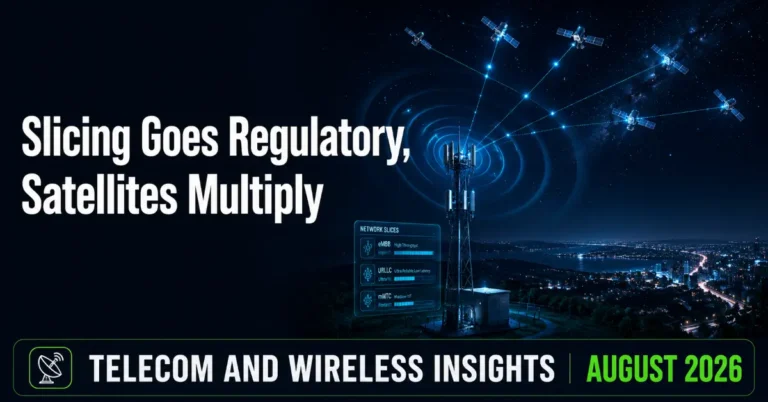
August 2026's roundup: EE launches the UK's first commercial 5G slicing service as India's regulator moves first to mandate per-slice tariffs and disclosed speeds, AI-RAN validation reaches SoftBank's live Japanese network, satellite operators from AST SpaceMobile to Elveo Mobile jockey for direct-to-device position, and Charter's completed Cox mega-merger reshapes the US cable map.
- Tech News & Insight
- September 1, 2026
- Mohamed Idrissi

Private 5G business cases are usually built with care: radios counted, spectrum priced, TCO compared against the Wi-Fi estate it replaces. What they rarely price is the cost of operating a mobile network, which the enterprise has just acquired along with the radios. This article sets out the five operational disciplines an enterprise inherits on day one, why managed-service SLAs thin out around year two, indicative five-year cost ranges for fully managed, hybrid and in-house models, and eight questions worth answering before signing.
- Tech News & Insight
- August 22, 2026
- Hema Kadia
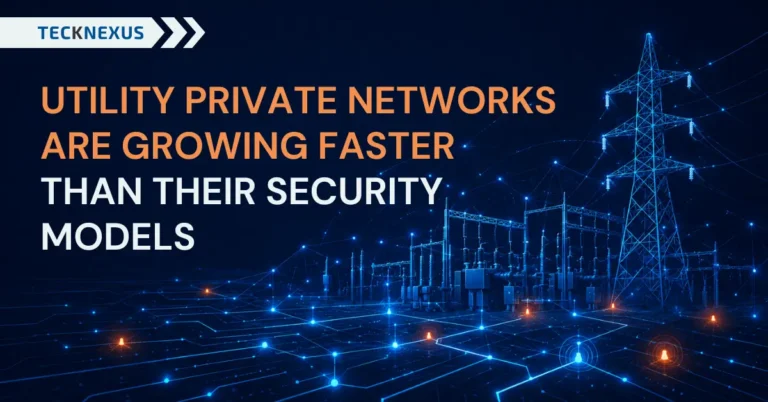
As utilities scale private LTE, 5G, and industrial IoT across operational technology environments, the attack surface is scaling with them. TeckNexus examines the security gap documented across the sector this August, the UK NCSC's identity-based access recommendations, and what a Tampa Electric private LTE deployment — combining Ericsson's connectivity, OneLayer's security layer, and Burns & McDonnell's integration work — shows about what a properly resourced approach actually looks like in practice.
- Tech News & Insight
- August 12, 2026
- Hema Kadia
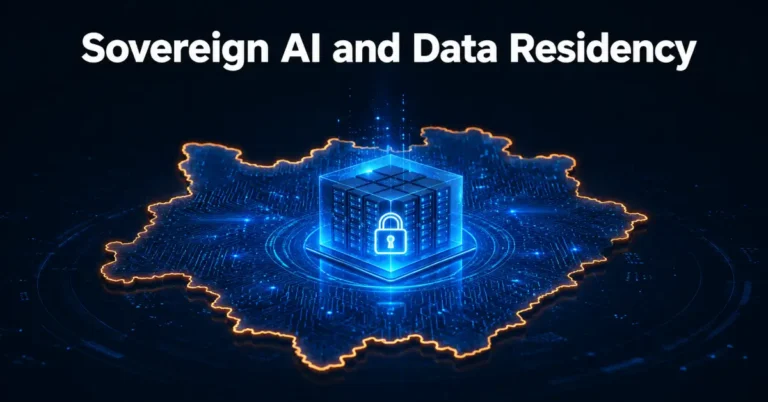
e& UAE's deployment with Core42 and SoftBank's SB Intuitions-based services show sovereign AI procurement bundling three decisions that used to be evaluated separately — and a widening set of security incidents shows why that bundling matters.
- Tech News & Insight
- June 22, 2026
- Hema Kadia
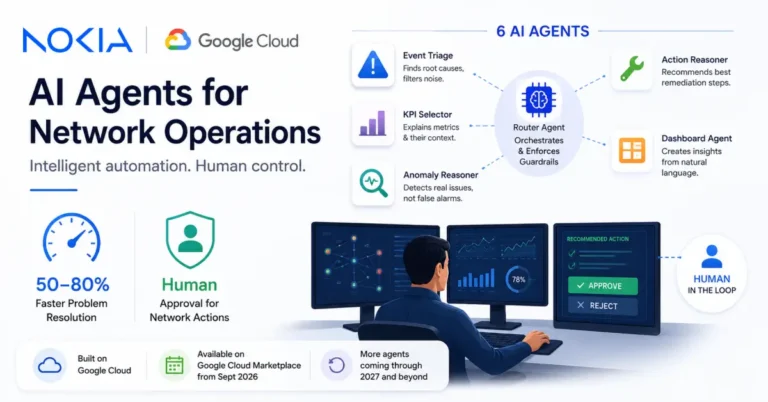
Nokia and Google Cloud have embedded six Gemini-powered AI agents into Nokia's Assurance Center, promising to cut network fault-resolution times by 50–80%. The 'glass box' design keeps human engineers in the approval loop - a deliberate choice Nokia argues is why this generation of automation will stick where earlier approaches stalled.
- Tech News & Insight
- March 19, 2026
- Hema Kadia
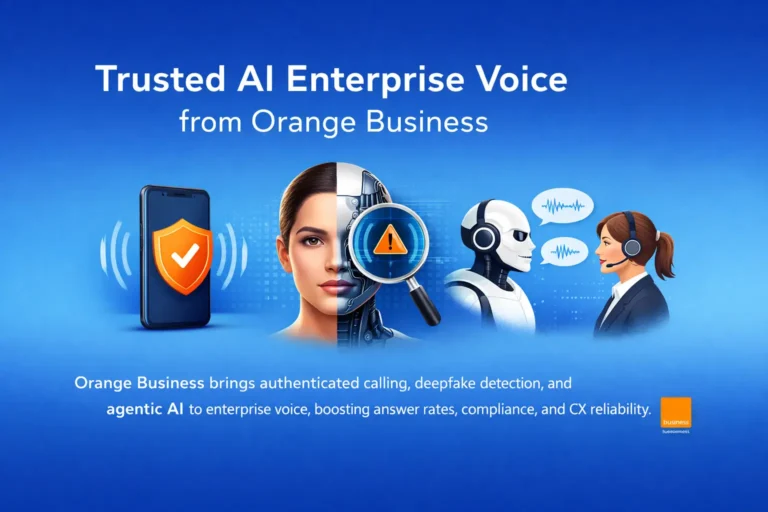
Orange Business is putting authenticated, AI-augmented voice back in the critical path of CX and employee workflows as enterprises confront fraud, fatigue, and falling answer rates. As digital touchpoints proliferate, the phone channel faces a crisis of confidence: spoofed identities, impersonation scams, and AI-generated content have eroded user trust and pushed customers to ignore legitimate calls. Despite surging chat and self-service volumes, voice remains the preferred medium for resolving complex or high-stakes problems, and the most-used channel for many service agents. The new capabilities combine authenticated caller identity, deepfake detection, generative AI in the contact center, and agentic telephony that can autonomously manage call flows.
- Tech News & Insight
- March 19, 2026
- Hema Kadia
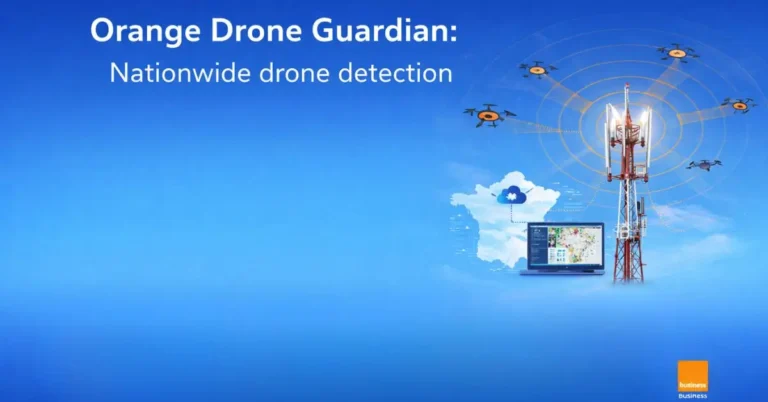
Orange Business has launched Orange Drone Guardian, a counter‑UAS service that turns telco infrastructure into a nationwide sensing fabric—arriving as drone activity, regulation, and critical-infrastructure risk converge. Orange is leveraging assets few others can: secure nationwide connectivity, cloud qualified to ANSSI’s SecNumCloud 3.2 standard, a domestic security operations capability, and a tower footprint via TOTEM’s 19,700 sites across France. The offer combines sensors, command‑and‑control software, secure cloud, and managed operations in a subscription bundle designed to scale and evolve. Delivered as a subscription, customers gain real‑time situational awareness without large upfront capex.
- Tech News & Insight
- February 25, 2026
- Hema Kadia
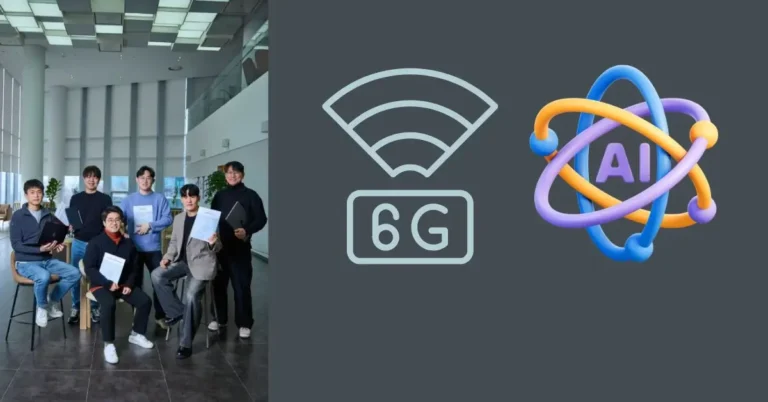
SK Telecom introduced ATHENA—an architecture grounded in AI-native operations, Zero Trust security, hyper-connectivity, openness, and cloud-native design—to guide mid- to long-term evolution across RAN, core, transport, and network data platforms. The operator positions “AI for network” and “network for AI” as dual tracks: the former embeds AI into decision loops for autonomous optimization, while the latter tunes the network fabric to serve AI workloads efficiently. SK Telecom will showcase related technologies at MWC Barcelona 2026, including AI agents for networks, AI-RAN for combined connectivity and compute, device-side AI for antenna tuning, and integrated sensing-and-communications.
- Tech News & Insight
- February 25, 2026
- Hema Kadia

Nokia and Amazon Web Services (AWS) are bringing agentic AI to 5G-Advanced network slicing, moving closed‑loop, intent-based services from PowerPoint to live pilots with du and Orange. The partners unveiled an agentic AI-powered slicing solution that fuses Nokia’s RAN-to-core slicing, AirScale radio, and MantaRay SMO with AWS’s Bedrock AI platform and EKS Hybrid Nodes to turn external context—events, traffic, maps, weather—and live network KPIs into real-time policy decisions. The result is adaptive, premium slices provisioned when and where they’re needed, without manual reconfiguration.
- Tech News & Insight
- February 23, 2026
- Hema Kadia
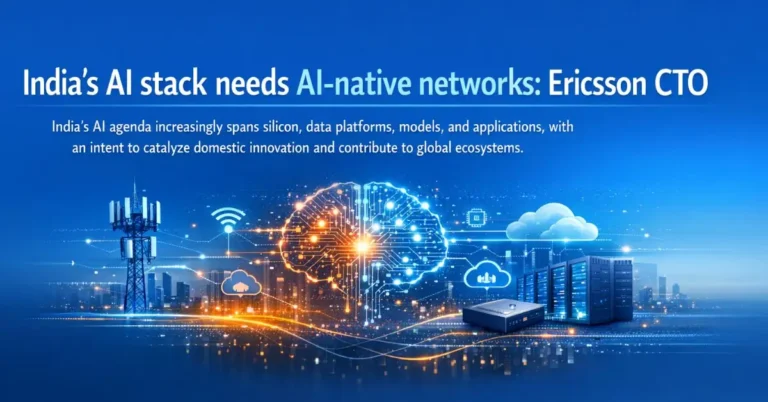
India’s AI agenda increasingly spans silicon, data platforms, models, and applications, with an intent to catalyze domestic innovation and contribute to global ecosystems. For telecom leaders, the message is clear: AI is not a bolt-on capability but a system-level transformation that touches RAN, core, transport, cloud, and the enterprise edge. The AI economy runs on connectivity—low-latency access to data, assured bandwidth, location-aware processing, and programmable control. The operators that can fuse connectivity, compute, and data into a cohesive platform will set the pace for India’s next wave of digital growth.
Frequently Asked Questions
What does ‘network assurance’ actually cover day to day?
Day to day, network assurance covers continuous monitoring of network performance across multiple layers, from radio signal quality and data throughput at the cell site level, to the health of core network functions running in virtualized infrastructure, to end-to-end service quality as experienced by actual customers. It includes testing new network configurations or software updates before they’re deployed broadly, to confirm they don’t degrade performance unexpectedly. It also covers ongoing validation that service-level agreements, the specific performance promises made to certain customers or business clients, are actually being met in practice. In modern networks, assurance teams increasingly rely on automated tools that continuously collect and analyze performance data, rather than depending purely on customer complaints to surface problems.
How has assurance changed with the move to virtualized, cloud-based 5G networks?
Older, hardware-based networks were comparatively straightforward to monitor because each network function typically ran on its own dedicated, purpose-built equipment with well-defined performance characteristics. Modern 5G networks, by contrast, run largely as software across shared, virtualized cloud infrastructure, often spanning equipment and software from multiple different vendors. A single performance problem, like degraded call quality in a specific area, could originate from an issue in the radio equipment, a virtualized core network function, the underlying cloud infrastructure, or the interaction between several of these components. Assurance tools have had to evolve accordingly, gaining the ability to trace problems across these virtualized, distributed, multi-vendor layers in real time.
What role does AI play in modern network assurance?
AI is shifting network assurance from a largely reactive discipline, responding to problems once they’re detected or reported, toward a more proactive one, predicting and addressing problems before they meaningfully affect customers. By continuously analyzing enormous volumes of network performance data, AI systems can identify subtle patterns or early warning signs of degrading performance that would be extremely difficult for human analysts to spot manually across a network generating millions of data points constantly. This predictive capability is particularly valuable for energy optimization, since AI-driven assurance systems are increasingly used to dynamically adjust radio power consumption based on real-time traffic, cutting energy costs without degrading the customer experience.
Why does network slicing make assurance more complicated?
Network slicing means a single physical network now hosts multiple independent virtual networks, each with its own distinct performance guarantee, such as a specific latency target for one slice supporting cloud gaming, and a different reliability target for another slice supporting a hospital’s connected medical equipment. Assurance teams therefore can’t simply monitor the network as one undifferentiated whole; they need visibility into each individual slice’s performance separately, to confirm the operator is actually delivering on the specific promise made for that slice. This adds meaningful complexity, multiplying the number of distinct performance commitments an assurance system needs to track and correctly attribute problems to.
What’s the difference between assurance and basic network monitoring?
Basic network monitoring generally refers to passively observing network status and performance metrics, essentially watching dashboards and alerts to know what’s currently happening across the network. Assurance is a broader discipline that includes monitoring as one component, but also encompasses testing, validation, and proactive quality management aimed specifically at guaranteeing the network meets defined performance commitments, not just observing whatever performance happens to occur. In practice, assurance often involves comparing real-world performance data against specific targets, triggering automated or manual remediation when performance falls short, and continuously refining the network based on what that comparison reveals.
How do operators measure whether they’re meeting service-level agreements (SLAs)?
Operators typically define specific, measurable metrics tied to each SLA, such as maximum acceptable latency, minimum guaranteed bandwidth, or a target percentage of uptime, and then use assurance tools to continuously collect real performance data against those exact metrics, often for a specific customer, service, or network slice rather than the network in aggregate. Modern assurance platforms generally provide ongoing, automated reporting against these targets rather than relying on periodic manual audits, allowing operators to catch SLA violations quickly and, in more advanced setups, automatically trigger corrective action before a violation becomes severe enough to require contractual penalties or customer compensation.
What happens when an assurance system detects a problem?
When an assurance system detects a problem, the response generally follows a few possible paths depending on severity and how advanced the operator’s systems are. In simpler or higher-severity cases, the system alerts a human network operations team, providing diagnostic context to speed up manual troubleshooting. In more advanced, automated setups, the system may trigger an automatic remediation action directly, such as rerouting traffic or restarting a malfunctioning virtualized function, without requiring human intervention at all, particularly for well-understood, low-risk issues. Increasingly, AI-driven assurance systems aim to act before the problem becomes customer-visible at all.
Why is assurance increasingly tied to customer experience, not just technical uptime?
Assurance has expanded beyond pure technical uptime metrics because customer satisfaction and business outcomes don’t always track perfectly with simple availability statistics; a network can be technically up while still delivering a poor experience due to slow speeds or subtle quality issues that don’t register as a full outage. Modern assurance increasingly incorporates customer experience metrics directly, sometimes inferred from actual usage patterns and application performance, to get a more accurate picture of what customers are actually experiencing. This matters commercially too, since for enterprise customers paying for guaranteed performance through network slicing, technical uptime alone isn’t a sufficient measure of delivered value.




Telco AI Agent Leadership

