

Partner Hubs

The next evolution of Ciena’s DCOM: OOB management for diverse data center needs
2027 Intelligence Programs

T-Mobile

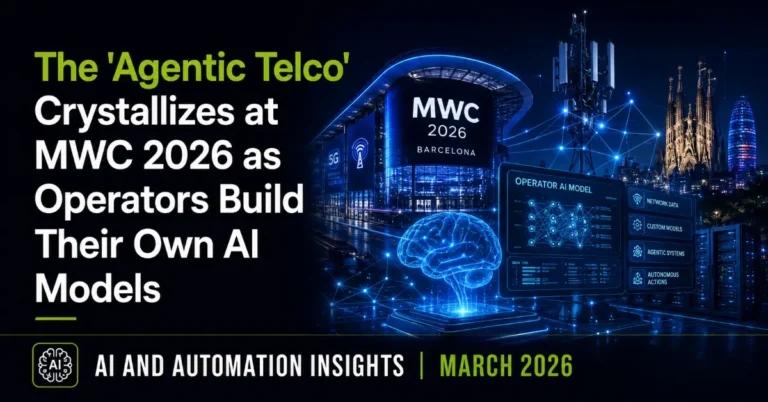
March 2026's roundup: GSMA, Google Cloud, Huawei, and AWS all converge on an "agentic telco" framing at MWC Barcelona, SoftBank and SK Telecom build proprietary telecom-specific AI models and infrastructure, and physical AI reaches airports, drones, and network edge sites — with AI-RAN and connectivity infrastructure covered separately in our companion Advanced Connectivity Insights, March 2026.
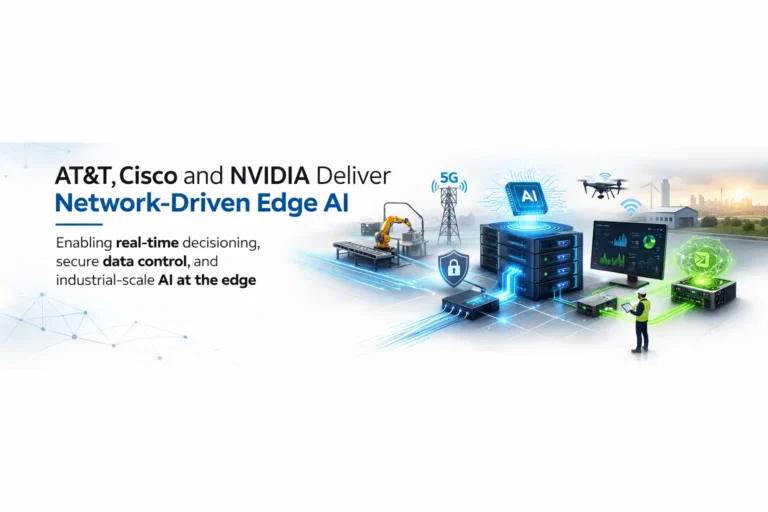
AT&T’s new collaboration with Cisco and NVIDIA signals a decisive shift from cloud-centric AI to network-driven edge intelligence for enterprise operations. Enterprises want real-time decisioning without shipping sensitive data to distant clouds, and operators need a scalable way to deliver it. By combining AT&T’s dedicated IoT core with Cisco’s mobility services platform and NVIDIA-powered AI infrastructure, the trio is packaging deterministic connectivity, near-device inference, and policy enforcement into a single, operator-grade platform. The promise: lower latency, tighter data control, and a path to production for AI at industrial scale.
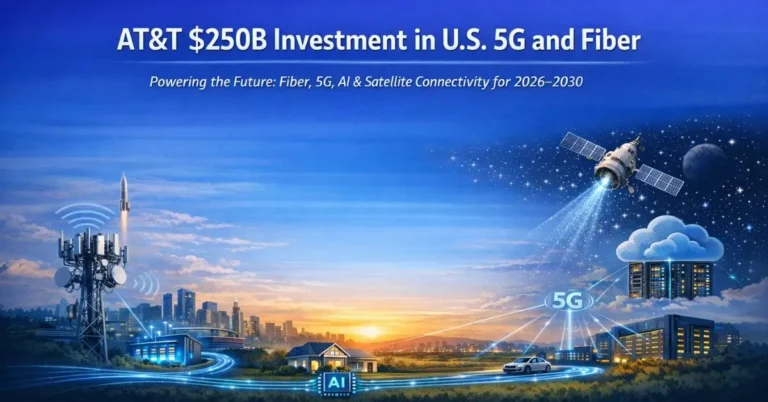
AT&T’s five-year, $250 billion U.S. network commitment sets the tone for the next phase of fiber, 5G, and satellite convergence as traffic, AI workloads, and resilience requirements climb sharply. The 2026–2030 window aligns with the industry’s transition into 5G-Advanced (3GPP Release 18/19), the scaling of edge AI, and increased cloud traffic between homes, enterprises, and hyperscalers. Data growth is no longer linear, and the cost of downtime is rising. Large, front-loaded builds in fiber and 5G Radio Access Network (RAN), paired with new satellite overlays, are how national carriers will chase coverage, performance, and reliability targets simultaneously.
T-Mobile is introducing a network-native AI translation service that activates during voice calls, signaling a new phase where AI runs inside the mobile network rather than on apps or devices. T-Mobile announced a beta of Live Translation, a voice-call feature that translates conversations in over 50 languages by activating an AI agent within its 5G Advanced network. The service is initiated by the T-Mobile subscriber using *87* during a call; only one caller needs to be on T-Mobile, and it also works while roaming on supported networks.
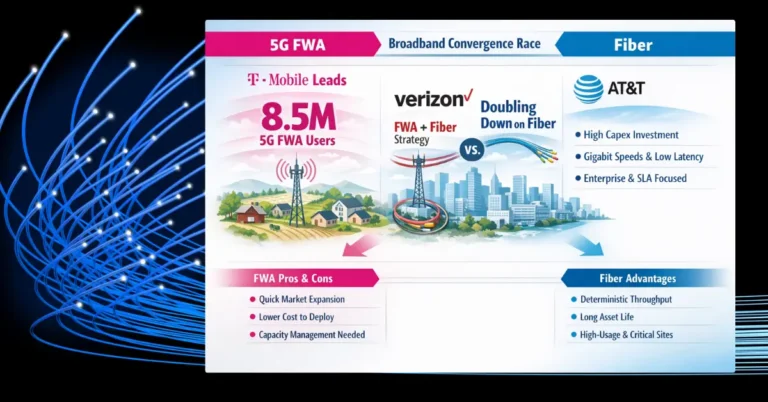
FWA is capex-light and fast to deploy, especially in mid-band-rich markets, which makes it ideal for quick share gains, addressable market expansion, and rural or underserved pockets. Its constraint is shared capacity: as mobile traffic grows, operators must manage prioritization, peak congestion, and plan mix to preserve experience. Fiber demands higher upfront capital but delivers deterministic throughput, low latency, and long asset life that underpins premium ARPU, enterprise SLAs, and wholesale opportunities. Expect operators to steer FWA toward segments with favorable traffic profiles and use fiber for high-usage clusters and enterprise-critical sites.
2027 Intelligence Programs
Scroll to Top
TECKNEXUS MWC BARCELONA 2027
MWC27 EXECUTIVE INSIGHTS PROGRAM

Industry voices. Ideas that move.

SIX MAGAZINES. SIX BIG CONVERSATIONS.
EDITION 01 Networks as Platforms
EDITION 02 AI in the Real World
EDITION 03 The Intelligent Enterprise
EDITION 04 The Future of AI
EDITION 05 Securing the Digital Future
EDITION 06 The Next Frontier

Ways to Participate

Contributed Article Complimentary for eligible MWC sponsors
Sponsored Article & Executive Q&A
Executive Video Interview