NCTA

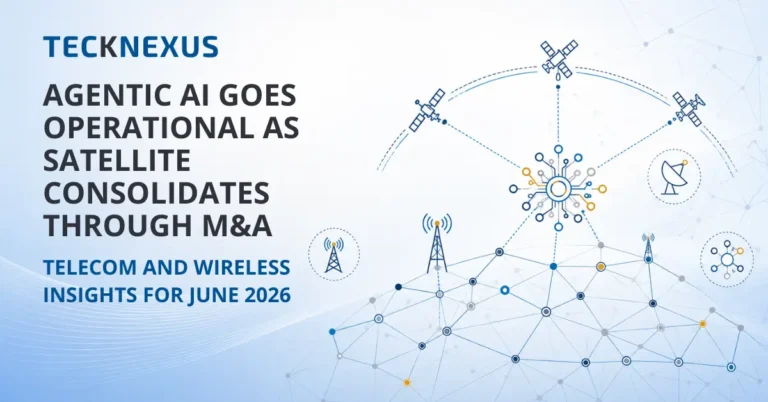
June 2026's roundup: agentic AI moves from pilot to operational core across telecom networks, satellite consolidates through Rocket Lab's $8B Iridium acquisition and SpaceX's $75B IPO, AI-RAN's GPU divide matures into shipping products, US spectrum auctions return after a four-year hiatus, and telecom M&A accelerates globally.
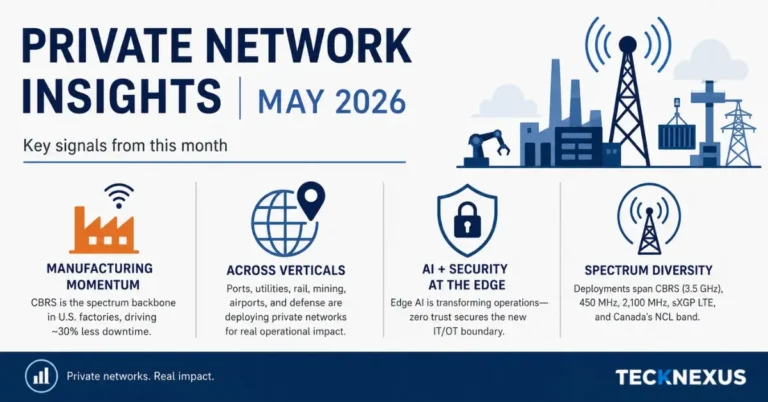
Private 5G became an industrial default in May 2026, with CBRS now the U.S. factory spectrum of record. This month's roundup spans deployments across manufacturing, ports, utilities, rail and defence — plus a deep utilities thread on grid AI and security — and what the shift means for buyers scoping spectrum, architecture and security.
In 2024, the U.S. cable sector generated $568.7 billion in total economic output and supported 1.3 million jobs across the country. This footprint spans broadband networks, video programming, construction, manufacturing, and a broad vendor ecosystem. It underscores why cable remains a central pillar of America’s connectivity and media economy even as consumption shifts to IP and streaming. Cable broadband providers—led by Comcast, Charter Communications (Spectrum), Cox, Altice USA (Optimum), Mediacom, Cable One (Sparklight), and WOW!—accounted for $366 billion in total economic impact and nearly 888,000 jobs.
With the FCC under pressure to deliver 300 MHz of auctionable spectrum, a group of Senate Republicans is urging the agency to preserve the shared 3.5 GHz CBRS band and the unlicensed 6 GHz band that underpin private 5G and next‑gen Wi‑Fi. Ten Senate Republicans, including five members of the Senate Commerce Committee, sent a letter urging the FCC to ensure existing operations in the 6 GHz and Citizens Broadband Radio Service (CBRS) bands continue “without disruption.” NTIA Administrator Arielle Roth called for preserving 6 GHz for Wi‑Fi, a stance applauded by NCTA as a recognition that unlicensed spectrum is an economic engine.
SpaceX wants the FCC to count Starlink as “advanced” broadband in its annual Section 706 report, a move that could reshape funding, benchmarks, and competition in rural internet buildouts. In 2024, the agency set a 100/20 Mbps benchmark, added affordability and adoption metrics, and floated a long-term goal of 1 Gbps/500 Mbps. SpaceX argues that excluding LEO distorts the national picture. The company says Starlink serves more than 2 million U.S. subscribers and posts median peak-hour speeds near 200 Mbps today. Rural electric co-ops and community telcos counter that LEO networks remain capacity constrained and variable.
Broadband leaders and utility companies, including CTA, NCTA, and PG&E, have extended the Voluntary Agreement for Small Network Equipment through 2028. The initiative has already improved home internet device energy efficiency by 89% since 2015, and new targets aim for an additional 10% reduction by 2026. With compliance from major ISPs and device manufacturers, this industry-led effort is making home broadband more sustainable while enhancing performance.

Partner Hubs

Download content, access intelligence tools, and hear from executives.

Partner Events

  • M360 ASEAN
  • FutureNet Asia 2026
  • Network X Vienna 2026
Scroll to Top