IoT

The Internet of Things connects sensors, machines, and devices to networks so they can report data and be controlled remotely, underpinning applications from smart metering and asset tracking to industrial automation. Cellular IoT spans technologies from low-power NB-IoT and LTE-M to higher-bandwidth 5G, with new reduced-capability (RedCap) devices filling the gap between them. As deployments scale, the focus has shifted from connectivity alone to managing fleets of devices, securing them, and turning their data into value. For operators, IoT is a connectivity-plus-platform opportunity; for enterprises, it’s the foundation of connected operations. This channel covers IoT across cellular technologies, platforms, and industry verticals — including device classes, security, and data — with analysis of where connected-device deployments deliver measurable outcomes rather than stalling at the pilot stage.

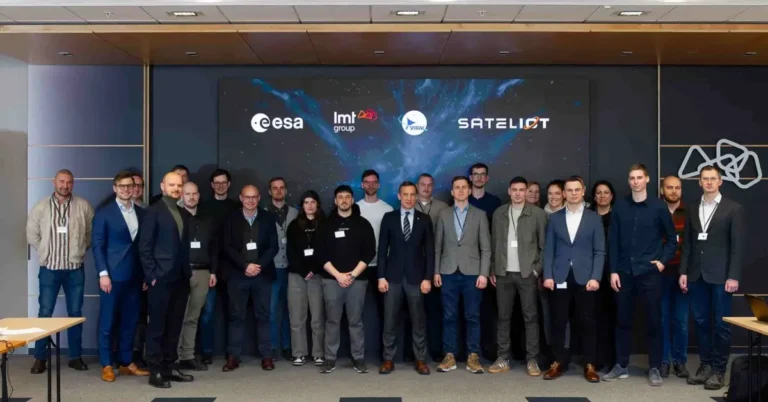
Latvian tech company LMT Group will develop a dual-mode satellite IoT module in the next 12 months in partnership with the European Space Agency. This will enable devices to remain connected almost anywhere, addressing the "dead zones" – oceans, deep forests, and rural farmland – of global connectivity. The module will allow IoT devices to autonomously switch between terrestrial cellular and satellite networks (NTNs) without data loss or user intervention.
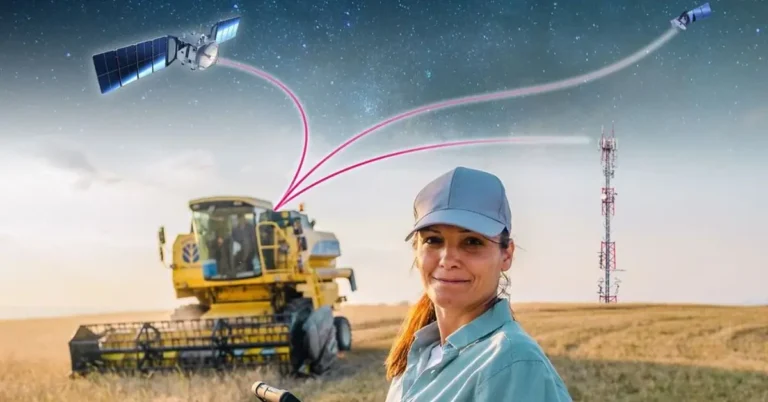
Deutsche Telekom’s launch of seamless IoT roaming across terrestrial, GEO, and LEO networks signals a practical turning point for standards‑based satellite IoT at global scale. Multi‑orbit roaming blends the strengths of geostationary (always‑on footprint, predictable links) with low‑earth orbit (lower latency, better high‑latitude reach) and terrestrial cellular to keep devices online where traditional networks fall short. The service has been validated on Nordic Semiconductor’s nRF9151—billed as the first 3GPP‑compliant cellular IoT module to support terrestrial NB‑IoT/LTE‑M and NB‑NTN over both GEO and LEO—which matters for total cost of ownership and speed to scale.
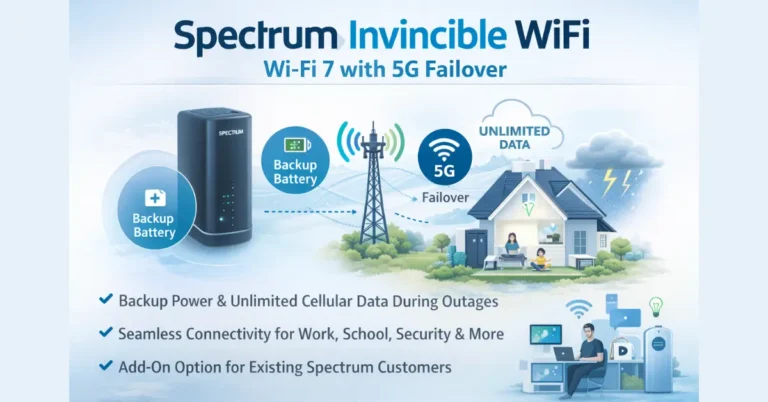
Charter introduced Spectrum Invincible WiFi, a package built around its Advanced Wi‑Fi 7 router paired with an integrated backup battery and an embedded 5G cellular pathway. The system automatically rides through local power interruptions for up to eight hours and, if the wired broadband link drops, switches to cellular with unlimited data until the primary connection returns. The offer targets households running multigig internet and dozens of smart devices, and is positioned as a simple add-on for existing Spectrum customers. Home connectivity has become mission‑critical for work, school, security and telehealth while weather-related disruptions and grid instability are rising.
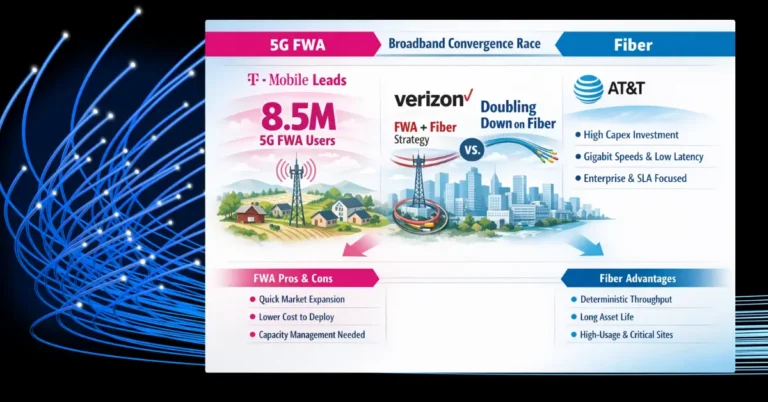
FWA is capex-light and fast to deploy, especially in mid-band-rich markets, which makes it ideal for quick share gains, addressable market expansion, and rural or underserved pockets. Its constraint is shared capacity: as mobile traffic grows, operators must manage prioritization, peak congestion, and plan mix to preserve experience. Fiber demands higher upfront capital but delivers deterministic throughput, low latency, and long asset life that underpins premium ARPU, enterprise SLAs, and wholesale opportunities. Expect operators to steer FWA toward segments with favorable traffic profiles and use fiber for high-usage clusters and enterprise-critical sites.
An AI‑fueled land grab for advanced memory is squeezing supply for handsets, undercutting Qualcomm’s near‑term outlook even as end‑demand for premium Android devices improves. Memory suppliers are prioritizing high‑bandwidth memory (HBM) and DDR5 for AI accelerators and data center servers, diverting wafer capacity and capex away from mobile‑grade LPDDR5/5X and UFS storage. The result is a classic allocation cycle: supply chases the highest‑margin demand (HBM and enterprise SSDs), while downstream categories like smartphones and some edge devices face tighter availability and rising component costs. For Qualcomm, whose Snapdragon platforms anchor premium Android devices, the constraint limits upside volume and mix in the near term.
Colombia has cleared a milestone consolidation: Tigo has taken operational control of Movistar, creating a second national-scale incumbent to challenge Claro. The Superintendence of Industry and Commerce (SIC) approved the integration through Resolution 94169 of 2025, capping months of scrutiny and pushback from rivals and ISPs. The merger compresses Colombia’s competitive field at a time when 5G rollouts, fiber densification, and cloud-native cores demand scale. It creates a stronger counterweight to Claro, but also raises real concerns about a two-horse race and the downstream effects on MVNOs, ISPs, and enterprise buyers.
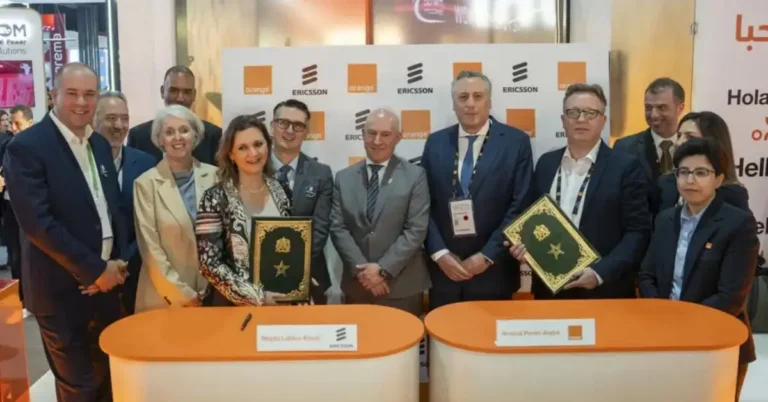
A new partnership between Telefónica Tech and Fermax brings managed 4G IoT connectivity to video door entry systems across Spain, France, and Portugal, turning access control into a connected service. Fermax, a long-standing leader in video door entry and access control, has selected Telefónica Tech to connect its new generation of panels via mobile networks. Telefónica Tech is delivering managed IoT connectivity through its Kite platform, providing centralized visibility and real-time control of devices equipped with 4G modules and non-removable SIM-IoT cards.
Boingo Wireless is integrating Globalstar’s XCOM RAN to accelerate private 5G across airports, stadiums, hospitals, convention centers, transit hubs, and military bases. Globalstar said Boingo will add XCOM RAN, a software-defined private 5G platform built around the Supercell architecture, to its private network portfolio. A highlighted approach is overlaying XCOM RAN on existing distributed antenna system (DAS) infrastructure to preserve DAS coverage advantages while boosting capacity and performance. Enterprises are moving beyond pilot projects to operational private 5G in high-traffic, RF-challenged environments. This aligns with rising demand for low-latency, secure connectivity for IoT, video, automation, and mission-critical operations.
The merger creates a $1.25 trillion private giant that fuses launch, satellites, and AI, but the strategic logic goes beyond orbiting data centers. SpaceX brings rockets, Starship scale, and the world’s largest NGSO broadband network via Starlink. xAI brings models, AI R&D, and a brand in the hottest capital market category. Together, they present a single story to investors: own the stack from compute to constellation to connectivity, on and off Earth. Consolidation gives Musk freedom to reallocate cash flows and simplifies the roadshow pitch.
ABB has unveiled Automation Extended, an evolution of its distributed control systems designed to let plants add digital capabilities without disrupting mission-critical operations. The program extends ABB’s established DCS portfolio—Ability System 800xA, Symphony Plus, and Freelance—by introducing a framework to layer analytics, AI, and IoT capabilities on top of existing control assets. The core promise is modernization without downtime: operators can keep trusted control systems running while progressively adopting new functionality. Security and interoperability are central themes, with ABB positioning an open, modular ecosystem that scales across industrial domains and preserves prior investments.
CEO Börje Ekholm indicated the company will keep trimming headcount after cutting roughly 5,000 positions over the last year. In Sweden, Ericsson has notified authorities and begun union talks that could affect about 1,600 roles, part of a multi‑year restructuring program. The move follows a 2023 plan to remove around 8,500 jobs worldwide—about 8% of its workforce—with further reductions last year in markets such as Spain and Canada. The rationale remains consistent: reset the cost base, protect profitability, and keep investment firepower for strategic bets amid a slower operator capex cycle.
BlueBird 7 is slated to lift off in late February from Launch Complex 36 at Cape Canaveral Space Force Station on the New Glenn-3 mission. It is AST SpaceMobile’s first payload on New Glenn and the second satellite in its next-generation “Block 2” campaign, following BlueBird 6. BlueBird 7 mirrors BlueBird 6 and carries a deployable array of about 2,400 square feet—the company positions it as the largest commercial communications aperture in low Earth orbit. The design, backed by thousands of patent and patent-pending claims, is engineered to deliver peak downlink rates up to 120 Mbps directly to standard, unmodified devices for voice, data, and video.

Frequently Asked Questions

What’s the difference between regular IoT and ‘massive IoT’?
Regular IoT typically refers to a moderate number of connected devices with meaningful data needs, like security cameras streaming video, smart home hubs, or connected vehicles transmitting diagnostic and location data continuously. Massive IoT refers to a fundamentally different scale: enormous numbers, potentially millions, of simple, low-power, low-data sensors, like utility meters, environmental monitors, or asset trackers, that each transmit only small amounts of data infrequently but need to remain connected reliably and cheaply across very large device populations. The distinction matters because massive IoT requires network technology specifically optimized for extremely low power consumption and the ability to support enormous device density per cell, priorities that differ from the higher bandwidth and lower latency priorities of more data-intensive regular IoT applications.
Why does 5G matter for IoT specifically?
5G matters for IoT in several specific ways beyond simply being a faster network. It’s designed to support a far greater density of connected devices per square kilometer than 4G, which matters enormously for massive IoT deployments involving huge numbers of sensors in a concentrated area. It also offers specialized operating modes tailored to different IoT needs: extremely low-power modes for simple sensors that need to run for years on a single battery, and ultra-reliable, low-latency modes for mission-critical applications like industrial robotics or autonomous systems where a delayed connection could cause real operational problems. This flexibility, supporting both massive numbers of simple devices and demanding, latency-sensitive applications on the same network, is a meaningful architectural advance over earlier cellular generations.
What are the biggest barriers to wider IoT adoption?
Several recurring barriers continue to limit how quickly IoT adoption scales. Device and connectivity costs, while falling steadily, still need to make economic sense across potentially millions of deployed units for many proposed use cases, and even small per-device costs add up quickly at that scale. Security concerns are significant, since managing the security of huge numbers of distributed, often physically unattended endpoints is meaningfully harder than securing a smaller number of centrally managed devices. Fragmented standards across different IoT use cases can complicate interoperability between devices and platforms from different manufacturers. Integrating the resulting flood of IoT data into existing business systems and deriving useful insight from it remains a genuine organizational challenge even after connectivity itself is solved.
How do cellular IoT connections compare to alternatives like Wi-Fi or LoRaWAN?
Cellular IoT, using carrier networks like 4G, 5G, NB-IoT, or LTE-M, offers wide-area mobility and carrier-grade reliability without requiring an organization to build its own local wireless infrastructure, making it well suited for devices that move across large areas or are deployed in remote locations without existing local coverage. Wi-Fi can be cheaper for localized deployments within a single building where infrastructure already exists, but doesn’t provide the same wide-area mobility without significant additional infrastructure. LoRaWAN and similar low-power wide-area technologies offer very long battery life and decent range at low cost, attractive for simple, infrequent-data sensors, but typically can’t support the data rates or mobility that cellular IoT can, and often require organizations to deploy their own gateway infrastructure.
What industries are the biggest users of IoT technology today?
Manufacturing has been one of the most active adopters of industrial IoT, using sensors throughout production lines for predictive maintenance, quality control, and real-time process monitoring. Logistics and supply chain companies rely heavily on IoT for asset tracking, monitoring shipment location and condition, like temperature for perishable goods, throughout transit. Agriculture uses IoT sensors to monitor soil conditions, irrigation needs, and livestock health across large rural areas where cellular IoT’s wide coverage is particularly valuable. Utilities use IoT extensively for smart metering and grid monitoring. Healthcare is an increasingly significant adopter too, using connected medical devices and wearables for remote patient monitoring, an application where reliability and security carry particularly high stakes.
How is AI changing what IoT devices and networks can do?
AI is increasingly applied directly to the enormous volumes of data IoT devices generate, since manually analyzing data from potentially millions of sensors isn’t practically possible without automated analysis. AI models are used to detect anomalies in sensor data that might indicate equipment about to fail, to optimize complex systems like energy grids or supply chains based on real-time data from many distributed sensors, and increasingly, to run directly on IoT devices themselves through on-device or edge AI, allowing analysis and decision-making to happen locally rather than requiring every piece of raw data to be transmitted back to a central system. This local processing is particularly valuable where bandwidth is limited or sending all raw data back centrally would be impractical given the volume involved.
What is ‘NB-IoT’ and ‘LTE-M,’ and how do they differ from regular cellular connections?
NB-IoT, short for Narrowband IoT, and LTE-M, short for LTE Machine-Type Communication, are specialized cellular technologies designed specifically for IoT use cases rather than general smartphone-style connectivity. They prioritize extremely low power consumption, allowing devices to run for years on a single battery, and excellent coverage, including reaching devices in challenging locations like deep indoors or underground, over the higher data speeds standard cellular connections prioritize. The two differ in their tradeoffs: NB-IoT generally supports even lower power consumption and better extreme-condition coverage, suited for simple, infrequent-data sensors, while LTE-M supports somewhat higher data rates and mobility, making it better suited for applications like asset tracking that need to maintain a connection while moving.
What security risks are specific to IoT devices, and why are they considered higher risk?
IoT devices are often considered higher security risk for several specific reasons. Many are deployed in huge numbers across physically unattended or hard-to-access locations, making it impractical to manually monitor or service the security of each individual unit. Cost pressures in massive IoT deployments can lead manufacturers to cut corners on security to keep per-unit costs low, sometimes resulting in weak default passwords, infrequent software updates, or limited encryption. Because IoT devices are often deployed for many years without replacement, vulnerabilities discovered after deployment can remain unpatched for extended periods if devices lack reliable update mechanisms. The sheer scale of many deployments also means a single vulnerability could potentially compromise an unusually large number of devices simultaneously.


Your Brand. Our Intelligence Tools.

Capture leads at the point of evaluation. Talk to Us →

Sponsored by Palo Alto Networks
⚡ Utilities ⏱ 8 min ✓ Free
This tool is built and hosted by TeckNexus.
Launch Tool →
Whitepaper
This whitepaper explains how utilities can use secure AI-enabled private mobile networks to modernize operations, support distributed intelligence, improve resilience, and strengthen cybersecurity across critical infrastructure. It covers AI applications, private network advantages, zero trust principles, multilayered security architecture, and governance considerations for AI-ready utility environments....
Whitepaper
Non-terrestrial networks are rapidly evolving from experimental satellite systems into an increasingly important part of the global 5G connectivity landscape. This eBook, developed by Radisys in collaboration with TeckNexus, explores how 3GPP standardization, satellite architecture innovation, and software-driven network design are reshaping NTN deployment models. It examines the transition from...
Whitepaper
Private cellular networks are transforming industrial operations, but securing private 5G, LTE, and CBRS infrastructure requires more than legacy IT/OT tools. This whitepaper by TeckNexus and sponsored by OneLayer outlines a 4-pillar framework to protect critical systems, offering clear guidance for evaluating security vendors, deploying zero trust, and integrating IT,...
Scroll to Top