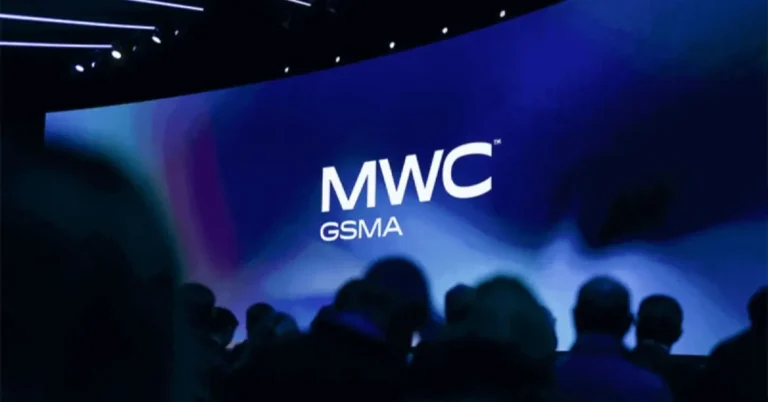
In a world defined by geopolitical fragmentation, AI acceleration, and structural shifts in digital power, the opening keynote at MWC Barcelona 2026 delivered a strategic reset for the telecom industry. This was not a product showcase. It was a directional statement. Leaders from the GSMA and major global operators outlined three defining priorities:
- Complete the 5G Standalone journey
- Build telco-grade AI
- Restore trust at the internet scale
Keynote Speakers
- Vivek Badrinath – Director General, GSMA
- Gopal Vittal – Executive Vice Chairman, Bharti Airtel
- Christel Heydemann – CEO, Orange
- Guiqing Liu – President & COO, China Telecom
- Margherita Della Valle – CEO, Vodafone
- Tim Peake – Astronaut, European Space Agency
- John Stankey – Chairman & CEO, AT&T
Inside the Opening Keynote: A Strategic Reset for Telecom
The message was direct: connectivity alone is no longer enough. The future belongs to intelligent, secure, AI-native networks built on global standards.
Vivek Badrinath: The Three Mountains Defining Telecom’s Next Decade
“Your Majesty, the King of Spain. Your Excellencies. Ladies and gentlemen — it is a great honor to welcome you to MWC Barcelona 2026. This is my first as Director General of the GSMA.” Badrinath began with reflection.
Next week marks 150 years since Alexander Graham Bell made the first telephone call. One hundred and fifteen years later, the first GSM call was made in Europe — built on a global standard that unlocked global scale. This year marks 20 years of MWC in Barcelona.
“When MWC came to Barcelona, 3G had just launched. The Motorola Razr was the phone of the moment.”
Today:
- Nearly 9 billion mobile connections
- 5.8 billion people connected
- $7.6 trillion contributed to global GDP
- Expected to exceed $11 trillion by 2030
“We have become the nervous system of the digital world.” But anniversaries are not only about celebration. They are about direction. He framed the future around three mountains the industry must climb.
Mountain One: Completing the 5G Standalone Journey
“5G is the modernization of society itself.”
In markets where 5G Standalone adoption exceeds 10%, operators are seeing double the revenue growth of those without it. 5G Standalone could add $187 billion in additional mobile revenue by 2030. The examples are operational:
- Ports running on 5G Advanced
- Smart factories
- Digitally enabled hospitals
- Industrial automation at scale
“These are not proofs of concept. These are commercial deployments.” However, Europe risks falling behind due to lack of scale and investment fragmentation. “If we want to realize the full promise of 5G and lay a healthy foundation for 6G, we must complete the 5G Standalone journey.”
Mountain Two: Rising to the AI Challenge
“AI is transforming the world — and the way we relate to it.”
Telcos are not peripheral players in AI. They are foundational. “Our infrastructure allows AI to run at the edge, in real time, for billions.”
Operators are investing heavily:
- Deutsche Telekom’s €1 billion AI factory
- China Mobile doubling AI investments
- AT&T moving aggressively into agentic AI
Yet current AI models are not designed for telecom environments. “We need telco-grade AI.” The GSMA announced OpenTelco AI, an initiative to:
- Develop open telco-specific models
- Create shared datasets
- Expand compute access
- Benchmark AI capability progress
But Badrinath also highlighted a structural inequity. “There are 7,000 languages in the world. AI is trained in only a handful.” This creates an AI language gap layered on top of existing coverage and usage gaps.
Today:
- 300 million remain outside coverage
- 3.1 billion live within coverage but do not use mobile internet
- 3.4 billion remain effectively disconnected
“If AI is not trained in the language people speak, they are excluded from the opportunities it creates.”
MWC 2026 marked the launch of the first open Swahili reasoning model, alongside commitments to support African-language AI models. “The next AI breakthrough could come from anywhere — but only if everyone is connected.”
Mountain Three: Safety and Trust
The tone shifted. “Today, criminals are winning the arms race.” Scams, spoofing, phishing, and cybercrime are escalating. Digital fraud costs the global economy roughly $480 billion annually.
Through GSMA Open Gateway:
- Scam detection rates have improved by up to 40%
- APIs are being rolled out globally
But Badrinath was clear: “This is not a challenge that will be solved by one industry alone.”
Trust requires coordination across:
- Telecom operators
- Financial institutions
- Social platforms
- Governments
- Security firms
Sunil Bharti Mittal: Trust, Fraud, and the New Security Mandate
Mittal reframed the keynote around a single word: trust.
“My generation connected the world. But connectivity is taken for granted — until it disappears.”
He described a country that shut down its network for two days. “The chaos was beyond imagination. Trade stopped. Health services halted. Government services collapsed.”
Connectivity is essential infrastructure. But trust is now the defining challenge. A middle-class individual lost his entire life savings by clicking a single link.
“$480 billion is lost every year through digital fraud — that is $15,000 every second.”
Airtel’s response:
- 71 billion malicious calls blocked
- 2.9 billion fraudulent SMS blocked
- Over 1 billion malicious links neutralized
- 69% reduction in fraud versus peers
“It is my target that anyone who becomes a victim of fraud on our network should ultimately be compensated.” Mittal outlined three solutions:
1. Collaboration
Industry-wide cooperation similar to GSM standards and roaming frameworks.
2. Institutional Framework
A global cyber equivalent of Interpol.
3. Regulatory Alignment
OTT platforms must operate within harmonized trust frameworks.
“You cannot regulate only one part of the playing field and leave the rest open.”
Christel Heydemann: AI, Value Capture, and Europe’s Strategic Position
“We are at the dawn of a new era where artificial intelligence becomes the engine of our economies.”
Agentic AI, autonomous systems, robotics — acceleration is exponential. But: “Technology is accelerating. Trust is not.”
Deepfakes are easy. AI-generated content now exceeds human-generated content. Data breaches are daily. Telecom operators carry the majority of global data traffic and power essential systems — yet capture less than 10% of ICT value in a $30 trillion sector. “This imbalance is not just financial. It is strategic.”
AI demands:
- More resilient networks
- Massive compute
- Energy investment
- Data governance
Operators must move from background utilities to strategic infrastructure anchors.
Guiqing Liu: Scale, Industrial AI, and China’s Infrastructure Momentum
Guiqing Liu’s perspective reinforced a core theme emerging across MWC 2026: scale remains a decisive competitive advantage. China Telecom’s approach centers on integrating 5G, cloud, and AI as a unified infrastructure platform rather than as parallel tracks. The emphasis was not simply on nationwide coverage, but on industrial-grade deployment — smart manufacturing, logistics automation, energy systems, and public-sector digitization.
The message was clear: 5G Standalone is not a marketing milestone. It is an industrial control layer. China’s rapid deployment of 5G Advanced capabilities, edge compute integration, and AI-driven network optimization demonstrates how vertically coordinated infrastructure strategy can accelerate commercial readiness. Liu underscored that the future of telecom lies in combining:
- Network intelligence
- Cloud-native architectures
- AI-enabled service platforms
at the national scale. The implication for global operators is direct: execution velocity matters as much as technology vision.
Margherita Della Valle: Europe’s Investment Challenge and the Case for Consolidation
Margherita Della Valle brought a sharp European perspective to the stage. Her remarks centered on a structural imbalance: Europe’s telecom sector remains highly fragmented, capital-intensive, and heavily regulated — yet expected to deliver world-class digital infrastructure.
She emphasized that Europe cannot afford to fall behind in 5G Standalone and future 6G development. Without policy modernization — including merger flexibility and investment incentives — the region risks long-term competitive erosion.
The central argument was pragmatic:
- Telecom requires massive, sustained capital deployment.
- Regulatory frameworks must align with infrastructure economics.
- Scale is essential to fund innovation.
Her intervention reinforced a growing theme across MWC 2026: the debate is no longer just technological — it is structural and policy-driven. Europe’s digital competitiveness will depend on its ability to reconcile competition policy with infrastructure investment needs.
Tim Peake: Resilience, Exploration, and the Perspective from Orbit
Tim Peake added a unique dimension to the keynote — the view from space. Drawing from his experience as a European Space Agency astronaut, Peake framed connectivity not simply as commercial infrastructure but as critical human infrastructure.
From orbit, Earth’s communication networks represent the connective tissue of modern civilization. Satellites enable disaster response, navigation, climate monitoring, and global coordination. Peake emphasized resilience.
As terrestrial networks face climate stress, geopolitical instability, and cyber threats, space-based infrastructure becomes increasingly vital. Connectivity from orbit provides redundancy, continuity, and planetary-scale coordination.
His remarks subtly bridged Keynote 1 and Keynote 2 themes — connecting terrestrial 5G development with emerging satellite-to-mobile ecosystems.
Connectivity, viewed from space, is no longer optional. It is civilizational.
John Stankey: The AI-Native Operator Model
John Stankey’s contribution brought the discussion back to operator transformation. AT&T’s positioning reflects a broader strategic shift underway among leading U.S. carriers: moving from connectivity provider to AI-enabled infrastructure platform.
Stankey emphasized three areas:
- AI-driven network automation
- Enterprise digital transformation
- Operational simplification through software integration
Artificial intelligence is not merely a service overlay. It is being embedded into core network management, predictive maintenance, customer experience optimization, and fraud prevention. AT&T’s approach signals that AI-native operations may become a defining competitive differentiator. In an environment where capital intensity remains high and revenue growth modest, efficiency gains from AI integration may determine margin sustainability.
Stankey’s message aligned with the broader keynote narrative: operators must evolve structurally — not incrementally.
TeckNexus Strategic View: Telecom’s Strategic Inflection Moment
MWC 2026 did not introduce a new technology cycle. It exposed a strategic inflection point. For more than a decade, telecom’s mandate centered on expansion: extend coverage, acquire spectrum, densify networks, and manage capital intensity. That phase is largely complete in developed markets. The next chapter is not about expansion — it is about repositioning.

Across the keynote stage — from GSMA to AT&T, from China Telecom to Vodafone, from Airtel to Orange — one conclusion emerged: the industry is entering a structural redefinition. Three structural forces are converging simultaneously: monetization pressure, AI acceleration, and systemic trust erosion — all unfolding within a rising sovereignty–scale tension.
I. The 5G Monetization Imperative: From Coverage to Control
The industry has largely won the coverage race. What remains unresolved is economic differentiation. The repeated emphasis on 5G Standalone during the keynote was not technical optimism — it was economic urgency. Standalone architecture enables network slicing, deterministic latency, programmable APIs, and enterprise-grade performance guarantees. Without it, operators remain constrained to enhanced mobile broadband economics.
China Telecom’s execution velocity demonstrated what national-scale industrial deployment looks like. AT&T’s positioning showed how AI-native integration depends on Standalone maturity. Vodafone’s call for consolidation highlighted the capital realities required to sustain it.
Markets advancing Standalone are not simply upgrading networks; they are building programmable control layers. The strategic risk is clear: operators that delay full Standalone transition may enter the 6G era without monetizable orchestration capability. In that scenario, infrastructure becomes commoditized transport while value migrates upward to hyperscalers and digital platforms.
The next growth cycle will not be driven by gigabytes. It will be driven by programmable authority.
II. AI as the Operating Layer: Infrastructure Meets Intelligence
Artificial intelligence is no longer an overlay. It is becoming the operating logic of networks. Across the keynote, AI was framed not as a feature, but as embedded infrastructure:
- AT&T positioning AI inside core operations
- China Telecom is integrating AI into industrial platforms
- Orange highlighting AI’s macroeconomic implications
- GSMA launching OpenTelco AI
Agentic AI, predictive automation, fraud detection engines, and real-time orchestration are redefining network architecture itself. However, this creates a strategic paradox.
AI increases the centrality of telecom infrastructure while concentrating economic leverage within hyperscale compute ecosystems. OpenTelco AI reflects a defensive but necessary recognition: if operators do not anchor telco-grade AI within their own domain — through shared models, datasets, and capability benchmarks — they risk becoming passive carriers of someone else’s intelligence layer.
The core strategic question is no longer whether to adopt AI. It is whether operators control, coordinate, or merely transport it. Those that fail to define that position risk structural margin compression.
III. Trust as Infrastructure Strategy, Not Compliance Overhead
Perhaps the most consequential shift at MWC 2026 was the reframing of trust. From Airtel’s fraud mitigation scale to Orange’s warning on misinformation and AI abuse, trust emerged not as a regulatory burden — but as a competitive frontier.
Global digital fraud now approaches half a trillion dollars annually. AI-generated deception lowers the cost of manipulation. Deepfakes, spoofing, phishing, and cross-platform fraud are accelerating faster than regulatory adaptation.
Telecom operators occupy a structurally unique enforcement layer:
- Identity management
- Traffic routing
- Authentication control
- API-level security integration
Airtel’s real-world impact — blocking billions of malicious signals — demonstrates that network-layer trust enforcement is technically feasible. The strategic opportunity lies in converting security into measurable reliability — and eventually into differentiated positioning.
If operators succeed, trust becomes monetizable infrastructure. If they fail, trust fragments across platforms, leaving operators absorbing infrastructure costs without capturing assurance value.
Trust is becoming a strategic asset class.
IV. Sovereignty vs. Scale: The Structural Tension
Telecom’s historical advantage has been global interoperability. GSM standards, roaming frameworks, and harmonized spectrum policies created efficiency through scale. Yet digital sovereignty is now reshaping infrastructure policy.
Data localization mandates, AI governance frameworks, cybersecurity laws, and national resilience strategies are intensifying. Vodafone’s European investment argument, GSMA’s scale advocacy, and ESA’s resilience framing all pointed to the same underlying tension.
Scale drives cost efficiency and innovation velocity. Sovereignty drives resilience and political control.
Fragmentation at the standards level would erode decades of economic efficiency. Yet ignoring sovereignty pressures risks regulatory confrontation. The operators that successfully preserve interoperability while aligning with national resilience agendas will define the next governance model of telecom. The future of leadership lies in managing this balance without triggering structural disintegration.
V. The Value Capture Imbalance: Infrastructure vs. Ecosystem Power
The keynote repeatedly surfaced a persistent imbalance: telecom infrastructure underpins a digital economy exceeding $30 trillion in value, yet operators capture only a modest share. This imbalance is not new. What is new is the acceleration of AI-native ecosystems that further concentrate value in software and compute layers. Absent strategic repositioning, AI may amplify this imbalance rather than correct it.
The inflection point lies here. Operators must choose whether to remain capital-intensive utilities — absorbing spectrum costs and infrastructure capex — or evolve into intelligent orchestration layers that integrate:
- Programmable networks
- AI-native operations
- Trust enforcement
- Enterprise vertical platforms
China Telecom’s industrial execution, AT&T’s AI integration, and Airtel’s trust positioning suggest that leadership is beginning to pivot. The question is whether the broader industry follows.
VI. The Emerging Strategic Archetypes
From the full keynote spectrum, three operator trajectories are becoming visible.
Some will focus on consolidation and capital efficiency, optimizing infrastructure returns within existing structures.
Others will move upward into AI-native orchestration, embedding intelligence deeply within network control systems and enterprise platforms.
A smaller group may successfully reposition as trust-centric infrastructure platforms — where fraud mitigation, authentication, and resilience become core economic levers.
The operators that combine programmable 5G, telco-grade AI, measurable trust enforcement, and policy alignment will define the next competitive cycle.
Execution, not rhetoric, will determine which model prevails.
Bottom Line
MWC 2026 marked more than an anniversary gathering. It marked recognition that the competitive landscape has structurally shifted.
Connectivity built the digital economy.
Artificial intelligence is reshaping its architecture.
Trust will determine its durability.
Scale and sovereignty will shape its governance.
The next 24–36 months will reveal which operators merely deploy networks — and which redefine what networks mean in the AI era. The inflection point is no longer theoretical. It is operational.