Rogers

Rogers Communications has moved from beta to a commercial footprint for satellite-to-mobile in Canada, extending basic connectivity and select apps to consumer smartphones while adding an industrial IoT tier for remote operations. The new Rogers Satellite service enables a curated set of popular apps to work beyond terrestrial coverage, including WhatsApp calling, Google Maps, AccuWeather, X, and CalTopo on most modern smartphones. In parallel, Rogers introduced satellite-to-mobile for IoT businesses, targeting asset tracking along highways and rail, as well as sensor telemetry in forestry, mining, and other resource sectors where terrestrial cellular is sparse.
New usage data shows AT&T subscribers are tapping into T-Mobile’s Starlink-powered T-Satellite more than expected, signaling a rapid shift in how carriers and customers think about direct-to-device connectivity. Speedtest intelligence indicates T-Mobile users account for the majority of direct-to-device (D2D) connections to Starlink, roughly six in ten overall and more than seven in ten among devices reporting active service at connection time. The surprise is AT&T’s footprint: about a third of observed connections come from AT&T subscribers, while Verizon’s share is minimal.
Rogers’ “Plus It Up” campaign combines upbeat family moments, the hit song Too Easy by Canadian indie artist Connor Price, and the promise of 5G+ connectivity. The TV ad emphasizes household savings with multi-line plans, nationwide coverage, and perks like exclusive entertainment access, all while spotlighting homegrown music talent.
Rogers Communications said it successfully tested 5G network slicing technology, promising enhanced performance for diverse applications, including priority access for first responders.
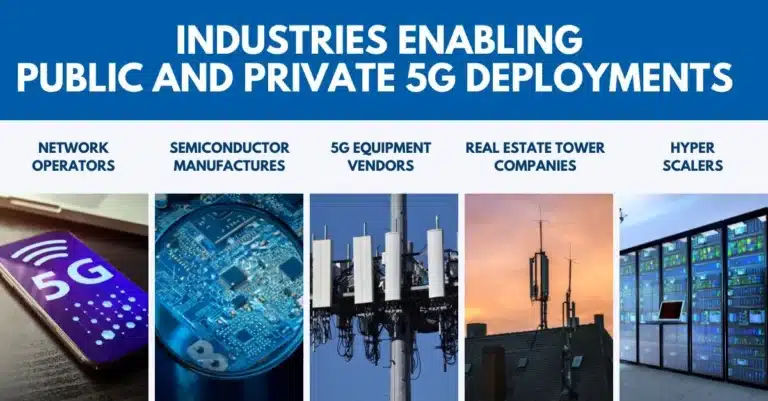
Investors seeking to maximize their profits from the potential of 5G should consider a multi-pronged approach and invest in companies that provide 5G network equipment, tower infrastructure, semiconductors, and hyperscalers as well as 5G mobile network operators. Here are the top companies across the sectors that are leading global public/private network rollouts.
Rogers Communications has announced its plan to acquire BAI Communications' Canadian operations, aiming to provide full 5G connectivity to Toronto's entire subway system, including universal access to 911 services. The 5G network build is expected to take around two years to complete, with the company working on a phased deployment plan in collaboration with the Toronto Transit Commission.
The 5G Future Forum (5GFF) will lead a first-in-the-world demonstration that is expected to change the evolution of music collaboration. Using the 5GFF Edge Discovery Service (EDS) API, which enables devices to identify and connect to the Mobile Edge Compute (MEC) site providing the lowest latency closest to them, the performance will showcase the value of the interoperability of the EDS API, leveraging Open Sesame's audio platform to sync guitar players across New York, USA (Verizon), Toronto, Canada (Rogers), and London, England (Vodafone).
The GSMA announced a new industry-wide initiative called GSMA Open Gateway, a framework of universal network Application Programmable Interfaces (APIs), designed to provide universal access to operator networks for developers. Launched with the support of 21 mobile network operators, the move is aimed at changing the way the telecoms industry designs and delivers services in an API economy world.
The first Canadian mining operation to be completely linked via a 5G Wireless Private Network is Kirkland Lake's Gold Detour Lake Mine, laying the groundwork for turning it into a Smart Digital Mine in the future. In addition, Rogers and Kirkland Lake Gold will bring more than 180 kilometers of network connectivity for the local community, with 8 new wireless towers along Highway 652, north of Cochrane, Ontario.

Partner Hubs

Download content, access intelligence tools, and hear from executives.

Partner Events

  • M360 ASEAN
  • FutureNet Asia 2026
Scroll to Top