
AI Agent Competitive
Intelligence
Intelligence
Private Network
Intelligence
Intelligence
Intelligence Journeys
Utilities Private Broadband Planning
AI Use Case Planning for Utilities
Intelligence Tools
By Tool Type
▼
By Industry
▼
Access Type
▼
Resources
▼
Technology Hubs
▼
Partner Hubs
▼
Monthly Trackers
▼


5G
5G is the fifth generation of cellular technology and the current global standard, succeeding 4G LTE with faster speeds, lower latency, and the capacity to connect far more devices per cell. Standardized by 3GPP from around 2017 and launched commercially in 2019, it has become the dominant connectivity technology across most major markets. 5G spans low-, mid-, and high-band (mmWave) spectrum and two architectures — non-standalone, which runs on a 4G core, and standalone, which unlocks network slicing and the lowest latency. The standard continues to evolve through 5G-Advanced, adding AI-native management and tighter satellite integration. For enterprises and operators, the questions have shifted from coverage to monetization, private deployments, and standalone migration. This channel tracks 5G developments across vendors, operators, and enterprise verticals, with analysis and decision tools for teams evaluating real deployments.
- Tech News & Insight
- September 29, 2026
- Hema Kadia
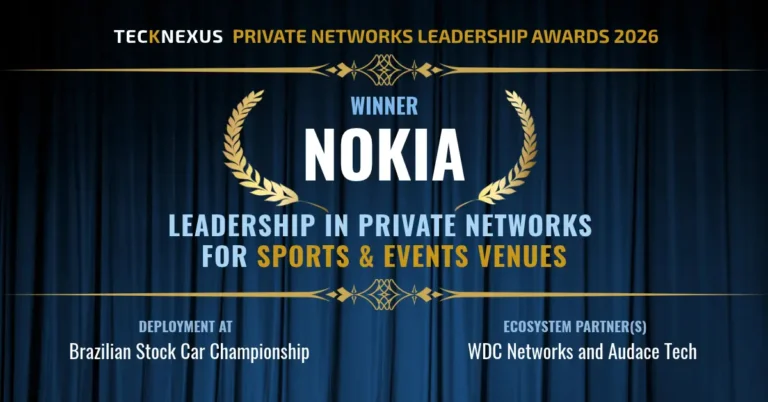
Nokia deployed a private 5G network for the Brazilian Stock Car Championship, in partnership with WDC Networks and Audace Tech, enabling real-time telemetry from moving cars, faster race-operations decision-making, and live video and audio streaming to fans through the Stock Car app.
- Tech News & Insight
- September 29, 2026
- Hema Kadia

With support from NTT DATA, the City of Brownsville, Texas integrated Cisco Identity Services Engine directly into a private 5G network, creating one centralized policy layer for cameras, patrol vehicle tablets, and city services, a blueprint other municipalities and critical infrastructure operators can follow.
- Tech News & Insight
- September 29, 2026
- Hema Kadia
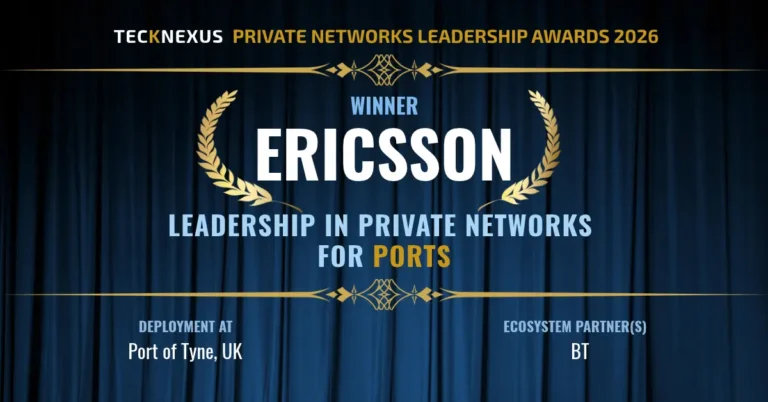
Ericsson and BT deployed the UK's first site-wide private 5G network at Port of Tyne, replacing legacy cabling with a dual-mode 4G/5G platform that powers automated container inspections, AI-driven safety monitoring, asset tracking, and smart gates, at 10 times the speed and 13 times the energy efficiency of standard 4G.
- Tech News & Insight
- September 29, 2026
- Hema Kadia
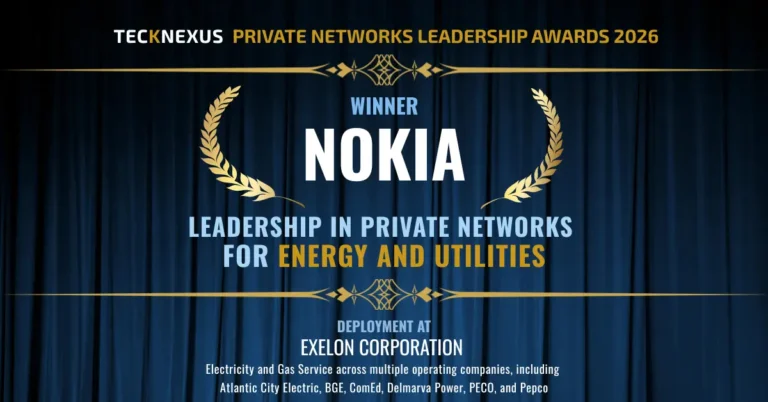
Nokia is designing, deploying, and managing a private 5G network across Exelon's U.S. utility footprint, consolidating legacy grid communications systems onto one secure, mission-critical platform supporting automation, renewable integration, and field operations at scale.
- Tech News & Insight
- September 29, 2026
- Hema Kadia

After a three-year evaluation, Cargill made private 5G its manufacturing connectivity standard, turning up more than 50 sites across the US, Europe, and Latin America in roughly 10 months with Celona's 5G LAN platform, at a fraction of the cost of comparable Wi-Fi deployments.
- Tech News & Insight
- September 3, 2026
- Hema Kadia
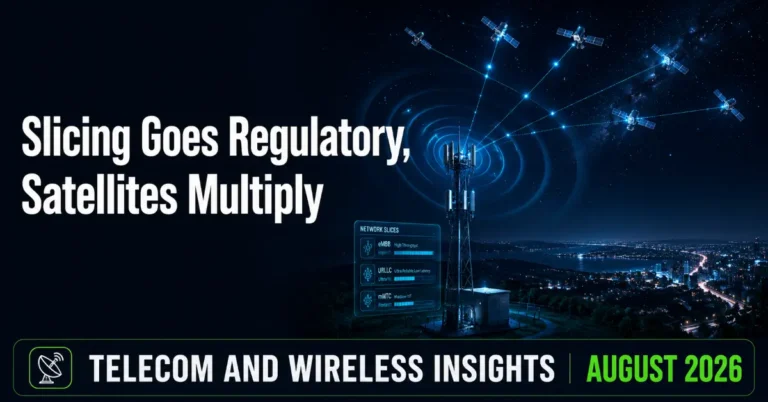
August 2026's roundup: EE launches the UK's first commercial 5G slicing service as India's regulator moves first to mandate per-slice tariffs and disclosed speeds, AI-RAN validation reaches SoftBank's live Japanese network, satellite operators from AST SpaceMobile to Elveo Mobile jockey for direct-to-device position, and Charter's completed Cox mega-merger reshapes the US cable map.
- Tech News & Insight
- September 1, 2026
- Mohamed Idrissi

Private 5G business cases are usually built with care: radios counted, spectrum priced, TCO compared against the Wi-Fi estate it replaces. What they rarely price is the cost of operating a mobile network, which the enterprise has just acquired along with the radios. This article sets out the five operational disciplines an enterprise inherits on day one, why managed-service SLAs thin out around year two, indicative five-year cost ranges for fully managed, hybrid and in-house models, and eight questions worth answering before signing.
- Tech News & Insight
- August 27, 2026
- Hema Kadia
Spectrum access shapes cost, control, and deployment speed more than almost any other private 5G decision. This guide compares directly licensed spectrum, CBRS-style shared access, other national shared frameworks, and the emerging leased spectrum model, including how a 2026 port authority procurement proved the leasing path out in practice, to help enterprises choose the right model for their market and deployment scale.
- Tech News & Insight
- August 26, 2026
- Hema Kadia
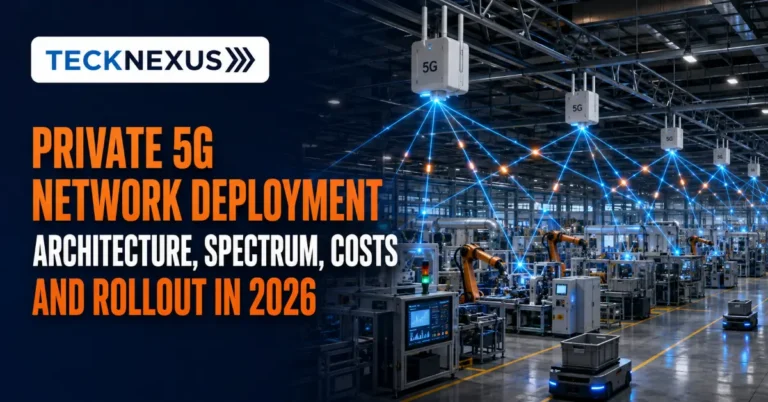
Private 5G has become mainstream industrial infrastructure, but the decisions behind a deployment — architecture ownership, spectrum access, vendor selection, cost modelling, and rollout planning — are still frequently evaluated in isolation. This pillar guide lays out how the five core decisions fit together, giving enterprises a starting framework before going deeper into any single decision area.
- Tech News & Insight
- August 24, 2026
- Hema Kadia
India's telecom regulator now requires operators to treat each 5G eMBB network slice as its own tariff, with mandated disclosure of measured — not advertised — speeds, and defined non-compliance. TeckNexus examines what this regulatory precedent means for network slicing as a commercial product, how it differs from the enterprise-grade slicing arrangements industrial buyers typically negotiate directly, and why the underlying principle — measured, disclosed, and enforceable slice performance — is worth building into SLA negotiations regardless of where a buyer operates.
- Tech News & Insight
- August 24, 2026
- Hema Kadia
Lockheed Martin's upcoming 5G drone detection service on Verizon's network, and AT&T's cloud-managed Video Intelligence platform, both point at physical security AI capabilities moving from owned, standalone systems toward managed services delivered over carrier 5G networks. TeckNexus examines what that delivery shift means for procurement decisions at airports, ports, and utilities — and where the dependency trade-offs sit relative to standalone systems.
Frequently Asked Questions
What actually makes 5G different from 4G LTE?
5G introduces three core technical improvements over 4G LTE: significantly higher peak data speeds, in some cases multiple gigabits per second under ideal conditions compared to 4G’s typical tens to low hundreds of megabits per second; substantially lower latency, the delay between sending and receiving data, which matters for applications like gaming, video calls, and industrial automation where responsiveness is critical; and far greater device density support, allowing a single cell site to maintain reliable connections with a much larger number of simultaneous devices, which matters increasingly as IoT sensors and connected devices proliferate. These improvements come from a combination of new radio technology, additional spectrum bands made available for 5G use, and a redesigned network architecture that’s considerably more flexible and software-driven than 4G’s architecture was.
What’s the difference between low-band, mid-band, and high-band (mmWave) 5G?
Low-band 5G uses similar frequencies to 4G LTE, offering wide coverage area and good building penetration but speeds not dramatically faster than good 4G performance, making it most useful for extending broad geographic coverage rather than delivering 5G’s headline speed improvements. Mid-band 5G offers a more balanced tradeoff between coverage and speed, generally delivering meaningfully faster performance than 4G across a reasonably wide area, and has become the most common band used for mainstream 5G deployment in most markets globally. High-band 5G, often called mmWave, delivers by far the fastest possible speeds, but its very short range and poor ability to penetrate walls means it’s typically deployed only in dense, high-traffic urban areas like stadiums, rather than for broad area coverage.
What’s the difference between 5G NSA (non-standalone) and 5G SA (standalone)?
5G non-standalone, or NSA, runs 5G radio technology on top of an existing 4G core network, meaning certain control functions still rely on 4G infrastructure even though the actual data connection itself uses 5G radio technology; this was the faster, easier path many operators took for their initial 5G launches, since it could be deployed by upgrading existing 4G infrastructure rather than building an entirely new core network from scratch. 5G standalone, or SA, uses an entirely new, independently functioning 5G core network rather than relying on 4G at all, unlocking more of 5G’s distinctive advanced capabilities, including network slicing and the lowest possible latency, that NSA architecture generally can’t fully support. Many operators have been gradually transitioning from NSA to SA, though this migration has generally taken longer than initially anticipated.
How widespread is 5G coverage and adoption globally in 2026?
5G has become genuinely widespread rather than experimental. Global subscriptions surpassed 3.1 billion in early 2026, with another 162 million subscriptions added in just the first quarter of the year, reflecting continued strong growth even years after 5G’s initial 2019 commercial launch. Coverage varies considerably by region and band: low and mid-band 5G now reaches the substantial majority of the population in most major markets including the U.S., much of Europe, China, and South Korea, while high-band mmWave coverage remains considerably more limited and concentrated in dense urban areas given its short range. Adoption has progressed furthest in markets with aggressive early infrastructure investment, particularly China and South Korea, while other regions, especially parts of the developing world, continue working through earlier stages of 5G buildout.
What is ‘5G-Advanced,’ and how is it different from regular 5G?
5G-Advanced, sometimes marketed by certain vendors and operators, particularly in China, as 5.5G, refers to the next phase of 5G standards development beyond the original 2019 specification, formalized starting with 3GPP Release 18 and continuing through subsequent releases. It introduces capabilities including better support for reduced-capability IoT devices that don’t need full 5G performance, tighter integration with non-terrestrial satellite networks, more sophisticated AI-native network management built directly into the standard, and further uplink and capacity improvements beyond the original 5G specification. Rather than representing a completely new generation the way 5G itself was relative to 4G, 5G-Advanced is best understood as a substantial, ongoing evolution and refinement of the existing 5G standard, extending its useful commercial life well beyond what the original 2019 specification alone delivered.
Why do real-world 5G speeds vary so much between users and locations?
Real-world 5G speeds vary considerably because of the fundamental tradeoffs between different frequency bands: a user connected to low-band 5G in a rural area will experience meaningfully slower speeds than someone connected to mid-band 5G in a well-covered urban area, who in turn will experience slower speeds than someone briefly connected to high-band mmWave near a stadium or dense downtown location. Network congestion also plays a significant role, since a cell site serving many simultaneous users, particularly during peak usage periods, will generally deliver lower per-user speeds than the same site serving fewer users. Device capability matters too, since a phone’s specific modem chip determines which frequency bands and 5G features it can actually access, meaning even within the same coverage area, different devices can experience meaningfully different real-world performance.
Is 5G actually necessary, or is 4G still ‘good enough’ for most uses?
For many everyday tasks like browsing, messaging, and standard video streaming, 4G genuinely remains adequate, and many consumers report not noticing a dramatic difference in daily use compared to a well-performing 4G connection, which is part of why 5G monetization has proven harder than the industry initially expected. However, 5G’s advantages become considerably more apparent for specific use cases: dense urban areas with heavy simultaneous network usage benefit meaningfully from 5G’s greater capacity, fixed wireless access using 5G can deliver genuinely faster home broadband than many alternatives, and emerging applications like cloud gaming, AR and VR, and industrial automation benefit directly from 5G’s lower latency and higher reliability in ways 4G generally can’t match. Whether 5G feels necessary depends heavily on a specific user’s actual usage patterns and location rather than being a universal yes or no answer.
How does 5G relate to other technologies like network slicing, private networks, and FWA covered elsewhere in this reference?
5G is the foundational technology underlying many of the more specific capabilities covered elsewhere in this reference. Network slicing depends specifically on 5G standalone’s more flexible core network architecture to create multiple differentiated virtual networks on shared infrastructure. Private networks increasingly use 5G rather than 4G LTE as their core technology for new deployments, given 5G’s superior capacity and lower latency for industrial use cases. Fixed wireless access has become one of 5G’s clearest commercial monetization successes, using 5G’s speed and capacity to deliver home broadband as an alternative to cable or fiber. Open RAN’s disaggregated, multi-vendor approach to radio equipment is increasingly being applied specifically to 5G network deployments, making 5G the underlying connectivity layer most other categories in this reference build upon.




Telco AI Agent Leadership

