Vodafone

Satellite-mobile convergence is rapidly shifting from niche to mainstream, enabling global mobile coverage through Non-Terrestrial Networks (NTN). With direct-to-device (D2D) standards now supported by 3GPP Releases 17–19, traditional mobile phones can connect directly to satellites. This development has unlocked use cases in emergency response, smart agriculture, logistics, and IoT—paving the way for a future where 6G, edge AI, and multi-orbit architectures redefine connectivity. Learn how telecoms, enterprises, and regulators are navigating the path to a fully connected planet.
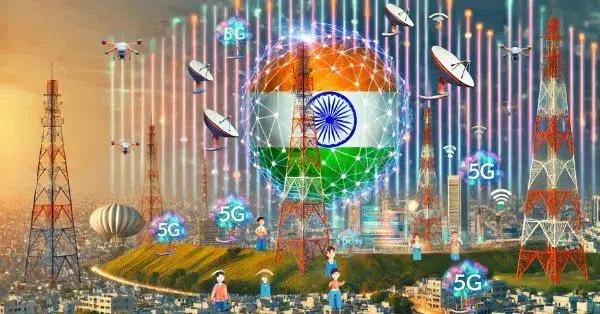
India’s telecom sector is rapidly evolving with AI and automation enhancing network operations, customer service, and 5G deployment. With over 125 million 5G users and major investments from companies like Reliance Jio and Bharti Airtel, AI technologies are proving essential for scalability and efficiency. Despite challenges like infrastructure integration and talent gaps, India’s growing AI ecosystem and government support are driving the future of smart telecom solutions.
As Open RAN moves from trials to large-scale adoption, telecom giants like NTT Docomo, AT&T, and TELUS share their real-world deployment strategies. From multivendor interoperability to automation and security, this article explores key operational insights, ecosystem collaborations, and future directions in Open RAN architecture.
As Europe accelerates its digital transformation, industry leaders from Vodafone, Orange, Deutsche Telekom, and Telefónica will explore strategies to enhance 5G and fiber networks, AI-driven innovation, and regulatory coherence. With growing global competition, Europe must balance connectivity expansion, fair competition, and sustainability to remain a leader in the digital economy. Join MWC 2025 to discover how Europe’s telecom vision is shaping the future.
As the digital world evolves, connectivity is reshaping industries through API-driven telecom solutions. The GSMA Open Gateway initiative is pioneering this shift by enabling seamless integration between telecom operators, developers, and enterprises. With 5G expected to power 1.2 billion connections by 2025, Open Gateway’s standardized APIs are fostering innovation in smart cities, fintech, logistics, and more. Join us at MWC25 Barcelona to explore the future of telecom connectivity.
AI is transforming the relationship between telcos and hyperscalers like AWS, Google Cloud, and Microsoft Azure. With AI-driven automation, cloud-native networks, and edge computing, telecom operators are optimizing efficiency, reducing costs, and unlocking new revenue streams. As AI-powered innovations reshape 5G, cybersecurity, and digital services, these strategic partnerships are set to redefine the future of telecom.
Vodafone Spain is deploying a private 5G network at the Muga Potash Mine in collaboration with Geoalcali. This initiative enhances safety, automation, and operational efficiency in underground mining by enabling real-time data access, remote-controlled machinery, and IoT-powered monitoring. With low-latency connectivity and AI-driven automation, the project sets a new benchmark for smart mining in Spain.
Vodafone has completed the world's first satellite-based video call using a standard 4G or 5G smartphone—no special hardware required. This milestone, achieved with AST SpaceMobile, demonstrates the power of direct-to-smartphone satellite connectivity. By 2026, Vodafone plans to roll out this service commercially across Europe, bridging mobile coverage gaps in rural and remote regions. Learn how this technology is set to redefine mobile broadband and global communication.
Europe faces mounting competition in the global tech race, with 5G and advanced digital infrastructure playing a pivotal role. The GSMA’s Mobile Economy Europe 2025 report highlights how 5G adoption, AI innovation, and targeted policy reforms can drive €164 billion in economic growth by 2030.
India approves 687 MHz of spectrum refarming to accelerate 5G rollout and lay the foundation for 6G services. This move increases total telecom spectrum to 1,587 MHz and addresses growing demands for mobile broadband, boosting innovations in edge computing and IoT while supporting telecom operators like Jio, Airtel, and Vodafone Idea.
Direct-to-cell SATCOM technology is not a disruptor to telecom operators but a complementary tool. By addressing connectivity gaps in remote regions and during emergencies, SATCOM enhances existing 4G and 5G networks without competing with their core business models.
Vodafone Spain and MasOrange have teamed up to launch FibreCo, a joint venture transforming Spain’s fiber landscape. With 12.2 million premises covered and cutting-edge XGS-PON technology, FibreCo promises nationwide high-speed connectivity. Collaborations with Telefónica and plans for third-party investors further solidify this ambitious venture’s role in Spain’s digital future.

Partner Hubs

Download content, access intelligence tools, and hear from executives.

Partner Events

  • M360 ASEAN
  • FutureNet Asia 2026
  • Network X Vienna 2026
Scroll to Top