T-Mobile

The FCC has approved T-Mobile’s $4.4B acquisition of UScellular and a 50% stake in Metronet, marking a strategic push into rural 5G and fixed broadband. While the moves improve network reach and service speeds, regulators caution that market consolidation among the Big Three wireless providers may restrict long-term competition and innovation.
Americans spend $166 billion annually on mobile phone services, making up 4% of all household bill expenses. A new doxoINSIGHTS report reveals median monthly costs of $96, with wide variations by state and city. Nebraska and Dallas top the charts, while tools like doxoINSIGHTS help users compare costs and save on mobile bills.
At the 2025 MLB All-Star Week, T-Mobile deployed a 5G Private Network to power Automated Ball-Strike (ABS) technology, immersive fan experiences, and smart event operations. Covering Truist Park and The Battery Atlanta, the network delivered ultra-low latency, network slicing for first responders, and high-speed 5G upgrades, creating a blueprint for future smart stadiums and live sports innovation.
Web3 is redefining the telecom industry by introducing decentralized infrastructure, blockchain-based billing, smart contracts, NFTs, and digital identity. This article explores how telcos can evolve from connectivity providers to key players in Web3 ecosystems—offering programmable services, token economies, and secure, user-centric digital experiences.
AT&T reported strong Q1 2025 earnings with EPS of $0.51 and $30.6B in revenue, boosted by 324K new postpaid wireless subscribers and 181K FWA additions. The telecom giant also expanded its fiber footprint by 600,000 locations and reaffirmed its commitment to broadband growth and copper retirement by 2029.
Verizon posted better-than-expected Q1 2025 earnings, with revenue and profits rising. But a record loss of 289,000 postpaid phone subscribers sent the stock down, as investors focused more on churn than cash flow. While prepaid gains and stable guidance offered some optimism, analysts remain cautious about Verizon’s subscriber strategy and pricing pressure.
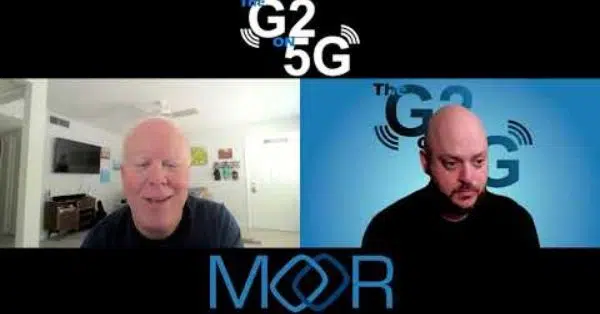
In Episode 222 of The G2 on 5G, analysts Will Townsend and Anshel Sag cover T-Mobile’s 6G equipment testing, Google’s mid-range Pixel 9a, Vodafone’s 200M IoT milestone, the GSA’s RedCap group, AT&T's satellite trials for FirstNet, and MediaTek’s powerful new chipsets for phones and Chromebooks.
Satellite-mobile convergence is rapidly shifting from niche to mainstream, enabling global mobile coverage through Non-Terrestrial Networks (NTN). With direct-to-device (D2D) standards now supported by 3GPP Releases 17–19, traditional mobile phones can connect directly to satellites. This development has unlocked use cases in emergency response, smart agriculture, logistics, and IoT—paving the way for a future where 6G, edge AI, and multi-orbit architectures redefine connectivity. Learn how telecoms, enterprises, and regulators are navigating the path to a fully connected planet.
MATRIXX Software introduces dynamic billing support for satellite and non-terrestrial network (NTN) services, enabling telecom operators to expand coverage, monetize emerging LEO partnerships, and unify revenue management. The platform supports flexible commercial models, powering growth in underserved regions and across consumer, enterprise, and wholesale markets.
T-Mobile US, Inc. has announced the sale of its 800 MHz spectrum portfolio to Grain Management, a move aimed at enhancing network capabilities particularly in rural and utility sectors. The deal includes a strategic exchange for Grain's 600 MHz licenses, promising improved service quality and network performance.
U.S. fixed wireless access (FWA) is on the rise, with over 11.5 million subscribers across T-Mobile, Verizon, and AT&T. Ookla Speedtest data reveals rising download speeds, with T-Mobile leading at 205 Mbps. Verizon manages performance via speed caps, while AT&T positions FWA as a transitional service. Latency and upload improvements further boost FWA's appeal in 2024.
NVIDIA is partnering with telecom leaders like T-Mobile, Cisco, and MITRE to develop AI-powered 6G networks, integrating artificial intelligence into next-gen wireless infrastructure. Announced at NVIDIA GTC, this initiative leverages AI-RAN and Open RAN technologies to enhance spectral efficiency, optimize network performance, and enable seamless 6G connectivity.

Partner Hubs

Download content, access intelligence tools, and hear from executives.

Partner Events

  • M360 ASEAN
  • FutureNet Asia 2026
Scroll to Top