private network security

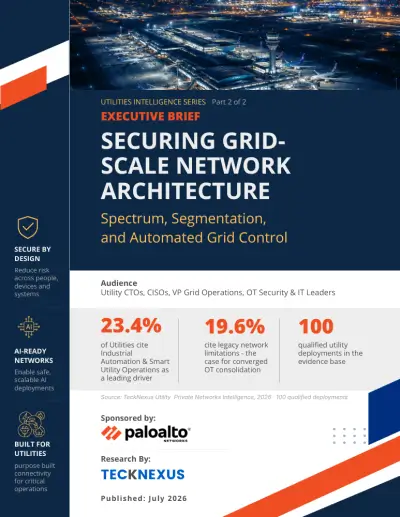
Converged OT, network slicing, and automated grid control look like three unrelated engineering topics. They share the same underlying risk pattern. Part 2 of TeckNexus's Utilities Intelligence Series digs into what happens when the component with the broadest reach across the grid, the management plane, the orchestration layer, the decision loop, gets compromised.
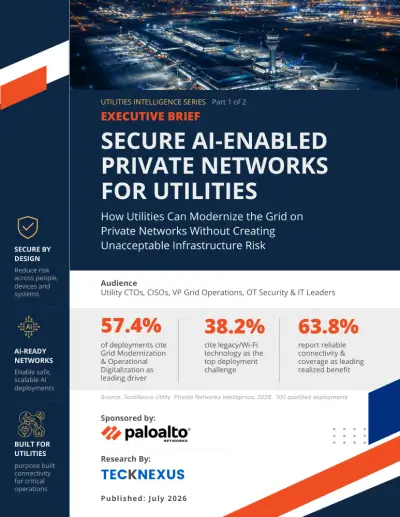
Utilities don't need to borrow a threat model from another sector. NERC CIP, IEC 62443, and nation-state actors like Volt Typhoon already treat the grid as a live target. New TeckNexus research across 100 utility deployments introduces the 4-layer security architecture utilities need to modernize the grid on private networks without creating unacceptable infrastructure risk.
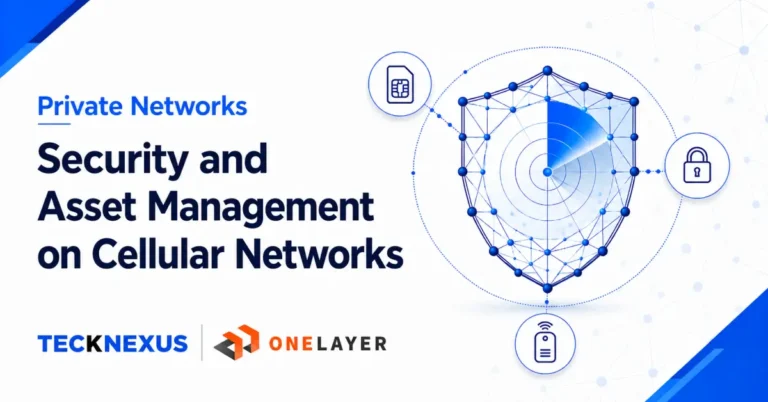
Evaluate your visibility, control, and security posture across cellular-connected OT and IoT devices.

You'll need: a picture of your current visibility and controls.
Produces: a maturity benchmark with your most urgent security gap flagged.
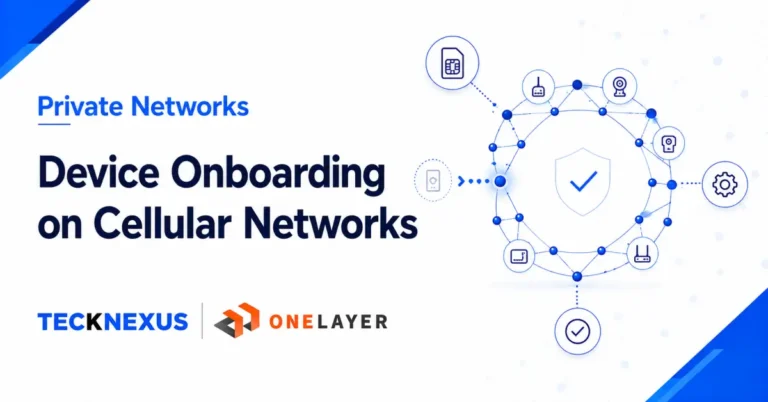
Benchmark your SIM provisioning, device lifecycle management, and operational readiness — and see exactly where automation would save the most time and cost.

You'll need: a picture of your current provisioning process.
Produces: a maturity benchmark with an automation-savings view.
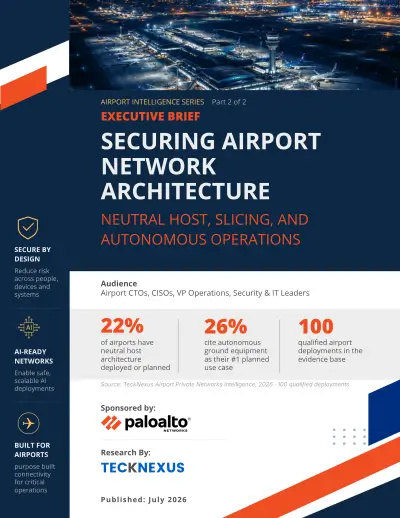
Neutral host, network slicing, and autonomous ground vehicles look like three unrelated topics — but they share the same hidden security risk. See what 100 airport deployments reveal about securing the components with the broadest reach across the network.
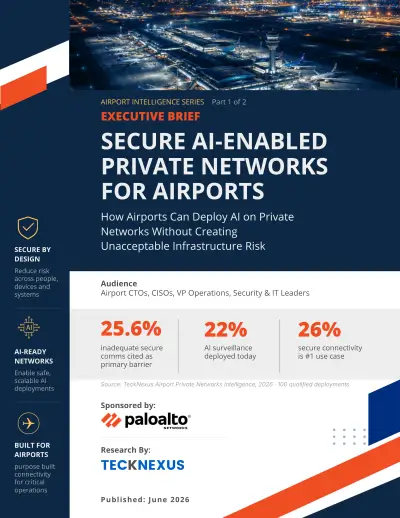
Airports are deploying AI surveillance, biometrics, and autonomous vehicles faster than most networks can secure them. See what 100 real-world airport deployments reveal about the airside/landside security gap — and the 4-layer framework built to close it.
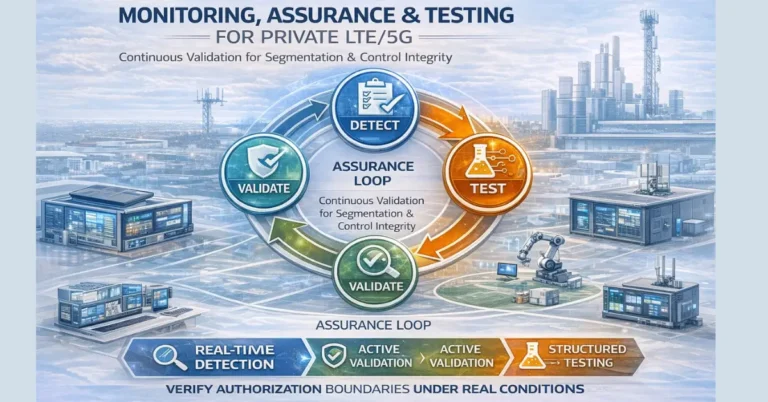
Private LTE and 5G security does not fail because of flawed architecture—it fails when enforcement controls degrade silently. This guide explains how enterprises implement continuous monitoring, assurance, and testing loops across control-plane signaling, user-plane routing, identity governance, and industrial OT environments. Learn how to validate segmentation integrity, detect policy drift, test Zero Trust enforcement, and produce audit-ready evidence across multi-site private cellular deployments.
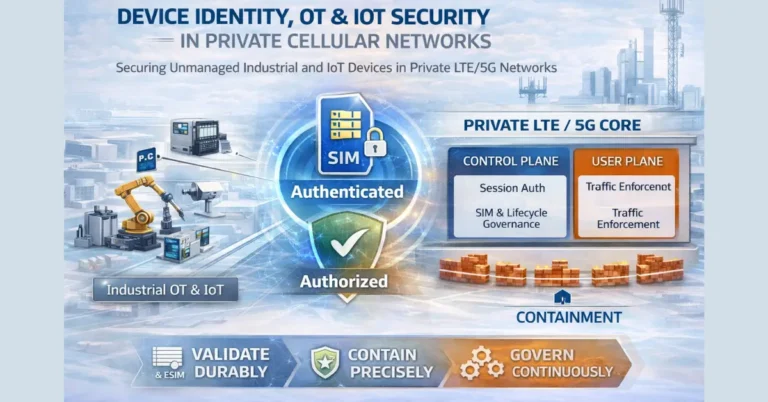
Private LTE and 5G networks strengthen authentication at the transport layer—but device identity, lifecycle governance, and OT/IoT realities determine whether containment holds. This in-depth guide explains SIM and eSIM authentication models, service-profile authorization, identity drift risks, industrial gateway mediation, and Zero Trust containment strategies across multi-site private cellular deployments.
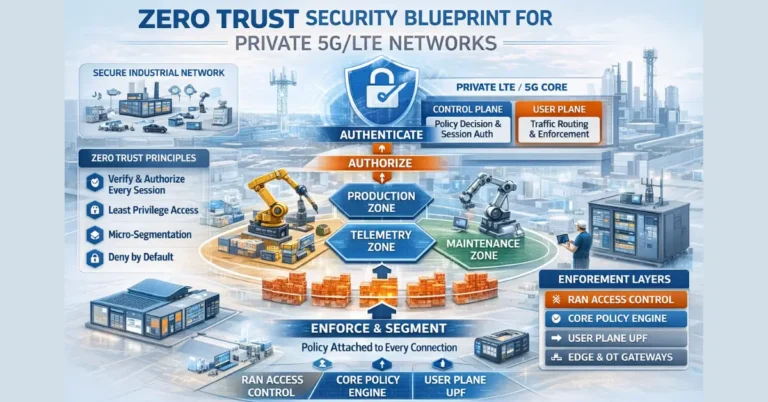
This Zero Trust security blueprint for Private LTE and 5G networks explains how session-based authorization, control-plane policy decisions, and user-plane enforcement create deterministic micro-segmentation across industrial and OT environments. Mapping private cellular architecture to NIST SP 800-207, the article details how operational zones, service profiles, and containment principles protect production-critical systems under mobility and scale.
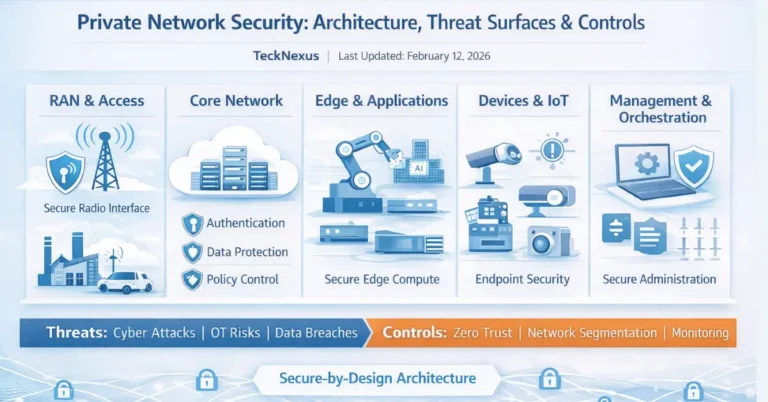
Private LTE and 5G networks introduce new security challenges as they become the foundation for industrial automation, critical infrastructure, and enterprise campuses. Unlike Wi-Fi and traditional IT networks, private cellular environments blend telecom infrastructure, IT systems, and operational technology, creating distinct threat surfaces across the RAN, core, edge, devices, and management planes. This article establishes a security-first architectural lens for private LTE/5G, explaining who needs it, where risks emerge, and what secure-by-design looks like before moving into Zero Trust and implementation frameworks.


Partner Hubs

Download content, access intelligence tools, and hear from executives.

Partner Events

  • M360 ASEAN
  • FutureNet Asia 2026
Scroll to Top