Private Network
Intelligence
Intelligence Journeys
Utilities Private Broadband Planning
AI Use Case Planning for Utilities

China Telecom

The Federal Communications Commission is advancing a proceeding that would prohibit US carriers from interconnecting with Chinese state-linked operators and from using facilities they own or operate, including data centers and points of presence. The proposal targets interconnection at meet-me rooms, cross-connects, and handoffs that underpin IP transit, voice interconnect, SMS hubs, and enterprise backhaul. The Commission is seeking comment on a ban and will take the item to a vote at its 30 April Open Meeting. Depending on the final order, potential outcomes range from mandatory disconnection to forced divestiture or transfer of affected facilities.
Live Streamed on Mon, 2 Mar at 09:30 - 10:45 CET

In an environment of accelerating change, global decision-makers convene to explore how the industry can unlock the full potential of 5G while laying the groundwork for what comes next. Visionaries take the stage to chart a path toward a hyper-connected world shaped by AI-native networks and next-generation infrastructure. Discover how operators are rethinking value creation and building the foundations of a more dynamic, intelligent and equitable digital economy.
The U.S. Federal Communications Commission (FCC) has opened a proceeding to revoke HKT International’s Section 214 authorizations, citing national security concerns tied to its affiliations and the evolving U.S.–China risk posture. Section 214 authority is the gatekeeper for carriers to originate, terminate, or carry traffic that touches the U.S., including wholesale voice, IP transit, subsea capacity backhaul, and certain enterprise connectivity. Over the past five years, the FCC—often in coordination with the interagency “Team Telecom” group (DOJ, DHS, DOD)—has revoked or denied comparable permissions for China Telecom (Americas), China Unicom (Americas), and Pacific Networks/ComNet, among others, after similar “order to show cause” phases. The next 60–120 days could reshape interconnection routes, roaming relationships, and wholesale arrangements touching Hong Kong-to-U.S. traffic paths.
Beijing's first World Humanoid Robot Games is more than a spectacle. It is a live systems trial for embodied AI, connectivity, and edge operations at scale. Over three days at the Beijing National Speed Skating Oval, more than 500 humanoid robots from roughly 280 teams representing 16 countries are competing in 26 events that span athletics and applied tasks, from soccer and boxing to medicine sorting and venue cleanup. The games double as a staging ground for 5G-Advanced (5G-A) capabilities designed for uplink-intensive, low-latency, high-reliability robotics traffic. Indoors, a digital system with 300 MHz of spectrum delivers multi-Gbps peaks and sustains uplink above 100 Mbps.
As the digital world evolves, connectivity is reshaping industries through API-driven telecom solutions. The GSMA Open Gateway initiative is pioneering this shift by enabling seamless integration between telecom operators, developers, and enterprises. With 5G expected to power 1.2 billion connections by 2025, Open Gateway’s standardized APIs are fostering innovation in smart cities, fintech, logistics, and more. Join us at MWC25 Barcelona to explore the future of telecom connectivity.
Congratulations to the 2026 Private Network Leadership Award Winners
Explore Winners →

Partner Hubs

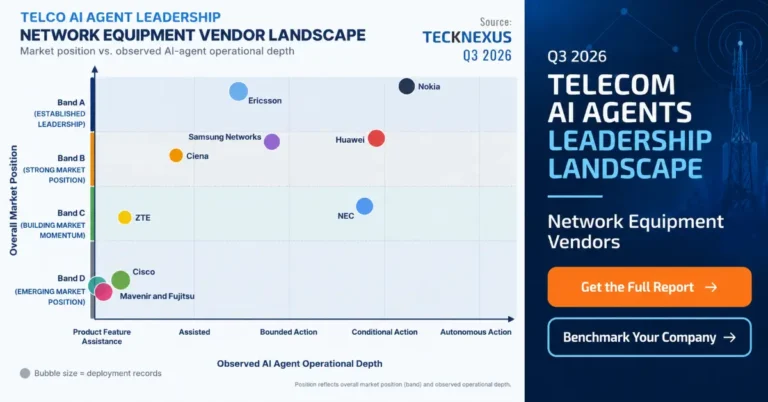
Telco AI Agent Leadership

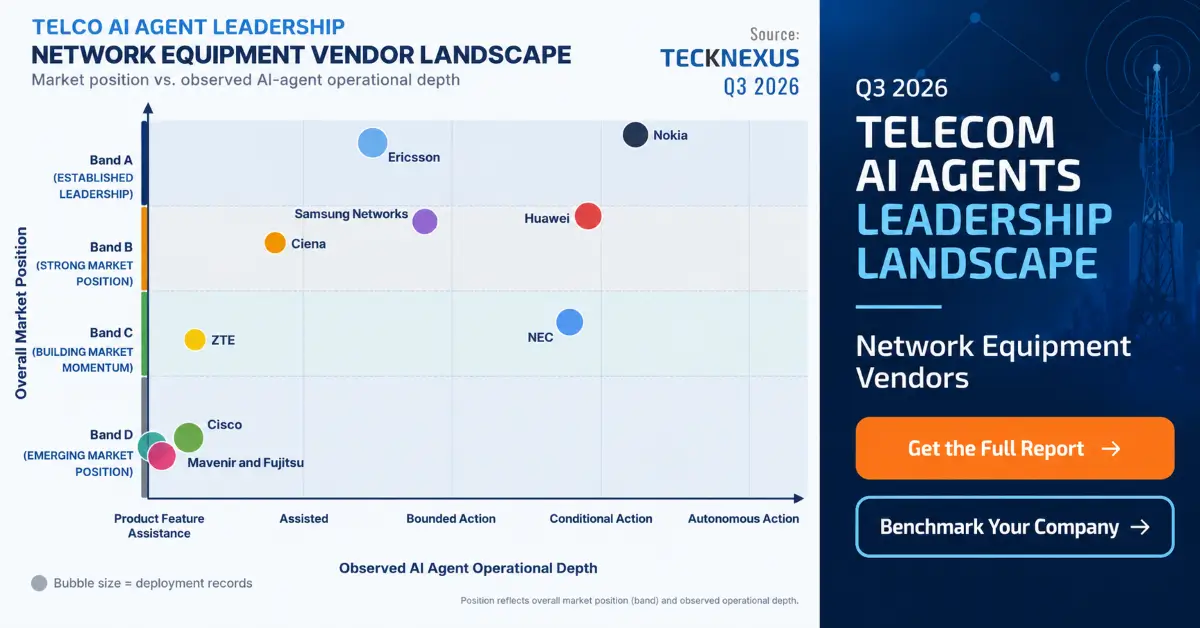
Telco AI Agent Leadership Landscape - Network Equipment Vendors
Network Equipment Vendor Report
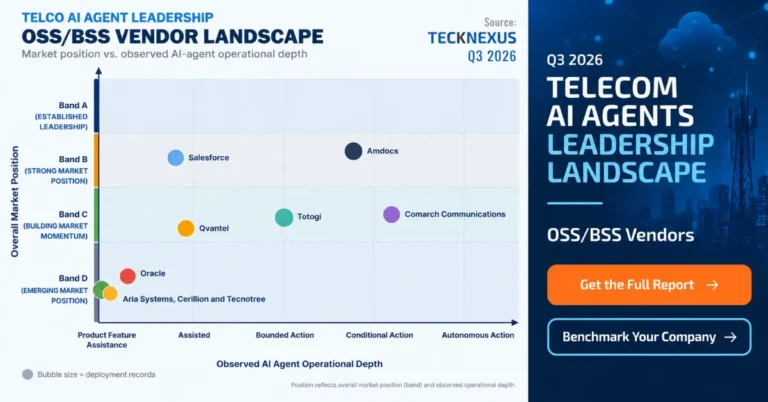
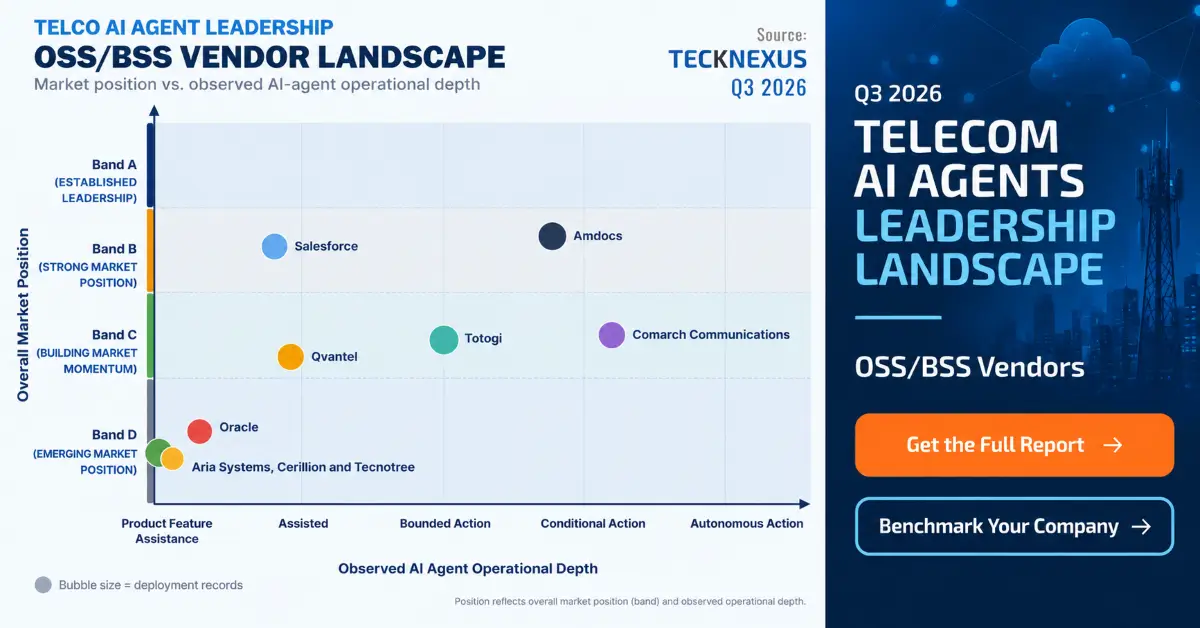
Telco AI Agent Leadership Landscape - OSS/BSS Vendors
OSS/BSS Vendor Report
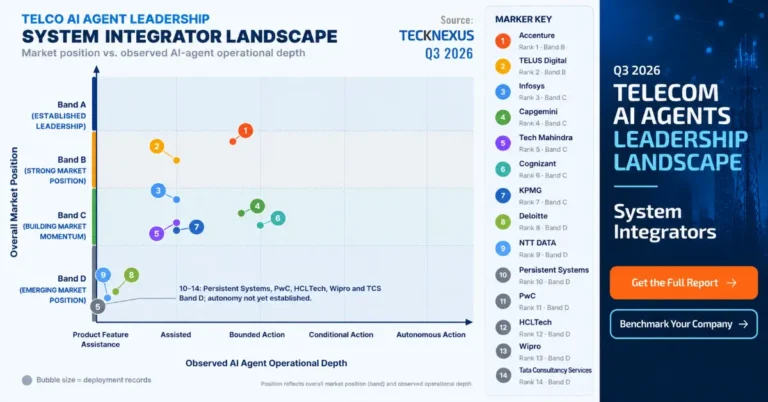
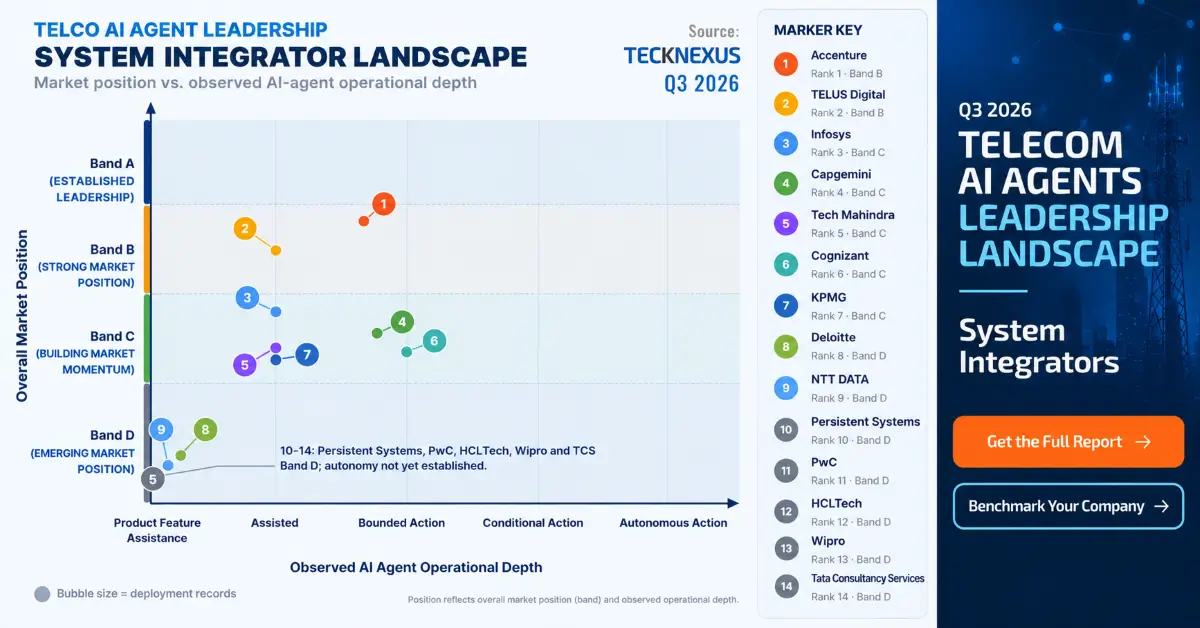
Telco AI Agent Leadership Landscape - System Integrators
System Integrator Report
Scroll to Top
TELECOM AI AGENTS Q3 2026 · Available Now

Explore the Telecom AI Agents Leadership Landscapes

Explore market positioning, deployment momentum and operator validation across the telecom AI agent ecosystem.

Explore Leadership Landscapes
Independent · Evidence-based · Telecom-focused