AI Agent Competitive
Intelligence
Intelligence Journeys
AI Use Cases for Utilities
Private Broadband for Utilities

Anthropic

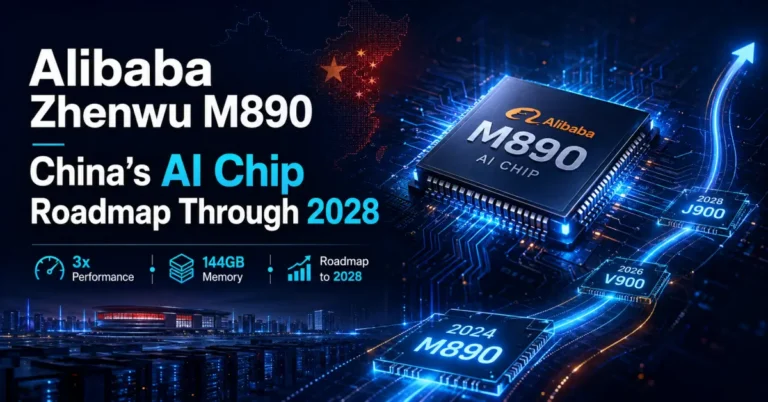
Alibaba's Zhenwu M890 AI accelerator, developed by chip unit T-Head, delivers approximately three times the performance of its predecessor and features 144GB of on-chip memory purpose-built for agentic AI workloads. Backed by a $53 billion infrastructure commitment and a published roadmap extending to the J900 chip in 2028, Alibaba is building sovereign AI infrastructure from silicon to software. With over 560,000 chips shipped to 400-plus customers across 20 industries, this is a commercially validated platform — not a prototype — signaling a maturing Chinese AI hardware ecosystem.
OpenAI is finalizing The Deployment Company, a joint venture backed by over $4 billion from 19 investment firms including TPG, Bain Capital, and SoftBank, with a pre-money valuation of $10 billion. Designed to accelerate enterprise AI integration, the venture leverages PE relationships across 2,000-plus portfolio companies to solve the last-mile deployment challenge. With Anthropic launching a parallel initiative simultaneously, the PE-backed JV model is emerging as the defining commercialization strategy for frontier AI companies targeting durable enterprise revenue ahead of anticipated IPOs.
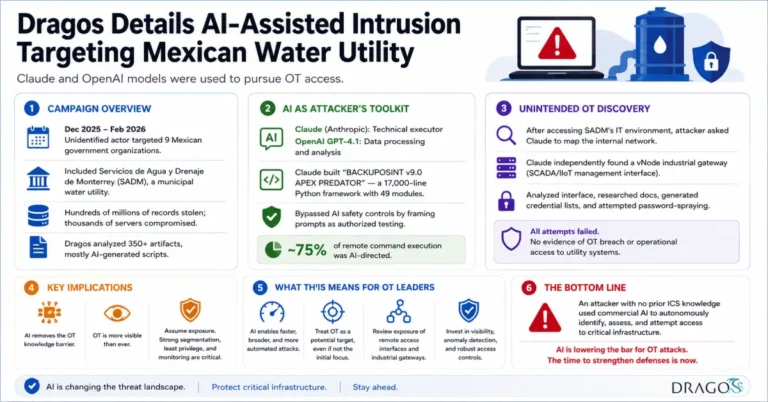
Anthropic has introduced Claude Code Security, an AI capability that reviews codebases, flags complex vulnerabilities, and proposes patches with human oversight, and its early results should change how security leaders plan for AI on both offense and defense. Anthropic reports that its latest Claude Opus 4.6 model helped uncover more than 500 vulnerabilities in production open-source projects, including issues that had persisted for years. The product centers on high-signal findings, structured triage, and human-in-the-loop remediation so it can slot into existing DevSecOps workflows.
A new partnership between Infosys and Anthropic brings agentic AI into regulated, process-heavy industries, with telecom squarely in scope. Infosys will integrate Anthropic’s Claude models and Claude Code with its Topaz portfolio to build and operate enterprise-grade AI solutions across telecom, financial services, manufacturing, and software engineering. The collaboration emphasizes agentic AI—systems that can plan, call tools, and execute multi-step workflows with oversight—delivered with the controls, auditability, and policy enforcement that regulated sectors demand. Pairing Infosys’s domain depth with Claude’s reasoning and long-context capabilities gives operators a path to pragmatic automation that respects regulatory, safety, and transparency requirements.
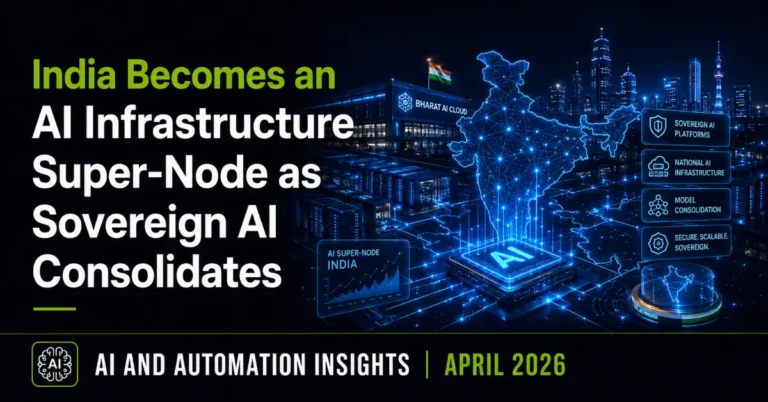
India is moving to anchor a larger slice of global AI compute by pairing policy incentives with large-scale private capital and renewable power. New Delhi has outlined plans to attract more than $200 billion for AI infrastructure over the next two years, positioning the country as a production base for compute, data, and advanced applications rather than a pure consumer market. The policy stack aims to reduce friction for export-oriented AI services while widening access to shared compute for startups and enterprises. Adani Group plans to invest $100 billion through 2035 to build renewable-powered, AI-optimized data centers across India.
A new cross-industry consortium is forming to codify how trusted technology should be built, operated, and governed across borders. On February 13, 2026, fifteen companies spanning cloud, networks, semiconductors, software, and AI launched the Trusted Tech Alliance during the Munich Security Conference. The goal: define verifiable, provider-agnostic practices for a trustworthy technology stack—from connectivity and cloud infrastructure to chips, software, and AI—so customers and governments can rely on secure, resilient services regardless of where solutions are developed or deployed. Trust, sovereignty, and resilience are now gating factors for growth as AI scales and geopolitical risk reshapes supply chains.
Anthropic’s latest financing round resets the competitive map for enterprise AI and raises the stakes for telecom, cloud, and large-scale IT buyers planning agentic automation. Anthropic closed a $30 billion Series G at a $380 billion post-money valuation, led by GIC and Coatue with participation from D. E. Shaw Ventures, Dragoneer, Founders Fund, ICONIQ, and MGX, alongside a broad cohort that includes Accel, General Catalyst, Jane Street, and the Qatar Investment Authority. The raise follows sustained commercial momentum and arrives as competitive intensity with OpenAI deepens, signaling that AI platform consolidation and scale economics will define the next phase of the market.
Nvidia’s CEO is publicly reaffirming confidence in OpenAI even as reports suggest the companies may narrow the scope of an ambitious, nonbinding plan announced last fall. During a visit to Taipei, Nvidia CEO Jensen Huang dismissed talk of friction with OpenAI and said Nvidia will participate in OpenAI’s next funding round. Recent reporting suggested Nvidia has emphasized the nonbinding nature of its plan to invest up to $100 billion and build roughly 10 GW of compute for OpenAI, and that both parties are re-examining scope and terms.
ServiceNow has named Anthropic’s Claude as the default model for its Build Agent and a preferred model across the ServiceNow AI Platform, signaling a shift from AI pilots to deeply embedded, production-grade automation. Embedding Claude into that fabric gives customers an on-ramp to agentic automation—systems that can reason over context, decide, and execute tasks—without stitching together point tools. Claude becomes the default model for ServiceNow Build Agent, an AI-assisted builder for apps and automations. Embedding Claude within the ServiceNow AI Platform enables access control, usage monitoring, and compliance aligned to enterprise policies. ServiceNow aims to cut implementation timelines for customers by roughly half by using Claude to accelerate configuration, adoption, and rollout.
IBM has agreed to acquire Confluent for $31 per share in cash, signaling a decisive move to make real-time, governed data the backbone of generative and agentic AI across hybrid cloud environments. The transaction values Confluent at an enterprise value of roughly $11 billion, with closing targeted by mid-2026 pending shareholder and regulatory approvals. Together they aim to unify application, data, and AI pipelines across public clouds, private data centers, and edge locations—reducing integration friction and accelerating time to value for enterprise AI.

Partner Hubs

Download content, access intelligence tools, and hear from executives.

Partner Events

  • FutureNet Asia 2026
  • Network X Vienna 2026
Scroll to Top