Industry Intelligence
Intelligence Journeys
AI Use Cases for Utilities
Private Broadband for Utilities
Intelligence Tools
By Tool Type
▼
By Industry
▼
Access Type
▼
Tool Source
▼
Intelligence PlatformPaid
▼
Monthly Tracker
▼
Resources
▼
Technology Hubs
▼
Partner Hubs
▼

Home » Monetization » Page 13
Monetization
Monetization covers how operators turn networks and capabilities into revenue beyond traditional connectivity. As 5G investment has outpaced obvious new revenue, the industry is pursuing fresh models: network slicing, private networks, fixed wireless access, edge services, network APIs, and enterprise solutions. The recurring challenge is that consumers often perceive limited difference between strong 4G and 5G, making it hard to charge premiums for speed alone and pushing operators toward differentiated, enterprise, and platform-based revenue. For operators, monetization strategy increasingly determines whether network investment pays off; for vendors and enterprises, it shapes which capabilities get built and bought. This channel tracks telecom monetization across slicing, private networks, APIs, FWA, and enterprise services, with analysis of which models are generating real revenue and which remain aspirational, grounded in evidence rather than projection.
- Article & Insights
- February 22, 2023
- Hema Kadia

To truly monetize 5G, we need to provide consumers with 1) services they want to use that 2) demonstrate the value of 5G. This is how consumers rationalize the price they pay for accessing our network.
- Article & Insights
- February 21, 2023
- Sagar Nangare

There are specific areas from which telcos will mine the revenue. But the key 5G monetization strategy for telcos would be to invest in all 5G standalone (SA) network aspects. It will bring different ecosystem partners together, help upgrade charging models, strategize usage of telecom APIs, and launch network slices to tap enterprise customer segments. All these would be driven by bringing high-level end-to-end automation and a solid orchestration platform to start services to consumers quickly.
- Whitepaper
- February 19, 2023
- Net Insight


5G network rollouts are now sprouting around the globe as operators get to grips with the potential of new enterprise applications. Yet behind the scenes, several factors still could strongly impact just how transformative this technology will be in years to come. Ultimately, it will all boil down to one single question: How will mobile network operators succeed in 5G monetization?
- Podcast
- February 15, 2023
- Hema Kadia

Explore the innovative strides of Rakuten in optimizing 5G technologies through Open RAN solutions. Dive into a comprehensive analysis of how the digital giant is shaping the future of connectivity, ensuring robust, scalable, and efficient networks. Learn about the transformative impact of Open RAN and Rakuten's pioneering initiatives in the realm of 5G deployments, offering enhanced user experiences, and driving the global telecom industry towards a future of seamless, high-speed connectivity.
- Podcast
- February 6, 2023
- Net Insight
Explore the pivotal role of precise time synchronization in delivering robust 5G services with Net Insight's Fredrik Sundling. Learn how GNSS-independent solutions not only safeguard against vulnerabilities like jamming and spoofing but also ensure the seamless delivery of real-time enterprise services, ensuring 24/7 availability and reliability in the burgeoning 5G landscape.
- News
- February 2, 2023
- Hema Kadia

MATRIXX Software announced that MATRIXX Digital Commerce Platform (DCP) is available in AWS Marketplace. MATRIXX DCP is a converged charging engine that accelerates a telco's ability to innovate in the market and monetize in real-time, from network services to new consumer and business offers and valuable third-party relationships.
- Usecase
- November 3, 2022
- Hema Kadia

Nokia to support Nedaa on its journey to delivering next-generation 5G network capabilities by upgrading its networks and developing innovative use cases. Nedaa is targeting segment-oriented solutions by introducing network slicing to improve public safety and smart city services for concerned organizations and citizens, as well as lay the foundations for more advanced services such as metaverse.
- Podcast
- October 16, 2022
- Hema Kadia
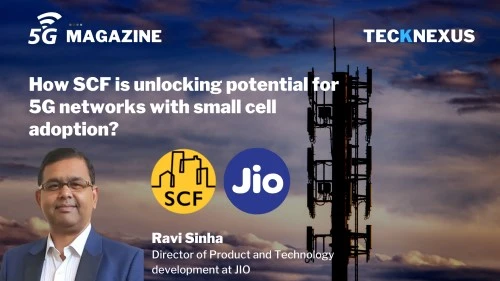
Dive into the advancements of 5G and CV2X in reshaping the automotive landscape. Explore how the Small Cell Forum is leading the charge with blueprints, collaborations, and a vision for a unified connectivity ecosystem. Discover the future of smart transportation and city integrations.
- Article & Insights
- September 10, 2022
- Hema Kadia

The Dickensian duality succinctly characterizes where we are with 5G — pushing towards monetization is challenging, commercially-available network slicing is fledgling at best, but 5G promises rewards for those enterprising and persistent.
Frequently Asked Questions
Is 5G actually making money for carriers yet?
It’s a mixed picture. Coverage and subscriptions have scaled massively, with global 5G subscriptions surpassing 3.1 billion in early 2026 after 162 million new subscriptions were added in just the first quarter, but the industry narrative has shifted from how fast networks can be built to how to make money from them, with revenue uplift and enterprise monetization still uneven across regions and operators. Some specific monetization avenues, like fixed wireless access, are showing clearer financial traction than others, like consumer-facing network slicing, which remains earlier in its commercial maturity. The honest summary is that 5G has succeeded as infrastructure far more decisively than it has yet succeeded as a profitable new revenue category.
What strategy are carriers using to monetize 5G right now?
The shift is from selling bandwidth to selling outcomes: using network slicing to offer guaranteed-performance services tailored to specific use cases, exposing network capabilities like location data or quality-of-service controls through APIs that outside developers can build on and pay for, and offering speed-based fixed wireless access tariff tiers that let customers pay more for guaranteed higher performance rather than a single flat-rate plan. Industry commentary from major vendors at events like Mobile World Congress 2026 has repeatedly emphasized this framing, arguing that simply selling faster connectivity at a similar price point doesn’t capture the genuine value 5G’s more advanced capabilities can actually provide to specific customer segments willing to pay a premium.
What are ‘network APIs,’ and how do they relate to monetization?
Network APIs let third-party developers tap into specific network capabilities, like verified location, fraud detection, or guaranteed bandwidth for a specific session, typically through aggregator platforms that combine APIs across multiple carriers so developers can build once and scale across markets rather than negotiating separate integrations with every individual operator. The operator-backed Aduna platform, for example, was specifically created to pull together network APIs from multiple operators into a single access point. This model lets operators monetize specific network capabilities directly, charging developers and businesses for access to things like quality-on-demand connectivity, rather than relying purely on consumers paying for basic data plans.
How much are carriers spending on network upgrades relative to what they’re earning back?
Capital intensity remains very high even as the industry pushes harder on monetization. Verizon alone guided $16 to $16.5 billion in U.S. network capital spending for 2026, explicitly tied to continued network investment rather than a pullback in spending despite monetization pressure. Whether that level of ongoing investment generates a proportionate financial return depends heavily on whether newer capabilities like 5G Standalone, network slicing, and enterprise API-driven services actually scale into substantial revenue streams, since basic connectivity revenue alone hasn’t grown enough to justify that scale of continued infrastructure spending without these newer revenue categories maturing significantly further.
Will 6G repeat the same monetization struggle as 5G?
Industry voices are explicitly framing current 5G Standalone monetization as a prerequisite for justifying 6G investment, arguing that proving sustainable, scaled revenue streams from 5G’s more advanced capabilities now is necessary before the industry can credibly justify the next full generational upgrade cycle to investors and regulators. This represents a meaningful shift in industry thinking compared to the 4G-to-5G transition, where rollout speed and coverage milestones were treated as the primary success metrics largely independent of immediate monetization proof. Whether the industry actually breaks this pattern before 6G arrives around 2030, or repeats a similar build-first, monetize-later cycle, remains an open and actively debated question.
Why has 5G monetization been harder than carriers initially expected?
Several factors made 5G monetization harder than many carriers initially expected. Consumers proved largely unwilling to pay significantly more for faster speeds alone once a good-enough connectivity experience was already widely available on 4G, undermining the simple charge-more-for-faster model many operators initially assumed would work. The more advanced, genuinely differentiated capabilities 5G enables, like network slicing and ultra-low latency services, required not just network infrastructure but also new billing systems and device ecosystem support that all took longer to mature than the radio network itself did. Enterprise customers, who represent much of the more promising opportunity, also require longer sales cycles than consumer mass-market products, slowing how quickly that revenue could scale.
What’s the difference between consumer and enterprise 5G monetization strategies?
Consumer 5G monetization has leaned heavily on tiered data plans, modest premium pricing for unlimited or higher-priority data, and fixed wireless access as a new product category competing with home cable and fiber broadband, generally still resembling familiar telecom pricing models. Enterprise monetization looks meaningfully different, focused on customized, often contractually negotiated services like dedicated network slices with guaranteed performance, private 5G networks built for a single organization’s exclusive use, and network API access sold to developers and businesses. Enterprise deals tend to be fewer in number but potentially much higher value per customer, and generally require more direct sales engagement and customization than the largely self-service consumer model.
Are any specific monetization strategies actually proving successful so far?
Some specific strategies are showing clearer success than others. Fixed wireless access has proven to be one of the more concretely successful 5G monetization stories, with the share of FWA offered specifically over 5G rather than 4G rising from 57 percent to 71 percent of providers in under a year, reflecting genuine, measurable revenue growth from a product carriers can sell with relatively straightforward positioning against existing home broadband competitors. Network slicing and API-based monetization, while generating real commercial deployments and partnerships, remain earlier in their maturity curve, with most market analyses describing them as still in the early stages of commercialization rather than fully scaled, proven revenue categories comparable to FWA’s more straightforward consumer success.