


Partner Hubs

The next evolution of Ciena’s DCOM: OOB management for diverse data center needs
2027 Intelligence Programs

Verizon

More than 60% of U.S. households are now serviceable by fiber, with double‑digit millions of new homes added in 2025 as operators, co‑ops, and municipalities pushed into suburban and rural areas. Median build benchmarks show underground construction around $18 per foot and aerial around $8 per foot, based on a broad sample of operator and contractor data across dozens of states. Most builders expect costs to rise again in 2026, and many anticipate longer schedules. Labor and materials remain the top pressure points, while permitting and make‑ready feature more prominently as networks stretch into harder‑to‑build pockets.
AI-driven experiences are flipping the traffic mix, pulling more capacity demand toward the uplink than U.S. mobile networks have historically planned for. Generative and vision-based AI are shifting usage from predominantly downloads to more continuous and bandwidth-heavy uploads. Recent benchmarking shows U.S. 5G networks prioritize downlink KPIs more than peers in Asia, even as uplink usage climbs. RootMetrics’ drive testing in late 2025 found all three U.S. carriers set roughly one-fifth of their midband Time Division Duplex (TDD) frame resources for uplink. That gap becomes material as AI, livestreaming, and enterprise camera workloads expand. U.S. carriers continued to win experience awards in early 2026, even as their uplink allocations trailed global leaders.
Verizon Business has officially launched the Edge Transportation Exchange, a 5G and mobile edge computing-powered vehicle-to-everything (V2X) platform. Already in use by partners like Volkswagen, the Arizona Commerce Authority, and DelDOT, the platform enables real-time data sharing between vehicles, infrastructure, and road users. It supports critical use cases like pedestrian detection, traffic signal data, and weather alerts—without relying on expensive roadside hardware.
Welcome to the TeckNexus Private Networks: Airports, Ports & Automotive Edition. Across transportation ecosystems, connectivity has shifted from an enabler to a strategic foundation. In airports, ports, and automotive environments, private LTE, 5G, and CBRS networks are delivering deterministic performance, real-time visibility, and secure operations—driving measurable gains in efficiency, safety, and resilience.

This edition showcases real-world deployments alongside exclusive insights from industry leaders shaping the future of mobility infrastructure. We also celebrate the 2025 TeckNexus Private Networks Award winners, recognizing organizations and partners setting new benchmarks for innovation and execution.

Through customer stories, executive interviews, and partner perspectives, the magazine highlights the power of ecosystem collaboration and introduces the Smart Airport and Smart Port Connectivity Blueprints—practical frameworks drawn from global deployments.

The message is clear: enterprises don’t invest in private networks for technology alone—they invest for outcomes.
A new analysis of U.S. fixed wireless access shows subscriber momentum outpacing performance, a signal that capacity and management strategies are under pressure. Fixed wireless access from T-Mobile, Verizon, and AT&T added about 1.04 million net customers in Q3 2025, taking the U.S. FWA base to roughly 14.7 million. T-Mobile remains the U.S. FWA speed leader, posting a median download around 209 Mbps in Q3 2025. Median uploads dipped below 20 Mbps across providers, creating a hurdle for the FCC’s 100/20 benchmark. Urban FWA customers are more likely to meet the FCC’s 100/20 threshold than rural users due to radio geometry and site density.
This dispute underscores the weakness of today’s data-sharing “plumbing.” Scraping is brittle, hard to audit, and raises legal risk. The industry will likely move toward standardized, consent-driven APIs that let customers securely share specific data fields for comparison and switching. Telecom can borrow from open banking: OAuth 2.0 and OpenID Connect flows, fine-grained scopes, auditable logs, and tokenized access with time limits. TM Forum Open APIs and carrier-to-carrier data-sharing frameworks could underpin such exchanges, while CTIA and GSMA initiatives provide governance. Done right, portability can be fast for consumers and compliant for operators.
2027 Intelligence Programs
Scroll to Top
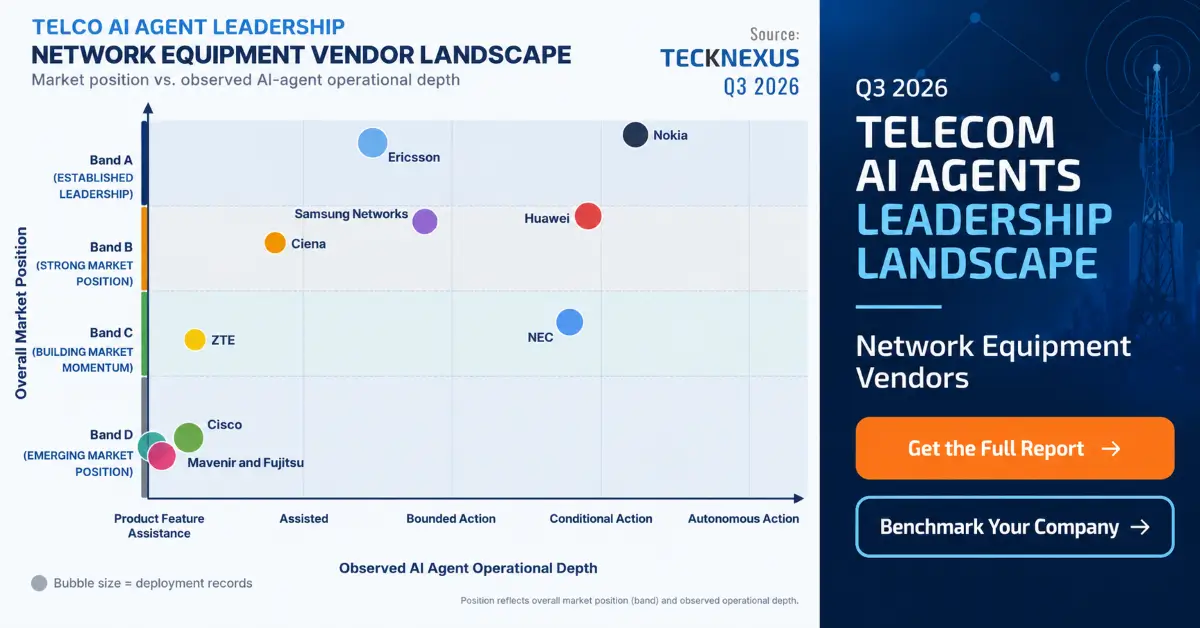
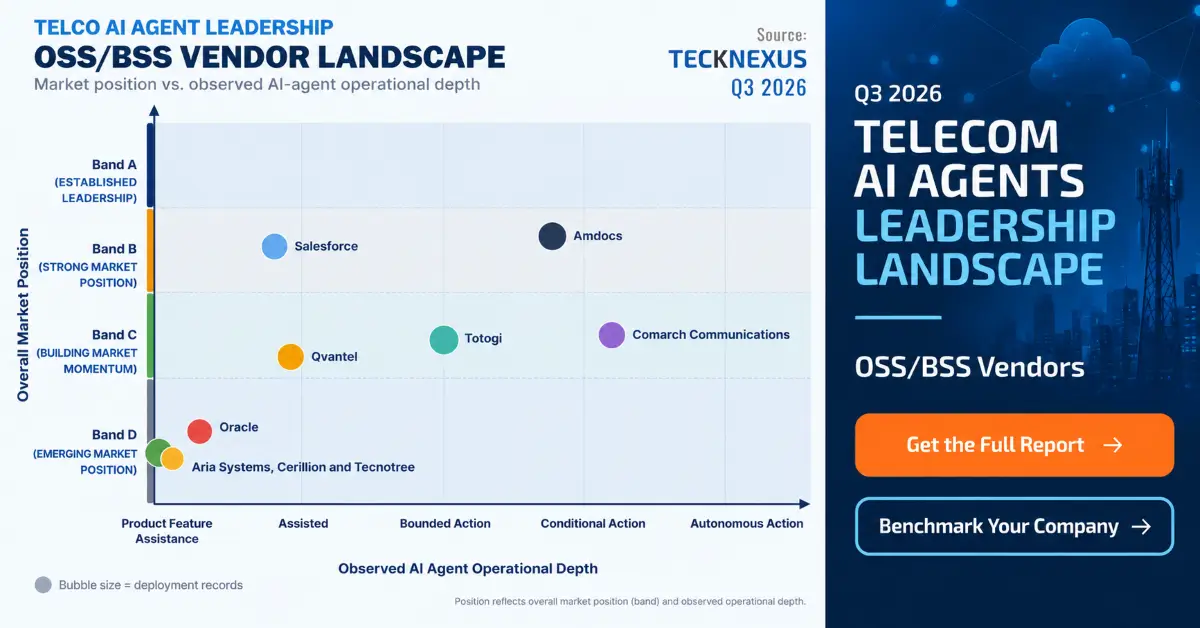
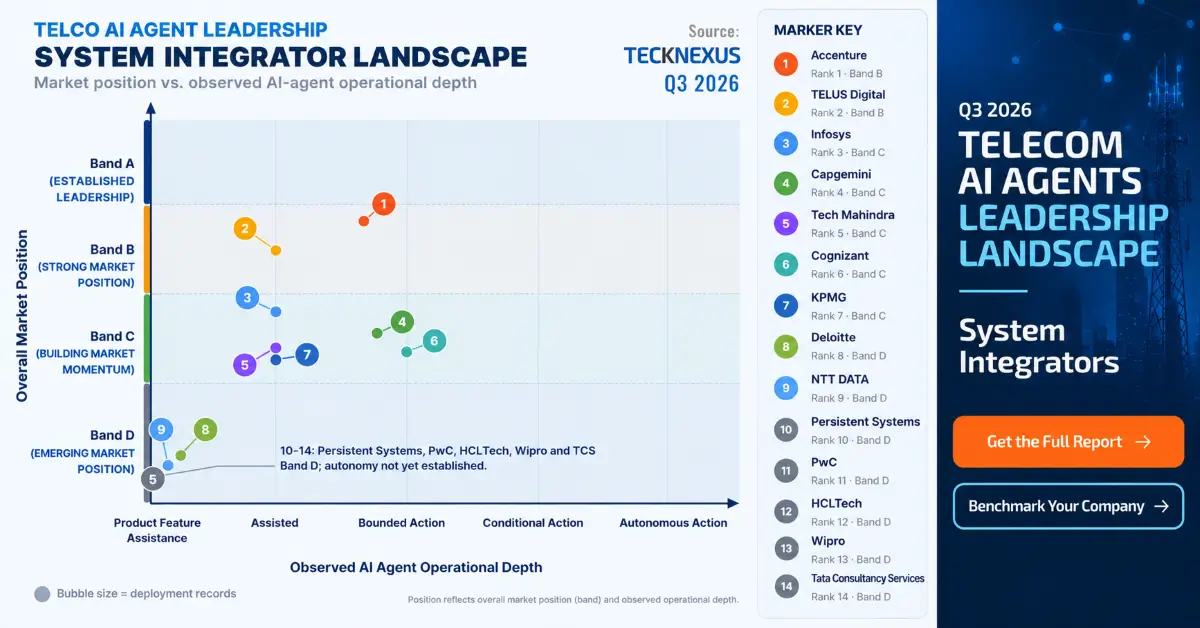
TELECOM AI AGENTS Q3 2026 · Available Now

Explore the Telecom AI Agents Leadership Landscapes

Explore market positioning, deployment momentum and operator validation across the telecom AI agent ecosystem.

Explore Leadership Landscapes
Independent · Evidence-based · Telecom-focused