


Partner Hubs

The next evolution of Ciena’s DCOM: OOB management for diverse data center needs
2027 Intelligence Programs

Verizon

The FCC has approved AT&T’s agreement to acquire a portfolio of UScellular wireless spectrum licenses for $1.02 billion, advancing AT&T’s mid-band capacity strategy and reshaping competitive dynamics in U.S. 5G markets. The licenses span select UScellular markets, bolstering AT&T’s holdings in areas where UScellular has long operated, including rural and midwestern regions. With FCC consent in hand, the parties can proceed to closing market by market, subject to routine administrative steps and any local obligations. Mid-band spectrum remains the sweet spot for balanced capacity and coverage. This positions AT&T to better support RedCap devices, uplink-sensitive applications, and the early wave of 5G-Advanced features.
Ericsson’s latest Mobility Report points to a clear shift: operators are turning 5G capabilities into differentiated, SLA-backed services rather than just selling more data at higher speeds. After years of building coverage and capacity, 5G networks are mature enough to commercialize features like guaranteed latency, uplink boosts, and application-aware prioritization. The catalysts are in place: more 5G Standalone (SA) cores, rising traffic from video creation and immersive apps, and enterprise demand for predictable performance across sites and clouds. The net result is momentum behind premium, differentiated connectivity that can be priced, assured, and exposed to partners.
Verizon will cut more than 13,000 roles as part of a broader restructuring aimed at simplifying operations and resetting its cost base for the next phase of growth. The reduction represents roughly 13% of Verizon’s reported ~100,000 full-time workforce and about one-fifth of its non-union management ranks, according to figures shared alongside the announcement. In parallel, Verizon plans to curb outsourcing and other external labor spending, convert 179 company-owned retail stores to franchise operations, and shutter one store. The restructuring reflects subscriber headwinds and a need to rebalance costs as 5G investment priorities shift from buildout to monetization and automation.
New performance data shows U.S. WISPs are getting faster, but low‑Earth orbit players like Starlink are advancing just as quickly—and the competitive gap in rural markets is narrowing. Based on Speedtest Intelligence data from Q1 2021 to Q2 2025, eight of the larger WISPs—Starry, Resound Networks, Nextlink, Wisper Internet, Unwired Broadband, GeoLinks, Etheric Networks, and Rise Broadband—improved speeds, with download gains outpacing uploads. Starry led by a wide margin with a 202 Mbps median download in Q2 2025, followed by Resound at 99 Mbps and Nextlink at 68 Mbps; GeoLinks trailed at 23 Mbps. Crucially, only a minority of WISP users consistently achieve the FCC’s 100/20 Mbps fixed broadband benchmark.
AT&T has activated EchoStar’s 3.45 GHz spectrum across a massive swath of its macro network, delivering a step-change in speed and capacity that advances its 5G and fixed wireless agenda. AT&T has deployed the 3.45 GHz band on nearly 23,000 cell sites across the contiguous United States, touching more than 5,300 cities. Early field results point to up to 80% faster 5G download speeds in upgraded markets. The same spectrum injection is lifting AT&T’s fixed wireless access (FWA) product, Internet Air, with download speeds up by about 55%. Mid-band spectrum is the engine of 5G performance at scale.
Multiple media reports say Verizon plans to cut roughly 15,000 jobs and shift about 180–200 company-owned stores to franchise operators, marking its most significant restructuring to date. According to reports citing unnamed sources, Verizon is preparing layoffs equal to about 15% of its workforce, with some estimates suggesting cuts could reach up to 20,000 roles when store conversions are included. Verizon ended 2024 with roughly 100,000 U.S. employees after several years of incremental reductions. Leadership has signaled the need to simplify operations and reset the expense base following heavy 5G investment and a more promotional market.
2027 Intelligence Programs
Scroll to Top
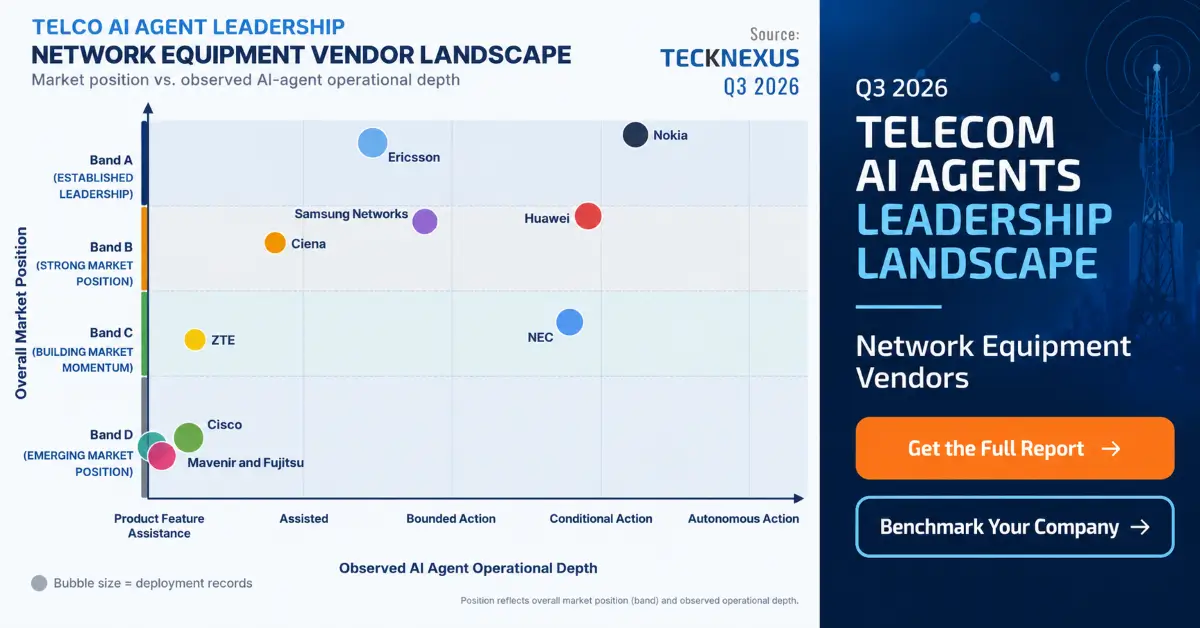
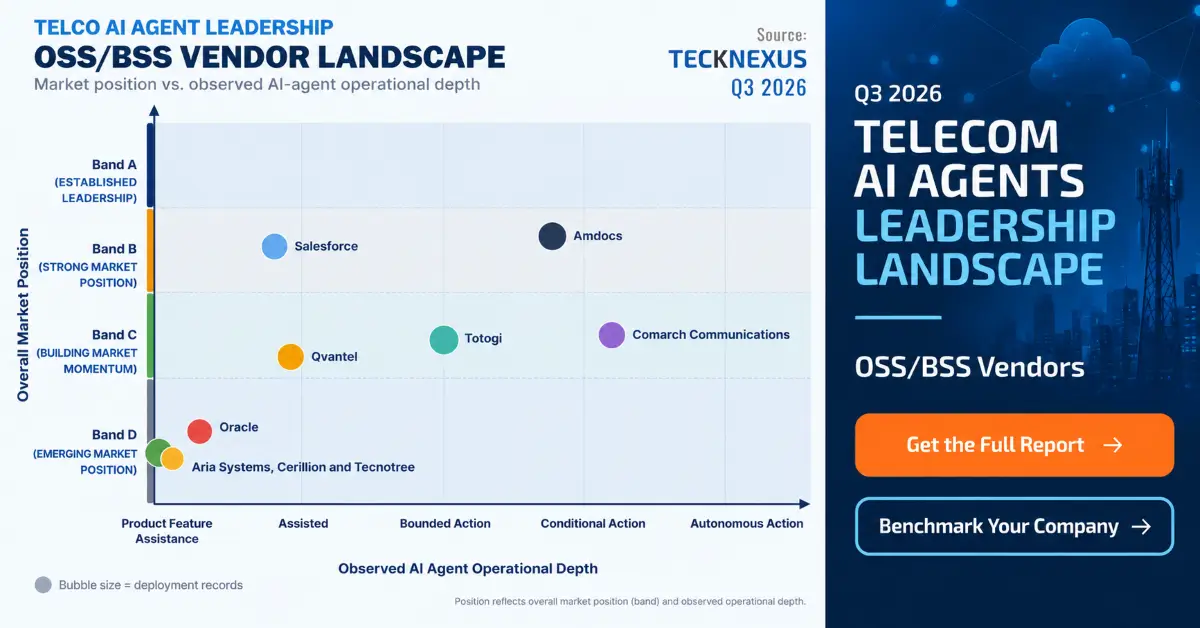
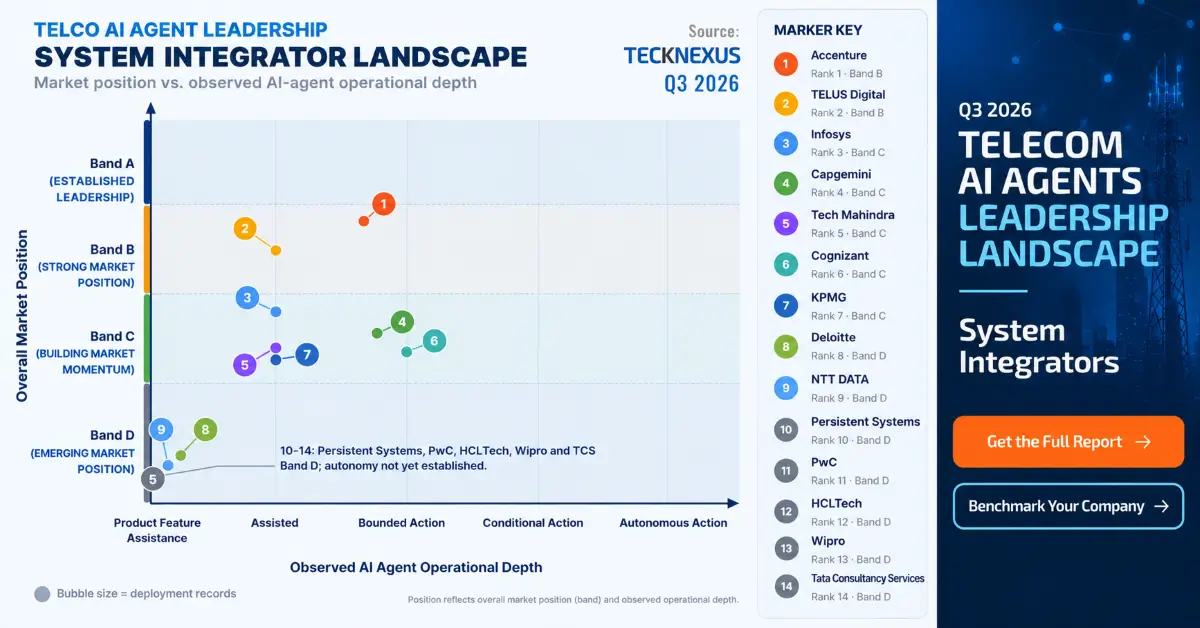
TELECOM AI AGENTS Q3 2026 · Available Now

Explore the Telecom AI Agents Leadership Landscapes

Explore market positioning, deployment momentum and operator validation across the telecom AI agent ecosystem.

Explore Leadership Landscapes
Independent · Evidence-based · Telecom-focused