Robotic

Tesla and Samsung have forged a $16.5B partnership to manufacture AI6 (Hardware 6) chips at Samsung’s Texas fab. Designed as a unified AI hardware platform, these chips will power Tesla’s Full Self-Driving vehicles, Optimus humanoid robots, and AI training clusters. The deal strengthens Tesla’s AI roadmap while positioning Samsung as a key player in high-performance AI silicon and U.S. chip manufacturing.
Private 5G in South Korea is reshaping manufacturing by enabling autonomous robots, real-time quality control, and AI-driven operations. This video podcast explains how dedicated spectrum, practical deployment models, and flexible pricing help factories justify Private 5G over Wi-Fi, plus insights on scaling ROI and future AI-native networks.
ETSI has published its first ISAC report for 6G—ETSI GR ISC 001—highlighting 18 use cases across healthcare, public safety, automation, and mobility. The report dives into deployment scenarios, sensing modalities, and KPIs like fine motion accuracy and sensing latency. It also outlines security, privacy, and sustainability guidelines for real-world ISAC integration into 6G networks.
SuperAI Singapore 2025 will bring together over 7,000 global leaders in AI, robotics, healthcare, finance, and climate tech at Marina Bay Sands on June 18–19. With three stages, a hackathon, and a $200K startup competition, the event unites Eastern and Western AI ecosystems to spotlight frontier breakthroughs. Speakers include Emad Mostaque, Balaji Srinivasan, and Sharon Zhou, with more than 150 tech visionaries expected to appear.
The integration of tariffs and the EU AI Act creates a challenging environment for the advancement of AI and automation. Tariffs, by increasing the cost of essential hardware components, and the EU AI Act, by increasing compliance costs, can significantly raise the barrier to entry for new AI and automation ventures. European companies developing these technologies may face a double disadvantage: higher input costs due to tariffs and higher compliance costs due to the AI Act, making them less competitive globally. This combined pressure could discourage investment in AI and automation within the EU, hindering innovation and slowing adoption rates. The resulting slower adoption could limit the availability of crucial real-world data for training and improving AI algorithms, further impacting progress.
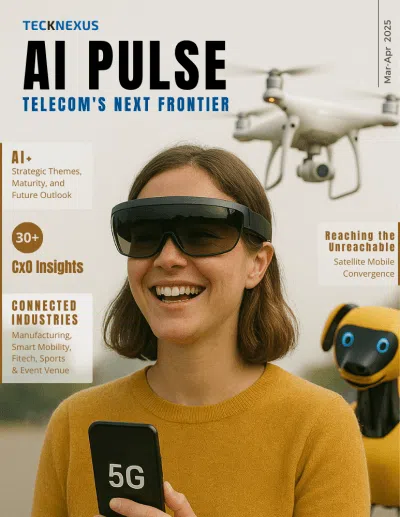
AI Pulse: Telecom’s Next Frontier is a definitive guide to how AI is reshaping the telecom landscape — strategically, structurally, and commercially. Spanning over 130 pages, this MWC 2025 special edition explores AI’s growing maturity in telecom, offering a comprehensive look at the technologies and trends driving transformation.

Explore strategic AI pillars—from AI Ops and Edge AI to LLMs, AI-as-a-Service, and governance—and learn how telcos are building AI-native architectures and monetization models. Discover insights from 30+ global CxOs, unpacking shifts in leadership thinking around purpose, innovation, and competitive advantage.

The edition also examines connected industries at the intersection of Private 5G, AI, and Satellite—fueling transformation in smart manufacturing, mobility, fintech, ports, sports, and more. From fan engagement to digital finance, from smart cities to the industrial metaverse, this is the roadmap to telecom’s next era—where intelligence is the new infrastructure, and telcos become the enablers of everything connected.
In Beyond Connectivity: The Telco to Techco Transformation, leaders from e&, KDDI, and MTN reveal how telecoms are evolving into technology-first, platform-driven companies. These digital pioneers are integrating AI, 5G, cloud, smart infrastructure, and fintech to unlock massive value—from AI-powered smart cities in Japan, to inclusive fintech platforms in Africa, and cloud-first enterprise solutions in the Middle East. This piece explores how telcos are reshaping their role in the digital economy—building intelligent, scalable, and people-first tech ecosystems.
In Technology Game Changers, leaders from Agility Robotics, Lenovo, Databricks, Mistral AI, and Maven Clinic showcase how AI and robotics are moving from novelty to necessity. From Peggy Johnson’s Digit transforming warehouse labor, to Lenovo’s hybrid AI ecosystem, Databricks' frictionless AI UIs, Mistral’s sovereignty-focused open-source models, and Maven’s virtual women’s health platform, this article explores the intelligent, personalized, and responsible future of tech. The next frontier of innovation isn’t just smart—it’s human-centered.
The future of manufacturing is intelligent, autonomous, and sustainable. Powered by private 5G networks, AI, and digital twins, smart factories are revolutionizing how goods are produced and maintained. From predictive maintenance to immersive virtual twins and AI-optimized energy systems, smart manufacturing is unlocking new levels of efficiency and innovation across industries—from ports and shipyards to agriculture and healthcare.
AI is transforming supply chain management by enhancing demand forecasting, optimizing inventory, and streamlining logistics. With the rise of Generative AI, businesses gain real-time insights for better efficiency and sustainability, from ethical sourcing to reducing carbon footprints. Companies like Fujitsu are leading the way with AI-powered solutions across logistics, quality control, and food/pharma safety.
As billionaires like Elon Musk and Jeff Bezos dominate headlines, the evolving space race raises crucial questions: is access to space limited to the ultra-wealthy, or is the sector finally opening up to startups, academia, and public-private partnerships? This article examines the commercial space boom, emerging technologies, and the ethics of an increasingly privatized cosmos.
Nvidia GTC 2025 introduced AI advancements, including Blackwell Ultra AI chips, agentic AI, and AI Factories. With innovations in robotics, generative AI, and AI-driven cloud computing, Nvidia is shaping the future of AI-powered industries. Discover how these technologies are transforming healthcare, finance, automotive, and enterprise applications.

Your Brand. Our Intelligence Tools.

Capture leads at the point of evaluation. Talk to Us →

Sponsored by Palo Alto Networks
⚡ Utilities ⏱ 8 min ✓ Free
This tool is built and hosted by TeckNexus.
Launch Tool →
Whitepaper
This whitepaper explains how utilities can use secure AI-enabled private mobile networks to modernize operations, support distributed intelligence, improve resilience, and strengthen cybersecurity across critical infrastructure. It covers AI applications, private network advantages, zero trust principles, multilayered security architecture, and governance considerations for AI-ready utility environments....
Whitepaper
Non-terrestrial networks are rapidly evolving from experimental satellite systems into an increasingly important part of the global 5G connectivity landscape. This eBook, developed by Radisys in collaboration with TeckNexus, explores how 3GPP standardization, satellite architecture innovation, and software-driven network design are reshaping NTN deployment models. It examines the transition from...
Whitepaper
Private cellular networks are transforming industrial operations, but securing private 5G, LTE, and CBRS infrastructure requires more than legacy IT/OT tools. This whitepaper by TeckNexus and sponsored by OneLayer outlines a 4-pillar framework to protect critical systems, offering clear guidance for evaluating security vendors, deploying zero trust, and integrating IT,...

It seems we can't find what you're looking for.

Scroll to Top

Map your security gaps to real threat scenarios – including Salt Typhoon, Volt Typhoon, AI data poisoning, rogue devices, and unencrypted OT traffic.

Take the free 8-minute assessment built for utility operators evaluating AI-enabled private mobile networks. Get a readiness score across five critical domains, see where your gaps are, and receive a prioritized action plan for what to fix first.

Free • 8 minutes • Built for private network security