MWC

Live Streamed on Mon, 2 Mar at 09:30 - 10:45 CET

In an environment of accelerating change, global decision-makers convene to explore how the industry can unlock the full potential of 5G while laying the groundwork for what comes next. Visionaries take the stage to chart a path toward a hyper-connected world shaped by AI-native networks and next-generation infrastructure. Discover how operators are rethinking value creation and building the foundations of a more dynamic, intelligent and equitable digital economy.
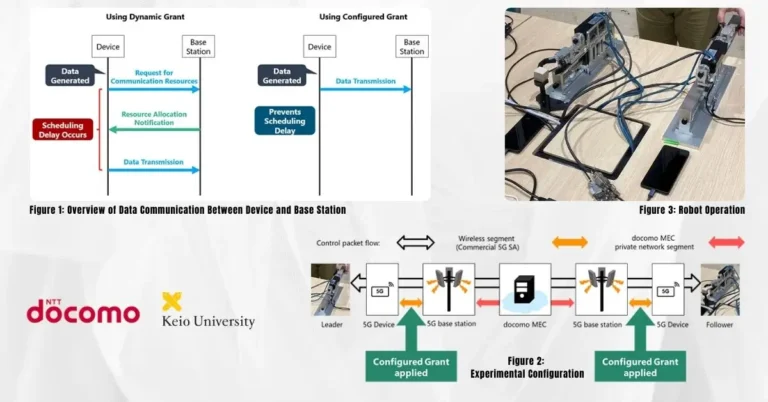
NTT DOCOMO and Keio University have validated that commercial 5G Standalone (SA) can stably support haptic-grade robot teleoperation using network slicing and configured grant—turning years of URLLC theory into practical results. By pairing 3GPP-configured grant scheduling with a low-latency slice and Keio’s Real Haptics technology, DOCOMO showed that public 5G SA can carry force and tactile feedback with the determinism required for safe, precise manipulation. The KPIs demonstrate material improvements in latency stability, force fidelity, and motion smoothness—indicators that the control loop is resilient enough for practical tasks.
TELUS Digital is using Mobile World Congress 2026 to move the AI-in-telecom conversation from pilots to proven production at scale. TELUS Digital reports processing more than two trillion tokens in 2025 through its Fuel iX generative AI platform for TELUS operations and customers. The portfolio spans AI for customer experience, application safety, and network modernization—built and battle-tested within TELUS before client rollout. The Network Design Services practice applies AI to planning and optimization while charting a path from legacy network stacks to cloud-native, automated environments.
SK Telecom introduced ATHENA—an architecture grounded in AI-native operations, Zero Trust security, hyper-connectivity, openness, and cloud-native design—to guide mid- to long-term evolution across RAN, core, transport, and network data platforms. The operator positions “AI for network” and “network for AI” as dual tracks: the former embeds AI into decision loops for autonomous optimization, while the latter tunes the network fabric to serve AI workloads efficiently. SK Telecom will showcase related technologies at MWC Barcelona 2026, including AI agents for networks, AI-RAN for combined connectivity and compute, device-side AI for antenna tuning, and integrated sensing-and-communications.
Deutsche Telekom, Orange, Telefónica, TIM, and Vodafone unveiled a live, pan‑European edge federation at MWC 2026, marking a practical step toward an interoperable edge cloud that spans national borders. The five largest European operators demonstrated the European Edge Continuum, a federated edge capability now running in lab and pre‑production environments. The initiative provides a single entry point to deploy and manage applications across multiple operators’ edge nodes, with automated placement, security controls, and mobility‑aware continuity. The platform draws on components developed under the IPCEI‑CIS program backed by the EU’s NextGenerationEU funds, and is positioned for industrialization and commercial rollout next.
Deutsche Telekom’s early live results showing up to 65% energy savings in its 5G core spotlight a pragmatic path to cut opex and carbon as traffic surges and standalone 5G scales. Operators have wrung out much of the easy efficiency from hardware refreshes; the next gains come from software-driven, demand-aware control. DT is applying that logic to the core, shifting components to run only when needed rather than idling at full power. The results are enabled by DT’s “Horizontal Telco Cloud,” a unified, standards-based platform that replaces fragmented stacks with one common layer for core services. Initial live-network tests have been completed, with broader rollout planned and further detail expected at MWC Barcelona 2026.
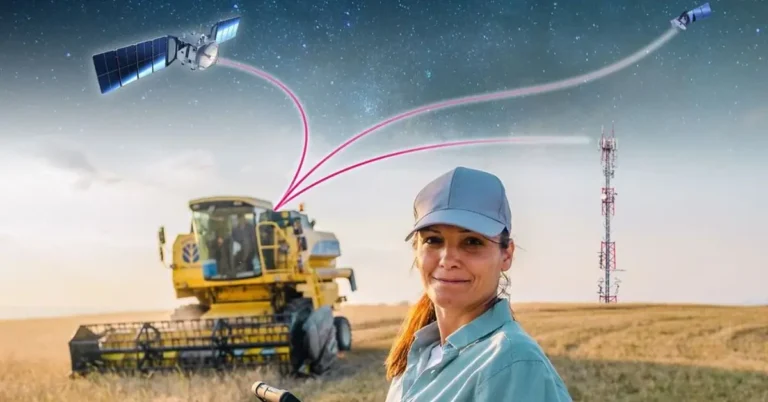
Deutsche Telekom’s launch of seamless IoT roaming across terrestrial, GEO, and LEO networks signals a practical turning point for standards‑based satellite IoT at global scale. Multi‑orbit roaming blends the strengths of geostationary (always‑on footprint, predictable links) with low‑earth orbit (lower latency, better high‑latitude reach) and terrestrial cellular to keep devices online where traditional networks fall short. The service has been validated on Nordic Semiconductor’s nRF9151—billed as the first 3GPP‑compliant cellular IoT module to support terrestrial NB‑IoT/LTE‑M and NB‑NTN over both GEO and LEO—which matters for total cost of ownership and speed to scale.
LG Uplus is moving from rule-based automation to closed-loop autonomy, using AI agents and digital twins to accelerate toward a fully autonomous network by 2028. Its core platform, the AI Orchestration Nexus (AION), is already automating repetitive operations and has contributed to a reported 70% reduction in customer complaints about network quality—an early signal that the approach is translating into measurable outcomes. The company plans to showcase these capabilities at MWC Barcelona 2026, underscoring growing operator interest in operational AI as 5G matures and traffic patterns become more volatile.
Start: March 2, 2026
End: March 5, 2026
Venue: Fira Gran Via, Barcelona
Location: Barcelona
In AI in Telecom: Strategic Themes, Maturity, and the Road Ahead, we explore how AI has shifted from buzzword to backbone for global telecom leaders. From AI-native networks and edge inferencing, to domain-specific LLMs and behavioral cybersecurity, this article maps out the strategic pillars, real-world use cases, and monetization models driving the AI-powered telecom era. Featuring CxO insights from Telefónica, KDDI, MTN, Telstra, and Orange, it captures the voice of a sector transforming infrastructure into intelligence.

Your Brand. Our Intelligence Tools.

Capture leads at the point of evaluation. Talk to Us →

Sponsored by Palo Alto Networks
⚡ Utilities ⏱ 8 min ✓ Free
This tool is built and hosted by TeckNexus.
Launch Tool →
Whitepaper
This whitepaper explains how utilities can use secure AI-enabled private mobile networks to modernize operations, support distributed intelligence, improve resilience, and strengthen cybersecurity across critical infrastructure. It covers AI applications, private network advantages, zero trust principles, multilayered security architecture, and governance considerations for AI-ready utility environments....
Whitepaper
Non-terrestrial networks are rapidly evolving from experimental satellite systems into an increasingly important part of the global 5G connectivity landscape. This eBook, developed by Radisys in collaboration with TeckNexus, explores how 3GPP standardization, satellite architecture innovation, and software-driven network design are reshaping NTN deployment models. It examines the transition from...
Whitepaper
Private cellular networks are transforming industrial operations, but securing private 5G, LTE, and CBRS infrastructure requires more than legacy IT/OT tools. This whitepaper by TeckNexus and sponsored by OneLayer outlines a 4-pillar framework to protect critical systems, offering clear guidance for evaluating security vendors, deploying zero trust, and integrating IT,...

It seems we can't find what you're looking for.

Scroll to Top

Map your security gaps to real threat scenarios – including Salt Typhoon, Volt Typhoon, AI data poisoning, rogue devices, and unencrypted OT traffic.

Take the free 8-minute assessment built for utility operators evaluating AI-enabled private mobile networks. Get a readiness score across five critical domains, see where your gaps are, and receive a prioritized action plan for what to fix first.

Free • 8 minutes • Built for private network security