Intelligence Journeys
AI Use Cases for Utilities
Private Broadband for Utilities

Meta

A German court has ordered Meta’s Edge Network Services to pay Deutsche Telekom roughly €30 million for network services tied to Meta traffic, reshaping leverage in Europe’s peering and interconnection market. The dispute centered on whether Meta’s subsidiary used Deutsche Telekom’s private interconnection and peering points under a valid, paid contract after an earlier agreement expired. The court sided with the operator, concluding that continued use of those private interconnection facilities created obligations to pay for services over a multi-year period covering traffic from Facebook, Instagram, and WhatsApp.
An AI‑fueled land grab for advanced memory is squeezing supply for handsets, undercutting Qualcomm’s near‑term outlook even as end‑demand for premium Android devices improves. Memory suppliers are prioritizing high‑bandwidth memory (HBM) and DDR5 for AI accelerators and data center servers, diverting wafer capacity and capex away from mobile‑grade LPDDR5/5X and UFS storage. The result is a classic allocation cycle: supply chases the highest‑margin demand (HBM and enterprise SSDs), while downstream categories like smartphones and some edge devices face tighter availability and rising component costs. For Qualcomm, whose Snapdragon platforms anchor premium Android devices, the constraint limits upside volume and mix in the near term.
Amazon and Google currently lead the AI capex race, with Microsoft and Meta not far behind, and the prize is control over scarce compute, power, and network resources that define the next decade of cloud and AI services. For telecom and infrastructure players, the opportunity is immediate: deliver power-adjacent, fiber-rich, AI-ready capacity with speed and predictable SLAs. For enterprises, the mandate is pragmatic: secure capacity, design for portability across heterogeneous silicon, and enforce cost governance as inference scales. The winners will be those who pair aggressive buildouts with disciplined execution—turning record capex into durable platforms and customer outcomes.
The merger creates a $1.25 trillion private giant that fuses launch, satellites, and AI, but the strategic logic goes beyond orbiting data centers. SpaceX brings rockets, Starship scale, and the world’s largest NGSO broadband network via Starlink. xAI brings models, AI R&D, and a brand in the hottest capital market category. Together, they present a single story to investors: own the stack from compute to constellation to connectivity, on and off Earth. Consolidation gives Musk freedom to reallocate cash flows and simplifies the roadshow pitch.
The next wave of digital transformation will be defined by AI workloads riding on cloud and edge infrastructure over 5G networks, and that shift will change how networks are built, monetized, and secured. Generative and agentic AI move more compute into the network, creating persistent, uplink-heavy, low-latency flows rather than the mostly downlink, best-effort traffic of the smartphone era. Video from cameras, glasses, and sensors feeds models at the edge and in the cloud; results return in milliseconds to people and machines. That means tighter latency budgets, deterministic jitter control, and stronger guarantees for both throughput and reliability.

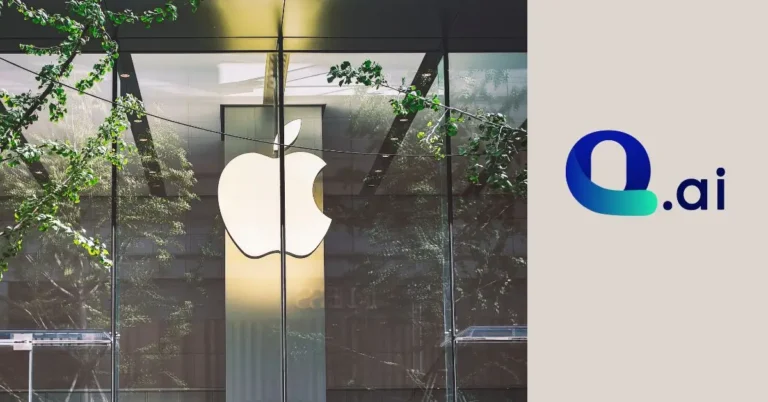
Apple’s purchase of Israeli start-up Q.ai accelerates its shift toward multimodal, audio-first wearables and tighter on-device AI. Apple acquired Q.ai, a Tel Aviv-based AI company operating in stealth since 2022, in a transaction reported around $2 billion, making it Apple’s second-largest acquisition after Beats. The move lands as Apple pushes a broader AI refresh across devices and services, including a reworked Siri due next month and a reported integration of Google’s Gemini into Apple Foundation Models. The core value is a human-computer interface designed to reduce friction between intent and AI execution. This enables “silent speech” and context awareness without overt voice commands or touch.
The administration plans an executive order to set a single national AI rulebook and override state-level frameworks, a move with immediate implications for telecom, cloud, and enterprise AI strategies. President Trump signaled he will sign an executive order establishing a uniform federal approach to AI governance that preempts state regulations. Reports indicate the order aims to reduce compliance friction by replacing diverse state rules with a lighter-touch national framework focused on competitiveness. State officials from both parties, safety advocates, and labor groups are preparing to fight the order, citing risks related to consumer harm, deepfakes, hiring bias, and child safety. On the other side, Silicon Valley leaders warn that 50-state compliance regimes could deter innovation and blunt national competitiveness.
A high-stakes policy fight has emerged in India over the 6 GHz band, pitting global device and cloud ecosystems against mobile operators over whether the band should power unlicensed Wi‑Fi or licensed mobile (IMT) networks. Apple, Amazon, Cisco, Meta, HP, and Intel have jointly urged India’s regulator, TRAI, to reserve the full 6 GHz range for Wi‑Fi, arguing the band is not technically or commercially ready for IMT and that unlicensed use will deliver immediate, widespread capacity benefits. Reliance Jio, Bharti Airtel, and Vodafone Idea have countered that delicensing upper 6 GHz would permanently foreclose India’s option to deploy wide‑area licensed broadband in prime mid‑band spectrum.
Alphabet’s Google will spend $40 billion to build three AI-focused data centers in Texas, signaling that power access and grid proximity now define hyperscale strategy more than any single technology feature. The build spans one campus in Armstrong County in the Texas Panhandle and two in Haskell County near Abilene, with investments running through 2027. Google expects the program to create thousands of construction and supplier jobs and hundreds of long-term operations roles, consistent with typical hyperscale staffing patterns. Texas offers relatively low-cost power, faster interconnection timelines, abundant land, and pro-investment policies, making it second only to Virginia in U.S. data center count.
Jeff Bezos is stepping back into day-to-day operations as co-CEO of Project Prometheus, a new AI company reportedly funded with $6.2 billion to build “AI for the physical economy.” Project Prometheus will be co-led by Bezos and Vik Bajaj, an operator-scientist with leadership experience at Google X, Verily, and Foresite Labs. Early reports indicate the company is targeting engineering and manufacturing tasks across sectors such as aerospace, automotive, and computing hardware. Headcount is already near 100, drawing researchers from OpenAI, Google DeepMind, and Meta, signaling an aggressive push for top-tier AI talent.
Renewables are emerging as the default option for new AI campuses, but the share that is truly carbon-free around the clock will hinge on siting, storage, and market design. Annual REC matching is no longer sufficient for leading buyers; the bar is shifting toward hourly, 24/7 carbon-free energy matching initiatives. Yet diurnal and seasonal variability limits how much of a site’s load can be met by solar and batteries alone, especially in non-sunny regions or during prolonged weather events. Expect mixed portfolios: on-site renewables and batteries, off-site PPAs (solar and wind), emerging long-duration storage, and grid purchases backed by hourly certificates where available.

Partner Hubs

Download content, access intelligence tools, and hear from executives.

Partner Events

  • M360 ASEAN
  • FutureNet Asia 2026
  • Network X Vienna 2026
Scroll to Top