Private Network
Intelligence
Intelligence Journeys
Utilities Private Broadband Planning
AI Use Case Planning for Utilities

GPU

Enterprises need indoor mobile coverage that works like the macro, integrates with private wireless, and sets a path to 5G and AI without ripping-and-replacing infrastructure. InfiniG’s Neutral Host as a Service turns a CBRS shared-spectrum deployment into an extension of public mobile networks using a 3GPP MOCN architecture. Employees, contractors, and visitors get native service from AT&T, T-Mobile, and Verizon on their existing SIMs—no apps, no plan changes. The Nokia RAN is 5G-ready out of the box, protecting investments as operators certify 5G Standalone and VoNR on neutral host. Radios and gateways are software-upgradable, so enterprises can deploy today for LTE and move to 5G without swapping hardware.
A new alliance between SK Telecom (SKT), Arm, and Rebellions targets the fast-growing AI inference market with a server platform designed for sovereign AI and telecom-grade data centers. SKT will validate a new AI server that combines Arm’s AGI CPU—its first Arm-designed data center processor, based on Neoverse CSS V3—with Rebellions’ RebelCard inference accelerator in live AI data center environments. The partners will co-develop the full software stack, from firmware up, and test telco-specific models and large-scale workloads, including SKT’s proprietary foundation model, A.X K1. Industry focus is shifting from training to inference at scale, where energy, latency, and total cost of ownership (TCO) are decisive.
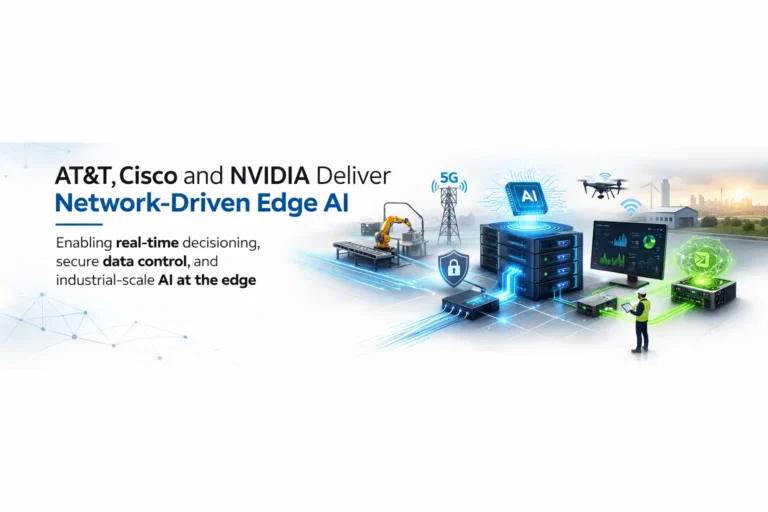
AT&T’s new collaboration with Cisco and NVIDIA signals a decisive shift from cloud-centric AI to network-driven edge intelligence for enterprise operations. Enterprises want real-time decisioning without shipping sensitive data to distant clouds, and operators need a scalable way to deliver it. By combining AT&T’s dedicated IoT core with Cisco’s mobility services platform and NVIDIA-powered AI infrastructure, the trio is packaging deterministic connectivity, near-device inference, and policy enforcement into a single, operator-grade platform. The promise: lower latency, tighter data control, and a path to production for AI at industrial scale.
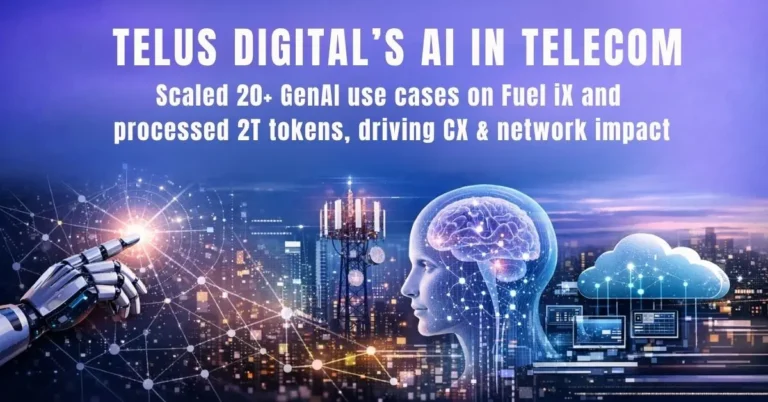
TELUS Digital is using Mobile World Congress 2026 to move the AI-in-telecom conversation from pilots to proven production at scale. TELUS Digital reports processing more than two trillion tokens in 2025 through its Fuel iX generative AI platform for TELUS operations and customers. The portfolio spans AI for customer experience, application safety, and network modernization—built and battle-tested within TELUS before client rollout. The Network Design Services practice applies AI to planning and optimization while charting a path from legacy network stacks to cloud-native, automated environments.
India is moving to anchor a larger slice of global AI compute by pairing policy incentives with large-scale private capital and renewable power. New Delhi has outlined plans to attract more than $200 billion for AI infrastructure over the next two years, positioning the country as a production base for compute, data, and advanced applications rather than a pure consumer market. The policy stack aims to reduce friction for export-oriented AI services while widening access to shared compute for startups and enterprises. Adani Group plans to invest $100 billion through 2035 to build renewable-powered, AI-optimized data centers across India.
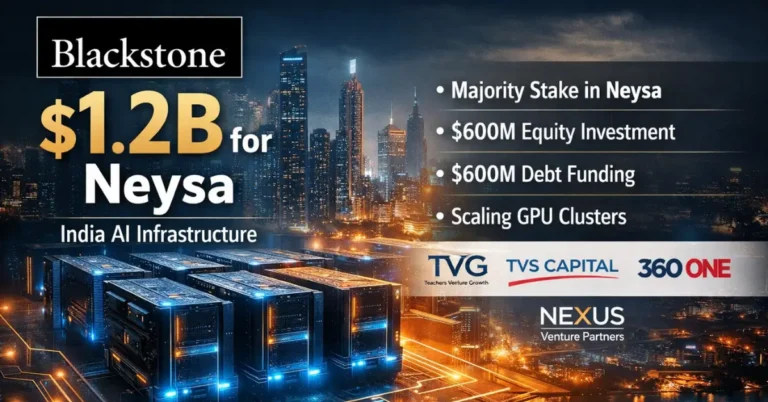
Blackstone will take a majority stake in Neysa through up to $600 million in primary equity, alongside Teachers’ Venture Growth, TVS Capital, 360 ONE Asset, and Nexus Venture Partners; the company also plans up to $600 million in debt to accelerate buildout. The raise is a step change from Neysa’s earlier $50 million and positions the Mumbai-headquartered startup to scale domestic GPU clusters for enterprises, public sector agencies, and AI developers.
The plan centers on Visakhapatnam, a port city on India’s east coast, as a tightly coupled zone for data centers, subsea cable landings, power, water, and the digital supply chain. State leadership wants the cluster to be more than rack space. It aims to bring in server assemblers, power and cooling vendors, and specialized logistics to create end-to-end capability. The city is also being pitched as a landing point for new subsea systems toward Singapore, which would diversify India’s international connectivity beyond Chennai and Mumbai and lower latency into Southeast Asia.
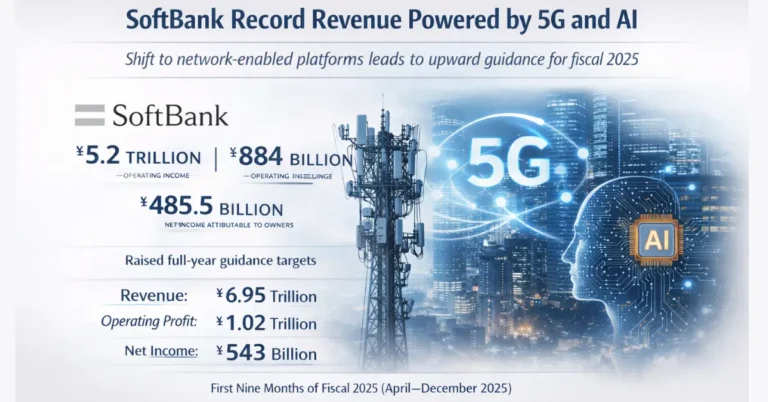
SoftBank Corp. delivered its strongest nine-month performance on record and lifted full-year guidance, underscoring a strategic shift from connectivity-only services to network-enabled platforms in AI, cloud, and edge. Through the first nine months of fiscal 2025 (April–December 2025), SoftBank reported revenue of ¥5.2 trillion, up 8% year over year, and operating income of ¥884 billion, also up 8%, with net income attributable to owners rising 11% to ¥485.5 billion. Management raised full-year targets to ¥6.95 trillion in revenue, ¥1.02 trillion in operating profit, and ¥543 billion in net income, signaling confidence heading into the March 31, 2026 year end.
Deutsche Telekom and T-Systems have switched on a sovereign, NVIDIA-powered AI factory in Munich’s Tucherpark, positioning Germany as a serious contender in industrial AI infrastructure. The new facility brings nearly 10,000 NVIDIA Blackwell GPUs online, including DGX B200 systems and NVIDIA RTX Pro Server GPUs, delivering up to 0.5 exaFLOPS of AI compute for training, fine-tuning, and large-scale inference. Operated by T-Systems on German soil, the platform targets industry, research, startups, and the public sector with strict controls for data protection, security, and availability. Early customers include Agile Robots, which is combining vision, robotics, and foundation models, and PhysicsX, which applies AI to technical simulation.
Amazon and Google currently lead the AI capex race, with Microsoft and Meta not far behind, and the prize is control over scarce compute, power, and network resources that define the next decade of cloud and AI services. For telecom and infrastructure players, the opportunity is immediate: deliver power-adjacent, fiber-rich, AI-ready capacity with speed and predictable SLAs. For enterprises, the mandate is pragmatic: secure capacity, design for portability across heterogeneous silicon, and enforce cost governance as inference scales. The winners will be those who pair aggressive buildouts with disciplined execution—turning record capex into durable platforms and customer outcomes.
TECKNEXUS PRIVATE NETWORKS
Congratulations to the 2026 Award Winners
Explore the Winners →

Partner Hubs

Telco AI Agent Leadership

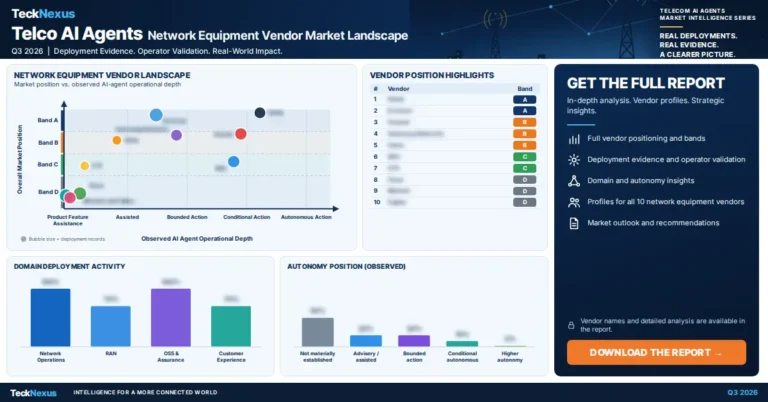
Telco AI Agent Leadership Landscape - Network Equipment Vendors
Network Equipment Vendor Report
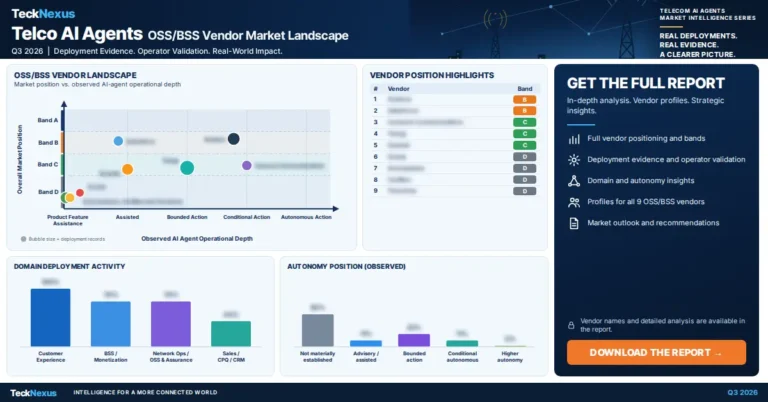
How are Amdocs, Salesforce, Comarch, Totogi, Qvantel, Oracle and other OSS/BSS vendors deploying telecom AI agents?
OSS/BSS Vendor Report
How are Amdocs, Salesforce, Comarch, Totogi, Qvantel, Oracle and other OSS/BSS vendors deploying telecom AI agents?
System Integrator Report
Scroll to Top