Private Network
Intelligence
Intelligence Journeys
Utilities Private Broadband Planning
AI Use Case Planning for Utilities
https://www.ciena.com/insights/blog/2026/rls-hyper-rail-solving-the-challenges-of-multi-rail-photonics?campaign=X1994626&channel=media-direct-buy&medium=display&source=tecknexus&ad-type=&campaign-type=&term=&region=&lid=D3JLmZ

Drones

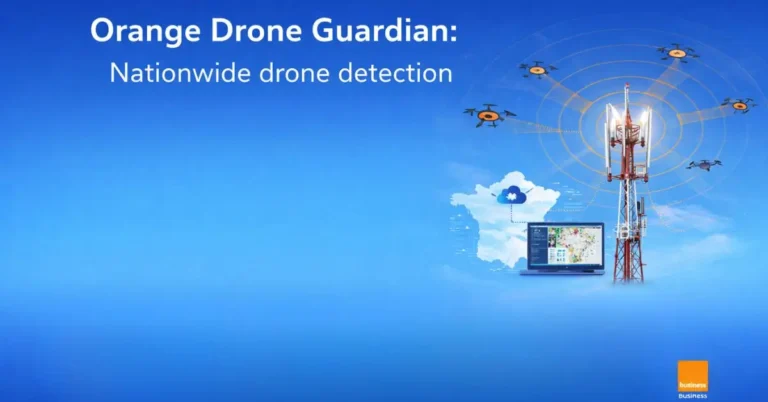
Orange Business has launched Orange Drone Guardian, a counter‑UAS service that turns telco infrastructure into a nationwide sensing fabric—arriving as drone activity, regulation, and critical-infrastructure risk converge. Orange is leveraging assets few others can: secure nationwide connectivity, cloud qualified to ANSSI’s SecNumCloud 3.2 standard, a domestic security operations capability, and a tower footprint via TOTEM’s 19,700 sites across France. The offer combines sensors, command‑and‑control software, secure cloud, and managed operations in a subscription bundle designed to scale and evolve. Delivered as a subscription, customers gain real‑time situational awareness without large upfront capex.
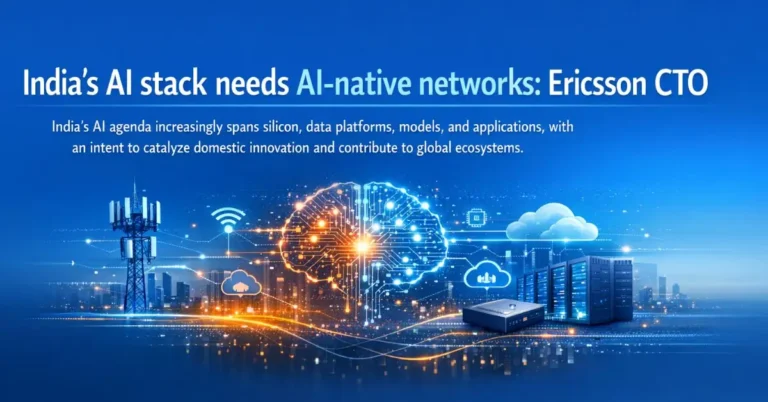
India’s AI agenda increasingly spans silicon, data platforms, models, and applications, with an intent to catalyze domestic innovation and contribute to global ecosystems. For telecom leaders, the message is clear: AI is not a bolt-on capability but a system-level transformation that touches RAN, core, transport, cloud, and the enterprise edge. The AI economy runs on connectivity—low-latency access to data, assured bandwidth, location-aware processing, and programmable control. The operators that can fuse connectivity, compute, and data into a cohesive platform will set the pace for India’s next wave of digital growth.
Across roughly 2,000 decision-makers in telecom, data center, and large enterprises, a strong majority doubts that existing infrastructure will keep up with AI’s next wave. In the US, most respondents expect network buildouts to lag AI investment and call out near-term priorities such as optimizing bidirectional data flows, expanding fiber capacity, enabling real-time training feedback, and placing low-latency compute closer to users. In Europe, most enterprise leaders say current networks are not ready for broad AI adoption; many already report latency, throughput, and resiliency pain as data demands rise. The common thread is clear: without accelerated modernization, networks risk becoming the bottleneck that constrains AI outcomes.
ZTE, China Unicom Liaoning and Dalian Changhai Airport have put a 5G-Advanced private network with integrated sensing and communications into live service to address low-altitude security at an island test flight field. The partners deployed a private 5G-Advanced architecture that fuses high-throughput connectivity with precision sensing on the same infrastructure, tailored for a maritime, island airport where traditional patrols and single-sensor radars leave blind spots for “low, slow, small” targets such as drones and bird flocks. According to the partners, the network is running 24/7 at the test flight field and has lifted low-altitude detection accuracy near 98%. By consolidating connectivity and sensing on one footprint, the deployment claims about 30% less space and roughly 25% lower capital intensity versus separate radios and radars.
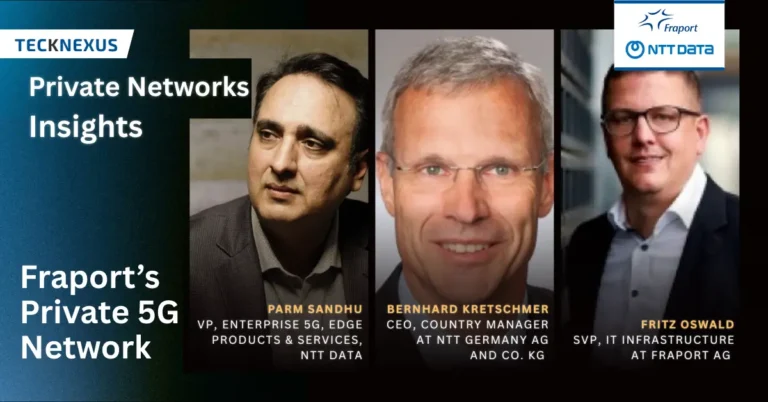
Winner – Private Network Excellence in Airports, NTT DATA, in partnership with Fraport and Nokia is transforming Frankfurt Airport with one of the world’s largest private 5G networks. By integrating AI and edge computing, the network supports real-time communication, autonomous systems, predictive maintenance, and smart ground operations. Fraport is laying the groundwork for a scalable, future-ready airport infrastructure that benefits airlines, partners, and passengers.
Winner – Private Network Excellence in Agriculture - Invences, in partnership with Trilogy Networks, are transforming agriculture with FarmGrid, a smart farming platform powered by private 5G, edge AI, and IoT. Deployed across multiple U.S. states, FarmGrid delivers 20–30% yield improvements, 25% resource savings, and a path to climate-resilient, digitally connected farming.
Samsung and NVIDIA are scaling a 25-year alliance into an AI-driven manufacturing platform that fuses memory, foundry, robotics and networks on a backbone of accelerated computing. Samsung plans to deploy more than 50,000 NVIDIA GPUs to infuse AI across the company’s manufacturing lifecycle—from chip design and lithography to equipment operations, logistics and quality control. The “AI factory” is designed as a unified, data-rich fabric where models continuously analyze and optimize processes in real time, shrinking development cycles and improving yield and uptime. The scope goes beyond semiconductors to include mobile devices and robotics, signaling a company-wide digital transformation anchored in accelerated computing.
NVIDIA and Nokia unveiled a strategic partnership to deliver commercial AI-RAN products built on NVIDIA’s Aerial RAN Computer Pro (ARC-Pro) platform and Nokia’s RAN software portfolio, with NVIDIA committing a $1 billion equity investment in Nokia at approximately $6.01 per share, subject to customary closing conditions. The companies are targeting an AI-native RAN that runs both radio workloads and AI inference on a software-defined, accelerated platform, with a cumulative AI-RAN market opportunity that Omdia estimates will exceed $200 billion by 2030. ARC-Pro is positioned as a 6G-ready accelerated computing platform that couples connectivity, compute, and sensing, enabling upgrades from 5G-Advanced to 6G largely via software.
Argentina’s regulator ENACOM has created a new licensing framework and reserved spectrum to let enterprises run stand-alone private mobile networks across critical industries. ENACOM has designated the 2300–2400 MHz band for Private Wireless Broadband Systems, a category designed for on-premise, non-public LTE/5G networks serving operational technology and enterprise applications rather than consumer subscribers. The framework supports high-throughput, low-latency, and massive IoT use cases, enabling enhanced video, automation, and machine communications across industrial campuses and field operations; 2.3 GHz maps to widely supported 3GPP Band 40 (LTE TDD) and NR n40, giving enterprises access to a mature device and radio ecosystem.
Fresh data from Nokia and GlobalData shows that private wireless and on-premise edge are delivering rapid ROI, unlocking AI at scale, and improving security and sustainability across industrial sites. Industrial operations need deterministic connectivity, real-time data, and strong security to automate safely and sustainably. Across 115 organizations, 87% of adopters reported a return on investment within one year after deploying private wireless with on-prem edge. Setup costs were lower than alternatives for 81% of respondents, and 86% cut ongoing costs. Critically, 94% deployed on-prem edge alongside private wireless, and 70% are already powering AI use cases.
Connected aviation is reshaping airports into smart, seamless ecosystems inside and outside the terminal. This case study reveals how hubs like Changi, Schiphol, and SAN use private networks, IoT, and cross-team collaboration to improve passenger flow, airside operations, sustainability, and safety.
5G Advanced and AI are reshaping utility private networks into hyper-intelligent, resilient grids. Learn how edge AI, programmable networks, digital twins, and human-in-the-loop automation will enable predictive maintenance, real-time grid optimization, and new energy services.
https://www.ciena.com/insights/blog/2026/rls-hyper-rail-solving-the-challenges-of-multi-rail-photonics?campaign=X1994626&channel=media-direct-buy&medium=display&source=tecknexus&ad-type=&campaign-type=&term=&region=&lid=D3JLmZ
TECKNEXUS PRIVATE NETWORKS
Congratulations to the 2026 Award Winners
Explore the Winners →

Partner Hubs

Telco AI Agent Leadership

Telco AI Agent Leadership Landscape - Network Equipment Vendors
Network Equipment Vendor Report
How are Amdocs, Salesforce, Comarch, Totogi, Qvantel, Oracle and other OSS/BSS vendors deploying telecom AI agents?
OSS/BSS Vendor Report
How are Amdocs, Salesforce, Comarch, Totogi, Qvantel, Oracle and other OSS/BSS vendors deploying telecom AI agents?
System Integrator Report
Scroll to Top