Private Network
Intelligence
Intelligence Journeys
Utilities Private Broadband Planning
AI Use Case Planning for Utilities

Customer Service

California has enacted SB 53, a first-of-its-kind AI safety law aimed at large model developers, with ripple effects for enterprises that build, buy, or operate AI at scale. SB 53 targets “frontier” AI developers—think OpenAI, Anthropic, Meta, and Google DeepMind—requiring public transparency on how they apply national and international standards and industry best practices. It institutionalizes safety incident reporting to California’s Office of Emergency Services and extends protections for whistleblowers who surface material risks. The California Department of Technology will recommend updates annually, ensuring the regime evolves with the tech.
Databricks is adding OpenAI’s newest foundation models to its catalog for use via SQL or API, alongside previously introduced open-weight options gpt-oss 20B and 120B. Customers can now select, benchmark, and fine-tune OpenAI models directly where governed enterprise data already lives. The move raises the stakes in the race to make generative AI a first-class, governed workload inside data platforms rather than an external service tethered by integration and compliance gaps. For telecom and enterprise IT, it reduces friction for AI agents that must safely traverse customer, network, and operational data domains.
This article argues that AI is revolutionizing the telecom industry, offering significant cost savings, improved network performance, and enhanced customer experiences. It highlights AI's ability to optimize networks, detect fraud, and improve customer service. The article emphasizes the importance of selecting the right AI solution, focusing on tailored, secure, cost-effective, and compliant models. Ultimately, it positions AI as a crucial tool for telecom companies to thrive in a competitive landscape by automating tasks, improving efficiency, and prioritizing customer satisfaction.
India's AI oversight for telecom is moving from recommendations to implementation, with policy review and technical workstreams running in parallel. The Telecom Regulatory Authority of India has issued recommendations on leveraging artificial intelligence and big data in telecom, including the creation of an independent statutory authority for AI governance. The proposed Artificial Intelligence and Data Authority of India (AIDAI) is envisioned to promote responsible AI development and regulate sectoral use cases. The Ministry of Electronics and Information Technology has initiated projects with research bodies and universities focused on how to ensure and test AI trustworthiness.
Fresh polling signals rising public concern that AI could upend employment, destabilize politics, and strain social and energy systems. A recent Reuters/Ipsos survey of 4,446 U.S. adults found that 71% worry AI will permanently displace too many workers. Seventy-seven percent of respondents fear AI will fuel political instability if hostile actors exploit the technology. The poll also shows broad worry about AIs indirect costs: 66% are concerned about AI companions displacing human relationships, and 61% are concerned about the technology's energy footprint. Bottom line: Public concern is high, and that increases the cost of missteps.
Congratulations to the 2026 Private Network Leadership Award Winners
Explore Winners →

Partner Hubs

Latest Reports

It seems we can't find what you're looking for.

Telco AI Agent Leadership

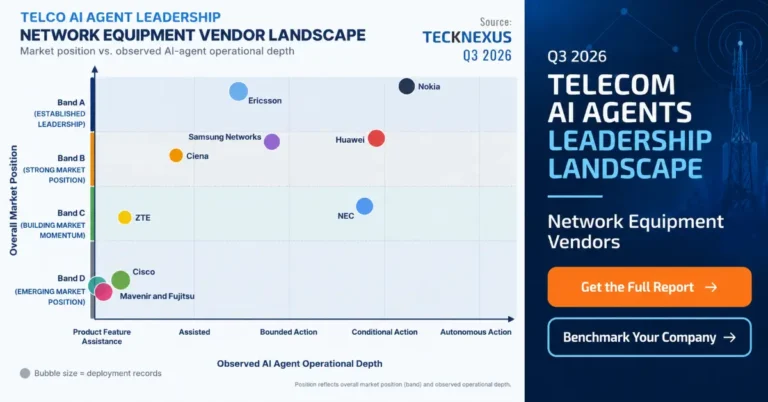
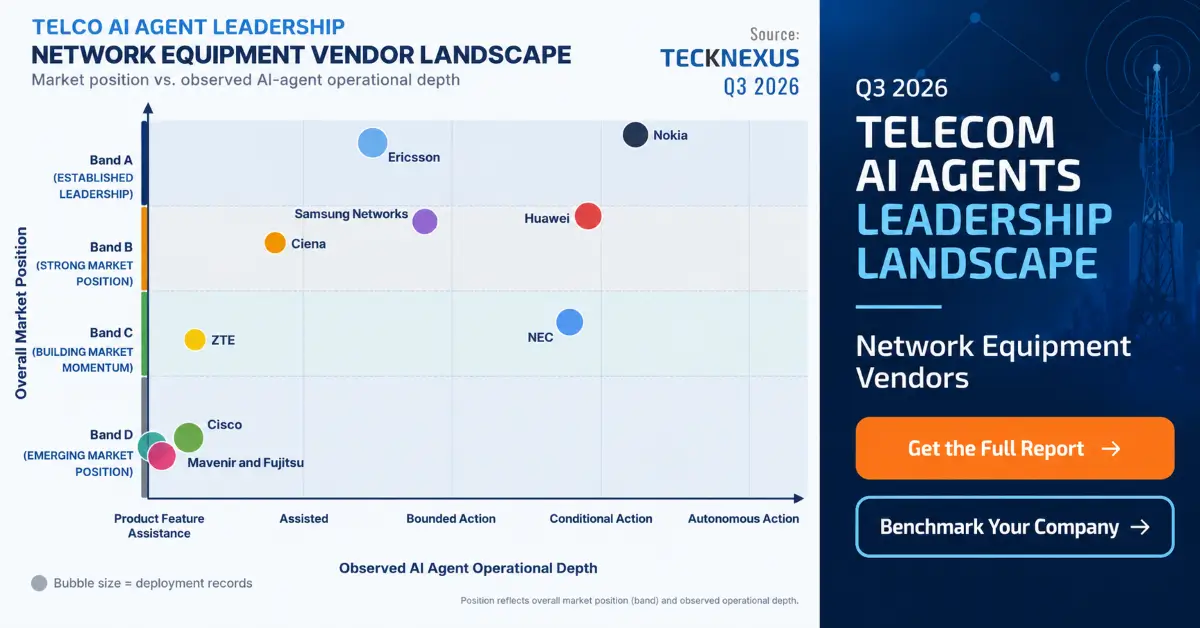
Telco AI Agent Leadership Landscape - Network Equipment Vendors
Network Equipment Vendor Report
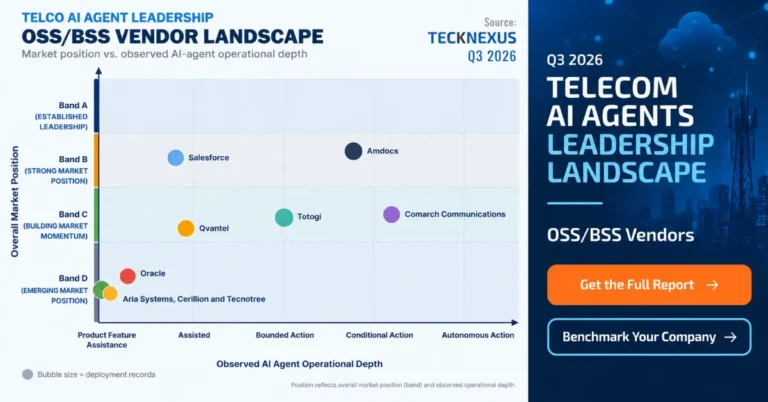
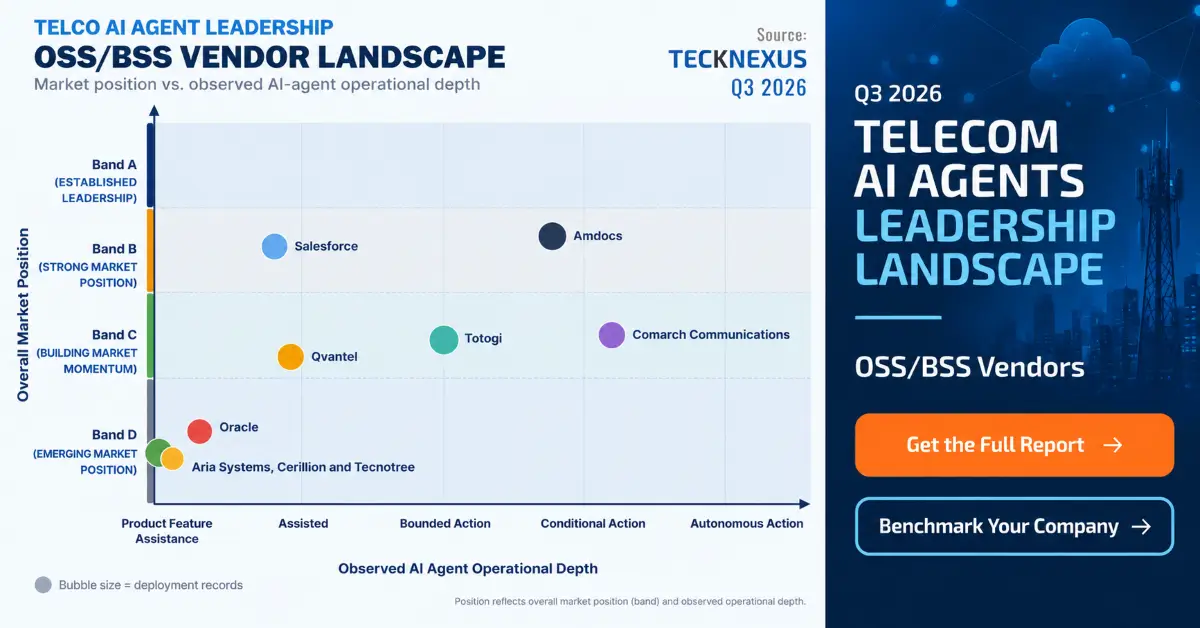
Telco AI Agent Leadership Landscape - OSS/BSS Vendors
OSS/BSS Vendor Report
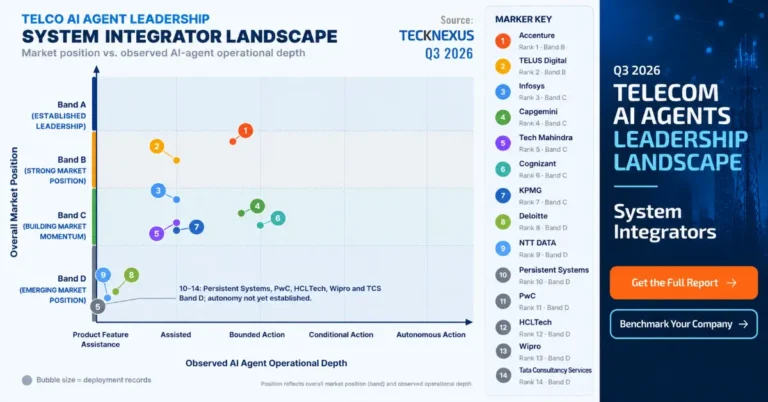
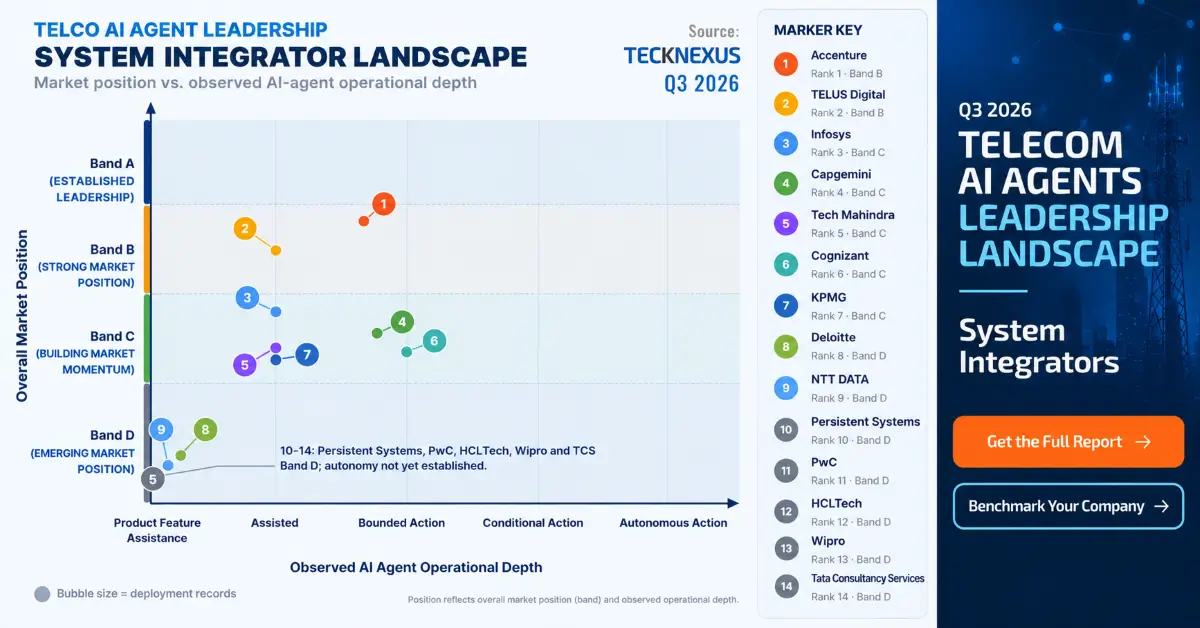
Telco AI Agent Leadership Landscape - System Integrators
System Integrator Report
Scroll to Top
TELECOM AI AGENTS Q3 2026 · Available Now

Explore the Telecom AI Agents Leadership Landscapes

Explore market positioning, deployment momentum and operator validation across the telecom AI agent ecosystem.

Explore Leadership Landscapes
Independent · Evidence-based · Telecom-focused