Amazon

SpaceX’s anticipated 2026 IPO is not just a space-launch story; it is a capital and scale inflection that could reorder parts of the mobile and broadband value chain. Market chatter pegs SpaceX’s IPO valuation around the trillion-plus mark with a potential multibillion-dollar primary raise, a war chest that would dwarf most rivals’ balance sheets. For telecom, the same cash advantage accelerates Starlink’s network deployment, ground infrastructure, and device partnerships—compressing the window for incumbents to respond. Starlink reports more than 9,000 satellites in orbit, 9.2 million paying customers, and over $10 billion in annual revenue.
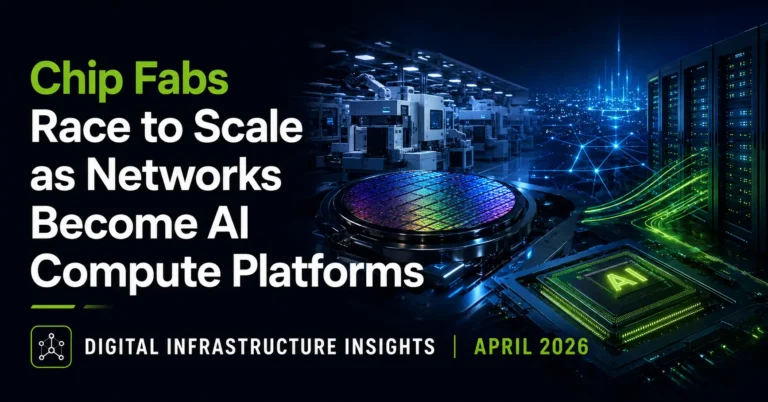
An AI‑fueled land grab for advanced memory is squeezing supply for handsets, undercutting Qualcomm’s near‑term outlook even as end‑demand for premium Android devices improves. Memory suppliers are prioritizing high‑bandwidth memory (HBM) and DDR5 for AI accelerators and data center servers, diverting wafer capacity and capex away from mobile‑grade LPDDR5/5X and UFS storage. The result is a classic allocation cycle: supply chases the highest‑margin demand (HBM and enterprise SSDs), while downstream categories like smartphones and some edge devices face tighter availability and rising component costs. For Qualcomm, whose Snapdragon platforms anchor premium Android devices, the constraint limits upside volume and mix in the near term.
New guidance from the NTIA signals that BEAD-funded satellite providers, including SpaceX’s Starlink, must abide by standard program terms rather than negotiate bespoke carve-outs. An updated NTIA FAQ on subgranting makes clear that states cannot waive or dilute the statutory and programmatic requirements set out in the BEAD NOFO and subsequent guidance. Payments should be tied to objective milestones and verifiable outcomes, not front-loaded without proportional performance. Performance testing, reporting, and documentation must meet program and FCC-aligned standards; subgrantees cannot unilaterally narrow test samples or exclude locations to their advantage. The FAQ effectively answers whether BEAD can be implemented on a “vendor’s terms”: it cannot.
Amazon and Google currently lead the AI capex race, with Microsoft and Meta not far behind, and the prize is control over scarce compute, power, and network resources that define the next decade of cloud and AI services. For telecom and infrastructure players, the opportunity is immediate: deliver power-adjacent, fiber-rich, AI-ready capacity with speed and predictable SLAs. For enterprises, the mandate is pragmatic: secure capacity, design for portability across heterogeneous silicon, and enforce cost governance as inference scales. The winners will be those who pair aggressive buildouts with disciplined execution—turning record capex into durable platforms and customer outcomes.
AT&T is deepening ties with Amazon by pairing its national fiber assets with AWS cloud and AI tooling while adding low Earth orbit connectivity from Amazon’s satellite network to fill coverage gaps for business customers. The collaboration has two pillars: cloud modernization on AWS and satellite-enabled reach via Amazon’s LEO network, with AT&T also supplying fiber capacity into AWS data centers to bolster high-performance infrastructure. Amazon’s LEO constellation will deliver fixed broadband connectivity for AT&T Business customers in areas where terrestrial options are limited, enabling primary service in hard-to-reach sites and resilient backup for SD‑WAN architectures.
Nvidia’s CEO is publicly reaffirming confidence in OpenAI even as reports suggest the companies may narrow the scope of an ambitious, nonbinding plan announced last fall. During a visit to Taipei, Nvidia CEO Jensen Huang dismissed talk of friction with OpenAI and said Nvidia will participate in OpenAI’s next funding round. Recent reporting suggested Nvidia has emphasized the nonbinding nature of its plan to invest up to $100 billion and build roughly 10 GW of compute for OpenAI, and that both parties are re-examining scope and terms.
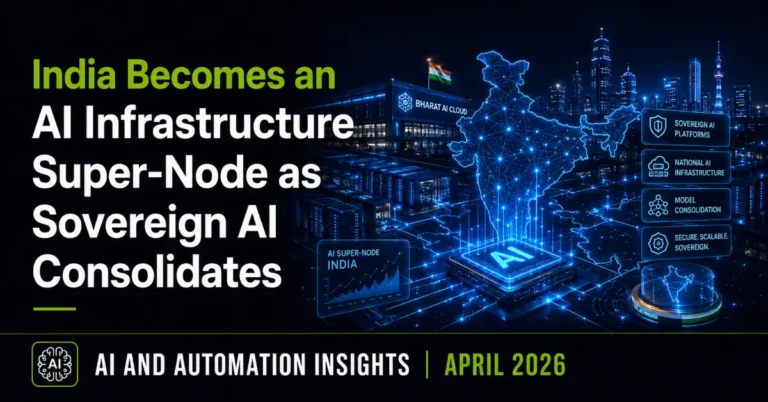
New Delhi has unveiled a sweeping tax holiday to capture the next wave of AI and cloud build-outs, positioning India as a long-term base for exporting compute. Foreign providers that deliver cloud and data center services to customers outside India will pay zero corporate tax on those revenues through 2047, provided workloads run from facilities in India. The budget also introduces a 15% cost-plus safe harbor for Indian data center units serving related foreign parties, simplifying transfer pricing for global delivery hubs. For cloud providers, it strengthens the business case to place GPU clusters, storage, and interconnect in India to serve overseas demand, not just local workloads.
NTT DATA and AWS have signed a multi-year strategic collaboration aimed at accelerating cloud modernization and responsible agentic AI adoption, with clear implications for APAC enterprises and telecoms. The agreement expands joint go-to-market and delivery across four pillars: AI-driven cloud transformation, industry cloud solutions, AI-enabled managed services and customer experience, and sovereign cloud for regulated workloads. NTT DATA has created a dedicated AWS Business Group with close to 11,000 AWS-certified experts and plans to certify nearly 10,000 more in three years. APAC boards want measurable AI outcomes, but legacy estates, data fragmentation, and compliance obligations slow progress.
TeraWave combines 5,280 low Earth orbit satellites with 128 medium Earth orbit satellites—5,408 spacecraft in total—tied together via optical inter-satellite links. The design targets global coverage with two distinct performance tiers: up to 144 Gbps symmetrical RF links per enterprise customer using Q/V-band in LEO, and optical links in MEO delivering up to 6 Tbps for high-throughput trunking between hubs. Blue Origin positions the service for point-to-point private links and enterprise-grade internet access, with an initial target of up to 100,000 customers. The company intends to launch on its own New Glenn vehicles and leverage reusable engines to scale deployment.
As enterprises move from single-model chatbots to collaborative multi-agent systems, the economic and operational burden of reasoning at scale is becoming the dominant constraint. NVIDIA’s Nemotron 3 family introduces open models and tools designed to keep multi-agent systems fast, affordable and inspectable. The models use a hybrid latent mixture‑of‑experts design to activate only a fraction of parameters per token, combining it with a Mamba‑Transformer approach optimized for long sequences. Nemotron 3 Nano is a small, roughly 30B‑parameter model that activates up to 3B parameters per token, making it efficient for retrieval, summarization, assistants and software debugging.
IBM has agreed to acquire Confluent for $31 per share in cash, signaling a decisive move to make real-time, governed data the backbone of generative and agentic AI across hybrid cloud environments. The transaction values Confluent at an enterprise value of roughly $11 billion, with closing targeted by mid-2026 pending shareholder and regulatory approvals. Together they aim to unify application, data, and AI pipelines across public clouds, private data centers, and edge locations—reducing integration friction and accelerating time to value for enterprise AI.
The administration plans an executive order to set a single national AI rulebook and override state-level frameworks, a move with immediate implications for telecom, cloud, and enterprise AI strategies. President Trump signaled he will sign an executive order establishing a uniform federal approach to AI governance that preempts state regulations. Reports indicate the order aims to reduce compliance friction by replacing diverse state rules with a lighter-touch national framework focused on competitiveness. State officials from both parties, safety advocates, and labor groups are preparing to fight the order, citing risks related to consumer harm, deepfakes, hiring bias, and child safety. On the other side, Silicon Valley leaders warn that 50-state compliance regimes could deter innovation and blunt national competitiveness.

Your Brand. Our Intelligence Tools.

Capture leads at the point of evaluation. Talk to Us →

Sponsored by Palo Alto Networks
⚡ Utilities ⏱ 8 min ✓ Free
This tool is built and hosted by TeckNexus.
Launch Tool →
Whitepaper
This whitepaper explains how utilities can use secure AI-enabled private mobile networks to modernize operations, support distributed intelligence, improve resilience, and strengthen cybersecurity across critical infrastructure. It covers AI applications, private network advantages, zero trust principles, multilayered security architecture, and governance considerations for AI-ready utility environments....
Whitepaper
Non-terrestrial networks are rapidly evolving from experimental satellite systems into an increasingly important part of the global 5G connectivity landscape. This eBook, developed by Radisys in collaboration with TeckNexus, explores how 3GPP standardization, satellite architecture innovation, and software-driven network design are reshaping NTN deployment models. It examines the transition from...
Whitepaper
Private cellular networks are transforming industrial operations, but securing private 5G, LTE, and CBRS infrastructure requires more than legacy IT/OT tools. This whitepaper by TeckNexus and sponsored by OneLayer outlines a 4-pillar framework to protect critical systems, offering clear guidance for evaluating security vendors, deploying zero trust, and integrating IT,...

It seems we can't find what you're looking for.

Scroll to Top

Map your security gaps to real threat scenarios – including Salt Typhoon, Volt Typhoon, AI data poisoning, rogue devices, and unencrypted OT traffic.

Take the free 8-minute assessment built for utility operators evaluating AI-enabled private mobile networks. Get a readiness score across five critical domains, see where your gaps are, and receive a prioritized action plan for what to fix first.

Free • 8 minutes • Built for private network security