Patrick Kelly talks with Spirent's Head of Strategy, Stephen Douglas, on the nature of testing and assurance for telcos in the cloud era. At least, that's where they start... An informative two-way discussion follows - a useful primer for lots of what will be on show at MWC24. Hosted on Acast. See acast.com/privacy for more information.
Uncover how satellites are redefining the role of traditional cell towers, enhancing mobile communication, and bridging the gap in global connectivity.
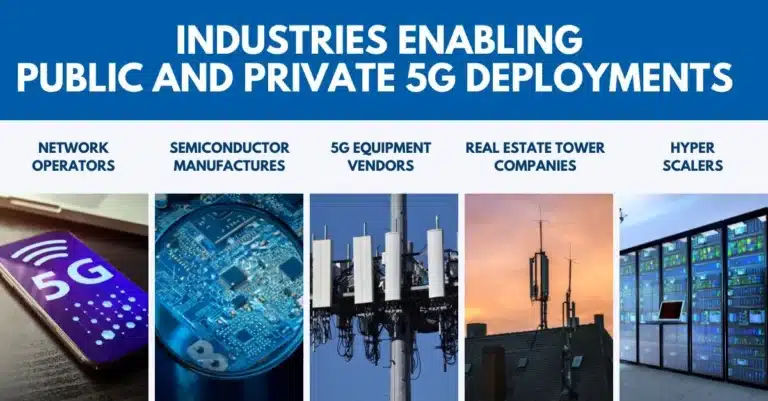
Investors seeking to maximize their profits from the potential of 5G should consider a multi-pronged approach and invest in companies that provide 5G network equipment, tower infrastructure, semiconductors, and hyperscalers as well as 5G mobile network operators. Here are the top companies across the sectors that are leading global public/private network rollouts.
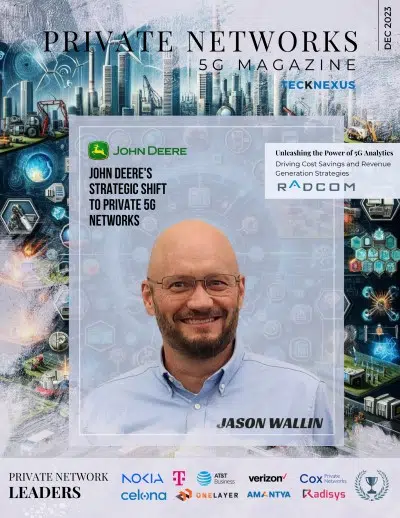
Explore the Private Network Edition of 5G Magazine, your guide to the latest in private 5G/LTE and CBRS networks. This edition spotlights 11 award categories including private 5G/LTE leader, neutral host leader, and rising startups. It features insights from industry leaders like Jason Wallin of John Deere and an analysis of RADCOM's 5G analytics. Covering sectors from manufacturing to healthcare and sustainability, it's a comprehensive read for those interested in the evolving landscape of private networks.
This article delves into the recent Ericsson Mobility Report, highlighting the robust growth of 5G technology with predictions of over 5.3 billion subscriptions by 2029 and a significant increase in average data usage per smartphone.
Whether you're a novice or an expert in cloud computing, the AWS Re: Invent conference offers insightful and useful knowledge. The conference is a event for anybody wishing to stay up to date on the newest trends and advancements in cloud computing, with its focus on innovation, networking, and education.
Technological innovation is happening nonstop. You need to keep learning to stay on top of things and avoid getting left behind. In this episode, Carrie Charles sits down with Steve Gleave, Marketing Director in the Strategic Missions and Technologies Group at Microsoft. He talks about Microsoft’s Azure for Operators and how it helps service providers navigate the intersection of AI, cloud network, and modern connected applications. Steve also explains why hyperscalers and telco companies make good partners, why employers should prioritize hybrid setups in a post-pandemic world, the best solutions in retaining the best talents, and the right approaches in de-stressing a work environment.
In this session, our panel of experts delved into the critical actions that need to be taken to ensure networks can maintain their functionality and performance in the wake of unforeseen events or disruptions. From physical infrastructure attacks to cyber threats at the application level, they explored the potential threats that can jeopardize network operations. Moreover, our panelists discussed a range of solutions including backup infrastructure, dynamic resource allocation, disaster recovery plans, drills, as well as strategies for enhancing network resilience, minimizing downtime, and effectively responding to and recovering from unexpected events.
Cultivating the workforce of tomorrow begins with embracing emerging technologies today. Join us in this eye-opening episode with special guest, Ishwar Parulkar, the Chief Technologist for Telecom and Edge Cloud at Amazon Web Services (AWS). Today, Ishwar takes us on a journey through the fascinating landscape of emerging technologies and their profound impact on the Telco industry. He touches on the evolution of Telco, software-defined networking, 5G, and mobile edge computing, providing a unique perspective on the industry's rapid transformation. Ishwar also explores the impact of generative AI on the workforce and emphasizes the importance of upskilling and retraining. He highlights the need for awareness, education, partnerships, and a shift in mindset to navigate the transformative wave that generative AI and cloud technologies bring. Tune in now and be part of the exciting transformation happening at the intersection of technology and Telecom.
Utilizing private 5G wireless networks, the collaboration between Ericsson, AWS and Hitachi America R&D emphasizes the transformative power of real-time digital video, AI, and edge-to-cloud solutions, showcasing a future where operational efficiency, product excellence, and optimized supply chains redefine smart manufacturing.
Welcome to the era of 5G revolution with the CAMARA Project. This initiative exposes telco network capabilities via APIs, simplifying network complexity and providing benefits across telco operators and countries. It's transforming the very fabric of telecom networks into robust service platforms, opening the door for enhanced service capabilities and fresh revenue streams for telecom providers. Dive into this article to learn about the CAMARA Project's journey, its approach towards standardization and simplification, and its vision for the future. Explore now!
Arrcus, the hyperscale networking software company and a leader in core, 5G/edge and multi-cloud routing and switching, today announced a significant new investment from Hitachi Ventures, the venture arm of Hitachi, for an additional closing of its Series D. This new investment showcases growing investor interest in Arrcus from strategic and corporate venture groups. This infusion of capital will empower Arrcus to accelerate its growth, expand market reach, and continue delivering cost-effective and transformational networking solutions to customers worldwide.
Your Brand. Our Intelligence Tools.
Capture leads at the point of evaluation. Talk to Us →
This whitepaper explains how utilities can use secure AI-enabled private mobile networks to modernize operations, support distributed intelligence, improve resilience, and strengthen cybersecurity across critical infrastructure. It covers AI applications, private network advantages, zero trust principles, multilayered security architecture, and governance considerations for AI-ready utility environments....
Non-terrestrial networks are rapidly evolving from experimental satellite systems into an increasingly important part of the global 5G connectivity landscape. This eBook, developed by Radisys in collaboration with TeckNexus, explores how 3GPP standardization, satellite architecture innovation, and software-driven network design are reshaping NTN deployment models. It examines the transition from...
Private cellular networks are transforming industrial operations, but securing private 5G, LTE, and CBRS infrastructure requires more than legacy IT/OT tools. This whitepaper by TeckNexus and sponsored by OneLayer outlines a 4-pillar framework to protect critical systems, offering clear guidance for evaluating security vendors, deploying zero trust, and integrating IT,...
Take the free 8-minute assessment built for utility operators evaluating AI-enabled private mobile networks. Get a readiness score across five critical domains, see where your gaps are, and receive a prioritized action plan for what to fix first.
We use cookies to ensure that we give you the best experience on our website. If you continue to use this site we will assume that you are happy with it.OkPrivacy policy