Sustainability

New Delhi has unveiled a sweeping tax holiday to capture the next wave of AI and cloud build-outs, positioning India as a long-term base for exporting compute. Foreign providers that deliver cloud and data center services to customers outside India will pay zero corporate tax on those revenues through 2047, provided workloads run from facilities in India. The budget also introduces a 15% cost-plus safe harbor for Indian data center units serving related foreign parties, simplifying transfer pricing for global delivery hubs. For cloud providers, it strengthens the business case to place GPU clusters, storage, and interconnect in India to serve overseas demand, not just local workloads.
France’s three other mobile network operators—Bouygues Telecom, Free-iliad and Orange—have reopened negotiations with Altice to carve up most of SFR, reviving a complex deal that could reshape competition, capex and customer experience across the market. The operators confirmed they are conducting due diligence with Altice after re-engaging in early January 2026, stressing that legal and financial terms remain undecided and that there is no assurance of a transaction. A successful transaction would compress the French market from four to three MNOs, with material consequences for pricing power, 5G/fiber investment, vendor ecosystems and enterprise buyers. Consolidation momentum is building across Europe, evidenced by recent approvals of large transactions with stringent remedies. Altice has been under sustained pressure to reduce debt following restructurings and asset sales.
The article examines:
The energy and thermal implications of rising compute density in data centers, Limitations of traditional air-based cooling at high rack power,
How direct-to-chip and immersion liquid cooling technologies improve heat transfer and energy performance,
Market, operational, and sustainability drivers influencing adoption in modern compute environments,
Broader implications for system architecture, infrastructure design, and future research directions.

Written as an objective, insight-led analysis rather than promotional content, the piece is designed to engage IEEE’s audience of computing researchers, systems engineers, and infrastructure strategists who are exploring how emerging cooling solutions intersect with future computing platforms and energy-aware design. The article is original and unpublished, and I’m happy to work with your editorial team to tailor it to IEEE Computer’s style and technical depth.
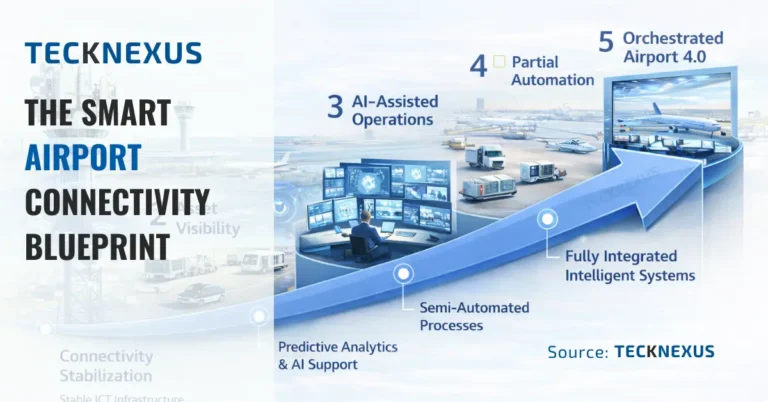
From Singapore to Schiphol, airports are embracing private networks for airports alongside AI and digital twins to drive operational efficiency, predictive maintenance, sustainability, and smarter passenger flows. This article explores 12 real-world deployments showcasing how private network deployments for aviation are shaping the future of Airport 4.0 globally.
The telecom industry is evolving fast, driven by the rise of AI and real-time data demands. Telcos are moving from legacy connectivity models toward becoming AI-powered intelligence infrastructure providers. This transformation spans infrastructure modernization, distributed AI, operational automation, and monetization shifts, from selling bandwidth to delivering tailored digital experiences.
Across roughly 2,000 decision-makers in telecom, data center, and large enterprises, a strong majority doubts that existing infrastructure will keep up with AI’s next wave. In the US, most respondents expect network buildouts to lag AI investment and call out near-term priorities such as optimizing bidirectional data flows, expanding fiber capacity, enabling real-time training feedback, and placing low-latency compute closer to users. In Europe, most enterprise leaders say current networks are not ready for broad AI adoption; many already report latency, throughput, and resiliency pain as data demands rise. The common thread is clear: without accelerated modernization, networks risk becoming the bottleneck that constrains AI outcomes.
A potential take‑private of DigitalBridge by SoftBank would concentrate capital, power, and build capability at the precise chokepoints of the AI and telecom stack. The center of gravity in AI infrastructure has moved from buildings and GPUs to grid access, entitlements, and construction lead time. DigitalBridge controls rights to roughly 21 GW of power across its global portfolio—effectively a banked inventory of megawatts that can be turned into contracted capacity faster than new entrants can clear interconnection queues or procure transformers. This transaction is fundamentally about compressing multi‑year build timelines for AI factories into quarters.
A landmark private 5G pilot at EMSTEEL with e& UAE signals how industrial networks in the region are evolving from connectivity add-ons to strategic infrastructure. The pilot delivers dedicated, high-speed wireless coverage across complex industrial spaces that are often hostile to traditional Wi‑Fi and public cellular. For manufacturers in the UAE, this is a meaningful milestone: it showcases a path to secure, deterministic wireless that can carry safety-critical and time-sensitive workloads on the shop floor. Private 5G gives factories a foundation to adopt connected worker tools, real-time quality control, AI-assisted operations, and digital twins without moving sensitive data off-site.
Two German heavyweights are in advanced discussions to co-build large-scale AI data centre capacity in Germany, a move that would tap European Union funding and accelerate sovereign AI infrastructure. Deutsche Telekom and the Schwarz Group are exploring a joint bid to develop EU-supported “AI Gigafactory” facilities, data centres purpose-built for high-density AI training and inference. According to multiple reports, the talks are well progressed but not yet final. Infrastructure investor Brookfield has been flagged as a potential financial partner alongside EU capital, adding balance-sheet depth and construction expertise to the consortium.
Amazon Web Services plans a sweeping expansion of classified and government cloud capacity to accelerate AI and high‑performance computing for U.S. agencies. AWS will invest up to $50 billion starting in 2026 to deliver purpose‑built AI and HPC infrastructure for federal customers. The buildout spans AWS Top Secret, AWS Secret, and AWS GovCloud (US) Regions. The expansion is designed to compress analysis timelines and enable AI‑assisted workflows across national security and civil missions. AWS is making a generational bet that AI and HPC, delivered inside accredited government regions at massive scale, will redefine how federal missions operate.

Your Brand. Our Intelligence Tools.

Capture leads at the point of evaluation. Talk to Us →

Sponsored by Palo Alto Networks
⚡ Utilities ⏱ 8 min ✓ Free
This tool is built and hosted by TeckNexus.
Launch Tool →
Whitepaper
This whitepaper explains how utilities can use secure AI-enabled private mobile networks to modernize operations, support distributed intelligence, improve resilience, and strengthen cybersecurity across critical infrastructure. It covers AI applications, private network advantages, zero trust principles, multilayered security architecture, and governance considerations for AI-ready utility environments....
Whitepaper
Non-terrestrial networks are rapidly evolving from experimental satellite systems into an increasingly important part of the global 5G connectivity landscape. This eBook, developed by Radisys in collaboration with TeckNexus, explores how 3GPP standardization, satellite architecture innovation, and software-driven network design are reshaping NTN deployment models. It examines the transition from...
Whitepaper
Private cellular networks are transforming industrial operations, but securing private 5G, LTE, and CBRS infrastructure requires more than legacy IT/OT tools. This whitepaper by TeckNexus and sponsored by OneLayer outlines a 4-pillar framework to protect critical systems, offering clear guidance for evaluating security vendors, deploying zero trust, and integrating IT,...

It seems we can't find what you're looking for.

Scroll to Top

Map your security gaps to real threat scenarios – including Salt Typhoon, Volt Typhoon, AI data poisoning, rogue devices, and unencrypted OT traffic.

Take the free 8-minute assessment built for utility operators evaluating AI-enabled private mobile networks. Get a readiness score across five critical domains, see where your gaps are, and receive a prioritized action plan for what to fix first.

Free • 8 minutes • Built for private network security