

AI Agent Competitive
Intelligence
Intelligence
Private Network
Intelligence
Intelligence
Intelligence Journeys
Utilities Private Broadband Planning
AI Use Case Planning for Utilities
Intelligence Tools
By Tool Type
▼
By Industry
▼
Access Type
▼
Monthly Trackers
▼
Resources
▼
Technology Hubs
▼
Partner Hubs
▼


Home » Network Slicing » Page 12
Network Slicing
Network slicing partitions a single physical network into multiple virtual networks, each tuned for specific performance, latency, or reliability requirements, all running on shared infrastructure. It depends on 5G standalone’s flexible, software-defined core, and is a key enabler of differentiated services — dedicated slices for enterprises, critical communications, or specific applications — and therefore a route to new operator revenue. In practice, slicing has advanced more slowly than early expectations, constrained by standalone deployment pace, operational complexity, and unproven demand. For operators, the question is which customers will pay for guaranteed, differentiated connectivity; for enterprises, whether a slice beats a private network. This channel tracks network slicing standards, deployments, and commercial models, with analysis of where slicing is delivering real services and where it remains a capability waiting for a market.
- Podcast
- February 24, 2024
- G2 on 5G

In this 181st episode of The G2 on 5G, we cover:
1. AT&T launches Dynamic Defense
2. The AT&T nationwide cellular outage, explanation and hasty conclusions
3. MWC Barcelona 2024 and three anticipated themes
4. Qualcomm R&D Demos and Other pre-MWC 2024 Announcements, including 6G
5. Singtel claims first app-based 5G network slicing capability
6. Sony’s new portable 5G transmitter for live video or large still images
1. AT&T launches Dynamic Defense
2. The AT&T nationwide cellular outage, explanation and hasty conclusions
3. MWC Barcelona 2024 and three anticipated themes
4. Qualcomm R&D Demos and Other pre-MWC 2024 Announcements, including 6G
5. Singtel claims first app-based 5G network slicing capability
6. Sony’s new portable 5G transmitter for live video or large still images
- News
- February 12, 2024
- News Feed

An industry-leading solution that enables communications service providers to unlock the monetization of new services by consistently delivering differentiated connectivity services
Simplifies network operations by managing conflicting intents to meet the desired business outcomes
Allows the network to respond, adapt and scale in a fully autonomous way to changes in network demands
Leverages one of the largest telco AI and automation use case libraries
Simplifies network operations by managing conflicting intents to meet the desired business outcomes
Allows the network to respond, adapt and scale in a fully autonomous way to changes in network demands
Leverages one of the largest telco AI and automation use case libraries
- News
- February 1, 2024
- Chris Gehlen

Discover Neutroon's latest SaaS innovations for 5G CSPs at MWC Barcelona 2024. Learn about new integrations, features, and partnerships with Druid, CTOne, and others for enhanced enterprise 5G solutions.
- News
- February 1, 2024
- News Feed

Rogers Communications said it successfully tested 5G network slicing technology, promising enhanced performance for diverse applications, including priority access for first responders.
- Article & Insights
- January 15, 2024
- Hema Kadia
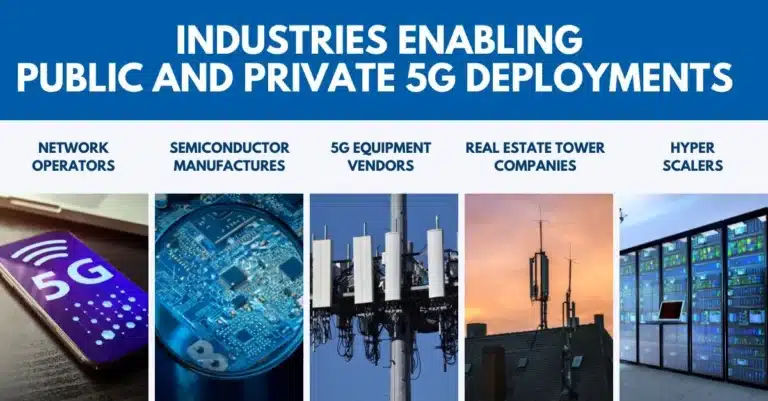
Investors seeking to maximize their profits from the potential of 5G should consider a multi-pronged approach and invest in companies that provide 5G network equipment, tower infrastructure, semiconductors, and hyperscalers as well as 5G mobile network operators. Here are the top companies across the sectors that are leading global public/private network rollouts.
- Article & Insights
- December 6, 2023
- Hema Kadia

Explore how Amantya Technologies is reshaping education with private 5G networks, enhancing learning experiences & bridging digital divides.
- Article & Insights
- December 2, 2023
- Hema Kadia

Explore how Deutsche Telekom shapes transportation with 5G - from teleoperated shuttles to automated driving and connected vehicle tech.
- Podcast
- October 17, 2023
- Hema Kadia

Explore Radisys's pivotal role in advancing 5G technology and Open RAN ecosystems. Discover their collaborative efforts with global industry-standard organizations, innovative use cases, and a future vision that fortifies its position as a key player in the global telecom sector, ensuring scalable and flexible network solutions.
- Podcast
- September 28, 2023
- Pulkit Dudeja

Episode 7 of Amantya’s Podcast Series is here! Join us in Breaking Barriers with Private 5G. Dive into the world of Private 5G networks with Gaurav Saini, AVP Pre-sales at Amantya Technologies, in this podcast episode!
- News
- August 28, 2023
- TeckNexus Editorial

Jio is positioned to take a global leadership role in 6G development, as revealed by Mukesh Ambani. The company's transformation from telecom to tech, coupled with its 5G achievements and AI aspirations, paints a promising future.
- Usecase
- August 14, 2023
- Hema Kadia

Deutsche Telekom AG and MIRA GmbH are collaboratively exploring the realm of teleoperated driving in Bonn. By leveraging 5G technology, this initiative seeks to elevate the efficiency of automated shuttle services, reduce idle times, and enhance vehicle usage. This project underlines the pivotal role of 5G in enabling real-time data transmission for remote vehicle operations. With Bonn at the forefront of sustainable mobility, this pilot signifies a significant step towards redefining transport's future, emphasizing safety, efficiency, and sustainability.
Frequently Asked Questions
What is network slicing in simple terms?
It’s the ability to carve a single physical 5G network into multiple virtual, independently configured slices, each with its own guaranteed performance characteristics for speed, latency, and reliability, so an operator can sell different service tiers off the same infrastructure rather than building separate networks for each use case. Each slice behaves, from the customer’s perspective, like a dedicated network tailored to their specific needs, even though it’s actually running on shared physical infrastructure alongside other slices serving completely different customers simultaneously. This is conceptually similar to how a single physical server can run multiple virtual machines that each behave like an independent computer, applied instead to network connectivity.
Is network slicing actually commercially available, or still experimental?
It has moved from pilot to early commercial deployment. Major carriers including T-Mobile, Verizon, Reliance Jio, and Singtel have launched commercial slicing-based offers for specific use cases, and telecom operators are described as the primary enablers of slicing technology, expected to hold roughly 62 percent of the market in 2026. That said, the industry consistently describes network slicing as being in the early stages of commercialization, meaning successful pilots are still being converted into broader, more scalable commercial offerings rather than slicing having become a fully mature, universally available product.
What’s a real-world example of network slicing in use?
Singtel partnered with Tencent Games to launch a dedicated low-latency network slice for cloud gaming in Singapore, described as the first nationwide gaming-specific network slice in the world, letting users play without downloading games or needing high-end hardware. Verizon Business launched a dedicated fixed wireless access slice for enterprise customers with guaranteed performance, extending slicing beyond mobile use cases into business broadband. Nokia and the UAE operator du were reportedly first in the industry to deploy autonomous network slicing, which automates the creation and management of slices rather than requiring extensive manual configuration.
Why does network slicing require 5G Standalone (SA)?
True dynamic, end-to-end network slicing depends on a 5G core built independently of 4G, known as 5G Standalone or SA architecture, since SA provides the flexibility and granular control needed to create, manage, and guarantee performance across multiple isolated virtual networks simultaneously. Non-standalone 5G, which still relies on a 4G core for certain control functions, can support some slicing-like capabilities but generally not with the same flexibility, automation, or end-to-end performance guarantees that SA enables. This is one of the main reasons operators have prioritized SA core upgrades specifically as a foundation for unlocking more advanced monetization opportunities like network slicing.
How big is the network slicing market expected to get?
Forecasts vary considerably depending on the specific market research firm, but most analyses put network slicing’s growth rate above 40 percent annually through the late 2020s, driven primarily by telecom operators monetizing differentiated connectivity for industries like healthcare, automotive, gaming, and manufacturing. Asia Pacific is generally described as leading global adoption given its large population base and diverse industrial use cases, while North America is often projected as the fastest-growing region given strong infrastructure investment. These projections should be treated with appropriate caution though, since the underlying market remains in an early commercialization phase.
Who actually manages and creates network slices in practice?
In practice, network slices are created and managed through orchestration software that translates a specific business requirement, such as guaranteed low latency for a particular customer’s application, into the actual technical configuration needed to deliver it across the relevant network infrastructure. This orchestration layer handles tasks like allocating the right combination of radio, transport, and core network resources to a given slice, monitoring whether it’s actually delivering its promised performance, and adjusting resource allocation dynamically as conditions change. More advanced, automated approaches, sometimes called autonomous network slicing, aim to handle much of this process automatically rather than requiring extensive manual configuration by network engineers each time.
What technical challenges have slowed broader network slicing adoption?
Several technical challenges have slowed broader adoption beyond the foundational requirement of upgrading to 5G Standalone infrastructure. Ensuring consistent performance guarantees across a slice that may span multiple different network domains, from radio access through transport and core, requires sophisticated end-to-end orchestration and assurance capabilities that have taken time to mature. Interoperability across different vendors’ equipment adds further complexity for operators running multi-vendor networks. There’s also a more fundamental business challenge: defining a manageable, scalable set of standard slice types that cover most customer needs, rather than requiring a fully custom-built slice for every individual customer, which would be operationally impractical at scale.
How is network slicing different from older approaches like VPNs or dedicated lines?
Older approaches like traditional VPNs or dedicated leased lines could provide a degree of network differentiation and security for specific customers, but they generally required separate, often physically distinct infrastructure or fixed, manually provisioned configurations that were slow and expensive to set up and change. Network slicing achieves a broadly similar goal, providing differentiated, somewhat isolated connectivity for a specific customer, but does so dynamically and through software, on top of shared underlying 5G infrastructure, without requiring separate physical infrastructure for each customer. This makes slicing considerably faster and cheaper to provision than traditional dedicated infrastructure approaches, while still providing meaningful performance guarantees and isolation.




Telco AI Agent Leadership

