Signal

SoftBank has exited Nvidia and is redirecting billions into AI platforms and infrastructure, signaling where it believes the next phase of value will concentrate. SoftBank sold its remaining 32.1 million Nvidia shares in October for approximately $5.83 billion, and also disclosed a separate $9.17 billion sale of T-Mobile US shares as part of a broader reallocation into artificial intelligence. The proceeds are earmarked for a significant expansion of SoftBank’s AI portfolio, including a major investment in OpenAI and potential participation in “Stargate,” a next-generation AI data center initiative co-developed by OpenAI and Oracle. Despite exiting Nvidia’s equity, SoftBank retains about 90% ownership of Arm.
SoftBank and OpenAI have formed SB OAI Japan, a jointly owned entity that will commercialize “Crystal intelligence,” a bundled enterprise AI offering focused on management and operations in Japan. The venture will combine OpenAI’s enterprise-grade models and tooling with localization, integration, and support led by SoftBank in-market. Crystal intelligence is positioned as a turnkey solution that pairs model access with domain-specific implementation, governance, and support. SoftBank plans to deploy the solution across its own group companies, validate outcomes in production, and recycle those learnings back into SB OAI Japan’s offerings.
New data from the Car Connectivity Consortium’s 2025 Future of Vehicle Connectivity Report signals how OEMs, suppliers, and mobile platforms will prioritize standards, security, and interoperability to scale the next phase of software-defined vehicles. The market is past pilots: executives are moving budget into customer experience and fleet productivity where ROI is visible within a year, but only if solutions are secure, easy to use, and proven to interoperate across brands, devices, and regions. The CCC’s data provides a directional roadmap for where to invest in the in-vehicle wireless stack and the edge-to-cloud controls that make those experiences trustworthy.
Telefónica delivered modest organic growth and wider 5G and fiber reach in Q3, while resetting free cash flow expectations amid operational and macro headwinds. Group revenue reached €8,958 million in Q3, with organic growth of 0.4%, and EBITDA rose organically by 1.2% to €3,071 million. 5G coverage reached 78% across core markets, while FTTH passings rose 9% to 82.6 million premises. Telefónica now expects 2025 free cash flow of €1.5–€1.9 billion. The company reaffirmed 2025 guidance for growth in revenue, EBITDA, and EBITDA minus CapEx.
October’s job-cut announcements surged, with AI and cost control reshaping staffing plans across technology and adjacent sectors. Planned layoffs spiked to roughly 153,000 in October, up more than 180% from September and about 175% from a year ago, according to the latest Challenger job-cuts tally. Year-to-date announcements for 2025 have crossed 1.09 million, the highest October-through-period since the pandemic shock of 2020 and above comparable 2009 levels. The cuts reflect a pivot from growth-at-any-cost to profitability, with AI rebalancing roles and budgets across the stack. Across reasons given, cost reduction led by a wide margin, and AI adoption was the second-largest driver, underscoring both macro pressure and structural transformation.
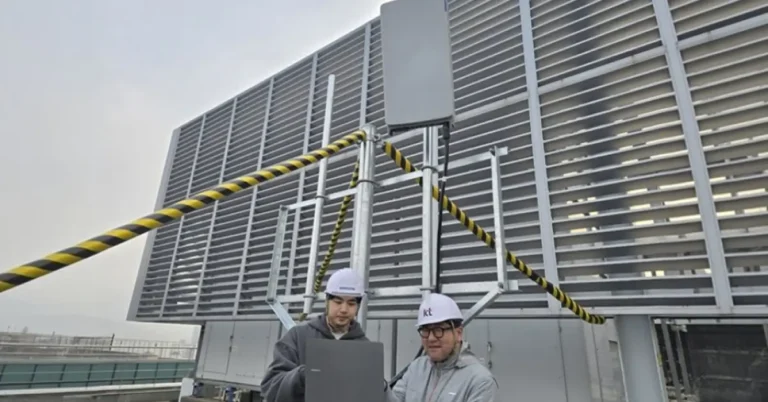
SkyMirr’s Sky5G Wireless Router being named a CES 2026 Innovation Awards Honoree signals that antenna-first design is emerging as a decisive lever for 5G customer-premises equipment performance and reliability. The Consumer Technology Association’s awards program recognizes design and engineering that materially advances user outcomes, and SkyMirr’s selection draws attention to a core differentiator: its MuLCAT (Multi-Layer Coupling Controlled Antenna Technology) architecture. Rather than treating the antenna as a downstream component, MuLCAT integrates a multi-layer coupling approach to increase isolation, broaden usable bandwidth, and suppress interference in compact enclosures.
LG Uplus is working with AWS on agentic AI that automates installation of cloud‑native network software, with early claims of up to 80% faster turn‑ups versus manual methods. LG Uplus and AWS partnered to develop an AI-driven approach that installs complex network software stacks without human intervention. The system uses Amazon Bedrock alongside AWS’s Strands-Agents SDK to orchestrate multiple cooperating AI agents. These agents are pre-trained on network design and implementation documents so they can execute the full workflow - provisioning cloud infrastructure, collecting device and network parameters, generating configurations, performing installation, and troubleshooting.
OECD data shows fixed and mobile broadband have shifted from build-out to scale-up, with fibre and 5G underpinning a new phase of digital infrastructure. Fixed broadband penetration across the OECD rose to 36.5 subscriptions per 100 inhabitants by end-2024, up from 32 in 2019, while the fibre share of fixed lines jumped from 28 percent to 47 percent over the same period. Gigabit-tier offers (≥1 Gbps) moved from 4 percent of subscriptions in 2019 to 19 percent in 2024, signaling both wider availability and growing appetite for very high throughput. On mobile, average monthly data consumption per subscription increased 2.5x—from 6 GB at end-2019 to 15 GB in 2024, aligned with more video, cloud, and AI-assisted applications shifting to handhelds and connected devices.
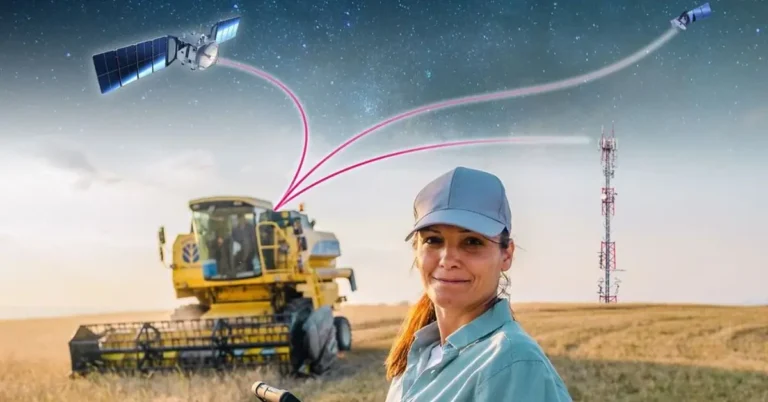
Virgin Media O2 has struck a multi‑year agreement with Starlink Direct to Cell to deliver satellite‑to‑mobile service across rural UK not‑spots, positioning O2 as the first British operator to integrate Starlink’s constellation with licensed mobile spectrum. Branded as O2 Satellite, the service will initially support messaging and basic data on existing smartphones when users move beyond terrestrial signal. O2 is targeting landmass coverage beyond 95% within a year of launch, using Starlink’s 650+ low‑Earth orbit satellites to act as “cell sites in space.” Customer rollout is planned for early 2026, with pricing to follow and an extra monthly fee anticipated.
Samsung and NVIDIA are scaling a 25-year alliance into an AI-driven manufacturing platform that fuses memory, foundry, robotics and networks on a backbone of accelerated computing. Samsung plans to deploy more than 50,000 NVIDIA GPUs to infuse AI across the company’s manufacturing lifecycle—from chip design and lithography to equipment operations, logistics and quality control. The “AI factory” is designed as a unified, data-rich fabric where models continuously analyze and optimize processes in real time, shrinking development cycles and improving yield and uptime. The scope goes beyond semiconductors to include mobile devices and robotics, signaling a company-wide digital transformation anchored in accelerated computing.
SoftBank and NVIDIA have validated a fully software-defined, GPU-accelerated AI-RAN that delivers 16-layer massive MU-MIMO outdoors—an inflection point for vRAN performance, Open RAN scalability, and AI-native RAN design. SoftBank’s AI-RAN product, AITRAS, executed the entire 5G physical layer on NVIDIA GPUs at the Distributed Unit and demonstrated stable 16-layer multi-user MIMO downlink in an outdoor trial at NVIDIA’s Santa Clara campus. The system connected to O-RAN-compliant radios via Split 7.2x and achieved roughly three times the spectral efficiency and throughput of a conventional 4-layer setup while maintaining per-user rates under high load. The field results show that software-only massive MIMO on GPUs can meet macro-radio conditions without bespoke silicon.
A renewed, three-year collaboration between Magic Leap and Google signals a pragmatic path to AI-capable AR glasses that prioritize visual quality, comfort, and manufacturability. Magic Leap is pivoting from building end-user headsets to becoming an ecosystem partner, offering waveguides, optics, device services, and manufacturing know-how to companies pursuing glasses form factors. The companies are aligning around Android XR, positioning the prototype showcased on stage at the Future Investment Initiative in Riyadh as a reference for future designs. The prototype highlights advances in see-through clarity, low-power displays, and an industrial design that approximates everyday eyewear.
Sponsored by Palo Alto Networks
⚡ Utilities ⏱ 8 min ✓ Free
This tool is built and hosted by TeckNexus.
Launch Tool →
Whitepaper
Neutral host, network slicing, and autonomous ground vehicles look like three unrelated topics — but they share the same hidden security risk. See what 100 airport deployments reveal about securing the components with the broadest reach across the network....
Palo Alto Networks
Whitepaper
Airports are deploying AI surveillance, biometrics, and autonomous vehicles faster than most networks can secure them. See what 100 real-world airport deployments reveal about the airside/landside security gap — and the 4-layer framework built to close it....
Palo Alto Networks
Scroll to Top