RAG

A new alliance between SK Telecom (SKT), Arm, and Rebellions targets the fast-growing AI inference market with a server platform designed for sovereign AI and telecom-grade data centers. SKT will validate a new AI server that combines Arm’s AGI CPU—its first Arm-designed data center processor, based on Neoverse CSS V3—with Rebellions’ RebelCard inference accelerator in live AI data center environments. The partners will co-develop the full software stack, from firmware up, and test telco-specific models and large-scale workloads, including SKT’s proprietary foundation model, A.X K1. Industry focus is shifting from training to inference at scale, where energy, latency, and total cost of ownership (TCO) are decisive.
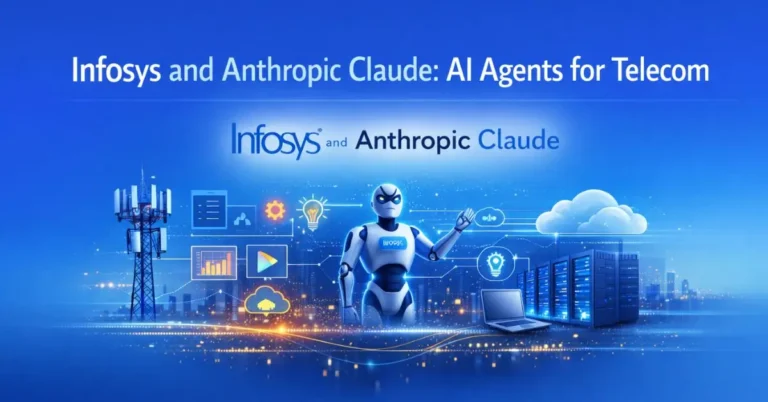
A new partnership between Infosys and Anthropic brings agentic AI into regulated, process-heavy industries, with telecom squarely in scope. Infosys will integrate Anthropic’s Claude models and Claude Code with its Topaz portfolio to build and operate enterprise-grade AI solutions across telecom, financial services, manufacturing, and software engineering. The collaboration emphasizes agentic AI—systems that can plan, call tools, and execute multi-step workflows with oversight—delivered with the controls, auditability, and policy enforcement that regulated sectors demand. Pairing Infosys’s domain depth with Claude’s reasoning and long-context capabilities gives operators a path to pragmatic automation that respects regulatory, safety, and transparency requirements.
Deutsche Telekom and T-Systems have switched on a sovereign, NVIDIA-powered AI factory in Munich’s Tucherpark, positioning Germany as a serious contender in industrial AI infrastructure. The new facility brings nearly 10,000 NVIDIA Blackwell GPUs online, including DGX B200 systems and NVIDIA RTX Pro Server GPUs, delivering up to 0.5 exaFLOPS of AI compute for training, fine-tuning, and large-scale inference. Operated by T-Systems on German soil, the platform targets industry, research, startups, and the public sector with strict controls for data protection, security, and availability. Early customers include Agile Robots, which is combining vision, robotics, and foundation models, and PhysicsX, which applies AI to technical simulation.
ServiceNow has named Anthropic’s Claude as the default model for its Build Agent and a preferred model across the ServiceNow AI Platform, signaling a shift from AI pilots to deeply embedded, production-grade automation. Embedding Claude into that fabric gives customers an on-ramp to agentic automation—systems that can reason over context, decide, and execute tasks—without stitching together point tools. Claude becomes the default model for ServiceNow Build Agent, an AI-assisted builder for apps and automations. Embedding Claude within the ServiceNow AI Platform enables access control, usage monitoring, and compliance aligned to enterprise policies. ServiceNow aims to cut implementation timelines for customers by roughly half by using Claude to accelerate configuration, adoption, and rollout.
Deutsche Telekom’s T-Systems has secured a multi-million-euro contract from Leibniz University Hannover to power SOOFI, a flagship initiative to build a 100-billion-parameter, European-operated large language model. The SOOFI (Sovereign Open Source Foundation Models) project will train a next-generation, open-source LLM focused on European languages and industrial requirements, replacing the current 7-billion-parameter Teuken7B with a model two orders of magnitude larger. T-Systems will host and operate the training environment in its new Industrial AI Cloud—an NVIDIA-powered facility that DT and NVIDIA unveiled as part of a €1 billion partnership.
A cascade of offers from OpenAI, Google, and Perplexity—amplified by Airtel and Reliance Jio—signals a deliberate push to convert India’s scale into durable AI usage, data, and future revenue. With more than 900 million internet users, rock-bottom mobile data prices, and a young, mobile-first population, India offers the world’s deepest top-of-funnel for AI adoption. Giving away premium access—such as a year of ChatGPT’s low-cost “Go” tier, Jio’s bundling of Gemini, or Airtel’s tie-up with Perplexity Pro—maximizes trial, habituation, and data collection across diverse languages and contexts. Even a low single-digit conversion rate translates into millions of subscribers, while non-converters still contribute valuable signals that improve models.
Telus is in active talks to bring partners into its data-centre and AI business, signaling a capital-light approach to scale sovereign AI compute in Canada. Partner capital can accelerate GPU procurement, facility buildouts, and interconnect investments while aligning with customers that require sovereign environments distinct from hyperscale public clouds. Management addressed investor concerns about potential AI compute oversupply by emphasizing a modular build strategy, adding capacity in phases as demand materializes. The timing aligns with tightening data-residency requirements, heightened AI adoption, and demand for local alternatives to U.S.-centric infrastructure. This reduces stranded capital risk in a market with volatile GPU supply, rapid chip roadmaps, and evolving workload profiles.
Snap and Perplexity are joining forces to embed a conversational AI search experience directly into Snapchat’s chat interface, signaling a new distribution model for AI and a fresh monetization path for social platforms. Perplexity will integrate its AI-powered answer engine natively into Snapchat, beginning a global rollout in early 2026. Under the agreement, Perplexity will pay Snap $400 million over one year, via a mix of cash and equity, as the integration scales. Snap expects revenue contribution from the partnership to begin in 2026. The move is notable as Snap’s first large-scale integration of an external AI partner directly in-app.
Qualcomm is moving from mobile NPUs into rack-scale AI infrastructure, positioning its AI200 (2026) and AI250 (2027) to challenge Nvidia/AMD on the economics of large-scale inference. The company is translating its Hexagon neural processing unit heritage—refined across phones and PCs—into data center accelerators tuned for inferencing, not training. AI200 and AI250 will ship in liquid-cooled, rack-scale configurations designed to operate as a single logical system. Qualcomm is leaning into that constraint with a redesigned memory subsystem and high-capacity cards supporting up to 768 GB of onboard memory—positioning that as a differentiator versus current GPU offerings.
Unlike metaverse-era headsets that leaned on entertainment and novelty, Galaxy XR makes Google’s Gemini the front door to the interface. In demos, Gemini orchestrated windows in a spatial workspace, answered context-aware questions, and invoked creative tools like Veo for AI-generated video. That tight AI integration is the strategic wedge: Samsung and Google position XR as a bridge to slim, everyday AI glasses developed with eyewear brands Warby Parker and Gentle Monster. The message to developers and enterprises is clear—design for multimodal AI agents first; the form factor will shrink later.
Apple’s new M5 chip is a material step in local AI compute that will ripple into enterprise IT, developer tooling, and edge networking strategies. M5 is built on a third‑generation 3‑nanometer process and reworks Apple’s GPU as the center of gravity for AI. The 10‑core GPU adds a dedicated Neural Accelerator in every core, pushing peak GPU compute for AI to more than four times M4. Unified memory bandwidth jumps to 153 GB/s, and configurations with up to 32 GB allow more and larger models to remain entirely on device. On‑device inference is moving from nice‑to‑have to default, driven by privacy, latency, and cost.
The AI value gap is widening—and it’s now a strategy problem, not a tooling problem. Fresh research shows a small cohort of “future-built” companies converting AI into material P&L impact while most firms lag despite sizable spend. BCG’s 2025 assessment of 1,250 senior executives finds only 5% of companies have the capabilities to consistently generate outsized AI value, with 35% scaling and beginning to see benefits, and a full 60% reporting little to no financial impact to date.

Your Brand. Our Intelligence Tools.

Capture leads at the point of evaluation. Talk to Us →

Sponsored by Palo Alto Networks
⚡ Utilities ⏱ 8 min ✓ Free
This tool is built and hosted by TeckNexus.
Launch Tool →
Whitepaper
This whitepaper explains how utilities can use secure AI-enabled private mobile networks to modernize operations, support distributed intelligence, improve resilience, and strengthen cybersecurity across critical infrastructure. It covers AI applications, private network advantages, zero trust principles, multilayered security architecture, and governance considerations for AI-ready utility environments....
Whitepaper
Non-terrestrial networks are rapidly evolving from experimental satellite systems into an increasingly important part of the global 5G connectivity landscape. This eBook, developed by Radisys in collaboration with TeckNexus, explores how 3GPP standardization, satellite architecture innovation, and software-driven network design are reshaping NTN deployment models. It examines the transition from...
Whitepaper
Private cellular networks are transforming industrial operations, but securing private 5G, LTE, and CBRS infrastructure requires more than legacy IT/OT tools. This whitepaper by TeckNexus and sponsored by OneLayer outlines a 4-pillar framework to protect critical systems, offering clear guidance for evaluating security vendors, deploying zero trust, and integrating IT,...
Scroll to Top

Map your security gaps to real threat scenarios – including Salt Typhoon, Volt Typhoon, AI data poisoning, rogue devices, and unencrypted OT traffic.

Take the free 8-minute assessment built for utility operators evaluating AI-enabled private mobile networks. Get a readiness score across five critical domains, see where your gaps are, and receive a prioritized action plan for what to fix first.

Free • 8 minutes • Built for private network security