AI Agent Competitive
Intelligence
Intelligence Journeys
AI Use Cases for Utilities
Private Broadband for Utilities

Nvidia

A long-term partnership between NVIDIA and Dassault Systèmes aims to make physics-grounded “world models” and virtual twins a mission-critical system of record for engineering, manufacturing, and the sciences. This collaboration moves beyond today’s project-level twin pilots toward industry-scale models that capture both geometry and behavior, validated against real physics and trusted industrial knowledge. The goal: use virtual environments not just to visualize, but to design, verify, and operate products and factories before steel is cut or code is deployed. The companies outlined a shared architecture spanning design, simulation, and operations.
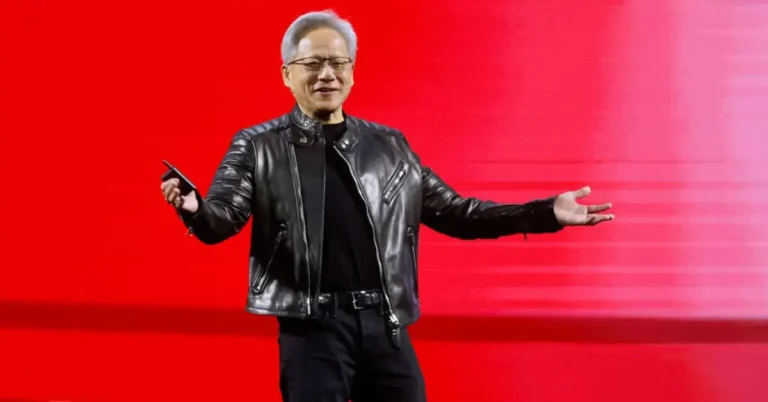
Nvidia’s CEO is publicly reaffirming confidence in OpenAI even as reports suggest the companies may narrow the scope of an ambitious, nonbinding plan announced last fall. During a visit to Taipei, Nvidia CEO Jensen Huang dismissed talk of friction with OpenAI and said Nvidia will participate in OpenAI’s next funding round. Recent reporting suggested Nvidia has emphasized the nonbinding nature of its plan to invest up to $100 billion and build roughly 10 GW of compute for OpenAI, and that both parties are re-examining scope and terms.
As enterprises move from single-model chatbots to collaborative multi-agent systems, the economic and operational burden of reasoning at scale is becoming the dominant constraint. NVIDIA’s Nemotron 3 family introduces open models and tools designed to keep multi-agent systems fast, affordable and inspectable. The models use a hybrid latent mixture‑of‑experts design to activate only a fraction of parameters per token, combining it with a Mamba‑Transformer approach optimized for long sequences. Nemotron 3 Nano is a small, roughly 30B‑parameter model that activates up to 3B parameters per token, making it efficient for retrieval, summarization, assistants and software debugging.
A potential take‑private of DigitalBridge by SoftBank would concentrate capital, power, and build capability at the precise chokepoints of the AI and telecom stack. The center of gravity in AI infrastructure has moved from buildings and GPUs to grid access, entitlements, and construction lead time. DigitalBridge controls rights to roughly 21 GW of power across its global portfolio—effectively a banked inventory of megawatts that can be turned into contracted capacity faster than new entrants can clear interconnection queues or procure transformers. This transaction is fundamentally about compressing multi‑year build timelines for AI factories into quarters.
Nvidia used NeurIPS to expand an open toolkit for digital and physical AI, with a flagship reasoning model for autonomous driving and a broader stack that targets speech, safety, and reinforcement learning. Nvidia introduced DRIVE Alpamayo-R1 (AR1), an open vision-language-action model that fuses multimodal perception with chain-of-thought reasoning and path planning, aiming to push toward Level 4 autonomy in constrained domains. To lower adoption friction, Nvidia published the Cosmos Cookbook with step-by-step recipes for data curation, synthetic data generation, inference, and post-training workflows, enabling customization for diverse physical AI use cases.
Two German heavyweights are in advanced discussions to co-build large-scale AI data centre capacity in Germany, a move that would tap European Union funding and accelerate sovereign AI infrastructure. Deutsche Telekom and the Schwarz Group are exploring a joint bid to develop EU-supported “AI Gigafactory” facilities, data centres purpose-built for high-density AI training and inference. According to multiple reports, the talks are well progressed but not yet final. Infrastructure investor Brookfield has been flagged as a potential financial partner alongside EU capital, adding balance-sheet depth and construction expertise to the consortium.
Amazon Web Services plans a sweeping expansion of classified and government cloud capacity to accelerate AI and high‑performance computing for U.S. agencies. AWS will invest up to $50 billion starting in 2026 to deliver purpose‑built AI and HPC infrastructure for federal customers. The buildout spans AWS Top Secret, AWS Secret, and AWS GovCloud (US) Regions. The expansion is designed to compress analysis timelines and enable AI‑assisted workflows across national security and civil missions. AWS is making a generational bet that AI and HPC, delivered inside accredited government regions at massive scale, will redefine how federal missions operate.
Nvidia’s CEO has warned that U.S. export controls have effectively halted the company’s China business, sharpening the stakes for AI leadership, supply chains, and enterprise buyers. He indicated the company is modeling China sales at effectively zero for the next two quarters under current rules, acknowledging that the revenue loss constrains reinvestment in R&D and manufacturing capacity. The message was blunt: a prolonged lockout weakens the U.S. AI stack abroad and cedes room to rivals at home and overseas. Huang pegged China’s accelerator market at roughly $50 billion today with potential to reach up to $200 billion by decade’s end.
Deutsche Telekom’s T-Systems has secured a multi-million-euro contract from Leibniz University Hannover to power SOOFI, a flagship initiative to build a 100-billion-parameter, European-operated large language model. The SOOFI (Sovereign Open Source Foundation Models) project will train a next-generation, open-source LLM focused on European languages and industrial requirements, replacing the current 7-billion-parameter Teuken7B with a model two orders of magnitude larger. T-Systems will host and operate the training environment in its new Industrial AI Cloud—an NVIDIA-powered facility that DT and NVIDIA unveiled as part of a €1 billion partnership.
Nvidia’s latest quarter signals that AI infrastructure spending is not cooling and is, in fact, broadening across clouds, sovereigns, and enterprises. Nvidia delivered $57 billion in revenue for the quarter, up more than 60% year over year, with GAAP net income reaching $32 billion; the data center segment accounted for roughly $51.2 billion, dwarfing gaming, pro visualization, and automotive combined. Management guided next-quarter sales to about $65 billion, exceeding consensus by several billion and underscoring that supply remains tight for cloud GPUs even as deployments ramp across hyperscalers, GPU clouds, national AI initiatives, and large enterprises.
Nokia is restructuring to monetize the AI supercycle across fixed and mobile networks while tightening focus on profitable growth. The company’s new strategy concentrates on: accelerating in AI and cloud; leading the next era of mobile with AI-native networks and 6G; co-innovating with customers and partners; concentrating capital where it can differentiate; and unlocking sustainable, consistent returns. Nokia will move from four primary segments to two, with changes effective 1 January 2026. The company is targeting comparable operating profit of €2.7 billion to €3.2 billion by 2028.
Group revenue reached about €28.9 billion, up 3.3% on an organic basis, with service revenue and adjusted EBITDA AL growing despite currency pressure from a weaker U.S. dollar; adjusted EBITDA AL was roughly €11.1 billion on an organic basis, and full-year 2025 EBITDA AL guidance rose to around €45.3 billion alongside a stronger free cash flow after leases outlook near €20.1 billion. Adjusted net profit increased to approximately €2.7 billion (+14% year-on-year), while reported net profit was €2.4 billion (-18% year-on-year) due to lapping prior-year one-offs in financial activities—an accounting effect rather than a signal of operating weakness.

Partner Hubs

Download content, access intelligence tools, and hear from executives.

Partner Events

  • FutureNet Asia 2026
  • Network X Vienna 2026
Scroll to Top