Connected Utilities

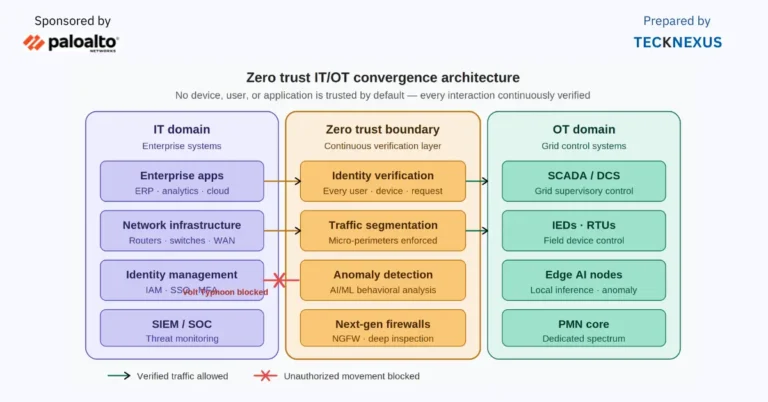
Volt Typhoon wasn't just a cyberattack - it was a strategic warning about the IT/OT boundary every utility now operates across. Zero trust is the only security model built for this threat environment, and private mobile networks are the foundation that makes it implementable. Here's what utilities need to know — and act on now.
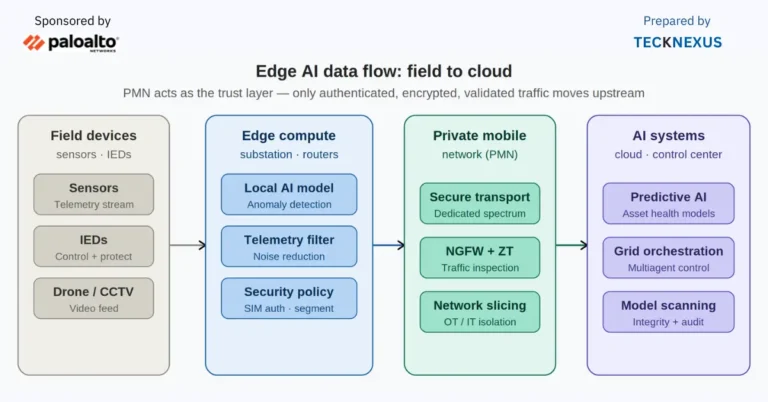
Edge AI is reshaping how utilities manage the grid — moving intelligence from the control room to the substation itself. Small language models, autonomous agents, and hardened edge routers are enabling faster fault detection, predictive maintenance, and real-time load optimization. But distributed intelligence demands distributed security. Here's what utilities need to build both.
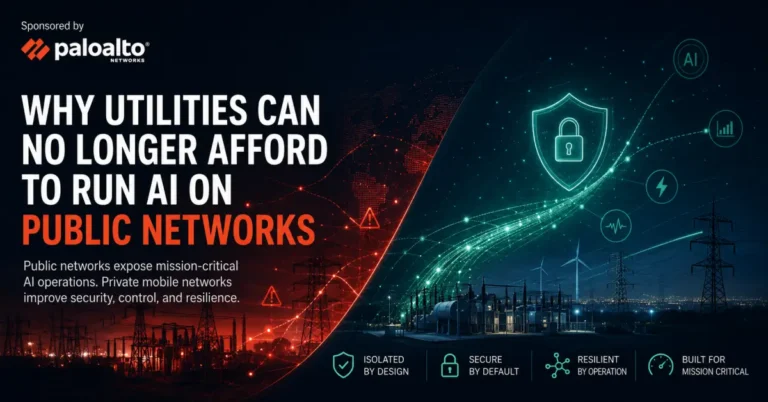
AI is reshaping utility operations, but many deployments still depend on public or legacy networks not designed for mission-critical OT, uplink-heavy telemetry, or cyber-resilient grid automation. This article explains why private mobile networks are becoming essential for secure AI-enabled utilities, reducing exposure to threats like Salt Typhoon and Volt Typhoon while supporting reliable, low-latency grid operations.
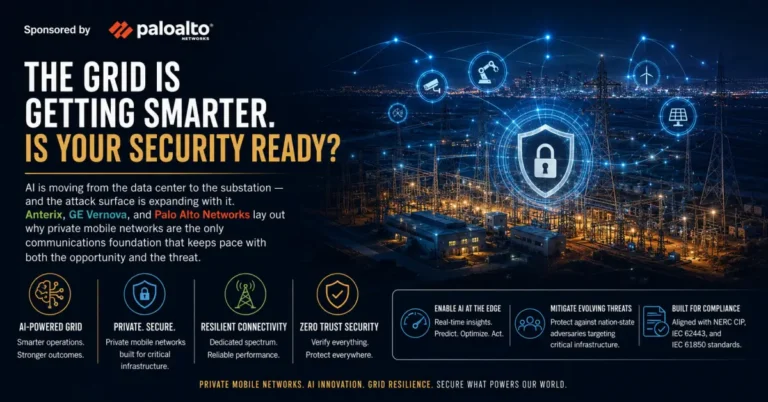
AI is moving from the data center to the substation — and the attack surface is expanding with it. Anterix, GE Vernova, and Palo Alto Networks lay out why private mobile networks are the only communications foundation that keeps pace with both the opportunity and the threat.
As utility private networks scale beyond pilot deployments, success depends on more than connectivity. This blog explores how utilities are applying orchestration frameworks, secure governance models, and lifecycle management strategies to build scalable, resilient, and future-ready private LTE and 5G infrastructures, ensuring long-term performance, compliance, and adaptability.

Utilities are unlocking real-time intelligence and predictive maintenance by combining edge computing and AI with private LTE/5G networks. This blog explores how utilities process critical data locally to automate decisions, detect anomalies, optimize asset performance, and improve operational resilience—laying the foundation for the autonomous grid.
Utilities are implementing private LTE and 5G networks across diverse environments—from turbine halls and substations to national grid systems. This blog outlines the key deployment architectures (site-specific, regional, wide-area, and indoor) and spectrum strategies utilities are using to deliver secure, scalable, and purpose-built connectivity for modern energy operations.

Your Brand. Our Intelligence Tools.

Capture leads at the point of evaluation. Talk to Us →

Sponsored by Palo Alto Networks
⚡ Utilities ⏱ 8 min ✓ Free
This tool is built and hosted by TeckNexus.
Launch Tool →
Whitepaper
This whitepaper explains how utilities can use secure AI-enabled private mobile networks to modernize operations, support distributed intelligence, improve resilience, and strengthen cybersecurity across critical infrastructure. It covers AI applications, private network advantages, zero trust principles, multilayered security architecture, and governance considerations for AI-ready utility environments....
Whitepaper
Non-terrestrial networks are rapidly evolving from experimental satellite systems into an increasingly important part of the global 5G connectivity landscape. This eBook, developed by Radisys in collaboration with TeckNexus, explores how 3GPP standardization, satellite architecture innovation, and software-driven network design are reshaping NTN deployment models. It examines the transition from...
Whitepaper
Private cellular networks are transforming industrial operations, but securing private 5G, LTE, and CBRS infrastructure requires more than legacy IT/OT tools. This whitepaper by TeckNexus and sponsored by OneLayer outlines a 4-pillar framework to protect critical systems, offering clear guidance for evaluating security vendors, deploying zero trust, and integrating IT,...
Scroll to Top

Map your security gaps to real threat scenarios – including Salt Typhoon, Volt Typhoon, AI data poisoning, rogue devices, and unencrypted OT traffic.

Take the free 8-minute assessment built for utility operators evaluating AI-enabled private mobile networks. Get a readiness score across five critical domains, see where your gaps are, and receive a prioritized action plan for what to fix first.

Free • 8 minutes • Built for private network security