Apple

T-Mobile has expanded its Starlink-powered T-Satellite service to all carriers, offering satellite SMS and location sharing in areas with no cellular coverage. Compatible with over 60 devices—including newer iPhones, Samsung, and Google Pixel models—T-Satellite provides off-grid communication for just $10/month. Learn how to sign up and what features are coming next.
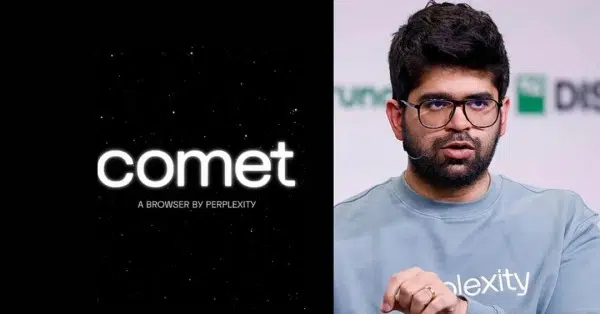
Perplexity’s new Comet browser blends AI search, summaries, and an integrated AI assistant to automate tasks like managing tabs and summarizing emails. Launched for its $200/month Max plan subscribers, Comet aims to rival Chrome and Edge by redefining how we browse and work online.
Nvidia's Open Power AI Consortium is pioneering the integration of AI in energy management, collaborating with industry giants to enhance grid efficiency and sustainability. This initiative not only caters to the rising demands of data centers but also promotes the use of renewable energy, illustrating a significant shift towards environmentally sustainable practices. Discover how this synergy between technology and energy sectors is setting new benchmarks in innovative and sustainable energy solutions.
Oumi AI, founded by ex-Google and Apple engineers, is the first fully open-source AI platform offering unrestricted access to models, data, and training pipelines. Unlike Llama and DeepSeek-R1, Oumi eliminates AI silos by enabling seamless collaboration across researchers, universities, and enterprises. With backing from MIT, Stanford, and Oxford, Oumi is enabling AI development through transparency, decentralization, and scalable infrastructure—making AI truly accessible to all.
Direct-to-Device (D2D) satellite services are revolutionizing connectivity but face significant spectrum challenges. The Summit Ridge whitepaper explores how leveraging the 2 GHz band, innovative partnerships, and regulatory shifts can unlock the potential of D2D services worldwide.
India’s ambition to become a global smartphone manufacturing leader faces hurdles as nearly half of its production capacity remains underutilized. Despite significant investments and the government’s PLI scheme, weak domestic and global demand has impacted production. Industry leaders like Foxconn and Tata Electronics continue to expand, while smaller manufacturers struggle. Experts predict recovery as global demand for smartphones and advanced technologies grows by 2025.
When Apple declared that LLMs can't reason, they forgot one crucial detail: a hammer isn't meant to turn screws. In our groundbreaking study of Einstein's classic logic puzzle, we discovered something fascinating. While language models initially stumbled with pure reasoning - making amusing claims like "Plumbers don't drive Porsches" - they excelled at an unexpected task.
Apple is set to invest $1.1 billion in expanding satellite connectivity for iPhones through Globalstar, aiming to develop a new satellite constellation that enhances emergency services and connects users in remote locations. This expansion, including new satellites and infrastructure, highlights Apple’s commitment to uninterrupted mobile services, even in cellular dead zones.
In this episode of the 5G Guys podcast, hosts Wayne Smith and Dan McVaugh delve into the world of satellite connectivity with Tarun Gupta, co-founder of Skylo Technologies. Learn how Skylo is pioneering 5G and satellite integration to enhance IoT, SMS, and voice services globally. Discover the advantages of their standards-based approach and how it differentiates from other satellite services like Starlink and AST SpaceMobile.
Comcast has introduced the StreamSaver bundle, combining Apple TV+, Peacock, and Netflix at a reduced price. This convenient streaming solution aims to attract Comcast broadband and TV customers by offering popular streaming services in one package. Explore how Comcast's latest offering could reshape the streaming landscape.
00:00:01 - Introduction
00:01:01 - AWS Cloud Core Win with Telefonica Germany
00:05:47 - The Role of 5G in Network Slicing and Enterprise Applications
00:08:43 - Verizon's Approach to Neutral Host 5G Networks
00:13:30 - Discussion on Verizon's Strategy and Infrastructure Ownership
00:15:27 - Apple's New iPad Launch and AI Capabilities
00:22:40 - Tesla's Private 5G Network Video and Industry 4.0
00:26:19 - Outro and Final Thoughts
In a pivotal move, the Federal Communications Commission (FCC) has introduced a regulatory framework enabling satellite operators to provide direct-to-device coverage. This initiative is a significant advancement in global connectivity with aim to bridge the communication gap, especially in remote locales where traditional cellular networks fall short. By fostering a partnership between satellite companies and wireless providers, the FCC's decision marks a major step toward a world where connectivity is universally accessible, ensuring safety and inclusivity for all.

Your Brand. Our Intelligence Tools.

Capture leads at the point of evaluation. Talk to Us →

Sponsored by Palo Alto Networks
⚡ Utilities ⏱ 8 min ✓ Free
This tool is built and hosted by TeckNexus.
Launch Tool →
Whitepaper
This whitepaper explains how utilities can use secure AI-enabled private mobile networks to modernize operations, support distributed intelligence, improve resilience, and strengthen cybersecurity across critical infrastructure. It covers AI applications, private network advantages, zero trust principles, multilayered security architecture, and governance considerations for AI-ready utility environments....
Whitepaper
Non-terrestrial networks are rapidly evolving from experimental satellite systems into an increasingly important part of the global 5G connectivity landscape. This eBook, developed by Radisys in collaboration with TeckNexus, explores how 3GPP standardization, satellite architecture innovation, and software-driven network design are reshaping NTN deployment models. It examines the transition from...
Whitepaper
Private cellular networks are transforming industrial operations, but securing private 5G, LTE, and CBRS infrastructure requires more than legacy IT/OT tools. This whitepaper by TeckNexus and sponsored by OneLayer outlines a 4-pillar framework to protect critical systems, offering clear guidance for evaluating security vendors, deploying zero trust, and integrating IT,...

It seems we can't find what you're looking for.

Scroll to Top

Map your security gaps to real threat scenarios – including Salt Typhoon, Volt Typhoon, AI data poisoning, rogue devices, and unencrypted OT traffic.

Take the free 8-minute assessment built for utility operators evaluating AI-enabled private mobile networks. Get a readiness score across five critical domains, see where your gaps are, and receive a prioritized action plan for what to fix first.

Free • 8 minutes • Built for private network security