


Partner Hubs

The next evolution of Ciena’s DCOM: OOB management for diverse data center needs
2027 Intelligence Programs

Automation

Network automation replaces manual configuration and operations with software-driven processes, ranging from scripted tasks to fully autonomous, self-optimizing networks. Driven by the complexity of 5G standalone, cloud-native architectures, and multi-vendor environments, operators are pursuing higher autonomy — often framed against the TM Forum’s autonomous networks levels — to cut costs, speed service delivery, and improve reliability. Automation increasingly relies on AI and closed-loop systems that sense, decide, and act with diminishing human intervention. For operators and enterprises, the practical path runs through incremental autonomy: automating well-defined tasks before attempting end-to-end self-operation. This channel covers network automation across RAN, core, and operations — including orchestration, closed-loop control, and the AI techniques behind autonomous networks — with analysis of where automation is delivering measurable results and how operators are progressing toward higher levels of autonomy.

Virgin Media O2 Business has introduced a revolutionary plug-and-play 5G Standalone (SA) Private Network in the UK. This compact solution offers businesses immediate 5G connectivity without the traditional hassles and costs associated with network setup. Ranging from tech start-ups to large enterprises, organizations can now harness the power of a secure and fast 5G network. The product, integrated with Nokia's advanced tech, facilitates real-time data processing and is poised to drive digital transformation across various industries. This innovation promotes 5G accessibility beyond urban areas, signifying a major leap in connectivity solutions.
Welcome to the era of 5G revolution with the CAMARA Project. This initiative exposes telco network capabilities via APIs, simplifying network complexity and providing benefits across telco operators and countries. It's transforming the very fabric of telecom networks into robust service platforms, opening the door for enhanced service capabilities and fresh revenue streams for telecom providers. Dive into this article to learn about the CAMARA Project's journey, its approach towards standardization and simplification, and its vision for the future. Explore now!
This whitepaper explores seven compelling use cases of AI-infused automated service assurance solutions, encompassing anomaly detection, automated root cause analysis, service quality enhancement, customer experience improvement, network capacity planning, network monetization, and self-healing networks. Each use case explains how AI, when embedded in a tailored assurance solution powered by extensive telecom domain knowledge, can optimize network operations and drive strategic growth.
The Icelandic government has initiated a program to assess the suitability of Low Earth Orbit (LEO) space-based connectivity across the Arctic nation in partnership with a satellite communications company, OneWeb. Iceland will initially evaluate OneWeb's Global Connectivity Solution over the course of a three-month trial period. It will then have the option to extend services indefinitely, which could include the deployment of additional ground-based infrastructure as well as airborne, maritime, and on-the-pause/on-the-move UTs.
This edition is dedicated to "Shaping the Future with Connectivity and Tech," a theme that truly encapsulates the transformative power of technology in our lives. In this edition, we delve into the multifaceted world of 5G, AI, AR/VR, IoT, and other emerging technologies rapidly revolutionizing various aspects of our society, from our workplaces to our shopping experiences to industrial sectors.
The article explores how the combination of 5G, AI, and automation changes the job market and creates new opportunities for workers and employers. It highlights the importance of 5G for remote workers, the role of AI in automating routine tasks and providing insights, and the impact of automation on the job market. The article also discusses the need for workers and employers to stay ahead of these changes by acquiring new skills and preparing for the jobs of the future.
The article explores the transformative impacts of 5G networks and augmented reality (AR) / virtual reality (VR) on consumer interactions, shopping habits, and entertainment preferences. These technologies enhance the user experience with real-time, immersive applications, consequently reshaping purchasing decisions and engagement with brands. Industries like retail and entertainment have embraced this shift, offering immersive and interactive experiences like virtual try-ons and immersive gaming. Moreover, sectors such as healthcare and education have harnessed these technologies to increase accessibility and improve service delivery. However, the article also highlights challenges such as privacy, security, and the potential digital divide. It emphasizes the importance of inclusive technologies and services, as well as the ethical use of these technologies, advocating for industry standards and best practices to ensure equitable benefits and minimize negative impacts.
The article explores how 5G, AI, and AR/VR are transforming a range of vertical industries, including manufacturing, transportation, energy and utilities, healthcare, education, retail, mining, agriculture/agritech, and smart cities. It highlights the benefits of these technologies, including increased efficiency and productivity, improved customer satisfaction, and new opportunities for growth. The article also discusses the challenges associated with these technologies, including privacy and security concerns and accessibility issues. The article concludes by emphasizing the importance of inclusive technologies and services, and the responsible and ethical use of these technologies, in order to ensure that the benefits of 5G, AI, and AR/VR are accessible to all and used for the betterment of society.
The private network revolution is transforming how businesses secure their operations and data by leveraging connectivity and emerging technologies. These dedicated private networks offer enhanced security, improved network performance, scalability, better control, and support for edge computing, network slicing, and IoT applications. As a result, businesses can embrace Industry 4.0, leading to increased efficiency and automation. While there are challenges to consider, such as cost, regulatory requirements, and integration with existing infrastructure, businesses are adopting these technologies and securing their future in the digital landscape.

Frequently Asked Questions

What’s the difference between automation and AI in a telecom context?
Automation, in its traditional form, generally follows pre-defined rules and scripted logic: a specific condition triggers a specific, predetermined response, with no real interpretation or judgment involved beyond what was explicitly programmed in advance. AI adds the capacity to learn from data, recognize patterns that weren’t explicitly anticipated, and make more nuanced decisions about what action makes sense in a given situation, even one the system hasn’t seen in exactly that form before. In practice, most modern telecom systems combine the two: AI analyzes a situation and decides what should happen, while automation infrastructure actually executes that decision reliably and consistently across the network, a combination often described as the foundation for agentic AI.
What is ‘zero-touch’ network operation, and how close is the industry to achieving it?
Zero-touch network operation describes the long-term industry goal of running networks with minimal direct human intervention, where the network itself handles configuration, fault recovery, and optimization automatically and continuously. It’s a meaningful aspiration rather than a fully achieved reality; the industry is progressing toward it in stages, with specific functions, like automated fault detection or dynamic capacity adjustment, achieving meaningful levels of automation well before the broader vision of an entirely self-managing network becomes reality. Standards bodies including ETSI have working groups specifically dedicated to defining the requirements for zero-touch network and service management, reflecting that this remains an active area of ongoing standardization rather than settled, widely deployed technology.
Why is automation considered essential for managing modern 5G networks specifically?
5G networks are substantially more complex than earlier generations for several compounding reasons: they rely heavily on virtualized network functions running across cloud infrastructure rather than fixed dedicated hardware, they support network slicing, meaning managing multiple distinct virtual networks with different performance guarantees simultaneously, and they often combine equipment and software from multiple different vendors rather than one integrated supplier. Traffic patterns also shift constantly and unpredictably as device density and application types continue to grow. Attempting to manually manage this level of complexity at the scale of a national or global network simply isn’t realistic, making automation effectively a practical requirement for operating a modern 5G network reliably at all.
How does automation relate to network orchestration?
Automation and orchestration are closely related but distinct concepts. Automation generally refers to executing a specific task without manual intervention, like automatically restarting a failed process or adjusting a configuration parameter. Orchestration refers to the broader coordination of multiple automated tasks and virtualized network components across their full lifecycle, deciding where different network functions should run, how they should scale, and how they interact with each other to deliver a complete service. In practice, orchestration systems often rely on underlying automation capabilities to actually carry out the individual tasks they coordinate, providing higher-level coordination while automation provides the lower-level mechanism for reliably executing decisions.
What are the risks of relying heavily on automated network systems?
Heavy reliance on automated systems introduces specific risks alongside its clear efficiency benefits. If an automated system makes an incorrect decision, that error can potentially propagate quickly and broadly across the network before a human notices and intervenes, compared to a manual process where mistakes tend to be more contained. There’s also a risk of reduced visibility and understanding among human staff over time, since heavily automated systems can create a gap between what the network is actually doing and what engineers fully understand about why, particularly as AI-driven decision-making becomes more involved. Operators generally manage these risks by maintaining careful guardrails for automated actions, expanding autonomous scope gradually as confidence grows.
How has automation changed the day-to-day role of network engineers?
Automation has shifted network engineers’ day-to-day work away from repetitive, manual configuration and troubleshooting tasks and toward higher-level responsibilities like designing automation policies, overseeing AI-driven systems, and handling more complex or novel problems that automated systems aren’t yet equipped to resolve independently. Rather than manually configuring each new service or personally diagnosing every fault, engineers increasingly spend time defining the rules, guardrails, and escalation criteria that govern how automated systems behave, then stepping in directly for situations that fall outside those parameters. This represents a meaningful skills shift, with growing demand for engineers comfortable working with automation platforms and AI systems alongside traditional networking expertise.
What’s ‘closed-loop automation,’ and why does it matter?
Closed-loop automation refers to systems that don’t just execute an automated action once, but continuously monitor the result of that action, compare it against the intended outcome, and adjust automatically if the result doesn’t match expectations, creating a self-correcting cycle without requiring a human to manually verify and re-trigger each step. A closed-loop system managing network capacity, for example, might automatically increase resources in response to rising traffic, then continuously monitor whether that adjustment actually resolved the congestion, and make further automatic adjustments if it didn’t. This concept is considered a meaningful step toward the zero-touch network vision, since it moves automation beyond simple one-off actions toward genuinely self-managing behavior based on real-world feedback.
Scroll to Top
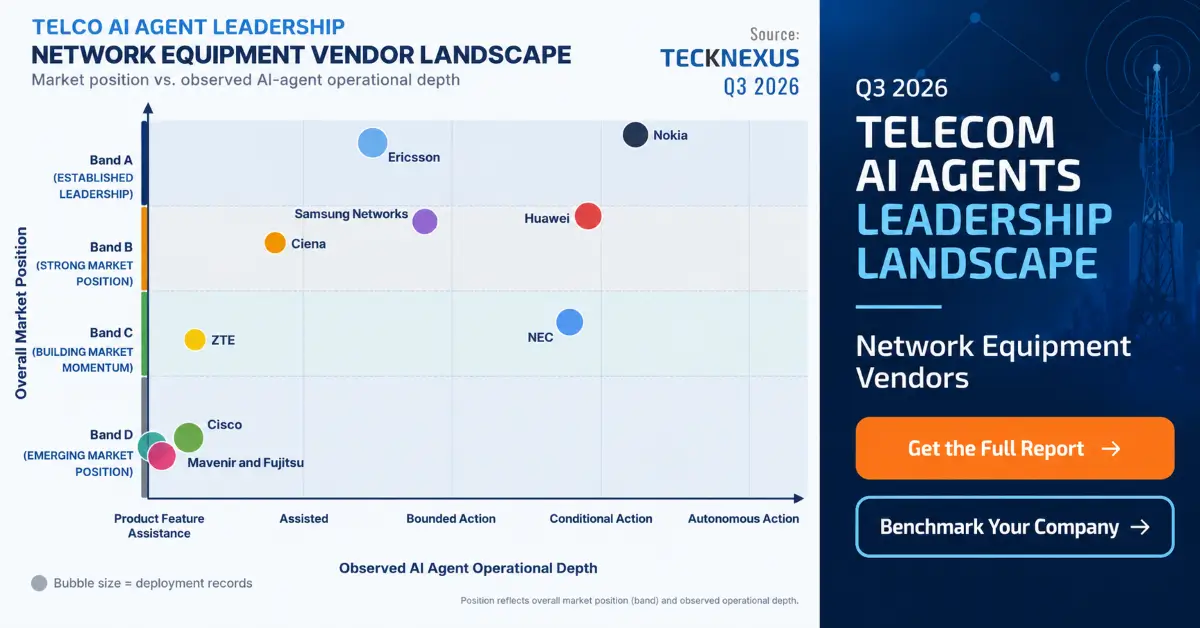
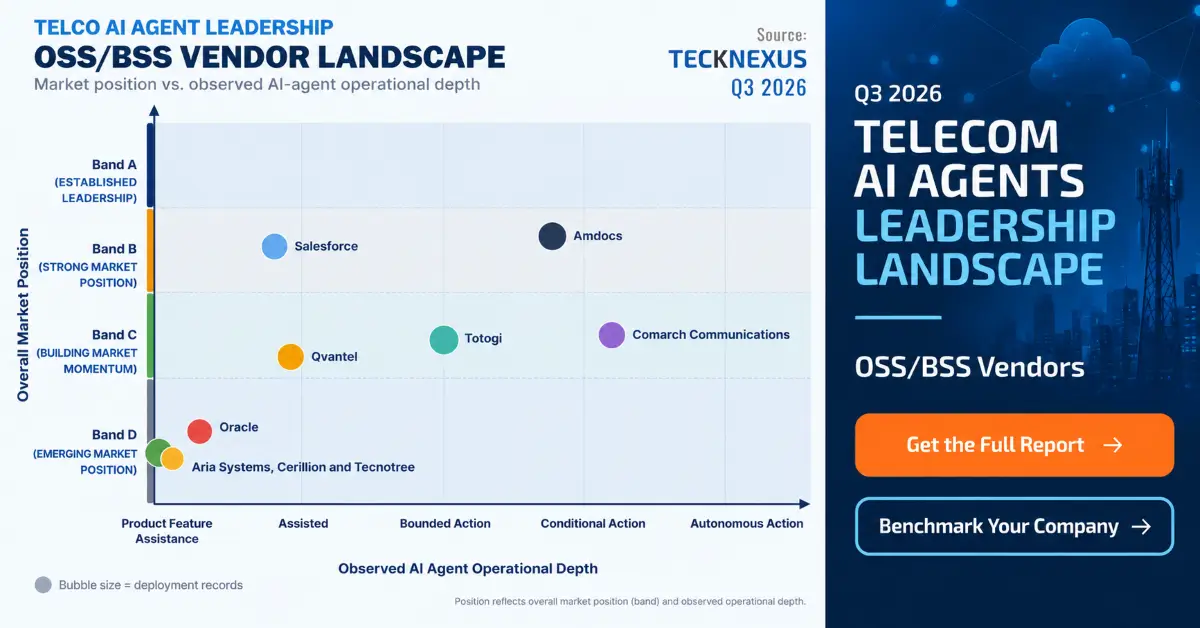
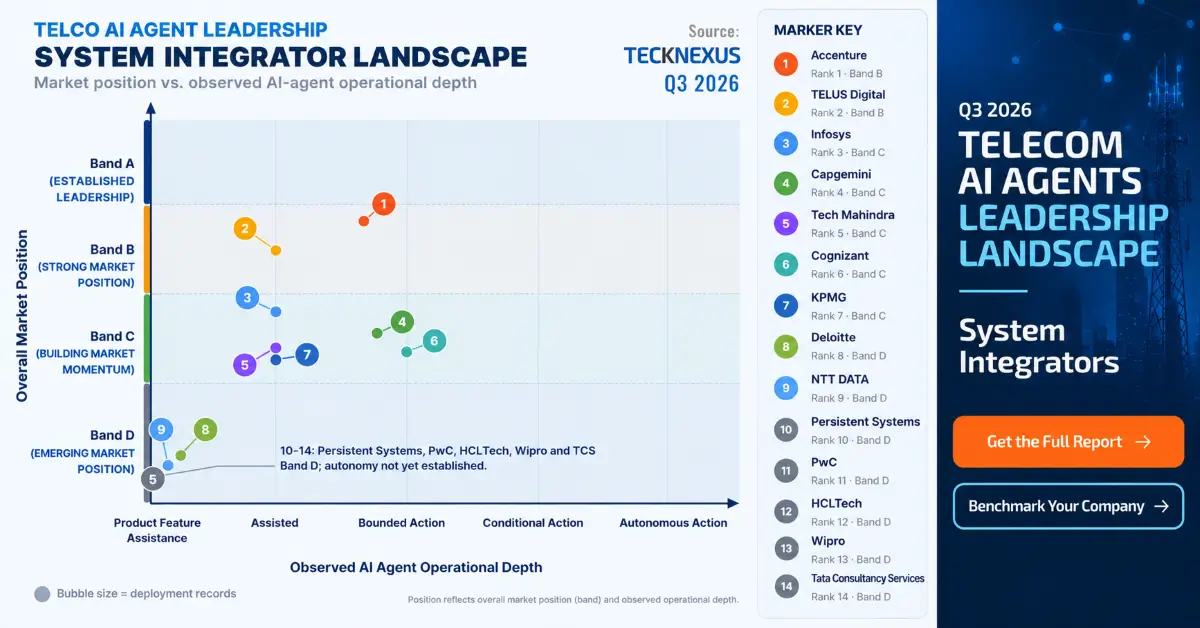
TELECOM AI AGENTS Q3 2026 · Available Now

Explore the Telecom AI Agents Leadership Landscapes

Explore market positioning, deployment momentum and operator validation across the telecom AI agent ecosystem.

Explore Leadership Landscapes
Independent · Evidence-based · Telecom-focused