AR

Augmented reality overlays digital content onto the physical world through glasses, headsets, or mobile devices, and depends heavily on connectivity for low-latency, high-bandwidth experiences. In telecom and enterprise contexts, AR is moving past consumer novelty toward practical industrial uses — remote assistance, maintenance guidance, training, and field operations — where it intersects directly with private networks, edge computing, and 5G. The technology’s network demands make it a recurring test case for low-latency connectivity and edge processing, and a driver of interest in standalone 5G and on-premises deployments. For operators and enterprises, the question is which AR use cases justify their connectivity and infrastructure requirements. This channel covers augmented reality where it meets networks: enterprise and industrial deployments, device developments, and the connectivity and edge requirements that make immersive experiences viable at scale.

Airtel has acquired 400 MHz of 26 GHz mmWave spectrum from Adani Data Networks, a move that strengthens its high-speed 5G offerings in urban and enterprise zones. The deal enhances Airtel’s ability to scale fixed wireless access, industrial 5G networks, and high-bandwidth consumer services. With India's spectrum demand surging, this acquisition underscores the critical role of efficient spectrum use and signals a new phase of telecom consolidation.
In Episode 222 of The G2 on 5G, analysts Will Townsend and Anshel Sag cover T-Mobile’s 6G equipment testing, Google’s mid-range Pixel 9a, Vodafone’s 200M IoT milestone, the GSA’s RedCap group, AT&T's satellite trials for FirstNet, and MediaTek’s powerful new chipsets for phones and Chromebooks.
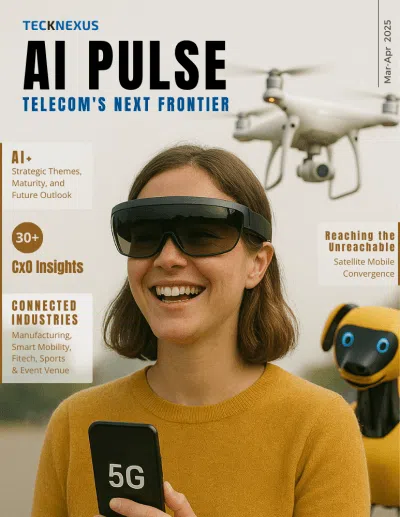
AI Pulse: Telecom’s Next Frontier is a definitive guide to how AI is reshaping the telecom landscape — strategically, structurally, and commercially. Spanning over 130 pages, this MWC 2025 special edition explores AI’s growing maturity in telecom, offering a comprehensive look at the technologies and trends driving transformation.

Explore strategic AI pillars—from AI Ops and Edge AI to LLMs, AI-as-a-Service, and governance—and learn how telcos are building AI-native architectures and monetization models. Discover insights from 30+ global CxOs, unpacking shifts in leadership thinking around purpose, innovation, and competitive advantage.

The edition also examines connected industries at the intersection of Private 5G, AI, and Satellite—fueling transformation in smart manufacturing, mobility, fintech, ports, sports, and more. From fan engagement to digital finance, from smart cities to the industrial metaverse, this is the roadmap to telecom’s next era—where intelligence is the new infrastructure, and telcos become the enablers of everything connected.
The future of sports and entertainment is fan-first, immersive, and data-driven. Powered by D2C models, 5G networks, AI content creation, and super apps, industry leaders are reimagining fan experiences—from Bundesliga's mobile strategy to Web2.5's tokenized communities. The shift is not just technical but cultural, prioritizing personalization, monetization, and real-time interaction across every touchpoint.
Private 5G is poised to transform India’s telecom and industrial landscape, enabling Industry 4.0 through automation, AI, and ultra-reliable connectivity. At the 5GCongress, TRAI chief AK Lahoti and DoT’s Manish Sinha projected ₹4 lakh crore revenue for the telecom sector by 2026, highlighting private 5G’s critical role in enhancing machine-to-machine communication, operational efficiency, and real-time data exchange. Government support through spectrum allocation and Make in India initiatives further boosts industry momentum.
Ericsson, Volvo Group, and Airtel have joined forces to explore how 5G Advanced, Digital Twin technology, and Extended Reality (XR) can transform manufacturing in India. The research, conducted at Volvo’s R&D Centre in Bangalore, will focus on smart factories, immersive training, and real-time process optimization. With Airtel’s low-latency 5G network, the collaboration aims to enhance industrial automation, workforce training, and AI-driven efficiencies, setting a benchmark for Industry 4.0 and Industry 5.0 innovations.
Dive into our in-depth coverage of MWC 2025, highlighting the latest innovations in 5G, AI, IoT, and more. Discover how industry leaders are shaping the future of technology with groundbreaking announcements and developments unveiled during the event.
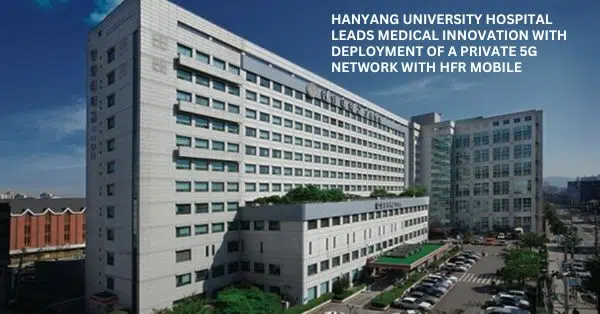
Hanyang University Hospital in Guri, South Korea, has deployed an advanced private 5G network from HFR Mobile, revolutionizing healthcare operations. The network supports AI-powered patient monitoring, real-time infusion tracking, and secure data communication. This milestone showcases private 5G's potential in addressing critical safety and efficiency challenges while paving the way for future innovations like robotic surgeries and IoT-based predictive healthcare.
BSNL and Echelon Edge have joined forces to install a private 5G SA network at Amlohri Coal Mines, transforming India's mining sector. The network enables real-time IoT monitoring, AI-powered traffic management, drone inspections, and digital twin integration for safer, more efficient operations. This deployment highlights the transformative potential of 5G in modernizing mining while promoting indigenous technology under India's "Make in India" initiative.
Verizon Business has secured a contract to enhance 5G and 4G LTE networks at 35 U.S. Air Force bases. Under the Air Force’s Offer to Lease (OTL) program, Verizon will deploy critical upgrades, including C-Band carrier layers, macro towers, and small cell installations. These enhancements will improve speed, bandwidth, and latency, supporting military operations, personnel, and surrounding communities.
Globe’s private 5G network enables connectivity for Philippine industries like ports, mining, and manufacturing. With features like real-time analytics, secure data transmission, and scalable infrastructure, Globe empowers businesses to optimize operations, improve safety, and adopt advanced technologies such as IoT, AI, and AR/VR.
Valenciaport’s private 5G network connects 25,000 devices across six square miles, optimizing cargo traffic, enhancing security, and enabling innovative solutions like AI-powered remote maintenance and digital twinning. Learn how Europe’s second-busiest port is driving digital transformation.

Frequently Asked Questions

What’s the difference between AR and VR, and where does ‘mixed reality’ fit in?
Augmented Reality overlays digital content onto a person’s existing view of the real world, like navigation arrows appearing through a phone camera, while Virtual Reality replaces a person’s entire field of view with a fully simulated digital environment, typically through a headset that blocks out physical surroundings. Mixed Reality sits conceptually between the two, generally referring to experiences where digital objects don’t just sit on top of the real world but actually interact with it, responding to physical surfaces, objects, and lighting in ways that make them feel genuinely present in the room. In practice, the terms are sometimes used loosely, but whether the real world remains visible and primary, or is replaced entirely, is the most reliable way to tell them apart.
Why does AR specifically need fast, low-latency networks to work well?
AR applications work by continuously analyzing a live camera feed and rendering digital content that appears to exist within that real-world view, often updating dozens of times per second as a user moves their phone or head. Any meaningful network delay between capturing real-world data and rendering the corresponding digital overlay causes a visible, often disorienting mismatch, where a virtual object appears to lag behind or drift away from the real-world surface it’s supposed to be anchored to. This sensitivity to latency becomes more pronounced as AR experiences offload heavy processing, like advanced object recognition, to cloud or edge servers, since that offloading only works smoothly if the round-trip network delay stays low enough to feel instantaneous.
What industries are using AR seriously, beyond consumer gaming and filters?
Beyond consumer gaming and social media filters, AR has found genuinely practical traction in several enterprise contexts. Manufacturing and field service use AR to guide technicians through complex repairs, often overlaying step-by-step instructions directly onto the equipment being worked on, or connecting a technician with a remote expert who can annotate what they see in real time. Retail uses AR for virtual try-on experiences. Healthcare uses AR for surgical visualization, overlaying imaging data directly onto a patient during a procedure, and for medical training. Logistics and warehousing use AR for picking and inventory tasks, highlighting correct item locations directly in a worker’s field of view.
Do I need special hardware for AR, or does it work on a regular phone?
Basic AR functionality works on most modern smartphones and tablets, using the device’s camera, screen, and onboard processing to render overlays without any additional hardware, which is how the vast majority of consumer AR experiences are delivered today. More immersive, hands-free AR, where digital content appears directly in a person’s field of view without holding up a phone, generally requires dedicated smart glasses or AR headsets. This category remains considerably less mature than VR headsets, facing ongoing challenges around battery life, display quality, weight and comfort for all-day wear, and price, which is part of why most AR adoption to date has happened through smartphones.
How does 5G specifically improve AR experiences compared to 4G?
5G improves AR primarily through lower latency and higher, more consistent bandwidth compared to 4G, both directly addressing AR’s core technical requirements. Lower latency means digital overlays stay more accurately anchored to the real world, even as more processing work gets offloaded to cloud or edge servers rather than handled entirely on the device. Higher bandwidth supports richer, higher-resolution AR content and makes multi-user, shared AR experiences more technically feasible. 5G’s support for network slicing adds another potential benefit, allowing an AR application to request a dedicated, guaranteed-performance connection rather than competing for capacity with all other network traffic.
What’s ‘AR cloud’ or ‘edge-assisted AR,’ and why does it matter?
AR cloud and edge-assisted AR both refer to the practice of offloading some of AR’s heavy computational work, like recognizing objects in a scene or rendering complex digital content, from the user’s device to more powerful servers, either in the cloud or, increasingly, at the network edge closer to the user. This matters because lightweight AR devices, particularly smart glasses, generally don’t have the processing power or battery capacity to handle sophisticated AR experiences entirely on their own. By offloading that work to nearby edge servers, AR applications can deliver more advanced experiences on lighter, cheaper hardware, provided the network connection is fast and low-latency enough to make that round trip feel instantaneous.
What’s holding back widespread adoption of dedicated AR hardware like smart glasses?
Several practical barriers continue to slow adoption of dedicated AR hardware. Battery life remains a persistent constraint, since the combination of cameras, displays, and processing needed for compelling AR experiences draws significant power in a form factor expected to be lightweight and comfortable for extended wear. Display technology capable of producing bright, high-resolution overlays in a glasses-sized form factor is still maturing and expensive to manufacture at scale. Social acceptance is another factor, since wearing a visibly camera-equipped device in public raises privacy concerns for the people around the wearer. Price also remains a barrier for mainstream consumers.
How is AR different from the broader ‘metaverse’ concept?
AR and the broader metaverse concept are related but not synonymous. AR specifically refers to overlaying digital content onto the real world, typically through a phone, tablet, or AR glasses, while the metaverse concept describes persistent, often fully virtual or mixed-reality environments that people can inhabit and interact with, more commonly associated with VR headsets and fully simulated 3D worlds. AR can be one piece of a broader metaverse vision, letting someone see virtual objects or avatars overlaid onto their actual surroundings rather than requiring a fully immersive headset, but AR itself doesn’t require the persistent, shared, virtual-world framing that defines metaverse discussions.


Partner Hubs

Download content, access intelligence tools, and hear from executives.

Partner Events

  • M360 ASEAN
  • FutureNet Asia 2026
  • Network X Vienna 2026
Scroll to Top