TeckNexus Awards
News & Insights ↗
Intelligence Tools
By Tool Type
▼
By Industry
▼
Access Type
▼
Tool Source
▼
Intelligence Platform
Paid
Intelligence Hub
▼
Monthly Insights
▼
Resources
▼
Channels
▼
Partner Channels
▼


API
Network APIs expose telecom capabilities — such as quality of service, location, device status, and authentication — to developers and enterprises through standardized programmable interfaces. Industry initiatives including GSMA Open Gateway and the CAMARA project aim to make these capabilities consistent across operators, turning the network into a platform that applications can call directly. For operators, APIs represent a route to revenue beyond connectivity; for enterprises and developers, they offer programmable access to network features once locked inside carrier systems. Standards bodies including TM Forum and 3GPP continue to shape how these interfaces are defined and monetized. This channel tracks network API standards, operator and hyperscaler partnerships, monetization models, and real deployments, with analysis of where programmable networks are gaining commercial traction and where adoption still lags behind the ambition.
- News
- August 20, 2022
- Hema Kadia

Adani Data Networks Ltd, the Adani Group subsidiary, will start with 5G services in six service areas and use the spectrum for data center businesses.
- Usecase
- August 14, 2022
- Hema Kadia

Vodafone and Bayer deployed private 5G network in a greenhouse in Germany to gain new knowledge about plant health quickly and make industry and agriculture even more sustainable with automated processes and real-time processing of large amounts of data.
- Usecase
- August 10, 2022
- Hema Kadia

Kajeet Smart Private 5G™ Platform and Samsung’s latest 5G RAN innovations to power smart cities, school campuses, utility grids, & factories. The education sector will be the first area of focus for the Kajeet and Samsung collaboration.
- News
- August 4, 2022
- Hema Kadia

In advancing Singapore’s 5G ecosystem, the Infocomm Media Development Authority (IMDA) is working with industry to unlock the real value of 5G by shaping new business use-cases and enabling enterprises to commercialise, locally and globally.
- Usecase
- August 2, 2022
- Hema Kadia

Ericsson and Vodafone have launched a new preemptive support service for private 5G networks using artificial intelligence (AI) and machine learning (ML) to ensure efficient operations at the Foxconn factory in Komárom, Hungary.
- News
- August 1, 2022
- Hema Kadia

Airtel acquires 19867.8 MHz spectrum in 900 MHz, 1800 MHz, 2100MHz, 3300 MHz and 26 GHz frequency bands through the auction for Rs 43,084 cr. Spectrum secured for 20 years.
The ideal spectrum bank for the best 5G experience, 100x capacity enhancement all done strategically at the least cost.
The ideal spectrum bank for the best 5G experience, 100x capacity enhancement all done strategically at the least cost.
- News
- July 30, 2022
- Hema Kadia

> Telefónica Tech and Telefónica Global Solutions (TGS) divisions, is testing Sateliot's solution to develop an innovative dual 5G NB-IoT connectivity service that integrates the satellite network with existing terrestrial networks to provide IoT connectivity wherever the customer needs it.
> The new service would extend the coverage of current terrestrial NB-IoT networks to remote areas providing connectivity over 100% of the territory and would be compatible with current NB-IoT devices available on the market.
> The first pre-commercial customer pilots are planned for the end of the year.
> The new service would extend the coverage of current terrestrial NB-IoT networks to remote areas providing connectivity over 100% of the territory and would be compatible with current NB-IoT devices available on the market.
> The first pre-commercial customer pilots are planned for the end of the year.
- Usecase
- July 13, 2022
- Hema Kadia

ExteNet and SS&E to deliver private wireless network solutions to Spurs fans to create an unforgettable fan experience at AT&T center.
- Podcast
- June 29, 2022
- Hema Kadia
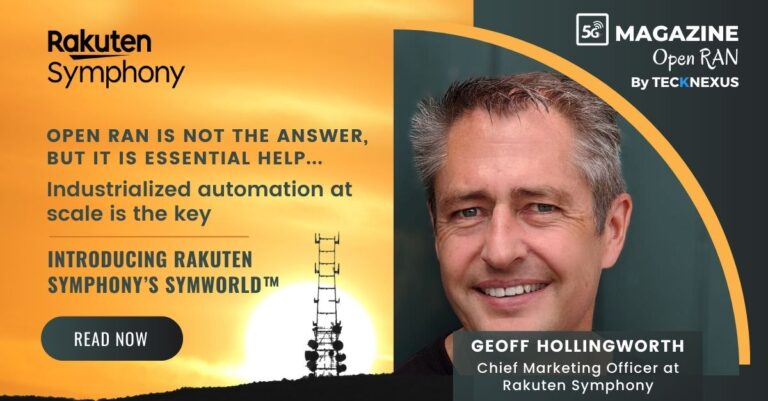
Explore the pioneering pathway of Rakuten in the telecom industry, navigating through Open RAN and a software-centric approach. Discover insights into how openness, transparency, and innovative mindsets are reshaping connectivity and uncovering new possibilities in the realm of 5G, network scalability, and global standards. Join us as we delve into the future of telecom, where Rakuten, Open RAN, and a new era of technological advancements converge to redefine the industry.
- Podcast
- June 28, 2022
- 5G Techritory

- Podcast
- June 22, 2022
- Hema Kadia

Explore Harman’s innovative strategies in fortifying cybersecurity for connected vehicles, led by VP Ravi Puvvala. Navigate through their approach in tackling regulatory challenges, investing in in-vehicle and edge platform security, and deploying unified cybersecurity architectures to safeguard the future of automotive connectivity and ensure compliant, secure, and future-proof operations in the evolving digital vehicular landscape.
Frequently Asked Questions
What is GSMA Open Gateway, and why was it created?
GSMA Open Gateway is an industry-wide initiative, backed by the GSMA, the trade body representing mobile operators globally, and dozens of major carriers, designed to standardize network APIs across operators and countries. Before this initiative, a company wanting to use a SIM swap detection API to prevent account-takeover fraud would typically need separate technical integrations and commercial agreements with every carrier in every market it operated in, an approach that didn’t scale well for global digital businesses like banks or ride-sharing platforms. Open Gateway defines a common technical specification for these APIs so a single integration works consistently across participating operators worldwide, dramatically reducing the engineering and business development overhead for any company wanting to build services on top of carrier network data.
Why do telecom companies want to expose network APIs to outside developers?
Exposing network APIs gives carriers a new revenue stream that doesn’t depend on selling more raw data or voice minutes, an increasingly commoditized, low-margin business. Instead, operators can charge for premium, differentiated capabilities, like verified caller identity for fraud prevention, real-time network quality guarantees for a specific application, or device location data for logistics and delivery tracking, turning the network itself into a monetizable platform. This mirrors a broader strategic shift across the industry, often summarized as moving from selling bandwidth to selling outcomes, where operators position themselves as infrastructure partners for other industries’ digital products rather than purely as connectivity providers competing on price. It also opens partnerships with software companies that wouldn’t otherwise have a direct commercial relationship with an operator at all.
What are some real-world examples of telecom network APIs in use today?
Some of the most established use cases include number verification, used heavily by banking and fintech apps to confirm a user genuinely controls the phone number tied to their account before allowing a transaction; SIM swap detection, which flags when a phone number has recently been transferred to a new SIM, a common signal of an account-takeover attempt; and location APIs, used by logistics and delivery companies for real-time tracking, or by other services for geofencing-based features. Newer, more specialized examples are emerging too, including quality-on-demand APIs that let an application request guaranteed network performance for a specific session, useful for video calls or cloud gaming, effectively giving developers programmatic access to capabilities like network slicing without negotiating a direct deal with the underlying carrier.
How do network APIs relate to network slicing and monetization?
Network slicing creates the actual underlying capability, a dedicated, performance-guaranteed virtual network for a specific purpose, while network APIs are often the mechanism by which a third-party developer actually requests and uses that capability programmatically, without needing to understand or manage the underlying slicing infrastructure directly. A quality-on-demand API, for example, might let a video conferencing app request guaranteed low latency for an important call, with that request fulfilled behind the scenes by the operator’s slicing infrastructure. This pairing is central to how operators are trying to monetize their 5G Standalone investments: slicing creates differentiated network capabilities, and APIs are the commercial and technical interface that makes those capabilities accessible and billable to outside developers.
What’s stopping network APIs from being adopted faster?
Adoption has been slower than initial industry enthusiasm suggested, for a few recurring reasons. Developers building global products need consistent behavior across operators and countries, and while standardization initiatives like Open Gateway aim to solve this, achieving true consistency across dozens of carriers, each with their own legacy systems and commercial priorities, takes time. There’s also a chicken-and-egg dynamic: developers are hesitant to build products around APIs that aren’t yet universally available, while operators are cautious about investing heavily in API infrastructure without proven developer demand. Pricing adds another layer of friction, since operators are still experimenting with how to price access in a way that’s attractive to developers while still generating meaningful revenue relative to infrastructure cost.
Who are the typical customers building on top of telecom network APIs?
Customers span a range of industries, but financial services and fraud prevention have been the earliest and most consistent adopters, using number verification and SIM swap detection to reduce account-takeover and transaction fraud. Logistics, delivery, and ride-sharing companies are major users of location-based APIs for real-time tracking and route optimization. Gaming and entertainment companies are increasingly interested in quality-on-demand APIs to guarantee performance for latency-sensitive applications like cloud gaming. Beyond individual companies, aggregator platforms have emerged specifically to combine APIs from multiple operators into a single access point, letting developers integrate once and reach users across many carriers and countries without managing separate relationships with each one.
Are network APIs secure, and who controls access to sensitive data like location?
Security and access control are central design considerations for network APIs, given the sensitive nature of data like location or SIM status. Access is generally tightly controlled through authentication and authorization systems, and most operators only expose specific, limited capabilities through these APIs rather than raw access to underlying network or subscriber data. Consent mechanisms are also typically built in, particularly for anything involving an individual’s location or personal data, often requiring an explicit user opt-in before that data can be shared with a third-party application. This remains an evolving area, and as more operators expose more capabilities through these interfaces, regulators and privacy advocates are paying closer attention to how consent is obtained across different countries with different privacy law standards.