Satellite & NTN

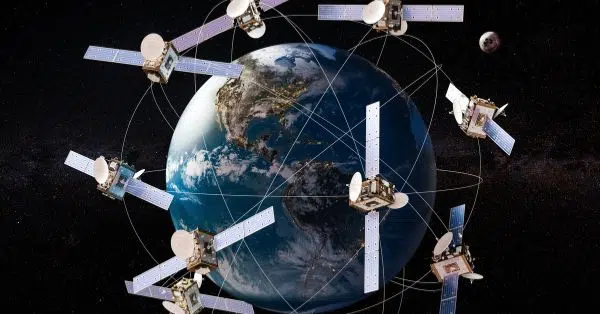
Satellite and non-terrestrial networks (NTN) extend connectivity beyond the reach of ground-based infrastructure, using low-earth-orbit constellations, geostationary satellites, and high-altitude platforms. A major shift is the integration of satellite directly into cellular standards, enabling direct-to-device services that let ordinary phones connect via satellite where there is no terrestrial coverage. NTN is increasingly viewed not as a competitor to mobile networks but as a complement — filling coverage gaps, adding resilience, and supporting IoT and emergency communications. For operators and enterprises, satellite partnerships and spectrum are becoming strategic. This channel covers satellite and NTN developments — constellations, direct-to-device, standards integration, and operator partnerships — with analysis of how non-terrestrial connectivity is moving from niche to a mainstream layer of the connectivity landscape, and where the business case genuinely holds.


Organizations globally are tapping into the vast potential of the Operational IoT market, from transforming weather monitoring in remote mines to ensuring safe drinking water in African communities. The real game-changer is the integration of reliable, cost-effective satellite connections, predicted to rise to tens of millions by 2030. These connections make it possible to transmit data periodically rather than in real-time, reducing costs and meeting the specific needs of industries like agriculture, shipping, and environmental monitoring. The challenge for Systems Integrators (SIs) is to ensure their Satellite IoT deployments are not only technologically viable but also commercially successful. Ensuring robust satellite coverage, cost-effective deployment, and prolonged battery life are essential to this business case. Forward-thinking SIs have already started their journeys, optimizing Satellite IoT solutions, proving its business worth, and preparing for large-scale deployments.
The emergence of 5G New Radio NTN is set to revolutionize the satellite communication market by bridging the gap between terrestrial and non-terrestrial networks. Offering improved speeds, lower latency, and enhanced reliability, 5G NR unlocks new transformative use cases from smart cities to augmented reality. With 5G NR's potential to beam signals from space, satellite communication will gain a competitive edge, providing powerful, seamless connectivity globally. Additionally, the unification of 5G standardization for both types of technologies promises heightened interoperability, allowing users to switch between networks effortlessly. This synergy presents a lucrative opportunity for businesses in both sectors, even as technical challenges persist.
The space industry should reach $1 trillion in annual revenue by 2040, according to a report by Citibank analysts. At the same time, a recent report from Inmarsat and Globant estimates the world could reach net zero up to ten years ahead of the 2050 target if industries make the most of existing and emerging space-based satellite technology. Suffice to say, space can offer an array of solutions for sustainability, security and connectivity. Mobile communications have evolved from generation to generation, adding better capabilities, and the trend is far from being over. The sixth generation is already in the making, and the core driving factors for 6G will revolve around enhancing human communication, including immersive experience, telepresence, multimodal collaboration and interaction. 6G will also aim to enhance machine communication, with the focus on autonomous machines and vehicles capable of sensing their surrounding environment in real time (network as a sensor). This article expands on how small satellites will augment the future of communications that starts already today.
Non-Terrestrial Networks will be an integral part of 6G to provide global connectivity with seamless coverage. The initial introduction of NTN in the 5G system is an important step for the establishment of a global standard for integrated scenarios with terrestrial and Non-Terrestrial networks. However, a much more flexible approach to integrate dynamic network elements such as UAVs, (V)LEO satellites and small satellites is required compared to NTN in 5G.
The rise of smart vehicles, projected to surpass 470 million connected cars by 2025, is rapidly transforming the transportation landscape. Enabled by IoT, these vehicles offer real-time communication with infrastructure, on-the-go diagnostics, and advanced safety features. Yet, challenges like patchy cellular network coverage persist. From facilitating autonomous driving and vehicle-to-vehicle communication to enhancing safety and sustainability, satellite-powered IoT is set to accelerate the connected vehicles revolution, optimizing transportation efficiency and environmental impact.
The mobile phone industry is undergoing a transformation, with emerging technology enabling direct communication between standard mobile phones and satellites. With regulatory changes, international partnerships, and new technological standards, mobile devices will soon boast enhanced satellite connectivity. Companies like SpaceX and Apple are diving deep into the race to provide extensive satellite communication, partnering with T-Mobile and Globalstar, respectively. As the competition intensifies, companies are pushed to innovate or risk becoming obsolete.
The age of connectivity we live in is marked by an explosion in smart devices and data consumption, underpinned by rapid urbanization and technological innovations. This necessitates superior communication infrastructure, especially with the rise of 4K/8K video streaming, online gaming, VR/AR, and shifts in work culture prompted by COVID-19. Despite 4G/LTE networks serving us till now, they lack in terms of speed and latency for present needs. Ensuring low-latency is paramount for real-time communications, particularly in sectors like autonomous vehicles, healthcare, and finance. Integrating terrestrial networks (like 5G) with non-terrestrial networks (like satellites) presents a solution, but is challenged by technical, regulatory, and economic factors. Future advancements in satellite communication, including improved payloads and next-gen constellations, look promising. The synergy between 5G and satellite networks will shape the future of global connectivity.
Satellite constellations are advanced networks of strategically placed satellites designed to offer extensive global coverage, overcoming the limitations of single satellite systems. They're pivotal in global communications, particularly in the era of 5G, enabling high-speed, low-latency connections. Different constellations operate at varying altitudes - Geostationary Earth Orbit (GEO), Medium Earth Orbit (MEO), and Low Earth Orbit (LEO) - each with unique benefits and challenges. As 5G emerges, these constellations will not only provide ultra-fast connectivity but will also bridge the digital divide, ensuring all corners of the world have access. Companies like SpaceX's Starlink and Amazon's Project Kuiper are pioneering efforts in this realm. However, while the opportunities are vast, challenges like interference management, space debris, and regulatory hurdles remain.
The emergence of 5G Non-Terrestrial Networks (NTN) presents a revolutionary step in global digital connectivity, but it brings with it intricate regulatory and policy challenges. These directives play a pivotal role, influencing the design, services, and the very integrity of these networks. Key issues range from spectrum allocation and licensing to operational standards and the potential cyber threats these networks might face. Given the global nature of 5G NTN, coordinating regulations across international boundaries becomes paramount, as does addressing the growing concerns of space debris. Moreover, with the vast amount of data these networks handle, policies ensuring data privacy and cybersecurity are of utmost importance. Ultimately, understanding and navigating this complex regulatory landscape is crucial for the successful deployment and operation of 5G NTN.
5G Non-Terrestrial Networks (NTN) promise a new horizon in global communication with high-speed, low-latency features. Yet, as they usher in this new era, they also introduce significant security and privacy challenges. Key vulnerabilities, such as signal jamming, spoofing, and eavesdropping, pose risks to data integrity and user privacy. Addressing these threats demands a layered approach, utilizing advanced cryptographic methods, intrusion detection systems, and innovative AI/ML techniques. As we navigate the future of 5G NTN, it's crucial to prioritize user security and privacy, balancing the immense potential of these networks with the inherent risks they present.
From SpaceX's Starlink providing unprecedented internet access, to the synergistic fusion of Eutelsat and OneWeb, and the ambitious visions of Amazon's Project Kuiper, each initiative is redefining what is possible in global connectivity. Companies like SES, Viasat, Intelsat, Telesat, and Iridium continue to push the boundaries of satellite communication, while EchoStar and Boeing Satellites exemplify the fusion of legacy and innovation.
This discussion aims to shape the future of 24/7 connectivity for defense forces, ensuring they remain connected, informed, and empowered in the face of evolving challenges. As the modern soldier and battlefield demand uninterrupted connectivity, our experts will delve into the challenges and explore the best tools or combination of tools to meet this critical requirement. Our panelists discuss various options on the table, including private networks on wheels, satellite communication, and Open RAN solutions.

Frequently Asked Questions

What is a Non-Terrestrial Network (NTN)?
NTN refers to connectivity delivered via satellites, high-altitude platforms, or other non-ground-based infrastructure, working alongside, not instead of, traditional cell towers to extend coverage to places terrestrial networks don’t reach. The concept has been formally incorporated into 3GPP’s mobile network standards specifically to ensure satellite-based connectivity can integrate technically with standard cellular networks, rather than existing as a completely separate, incompatible system. This standardization matters because it means NTN connectivity can, in principle, work seamlessly alongside regular cellular service, allowing a device to fall back to satellite coverage automatically when terrestrial signal isn’t available, rather than requiring users to manually switch between two entirely separate systems.
What are the different types of NTN?
  • Satellite networks: These networks use satellites in orbit around the Earth to transmit and receive signals and include geostationary and Low Earth orbit (LEO) satellite networks
  • Balloon networks: These networks use balloons that are floated high in the stratosphere to transmit and receive signals. They can be used for applications such as providing internet access in remote or hard-to-reach areas, as well as for remote sensing and scientific research.
  • High-altitude platform stations (HAPS): These networks use aircraft or airships that fly at high altitudes, such as the stratosphere, to transmit and receive signals. They can be used for similar applications to balloon networks, and they also have the added advantage of mobility.
  • Drone networks: These networks use drones, which are also referred to as unmanned aerial vehicles (UAVs), to transmit and receive signals. They can be used for a wide range of applications, such as providing internet access in remote or hard-to-reach areas, remote sensing, scientific research, and commercial uses like delivery and inspection.
  • Stratospheric platform stations (SAPS): This network uses a platform stationed in the lower part of the stratosphere, such as a blimp, that can relay communications between ground and satellites or between ground and another SAPS.
  • Laser Communications: This network uses a laser to transmit data between two points. This technology is still in development, but it has great potential to provide high-bandwidth, low-latency communications.
Is satellite internet going to make cell towers obsolete?
No. The industry consensus treats satellite and direct-to-device connectivity as a complementary layer that extends coverage to remote and underserved areas, not a replacement for dense terrestrial 5G networks in cities and suburbs where ground infrastructure remains far more efficient at handling large volumes of simultaneous users. Terrestrial cell towers can support vastly more simultaneous connections and far higher data throughput per user within a given area than current satellite technology can practically deliver, making satellite connectivity better suited for filling coverage gaps, like remote rural areas, maritime and aviation routes, or emergency situations where terrestrial infrastructure has failed.
What is direct-to-device (D2D) satellite connectivity?
Direct-to-device, often abbreviated D2D, lets ordinary smartphones connect directly to satellites for basic connectivity, such as text messaging and, increasingly, voice or limited data service, without needing a separate, dedicated satellite terminal or specialized hardware beyond what’s already built into many recent smartphone models. This represents a significant technical advance over older satellite phone technology, which required bulky, dedicated devices. Large satellite operators, including SpaceX’s Starlink, are positioning D2D as a broader connectivity layer that could eventually extend beyond emergency and remote-area use cases into more general-purpose coverage, though this more expansive vision remains considerably further from current commercial reality than basic emergency messaging service.
Why is satellite connectivity becoming a bigger topic in telecom circles in 2026?
Large satellite operators entering the connectivity market with very large addressable market projections are raising substantial industry questions about spectrum ownership, infrastructure economics, and how traditional telecom operators and satellite providers will share or compete for the same customers going forward. SpaceX’s Starlink, for instance, has framed its total addressable market across AI, connectivity, and space-enabled infrastructure as enormous, positioning direct-to-device satellite connectivity as a potential global connectivity layer. This scale of ambition has prompted genuine strategic concern within the traditional telecom industry about longer-term competitive dynamics and what role established carriers will play as satellite capabilities continue advancing rapidly.
How does NTN fit into 6G plans?
Standards bodies are explicitly designing 6G to include seamless integration between terrestrial and satellite networks as a core capability, aiming to close coverage gaps as a fundamental design goal rather than treating satellite as a bolt-on afterthought added after the main standard is already finalized. This reflects lessons learned from how NTN support was added to 5G somewhat later in that standard’s development process, with 6G planning intended to incorporate satellite integration considerations from earlier on. The explicit goal is a future network where a device can move seamlessly between terrestrial and satellite coverage without users needing to think about which type of connectivity they’re actually using.
What’s the difference between low-earth-orbit, medium-earth-orbit, and geostationary satellites for connectivity purposes?
Low-earth-orbit, or LEO, satellites orbit much closer to Earth than older satellite generations, typically a few hundred miles up, which significantly reduces signal delay, or latency, making LEO constellations considerably more suitable for real-time applications like voice calls than earlier satellite generations were. Medium-earth-orbit satellites sit considerably farther out and are less commonly used for the consumer broadband and direct-to-device connectivity currently generating the most attention. Geostationary satellites orbit much farther from Earth, remaining fixed relative to a specific ground point, useful for certain broadcast applications but introducing meaningfully higher latency, generally making them less suitable for interactive connectivity compared to LEO constellations.
Do existing smartphones actually support satellite connectivity today, or is special hardware required?
A growing number of recent smartphone models do support some form of satellite connectivity natively, generally for specific, limited use cases like emergency messaging when no cellular signal is available, rather than full general-purpose satellite data service. This built-in support typically depends on having a relatively recent device with a modem chipset specifically designed to support satellite frequencies, meaning older devices generally cannot access these features even through a software update. As direct-to-device satellite services continue expanding beyond basic emergency messaging toward more general data and voice capability, broader satellite support is expected to become a more standard smartphone feature over time, similar to how 5G modem support gradually became standard.
What regulatory and spectrum challenges does satellite connectivity raise for traditional telecom operators?
Spectrum that terrestrial carriers have historically used exclusively may need to be shared or coordinated with satellite operators offering direct-to-device service using similar or overlapping frequencies, raising technical interference concerns and complex regulatory coordination questions that vary by country. There are also competitive and regulatory fairness questions, since satellite operators offering connectivity services may not be subject to the same licensing requirements or local infrastructure investment expectations that traditional terrestrial carriers face in a given country, potentially creating an uneven competitive playing field regulators are still actively working through. These unresolved questions are part of why traditional operators have approached large-scale satellite providers with a mix of cautious partnership interest and genuine competitive concern.

Your Brand. Our Intelligence Tools.

Capture leads at the point of evaluation. Talk to Us →

Sponsored by Palo Alto Networks
⚡ Utilities ⏱ 8 min ✓ Free
This tool is built and hosted by TeckNexus.
Launch Tool →
Whitepaper
This whitepaper explains how utilities can use secure AI-enabled private mobile networks to modernize operations, support distributed intelligence, improve resilience, and strengthen cybersecurity across critical infrastructure. It covers AI applications, private network advantages, zero trust principles, multilayered security architecture, and governance considerations for AI-ready utility environments....
Whitepaper
Non-terrestrial networks are rapidly evolving from experimental satellite systems into an increasingly important part of the global 5G connectivity landscape. This eBook, developed by Radisys in collaboration with TeckNexus, explores how 3GPP standardization, satellite architecture innovation, and software-driven network design are reshaping NTN deployment models. It examines the transition from...
Whitepaper
Private cellular networks are transforming industrial operations, but securing private 5G, LTE, and CBRS infrastructure requires more than legacy IT/OT tools. This whitepaper by TeckNexus and sponsored by OneLayer outlines a 4-pillar framework to protect critical systems, offering clear guidance for evaluating security vendors, deploying zero trust, and integrating IT,...
Scroll to Top