

AI Agent Competitive
Intelligence
Intelligence
Private Network
Intelligence
Intelligence
Intelligence Journeys
Utilities Private Broadband Planning
AI Use Case Planning for Utilities
Intelligence Tools
By Tool Type
▼
By Industry
▼
Access Type
▼
Monthly Trackers
▼
Resources
▼
Technology Hubs
▼
Partner Hubs
▼


Devices
Devices span the hardware that connects to networks — smartphones, modules, routers, customer-premises equipment, IoT sensors, and increasingly AI-capable endpoints. Device capability is a frequently overlooked constraint on network performance: the bands, features, and chipsets a device supports determine which 5G or 5G-Advanced features users can actually access, even within strong coverage. New categories such as reduced-capability (RedCap) devices, fixed wireless access units, and satellite-capable phones are expanding where and how networks reach users. For operators and enterprises, device strategy shapes everything from spectrum value to private-network design and IoT scale. This channel covers the device ecosystem — chipsets, form factors, and the new classes of connected hardware — with analysis of how device evolution enables or limits network capability across consumer, enterprise, and industrial deployments.
- Tech News & Insight
- March 21, 2025
- Hema Kadia

Smartphones are no longer just communication tools—they're data hubs, wallets, and identity carriers. As mobile usage expands, so do digital threats. This article explores why the future of mobile protection must go beyond physical coverage to include AI-powered threat detection, data security, and digital identity safeguards.
- News
- January 14, 2025
- Susie

Dejero, a leader in resilient connectivity solutions, and RGB Spectrum, a pioneer in mission-critical, real-time video solutions, are set to announce their new partnership at AFCEA West 2025. The companies will unveil their latest innovation, the IPX Flyaway Kit, a command center’s display and connectivity infrastructure in a box, at booth #753 from January 28-30 at the San Diego Convention Center.
- Usecase
- December 20, 2024
- Hema Kadia
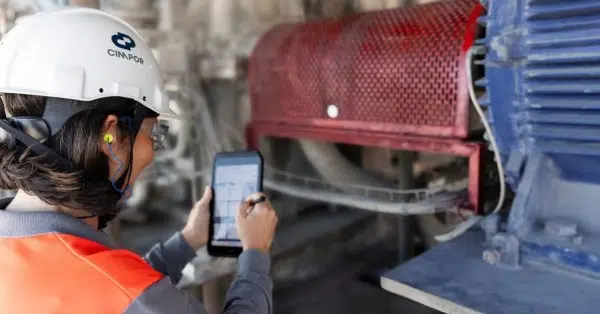
Ericsson and Vodafone Portugal pioneer 5G Standalone Private Networks at CIMPOR’s cement plant, enabling IoT, drone inspections, and smart devices for enhanced efficiency, safety, and sustainability in industrial operations.
- Tech News & Insight
- December 20, 2024
- Paul Warburton, Chief Digital and Marketing Officer NSC

Paul Warburton, Chief Digital Marketing Officer at NSC, explores the transformative impact of mobility on business. He envisions a future where "vehicle as a service" seamlessly integrates various services, connected devices, and collaborative efforts to enhance daily commutes with personalised experiences and mobile retail environments. Paul argues that businesses must shift from focusing solely on individual devices to adopting a holistic, interconnected approach.
- Article & Insights
- December 19, 2024
- Hema Kadia

Private 5G/LTE and CBRS networks are revolutionizing industries by enabling smarter cities, safer workplaces, and more efficient factories. This edition celebrates award-winning deployments and insights from industry leaders who are driving digital transformation. Explore real-world examples of how these networks optimize manufacturing operations, enhance supply chain visibility, and promote sustainable practices, making grids resilient and industries future-ready.
- News
- October 11, 2024
- Susie

Dejero, an innovator in mission-critical connectivity solutions proven to deliver real-time data and high-quality live video over IP for situational awareness, recently supplied its GateWay network aggregation device to Winston-Salem Police Department (WSPD) for critical connectivity during the International Black Theatre Festival (IBTF).
Powered by Dejero Smart Blending Technology™, GateWay is certified by multiple nationwide US wireless communications networks built for priority-use of first responders and the public safety community. Smart Blending Technology combines connectivity from diverse cellular and other IP network providers, including LEO, MEO and GEO satellites creating a virtual ‘network of networks’ to provide access to a far greater coverage area than any single provider can deliver. Easily transported, GateWay can be set up in a matter of minutes, making it ideal for on-location events.
- Article & Insights
- August 26, 2024
- Hema Kadia

Discover the future of stadium experiences with 5G and AI-powered digital mascots. From real-time interactions to personalized content, these innovative technologies are revolutionizing fan engagement in sports venues, creating immersive, multi-dimensional events that deepen brand connections and enhance the live event atmosphere.
- News
- August 23, 2024
- News Feed

MWC Las Vegas 2024, in partnership with CTIA, will unite the enterprise 5G ecosystem from October 8-10. Join CIOs, tech leaders, and industry experts as they explore the future of connectivity through discussions on AI Networks, 5G EdgeCloud, and more. Featuring summits on private networks, non-terrestrial networks, and industry 4.0, this event is a must-attend for those shaping the digital landscape.
- Tech News & Insight
- August 20, 2024
- Hema Kadia

Qualcomm's Snapdragon 7s Gen 3 Mobile Platform brings advanced features like on-device generative AI, enhanced gaming, and professional-grade imaging to mid-tier smartphones. This platform significantly boosts CPU and GPU performance while reducing power consumption, making high-end mobile experiences more accessible to a broader audience. With major OEMs like Xiaomi set to adopt it, the Snapdragon 7s Gen 3 is poised to elevate the capabilities of mid-range devices, bridging the gap between premium and affordable smartphones.
- Usecase
- August 13, 2024
- Hema Kadia

Nokia and Swisscom Broadcast are partnering to establish Switzerland's largest Drones-as-a-Service (DaaS) network, featuring 300 Drone-in-a-Box units. This deployment aims to improve public safety and industrial operations by offering quick, autonomous drone responses for emergencies and inspections. Utilizing advanced 3GPP technologies and edge computing, this network is designed to overcome Switzerland's unique operational challenges, ensuring reliable and efficient beyond visual line of sight (BVLOS) operations. This initiative builds on Nokia's successful drone deployment in Belgium and is set to revolutionize safety and efficiency across various sectors in Switzerland.
- News
- August 7, 2024
- Hema Kadia

The CROFT project, led by Skyports Drone Services and funded by the UK Space Agency, is set to explore 5G-enabled drone deliveries in Orkney, Scotland. This initiative unites leading experts to develop scalable drone services, enhancing connectivity for remote communities using cutting-edge space technologies.
Frequently Asked Questions
What counts as a ‘device’ in this category, beyond smartphones?
It spans smartphones, tablets, wearables like smartwatches and fitness trackers, mobile hotspots, IoT sensors deployed across industries from agriculture to manufacturing, connected vehicles, fixed wireless access routers used for home and business broadband, and increasingly, AI-capable hardware designed to run machine learning models directly on the device. Each device category has different priorities: a smartphone needs to balance performance, battery life, and broad consumer features, while an industrial IoT sensor might prioritize extremely low power consumption and a multi-year battery life over raw performance, and an enterprise device built for a private 5G network might prioritize certified protocol compatibility and ruggedized durability over consumer-friendly design.
Why does device support matter for new network technologies like 5G Standalone or network slicing?
Even if a network supports a capability, like dynamic network slicing or a specific 5G Standalone feature, customers can’t actually use it unless their device’s chipset, modem, and software also support that capability, which often lags meaningfully behind network rollout. Chipset manufacturers need time to design, test, and certify support for new network features, and device manufacturers then need to integrate those chipsets into actual products and release them to market, a process that can take a year or more after a network feature first becomes available. Device readiness is frequently the real bottleneck determining how quickly new network capabilities translate into a noticeably different experience for everyday users.
What’s driving demand for ruggedized or purpose-built enterprise devices?
Standard consumer smartphones are generally designed for everyday consumer environments and aren’t built to handle the physical conditions, security requirements, or specific network protocols many enterprise and industrial deployments require. Manufacturing floors, mining operations, ports, and outdoor industrial sites often expose devices to dust, moisture, extreme temperatures, and physical impact that consumer-grade hardware isn’t rated to withstand reliably over time. Beyond physical ruggedness, enterprises increasingly need devices specifically certified to work with private 5G network protocols, dedicated security requirements, or specialized application software, creating a distinct market for ruggedized, enterprise-focused devices from manufacturers who specialize in industrial and field-service hardware.
How is AI changing what we expect from connected devices?
Devices are increasingly expected to run AI processing locally, known as on-device inference, rather than sending every request to a cloud server for processing. This reduces latency, since results don’t need to travel to a distant data center and back, and it can improve privacy, since sensitive data doesn’t necessarily need to leave the device at all. However, on-device AI requires meaningfully more capable chipsets than older devices needed, since running AI models locally demands processing power and memory simpler, lower-cost devices may not have. This is driving tighter coordination between chipset makers, device manufacturers, and network operators.
Why do some phones get 5G features faster than others, even on the same network?
Even on the same underlying network, different phones can support meaningfully different real-world 5G performance because of differences in their specific modem chipsets, the particular frequency bands those chipsets support, and how well each device’s software has been optimized to take advantage of available network features. A phone with a more advanced or recently released modem might support carrier aggregation across more frequency bands simultaneously, or be certified for 5G Standalone features that an older or lower-cost device’s modem simply can’t process, even if both phones are technically labeled as 5G phones. Marketing labels alone don’t guarantee equivalent performance.
What’s the difference between a consumer device and an IoT device in terms of design priorities?
Consumer device design generally prioritizes a balance of performance, battery life, screen quality, and broad appeal, with relatively frequent product refresh cycles to stay competitive in a crowded market. IoT device design tends to prioritize very different things: extremely low power consumption to support battery life measured in years, low manufacturing cost to make large-scale deployment of thousands or millions of units economically viable, and a narrow, specific function rather than broad general-purpose capability. An IoT sensor monitoring soil moisture in agriculture doesn’t need a high-resolution display; it needs to reliably transmit a small amount of data for years on a single battery charge.
How long does it typically take for a new network capability to reach mainstream devices?
The timeline varies considerably, but it’s common for a meaningful gap, often a year or more, to exist between when a network feature first becomes technically available and when it reaches a meaningful share of mainstream devices in active use. Flagship devices released around the same time as a new network capability typically support it fastest, since manufacturers often coordinate development timelines with major network milestones. Mid-range and budget devices generally lag further behind, both because manufacturers prioritize newer chipsets in premium products first, and because many consumers keep mid-range and budget devices for longer before upgrading.
What role do device makers play in network standards development?
Device makers, particularly major chipset manufacturers like Qualcomm and MediaTek, participate directly in standards bodies such as 3GPP, contributing technical expertise and influencing which features make it into a given network generation’s specifications. This involvement matters because standards need to reflect what’s actually feasible to build into real hardware within a reasonable cost and power budget, not just an idealized technical capability no chipset could practically support. Device makers also often run early interoperability testing with network equipment vendors before a standard is finalized, helping ensure compatible devices can realistically follow soon after a standard is specified.




Telco AI Agent Leadership

