
AI Agent Competitive
Intelligence
Intelligence
Private Network
Intelligence
Intelligence
Intelligence Journeys
Utilities Private Broadband Planning
AI Use Case Planning for Utilities
Intelligence Tools
By Tool Type
▼
By Industry
▼
Access Type
▼
Monthly Trackers
▼
Resources
▼
Technology Hubs
▼
Partner Hubs
▼


Devices
Devices span the hardware that connects to networks — smartphones, modules, routers, customer-premises equipment, IoT sensors, and increasingly AI-capable endpoints. Device capability is a frequently overlooked constraint on network performance: the bands, features, and chipsets a device supports determine which 5G or 5G-Advanced features users can actually access, even within strong coverage. New categories such as reduced-capability (RedCap) devices, fixed wireless access units, and satellite-capable phones are expanding where and how networks reach users. For operators and enterprises, device strategy shapes everything from spectrum value to private-network design and IoT scale. This channel covers the device ecosystem — chipsets, form factors, and the new classes of connected hardware — with analysis of how device evolution enables or limits network capability across consumer, enterprise, and industrial deployments.
- News
- July 24, 2024
- Hema Kadia

J.D. Power's 2024 U.S. Wireless Network Quality Performance Study reveals fewer 5G issues and higher customer satisfaction due to advancements in 5G technology and strategic mid-band spectrum deployment, enhancing overall user experience.
- News
- July 19, 2024
- Hema Kadia

The FCC has proposed a new rule mandating mobile phone unlocking within 60 days to enhance consumer choice and competition. This move aims to standardize policies across carriers, providing a consistent timeframe for consumers to switch providers. The proposed rule addresses potential challenges, such as the impact on smaller providers and issues of fraud, while promoting fair practices in the mobile service market. Public comments will play a vital role in refining this initiative.
- Tech News & Insight
- July 11, 2024
- Hema Kadia
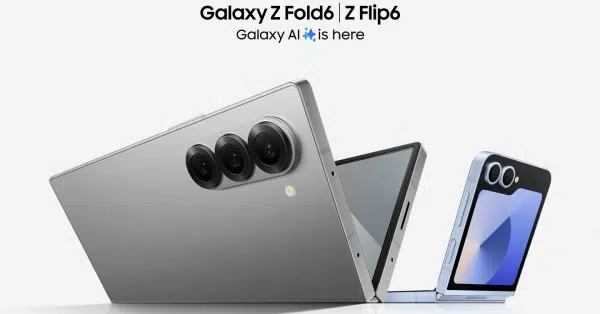
Explore the new Samsung Galaxy Z Fold 6 and Z Flip 6, featuring advanced AI capabilities for productivity, creativity, and entertainment. Unveiled at the Galaxy Unpacked event, these foldable smartphones, along with the AI-enhanced Galaxy Buds3 Pro, highlight Samsung's innovative approach to integrating AI in mobile technology.
- Article & Insights
- July 9, 2024
- Melanie Gomersall

Discover the top 9 trends transforming telecom inventory management in 2024. From predictive analytics and blockchain technology to AI-driven insights and IoT integration, these trends are optimizing operations, enhancing customer satisfaction, and promoting sustainability in the telecom industry.
- Podcast
- June 25, 2024
- GXC

Join hosts Hardik Jain and Cristina Betanzo as they chat with Daniel Quant, Vice President & General Manager of the Gateways, Routers, & Modems Business Unit at Multitech, about the essential role of private cellular networks in today’s enterprise landscape.
In this episode, we explore:
The unique requirements and needs of enterprises to digitize and automate processes.
-> How private cellular networks connect assets and people across various verticals such as oil and gas, logistics, food processing, and more.
-> The differences between public networks, WiFi, and private cellular networks, highlighting why private cellular is the superior solution.
-> The cost savings, enhanced security, and regulatory compliance offered by private cellular networks.
-> Discover how different use cases and devices drive the necessity for a private cellular network and gain insights into the transformative impact on enterprise automation, connectivity, security, and compliance.
Tune in now to learn why private cellular networks are the future of enterprise connectivity!
In this episode, we explore:
The unique requirements and needs of enterprises to digitize and automate processes.
-> How private cellular networks connect assets and people across various verticals such as oil and gas, logistics, food processing, and more.
-> The differences between public networks, WiFi, and private cellular networks, highlighting why private cellular is the superior solution.
-> The cost savings, enhanced security, and regulatory compliance offered by private cellular networks.
-> Discover how different use cases and devices drive the necessity for a private cellular network and gain insights into the transformative impact on enterprise automation, connectivity, security, and compliance.
Tune in now to learn why private cellular networks are the future of enterprise connectivity!
- Usecase
- June 23, 2024
- Hema Kadia

Telia's private 5G and drones extend network coverage to remote areas, revolutionizing industries like forestry. In Sweden, drones with mobile base stations enabled remote control of forestry machines, overcoming connectivity challenges in remote forests. Key partners, including Mittuniversitetet, Telia, Ericsson, and Volvo CE, contributed to this innovative project, showcasing the potential of 5G and drone technology to enhance connectivity, safety, and operational efficiency in forestry and beyond.
- Podcast
- June 19, 2024
- 5G Guys

In this episode of the 5G Guys podcast, hosts Wayne Smith and Dan McVaugh delve into the world of satellite connectivity with Tarun Gupta, co-founder of Skylo Technologies. Learn how Skylo is pioneering 5G and satellite integration to enhance IoT, SMS, and voice services globally. Discover the advantages of their standards-based approach and how it differentiates from other satellite services like Starlink and AST SpaceMobile.
- News
- June 5, 2024
- Hema Kadia

The government believes that using drones and balloons for telecom connectivity is a much more convenient option during disasters as compared to setting up new mobile sites.
- Podcast
- May 30, 2024
- G2 on 5G

Discover the latest in 5G technology, including Ericsson's $50M investment in a 5G factory, T-Mobile's price hike, Deutsche Telekom’s private 5G network for a paper mill, and Microsoft's AI PCs. Stay updated on key industry trends and advancements.
- News
- May 29, 2024
- Hema Kadia

Verizon's $100 million investment in AST SpaceMobile aims to enhance satellite-to-cell services across the U.S., using the 850 MHz spectrum to ensure reliable connectivity in remote areas.
- News
- May 28, 2024
- Hema Kadia

Stay updated with the latest in Indian tech and telecom: Samsung launches Galaxy F55 5G, Lava teases Yuva 5G, and new trends in affordable 5G phones. Discover the impact of telecom infrastructure investments, GST updates for telcos, and more.
Frequently Asked Questions
What counts as a ‘device’ in this category, beyond smartphones?
It spans smartphones, tablets, wearables like smartwatches and fitness trackers, mobile hotspots, IoT sensors deployed across industries from agriculture to manufacturing, connected vehicles, fixed wireless access routers used for home and business broadband, and increasingly, AI-capable hardware designed to run machine learning models directly on the device. Each device category has different priorities: a smartphone needs to balance performance, battery life, and broad consumer features, while an industrial IoT sensor might prioritize extremely low power consumption and a multi-year battery life over raw performance, and an enterprise device built for a private 5G network might prioritize certified protocol compatibility and ruggedized durability over consumer-friendly design.
Why does device support matter for new network technologies like 5G Standalone or network slicing?
Even if a network supports a capability, like dynamic network slicing or a specific 5G Standalone feature, customers can’t actually use it unless their device’s chipset, modem, and software also support that capability, which often lags meaningfully behind network rollout. Chipset manufacturers need time to design, test, and certify support for new network features, and device manufacturers then need to integrate those chipsets into actual products and release them to market, a process that can take a year or more after a network feature first becomes available. Device readiness is frequently the real bottleneck determining how quickly new network capabilities translate into a noticeably different experience for everyday users.
What’s driving demand for ruggedized or purpose-built enterprise devices?
Standard consumer smartphones are generally designed for everyday consumer environments and aren’t built to handle the physical conditions, security requirements, or specific network protocols many enterprise and industrial deployments require. Manufacturing floors, mining operations, ports, and outdoor industrial sites often expose devices to dust, moisture, extreme temperatures, and physical impact that consumer-grade hardware isn’t rated to withstand reliably over time. Beyond physical ruggedness, enterprises increasingly need devices specifically certified to work with private 5G network protocols, dedicated security requirements, or specialized application software, creating a distinct market for ruggedized, enterprise-focused devices from manufacturers who specialize in industrial and field-service hardware.
How is AI changing what we expect from connected devices?
Devices are increasingly expected to run AI processing locally, known as on-device inference, rather than sending every request to a cloud server for processing. This reduces latency, since results don’t need to travel to a distant data center and back, and it can improve privacy, since sensitive data doesn’t necessarily need to leave the device at all. However, on-device AI requires meaningfully more capable chipsets than older devices needed, since running AI models locally demands processing power and memory simpler, lower-cost devices may not have. This is driving tighter coordination between chipset makers, device manufacturers, and network operators.
Why do some phones get 5G features faster than others, even on the same network?
Even on the same underlying network, different phones can support meaningfully different real-world 5G performance because of differences in their specific modem chipsets, the particular frequency bands those chipsets support, and how well each device’s software has been optimized to take advantage of available network features. A phone with a more advanced or recently released modem might support carrier aggregation across more frequency bands simultaneously, or be certified for 5G Standalone features that an older or lower-cost device’s modem simply can’t process, even if both phones are technically labeled as 5G phones. Marketing labels alone don’t guarantee equivalent performance.
What’s the difference between a consumer device and an IoT device in terms of design priorities?
Consumer device design generally prioritizes a balance of performance, battery life, screen quality, and broad appeal, with relatively frequent product refresh cycles to stay competitive in a crowded market. IoT device design tends to prioritize very different things: extremely low power consumption to support battery life measured in years, low manufacturing cost to make large-scale deployment of thousands or millions of units economically viable, and a narrow, specific function rather than broad general-purpose capability. An IoT sensor monitoring soil moisture in agriculture doesn’t need a high-resolution display; it needs to reliably transmit a small amount of data for years on a single battery charge.
How long does it typically take for a new network capability to reach mainstream devices?
The timeline varies considerably, but it’s common for a meaningful gap, often a year or more, to exist between when a network feature first becomes technically available and when it reaches a meaningful share of mainstream devices in active use. Flagship devices released around the same time as a new network capability typically support it fastest, since manufacturers often coordinate development timelines with major network milestones. Mid-range and budget devices generally lag further behind, both because manufacturers prioritize newer chipsets in premium products first, and because many consumers keep mid-range and budget devices for longer before upgrading.
What role do device makers play in network standards development?
Device makers, particularly major chipset manufacturers like Qualcomm and MediaTek, participate directly in standards bodies such as 3GPP, contributing technical expertise and influencing which features make it into a given network generation’s specifications. This involvement matters because standards need to reflect what’s actually feasible to build into real hardware within a reasonable cost and power budget, not just an idealized technical capability no chipset could practically support. Device makers also often run early interoperability testing with network equipment vendors before a standard is finalized, helping ensure compatible devices can realistically follow soon after a standard is specified.




Telco AI Agent Leadership