Private Network
Intelligence
Intelligence Journeys
Utilities Private Broadband Planning
AI Use Case Planning for Utilities

Startups

India and the United Kingdom have launched the India–UK Connectivity and Innovation Centre to accelerate secure, AI-driven, and resilient telecom technologies over the next four years. The two governments committed an initial £24 million—roughly ₹250–₹282 crore depending on exchange rates—to fund applied research, joint testbeds, field trials, and standards contributions in emerging telecom domains. The investment concentrates on three pillars: AI in telecommunications, non-terrestrial networks (NTNs) for satellite and airborne connectivity, and telecoms cybersecurity with open, interoperable systems. The multi-year window aligns to the critical runway for 5G‑Advanced and early 6G experimentation.
Telecom Secretary Neeraj Mittal underscored that AI will be central to the next generation of networks, not an add-on. The direction aligns with industry momentum: 5G-Advanced is already introducing AI-enabled RAN and core features via 3GPP, while 6G initiatives under the ITU-R IMT-2030 framework envision AI-native control loops, sensing-assisted connectivity, and tight integration of compute and communications. India expects 6G trials to begin around 2028, with commercial deployments to follow. Operators that harden their AI and automation capabilities during 5G-Advanced will enter 6G with a competitive execution advantage.
India Mobile Congress 2025 in New Delhi framed a clear ambition: scale domestic innovation, shape 6G, and turn telecom into a larger engine of GDP growth. Leaders underscored a whole-of-government approach, with multiple ministries backing IMC and the Department of Telecommunications and the Cellular Operators Association of India co-hosting. India’s telecom and digital sector is estimated to contribute roughly 12–14% to GDP today. Leaders at IMC projected this could reach about 20% by the mid-2030s if India scales advanced connectivity, software-led services, and domestic manufacturing. India’s 6G push was tied to a potential GDP uplift exceeding a trillion dollars by 2035.
Qualcomm is acquiring Arduino to anchor an end-to-end developer funnel from hobbyist prototypes to commercial robots and industrial IoT systems. As part of the announcement, Arduino introduced the Uno Q, a new board priced around $45–$55 featuring Qualcomm’s Dragonwing QRB2210 processor that runs Linux alongside Arduino tooling and supports vision workloads. By meeting developers at the prototyping bench and offering an upgrade path to production-grade SoCs and modules, Qualcomm aims to convert experimentation into long-term silicon design wins. The Arduino tie-up broadens access to Qualcomm compute for small teams while reinforcing an ecosystem play that spans on-device AI, connectivity, and lifecycle operations at the edge.
California has enacted SB 53, a first-of-its-kind AI safety law aimed at large model developers, with ripple effects for enterprises that build, buy, or operate AI at scale. SB 53 targets “frontier” AI developers—think OpenAI, Anthropic, Meta, and Google DeepMind—requiring public transparency on how they apply national and international standards and industry best practices. It institutionalizes safety incident reporting to California’s Office of Emergency Services and extends protections for whistleblowers who surface material risks. The California Department of Technology will recommend updates annually, ensuring the regime evolves with the tech.
South Korea is funding a national AI stack to reduce dependence on foreign models, protect data, and tune AI to its language and industries. The government has committed ₩530 billion (about $390 million) to five companies building large-scale foundation models: LG AI Research, SK Telecom, Naver Cloud, NC AI, and Upstage. Progress will be reviewed every six months, with underperformers cut and resources concentrated on the strongest until two leaders remain. The policy goal is clear: build world-class, Korean-first AI capability that supports national security, economic competitiveness, and data sovereignty. For telecoms and enterprise IT, this is a shift from “consume global models” to “operate domestic AI platforms” integrated with local data, compliance, and services.
Congratulations to the 2026 Private Network Leadership Award Winners
Explore Winners →

Partner Hubs

Latest Reports

It seems we can't find what you're looking for.

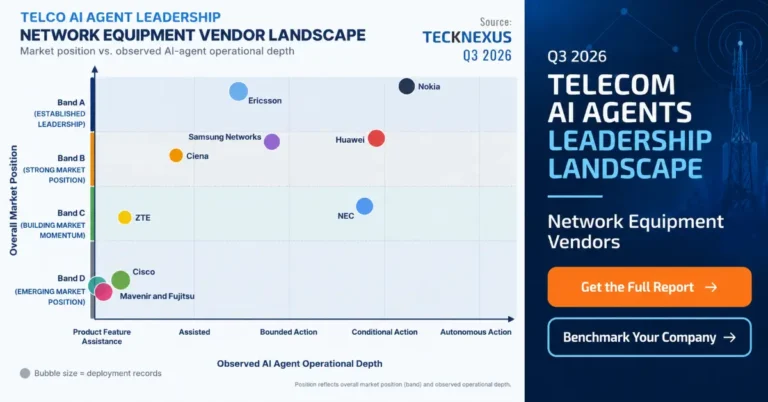
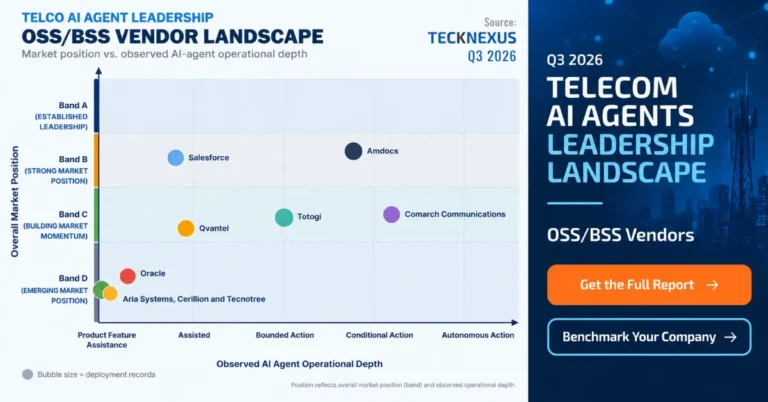
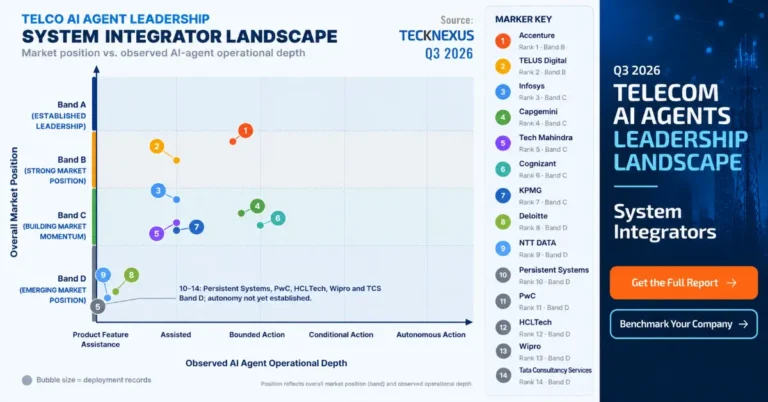
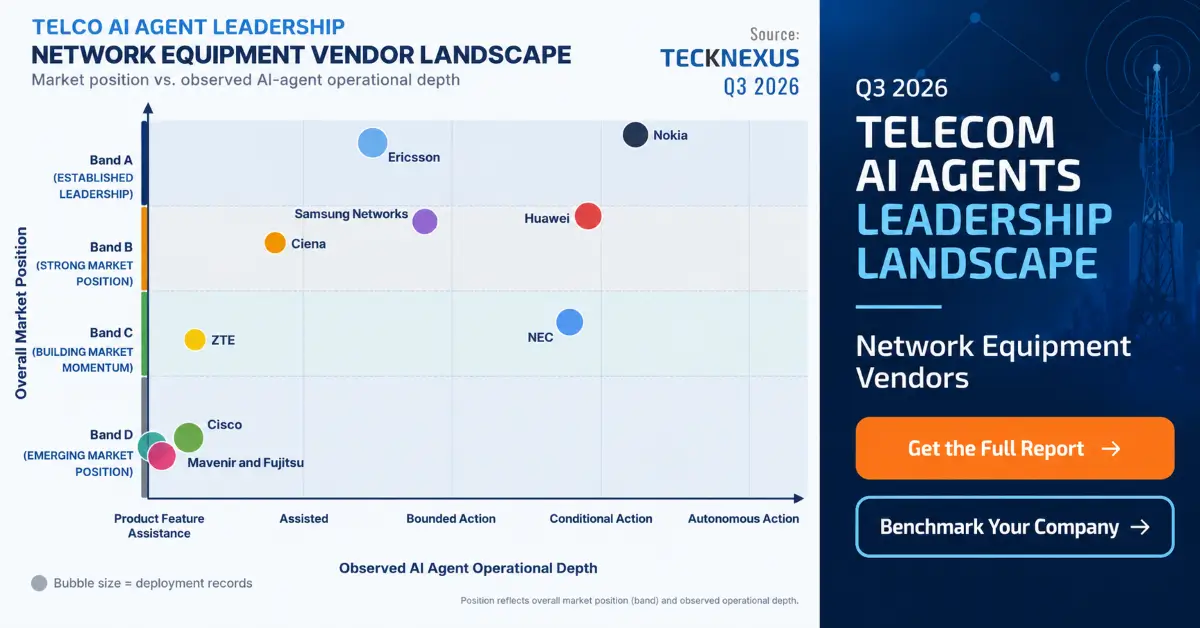
Telco AI Agent Leadership

Telco AI Agent Leadership Landscape - Network Equipment Vendors
Network Equipment Vendor Report
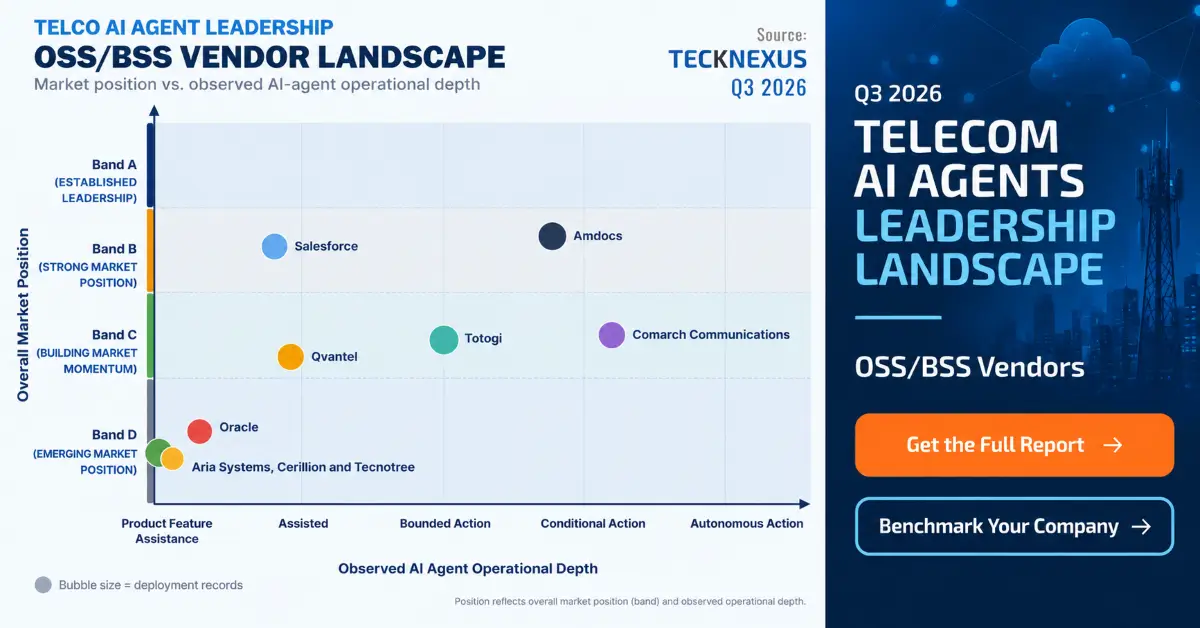
Telco AI Agent Leadership Landscape - OSS/BSS Vendors
OSS/BSS Vendor Report
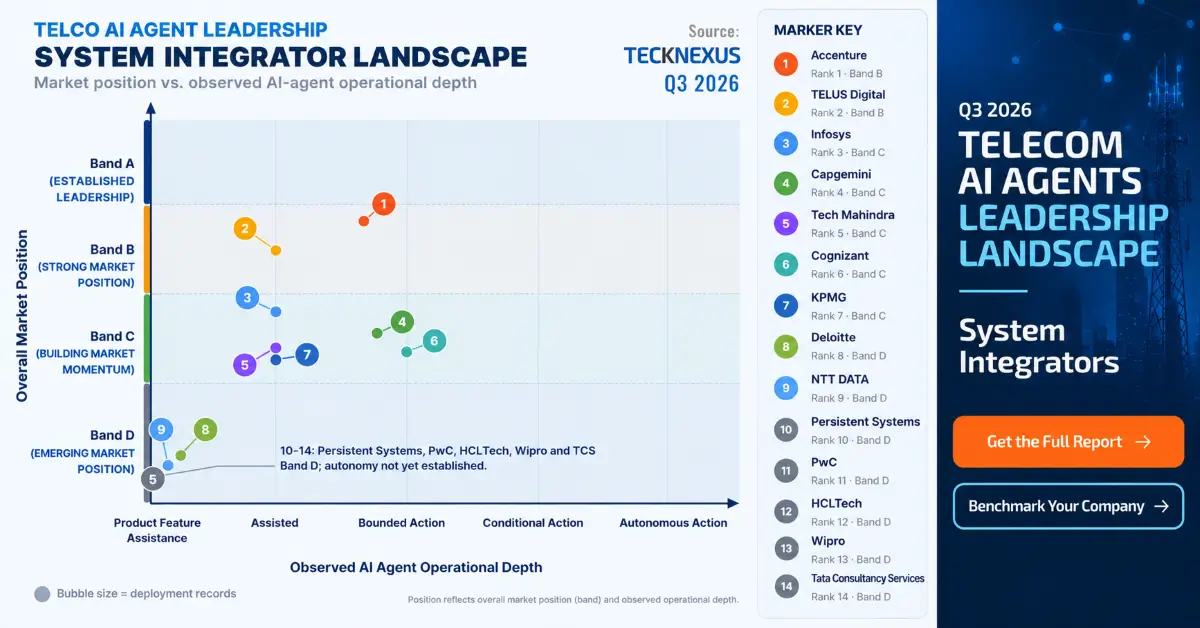
Telco AI Agent Leadership Landscape - System Integrators
System Integrator Report
Scroll to Top
TELECOM AI AGENTS Q3 2026 · Available Now

Explore the Telecom AI Agents Leadership Landscapes

Explore market positioning, deployment momentum and operator validation across the telecom AI agent ecosystem.

Explore Leadership Landscapes
Independent · Evidence-based · Telecom-focused