TeckNexus Awards
News & Insights ↗
Intelligence Tools
By Tool Type
▼
By Industry
▼
Access Type
▼
Tool Source
▼
Intelligence Platform
Paid
Intelligence Hub
▼
Monthly Insights
▼
Resources
▼
Channels
▼
Partner Channels
▼


IoT
The Internet of Things connects sensors, machines, and devices to networks so they can report data and be controlled remotely, underpinning applications from smart metering and asset tracking to industrial automation. Cellular IoT spans technologies from low-power NB-IoT and LTE-M to higher-bandwidth 5G, with new reduced-capability (RedCap) devices filling the gap between them. As deployments scale, the focus has shifted from connectivity alone to managing fleets of devices, securing them, and turning their data into value. For operators, IoT is a connectivity-plus-platform opportunity; for enterprises, it’s the foundation of connected operations. This channel covers IoT across cellular technologies, platforms, and industry verticals — including device classes, security, and data — with analysis of where connected-device deployments deliver measurable outcomes rather than stalling at the pilot stage.
- Tech News & Insight
- July 9, 2025
- Hema Kadia

Connected aviation is transforming airports into smart cities in the sky. With private LTE and 5G networks, airports ensure safe, secure, and efficient operations for billions of passengers, enabling automation, smart security, terminal digitization, and sustainable growth.
- Partner Event
- July 9, 2025
- Hema Kadia

Start: Oct 14, 2025
End: Oct 15, 2025
Venue: Fontainebleau Las Vegas
Location: Las Vegas
End: Oct 15, 2025
Venue: Fontainebleau Las Vegas
Location: Las Vegas
- Usecase
- July 8, 2025
- Hema Kadia

Vodacom Business has deployed a dedicated Mobile Private Network (MPN) at Sasol’s Secunda synthetic fuel facility in Mpumalanga. The secure, low-latency network replaces Wi-Fi to deliver resilient connectivity for 3,000 employees, mission-critical operations, and digital transformation initiatives including IoT, asset management, and future autonomous operations.
- Tech News & Insight
- July 5, 2025
- Hema Kadia

Virgin Media O2’s multi-year transformation redefines UK telecoms with digitalization, AI, and customer-first thinking. From legacy network upgrades and automation to AI tools like Daisy and Digital Twins, the operator’s strategy focuses on trust, reliability, and sustainable growth.
- Usecase
- July 3, 2025
- Hema Kadia

Tampnet has rolled out the world’s first fully autonomous private 5G network with Edge Compute offshore for Aker BP’s Edvard Grieg platform. This digital backbone provides real-time data processing, robust wireless coverage, and supports advanced offshore operations like autonomous drones, robotics, and predictive maintenance, setting a new standard for offshore oil and gas connectivity.
- Tech News & Insight
- July 2, 2025
- Hema Kadia

India’s Department of Telecommunications (DoT) has relaunched its plan to directly allocate spectrum for private 5G networks. The new demand study invites large enterprises and system integrators to signal interest in dedicated spectrum for captive 5G setups. If approved, this policy could enable Indian industries to run secure, high-speed networks without fully relying on telecom operators.
- Tech News & Insight
- June 27, 2025
- Hema Kadia
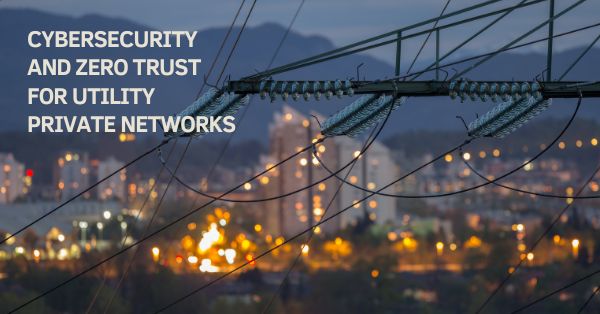
Cybersecurity is now a core pillar of utility private networks. Explore how Zero Trust Architecture helps utilities secure SCADA systems, protect distributed energy assets, and comply with NERC CIP standards, keeping critical infrastructure safe in a hybrid IT/OT world.
- Tech News & Insight
- June 27, 2025
- Hema Kadia
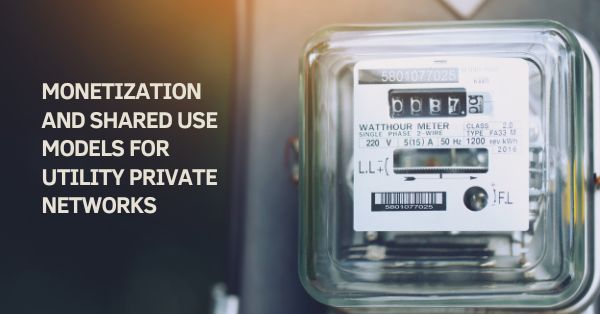
Utilities are turning private LTE and 5G networks into revenue engines with monetization and shared use models. Learn how Fixed Wireless Access, neutral host strategies, mobile wholesale partnerships, and edge services help utilities bridge the digital divide, support local economies, and generate ROI from advanced network investments.
- Usecase
- June 25, 2025
- Hema Kadia

Verizon Business and Nokia will deploy six private 5G networks across Thames Freeport’s major logistics sites, including the Port of Tilbury, London Gateway, and Ford Dagenham to create a high-performance digital infrastructure supporting real-time logistics, AI automation, and edge computing. With plans to generate 5,000 skilled jobs and power sustainable trade, this initiative positions Thames Freeport as a next-gen smart trade corridor.
- Usecase
- June 23, 2025
- Hema Kadia

Hrvatski Telekom’s NextGen 5G Airports project will deploy Private 5G Networks at Zagreb, Zadar, and Pula Airports to boost safety, efficiency, and airport automation. By combining 5G Standalone, Edge Computing, AI, and IoT, the initiative enables drones, smart cameras, and AI tablets to digitize inspections, secure perimeters, and streamline operations, redefining aviation connectivity in Croatia.
- Tech News & Insight
- June 19, 2025
- Hema Kadia

Edge AI is reshaping broadband customer experience by powering smart routers, proactive troubleshooting, conversational AI, and personalized Wi-Fi management. Learn how leading ISPs like Comcast and Charter use edge computing to boost reliability, security, and customer satisfaction.
Frequently Asked Questions
What’s the difference between regular IoT and ‘massive IoT’?
Regular IoT typically refers to a moderate number of connected devices with meaningful data needs, like security cameras streaming video, smart home hubs, or connected vehicles transmitting diagnostic and location data continuously. Massive IoT refers to a fundamentally different scale: enormous numbers, potentially millions, of simple, low-power, low-data sensors, like utility meters, environmental monitors, or asset trackers, that each transmit only small amounts of data infrequently but need to remain connected reliably and cheaply across very large device populations. The distinction matters because massive IoT requires network technology specifically optimized for extremely low power consumption and the ability to support enormous device density per cell, priorities that differ from the higher bandwidth and lower latency priorities of more data-intensive regular IoT applications.
Why does 5G matter for IoT specifically?
5G matters for IoT in several specific ways beyond simply being a faster network. It’s designed to support a far greater density of connected devices per square kilometer than 4G, which matters enormously for massive IoT deployments involving huge numbers of sensors in a concentrated area. It also offers specialized operating modes tailored to different IoT needs: extremely low-power modes for simple sensors that need to run for years on a single battery, and ultra-reliable, low-latency modes for mission-critical applications like industrial robotics or autonomous systems where a delayed connection could cause real operational problems. This flexibility, supporting both massive numbers of simple devices and demanding, latency-sensitive applications on the same network, is a meaningful architectural advance over earlier cellular generations.
What are the biggest barriers to wider IoT adoption?
Several recurring barriers continue to limit how quickly IoT adoption scales. Device and connectivity costs, while falling steadily, still need to make economic sense across potentially millions of deployed units for many proposed use cases, and even small per-device costs add up quickly at that scale. Security concerns are significant, since managing the security of huge numbers of distributed, often physically unattended endpoints is meaningfully harder than securing a smaller number of centrally managed devices. Fragmented standards across different IoT use cases can complicate interoperability between devices and platforms from different manufacturers. Integrating the resulting flood of IoT data into existing business systems and deriving useful insight from it remains a genuine organizational challenge even after connectivity itself is solved.
How do cellular IoT connections compare to alternatives like Wi-Fi or LoRaWAN?
Cellular IoT, using carrier networks like 4G, 5G, NB-IoT, or LTE-M, offers wide-area mobility and carrier-grade reliability without requiring an organization to build its own local wireless infrastructure, making it well suited for devices that move across large areas or are deployed in remote locations without existing local coverage. Wi-Fi can be cheaper for localized deployments within a single building where infrastructure already exists, but doesn’t provide the same wide-area mobility without significant additional infrastructure. LoRaWAN and similar low-power wide-area technologies offer very long battery life and decent range at low cost, attractive for simple, infrequent-data sensors, but typically can’t support the data rates or mobility that cellular IoT can, and often require organizations to deploy their own gateway infrastructure.
What industries are the biggest users of IoT technology today?
Manufacturing has been one of the most active adopters of industrial IoT, using sensors throughout production lines for predictive maintenance, quality control, and real-time process monitoring. Logistics and supply chain companies rely heavily on IoT for asset tracking, monitoring shipment location and condition, like temperature for perishable goods, throughout transit. Agriculture uses IoT sensors to monitor soil conditions, irrigation needs, and livestock health across large rural areas where cellular IoT’s wide coverage is particularly valuable. Utilities use IoT extensively for smart metering and grid monitoring. Healthcare is an increasingly significant adopter too, using connected medical devices and wearables for remote patient monitoring, an application where reliability and security carry particularly high stakes.
How is AI changing what IoT devices and networks can do?
AI is increasingly applied directly to the enormous volumes of data IoT devices generate, since manually analyzing data from potentially millions of sensors isn’t practically possible without automated analysis. AI models are used to detect anomalies in sensor data that might indicate equipment about to fail, to optimize complex systems like energy grids or supply chains based on real-time data from many distributed sensors, and increasingly, to run directly on IoT devices themselves through on-device or edge AI, allowing analysis and decision-making to happen locally rather than requiring every piece of raw data to be transmitted back to a central system. This local processing is particularly valuable where bandwidth is limited or sending all raw data back centrally would be impractical given the volume involved.
What is ‘NB-IoT’ and ‘LTE-M,’ and how do they differ from regular cellular connections?
NB-IoT, short for Narrowband IoT, and LTE-M, short for LTE Machine-Type Communication, are specialized cellular technologies designed specifically for IoT use cases rather than general smartphone-style connectivity. They prioritize extremely low power consumption, allowing devices to run for years on a single battery, and excellent coverage, including reaching devices in challenging locations like deep indoors or underground, over the higher data speeds standard cellular connections prioritize. The two differ in their tradeoffs: NB-IoT generally supports even lower power consumption and better extreme-condition coverage, suited for simple, infrequent-data sensors, while LTE-M supports somewhat higher data rates and mobility, making it better suited for applications like asset tracking that need to maintain a connection while moving.
What security risks are specific to IoT devices, and why are they considered higher risk?
IoT devices are often considered higher security risk for several specific reasons. Many are deployed in huge numbers across physically unattended or hard-to-access locations, making it impractical to manually monitor or service the security of each individual unit. Cost pressures in massive IoT deployments can lead manufacturers to cut corners on security to keep per-unit costs low, sometimes resulting in weak default passwords, infrequent software updates, or limited encryption. Because IoT devices are often deployed for many years without replacement, vulnerabilities discovered after deployment can remain unpatched for extended periods if devices lack reliable update mechanisms. The sheer scale of many deployments also means a single vulnerability could potentially compromise an unusually large number of devices simultaneously.