TeckNexus Awards
News & Insights ↗
Intelligence Tools
By Tool Type
▼
By Industry
▼
Access Type
▼
Tool Source
▼
Intelligence Platform
Paid
Intelligence Hub
▼
Monthly Insights
▼
Resources
▼
Channels
▼
Partner Channels
▼


FWA
Fixed wireless access (FWA) uses cellular networks — primarily 5G — to deliver home and business broadband as an alternative to cable and fiber. It has become one of 5G’s clearest commercial successes, letting operators monetize spectrum and capacity quickly, particularly where wired broadband is slow, costly, or unavailable. FWA’s economics depend on available mid-band capacity, device cost, and how aggressively operators price against fixed-line competitors. For operators, it offers fast revenue and subscriber growth; for enterprises and underserved regions, it offers viable connectivity without trenching fiber. This channel tracks FWA deployments, spectrum and capacity strategy, device developments, and the competitive dynamics between wireless and wired broadband, with analysis of where FWA delivers durable value and where capacity constraints limit its reach as adoption scales.
- Tech News & Insight
- July 24, 2025
- Hema Kadia

Nokia is shifting its core focus from mobile networks to AI infrastructure and optical networking amid declining RAN revenues and financial pressures. In Q2 2025, the Network Infrastructure division surpassed Mobile Networks, driven by demand from data centers and hyperscalers. With CEO Justin Hotard emphasizing AI integration and enterprise 5G, Nokia is repositioning itself for long-term growth while maintaining its mobile presence as a strategic layer.
- Tech News & Insight
- July 22, 2025
- Hema Kadia

The NTIA has approved all 56 U.S. states and territories to move into the “Benefit of the Bargain” round under the $42.45B BEAD Program. This competitive subgrantee selection phase streamlines broadband deployment nationwide by allowing fiber, fixed wireless, and satellite providers equal footing under new, tech-neutral NTIA rules. Final proposals are due by September 4, 2025, as the U.S. pushes toward universal internet access.
- Tech News & Insight
- July 20, 2025
- Hema Kadia

Charter Communications warns of a 200% increase in targeted fiber attacks across Missouri in 2025, calling them acts of domestic terrorism. With 148 outages already reported, these incidents have crippled emergency services, hospitals, and financial systems—raising alarm over national infrastructure vulnerabilities and sparking legislative debate.
- Usecase
- July 15, 2025
- Hema Kadia
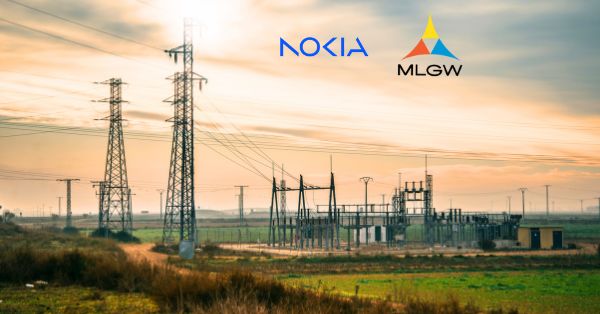
Memphis Light, Gas and Water (MLGW) and Nokia have launched the first standalone private 5G network by a U.S. municipal utility. This $31 million investment will modernize infrastructure across Memphis and Shelby County, enhancing real-time monitoring, outage response, cybersecurity, and smart grid capabilities for over 420,000 customers.
- Tech News & Insight
- July 14, 2025
- Hema Kadia

The FCC has approved T-Mobile’s $4.4B acquisition of UScellular and a 50% stake in Metronet, marking a strategic push into rural 5G and fixed broadband. While the moves improve network reach and service speeds, regulators caution that market consolidation among the Big Three wireless providers may restrict long-term competition and innovation.
- Tech News & Insight
- July 14, 2025
- Hema Kadia

Americans spend $166 billion annually on mobile phone services, making up 4% of all household bill expenses. A new doxoINSIGHTS report reveals median monthly costs of $96, with wide variations by state and city. Nebraska and Dallas top the charts, while tools like doxoINSIGHTS help users compare costs and save on mobile bills.
- Tech News & Insight
- July 9, 2025
- Hema Kadia

India’s internet subscriber base hit 969.10 million in FY25, with broadband users rising 2.17% and narrowband shrinking. TRAI data shows wireless ARPU up 16.89%, strong wireline growth, rural connectivity gains, and Jio-Airtel dominance — while DTH shrinks and OTT rises.
- Tech News & Insight
- June 27, 2025
- Hema Kadia
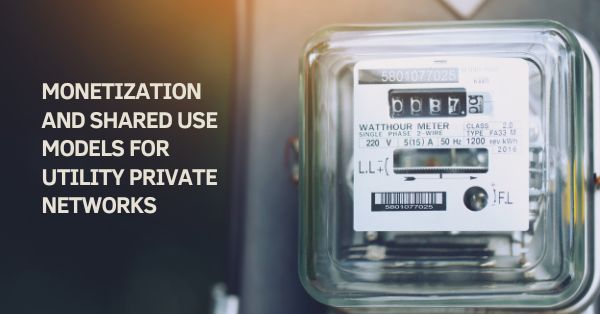
Utilities are turning private LTE and 5G networks into revenue engines with monetization and shared use models. Learn how Fixed Wireless Access, neutral host strategies, mobile wholesale partnerships, and edge services help utilities bridge the digital divide, support local economies, and generate ROI from advanced network investments.
- Tech News & Insight
- June 19, 2025
- Hema Kadia

Edge AI is reshaping broadband customer experience by powering smart routers, proactive troubleshooting, conversational AI, and personalized Wi-Fi management. Learn how leading ISPs like Comcast and Charter use edge computing to boost reliability, security, and customer satisfaction.
- Tech News & Insight
- June 2, 2025
- Hema Kadia

Starlink plans to enter India’s broadband market with a $10/month satellite internet service, aiming to reach 10 million users. Backed by SpaceX, the offering challenges local 5G and FWA providers like Jio and Airtel while targeting underserved rural regions. Regulatory hurdles, hardware costs, and network capacity may influence its success.
- Tech News & Insight
- June 2, 2025
- Hema Kadia

A new ACA Connects-backed study warns that state broadband price regulations could cut ISP investment by up to 41%, disproportionately impacting smaller providers. With the ACP ending, states like New York and California are proposing $15/month plans, but critics argue these caps could stall rural broadband expansion and force higher prices elsewhere.
Frequently Asked Questions
What is FWA, and how is it different from home fiber or cable?
FWA delivers home or business internet over a cellular signal to a receiver and router installed at the property, rather than requiring a physical fiber-optic or coaxial cable line to be run from the provider’s network to that specific address. It essentially repurposes the same mobile network infrastructure carriers use for smartphones to also serve as last-mile home broadband. This is fundamentally different from fiber, which uses dedicated physical cabling carrying a guaranteed amount of bandwidth directly to one property, and from cable, which shares bandwidth across a neighborhood through coaxial lines. FWA’s performance is instead shared across everyone connected to the same nearby cell site, similar to how mobile phone performance can vary based on how many other devices are using that cell at once.
Is FWA actually replacing cable and fiber broadband?
In specific markets, FWA is genuinely displacing cable and fiber, particularly where running new physical cables is expensive or impractical. Fixed wireless connections grew by roughly 27 percent year over year as of late 2025, a notably fast growth rate for an established broadband category, and the share of FWA specifically offered over 5G, rather than older 4G infrastructure, jumped from 57 percent to 71 percent of providers in under a year, reflecting both rising consumer demand and improving network capability. That said, FWA growth has been strongest in markets where wired broadband options were previously limited or expensive, rather than uniformly displacing fiber in areas with well-established, competitively priced wired infrastructure.
Why do carriers like offering FWA?
FWA lets carriers monetize existing 5G spectrum and infrastructure investment for home broadband revenue without the substantial additional capital expense of physically trenching new fiber or cable lines to every home. Since the underlying radio network already exists to serve mobile phones, adding FWA customers represents largely incremental revenue on top of infrastructure the carrier has already built. Some carriers have begun offering FWA through dedicated network slices with guaranteed performance, allowing them to position FWA not just as a budget alternative to wired broadband but as a premium, business-grade connectivity tier with contractually guaranteed speed and reliability, opening additional revenue tiers beyond a single flat-rate consumer offering.
Is FWA fast enough to replace fiber for heavy users like gamers or remote workers?
Whether FWA is fast enough for heavy use depends heavily on local network conditions rather than being a fixed yes-or-no answer. On dense, well-provisioned mid-band 5G coverage, FWA performance can genuinely rival fiber for most household needs, including multiple simultaneous heavy users. However, because FWA performance is shared across everyone connected to the same nearby cell site, it tends to be more susceptible to congestion during peak hours, like early evening, than a dedicated fiber line. It’s also more sensitive to distance from the cell site, obstructions like trees or buildings, and weather, none of which meaningfully affect a buried fiber connection.
Where is FWA growing the fastest?
FWA growth has been fastest in markets with limited existing fixed broadband infrastructure, particularly rural and other underserved regions where extending fiber or cable to every home would require substantial new construction. In these areas, FWA offers a meaningfully faster and cheaper path to delivering broadband, leveraging cell towers that may already exist rather than trenching cable across long distances between sparsely located homes. Suburban areas with growing housing development but limited wired competition have also seen strong FWA adoption as a lower-priced alternative to existing cable monopolies. Dense urban areas have generally seen comparatively slower FWA growth, since wired competition tends to be stronger and cell capacity is shared among more customers.
How does FWA installation actually work for a new customer?
Installation for a typical residential FWA customer is generally simpler and faster than wired broadband installation, since it doesn’t require a technician to run new physical cabling. A customer usually receives a self-install kit containing a receiver and router, places it near a window or in a location with good signal reception based on a coverage-checking tool, and the device connects to the nearest compatible cell site automatically. Some providers offer optional professional installation, particularly for outdoor-mounted receivers intended to capture a stronger signal than an indoor unit could, which can meaningfully improve performance in marginal-coverage areas. Compared to a multi-week wait for a fiber technician to run new lines, FWA’s typically same-day or next-day self-install process is a practical advantage.
What are the main downsides of FWA compared to wired broadband?
FWA’s main limitations stem directly from its reliance on a shared, wireless signal rather than a dedicated physical line. Performance can fluctuate based on network congestion during peak hours, weather conditions, and physical obstructions between the receiver and the nearest cell site, none of which affect a buried fiber connection. Upload speeds are often noticeably lower than download speeds, which can matter for significant video conferencing or large file uploads. Data caps or deprioritization after a certain usage threshold are also more common on FWA plans than on many wired broadband plans, since FWA shares finite radio spectrum capacity across many customers in the same area, whereas a dedicated fiber line has no equivalent shared-capacity constraint.
How does network slicing change what FWA can offer business customers?
Network slicing allows carriers to offer FWA business customers a dedicated, performance-guaranteed connection rather than the standard, best-effort residential FWA experience, where performance can vary with overall network congestion. A business relying on FWA for critical operations, like point-of-sale systems or VoIP phone service, can be offered a network slice with contractually guaranteed minimum bandwidth and reliability, similar in concept to a dedicated business-grade wired connection, but delivered wirelessly. Verizon Business, for example, has launched a dedicated FWA network slice product specifically aimed at giving business customers more predictable, guaranteed performance. This lets carriers position FWA across a spectrum of tiers, from a budget consumer alternative up to a premium, guaranteed-performance business service.