TeckNexus Awards
News & Insights ↗
Intelligence Tools
By Tool Type
▼
By Industry
▼
Access Type
▼
Tool Source
▼
Intelligence Platform
Paid
Intelligence Hub
▼
Monthly Insights
▼
Resources
▼
Channels
▼
Partner Channels
▼


FWA
Fixed wireless access (FWA) uses cellular networks — primarily 5G — to deliver home and business broadband as an alternative to cable and fiber. It has become one of 5G’s clearest commercial successes, letting operators monetize spectrum and capacity quickly, particularly where wired broadband is slow, costly, or unavailable. FWA’s economics depend on available mid-band capacity, device cost, and how aggressively operators price against fixed-line competitors. For operators, it offers fast revenue and subscriber growth; for enterprises and underserved regions, it offers viable connectivity without trenching fiber. This channel tracks FWA deployments, spectrum and capacity strategy, device developments, and the competitive dynamics between wireless and wired broadband, with analysis of where FWA delivers durable value and where capacity constraints limit its reach as adoption scales.
- Tech News & Insight
- May 9, 2025
- Rohit Nambiar

Indoor 5G enables high-speed, low-latency connectivity in enclosed environments like offices, hospitals, and airports, supporting mission-critical applications and smart building operations. The market is driven by technological advancements in small cells, distributed antenna systems, and a mix of mmWave and Sub-6 GHz bands. Asia-Pacific leads in adoption due to smart city initiatives and government support. Picocells and antennas are key components, with growing demand in emerging economies fueled by subsidies and infrastructure upgrades. Recent developments include partnerships and acquisitions aimed at strengthening indoor 5G capabilities.
- Tech News & Insight
- April 29, 2025
- Hema Kadia

Expanding Middle Mile infrastructure is essential for closing the broadband gap, promoting digital equity, and enabling affordable internet in underserved communities. By investing in the critical connections between internet backbones and local networks, Middle Mile expansion drives affordability, competition, and economic development.
- Tech News & Insight
- April 29, 2025
- Hema Kadia
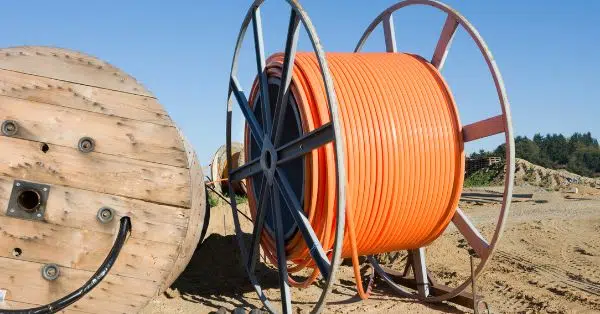
Connecting the unconnected requires more than just broadband buildout. National digital inclusion strategies focus on affordability, digital skills, devices, and sustainable infrastructure to empower all communities. Learn how federal programs, state initiatives, and public-private partnerships are reshaping broadband access across America.
- Tech News & Insight
- April 29, 2025
- Hema Kadia

The fiber, data center, and telecom sectors are evolving rapidly amid rising AI workloads, cloud expansion, edge computing, and new investment models. This article breaks down the key trends — from fiber deployments in rural markets to secondary data center expansions and telecoms shifting to platform-based services, that are reshaping digital infrastructure for a hyperconnected future.
- Tech News & Insight
- April 26, 2025
- Hema Kadia

Legacy broadband networks are struggling to meet today’s demands. Open architectures — modular, interoperable, and standards-based — are revolutionizing broadband by promoting flexibility, cost-efficiency, and faster innovation. Learn how service providers can leverage open broadband strategies to scale, improve customer experiences, and build resilient, future-proof infrastructures ready for the digital economy.
- Partner Event
- April 26, 2025
- Hema Kadia

Start: June 23, 2025
End: June 25, 2025
Venue: George R. Brown Convention Center, Houston, TX
Location: Houston
End: June 25, 2025
Venue: George R. Brown Convention Center, Houston, TX
Location: Houston
- Tech News & Insight
- April 23, 2025
- Hema Kadia

AT&T reported strong Q1 2025 earnings with EPS of $0.51 and $30.6B in revenue, boosted by 324K new postpaid wireless subscribers and 181K FWA additions. The telecom giant also expanded its fiber footprint by 600,000 locations and reaffirmed its commitment to broadband growth and copper retirement by 2029.
- Tech News & Insight
- April 22, 2025
- Hema Kadia

Verizon posted better-than-expected Q1 2025 earnings, with revenue and profits rising. But a record loss of 289,000 postpaid phone subscribers sent the stock down, as investors focused more on churn than cash flow. While prepaid gains and stable guidance offered some optimism, analysts remain cautious about Verizon’s subscriber strategy and pricing pressure.
- Tech News & Insight
- April 22, 2025
- Hema Kadia
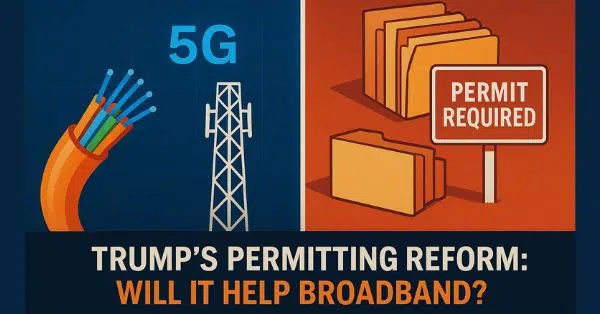
President Trump’s executive order to modernize environmental permitting may streamline U.S. infrastructure projects—but it notably omits telecom and broadband. Industry experts say pole attachments, state permitting rules, and access to federal lands remain critical hurdles. While the order could bring indirect benefits, real telecom reform still requires sector-specific solutions.
- Tech News & Insight
- April 22, 2025
- Hema Kadia

Airtel has acquired 400 MHz of 26 GHz mmWave spectrum from Adani Data Networks, a move that strengthens its high-speed 5G offerings in urban and enterprise zones. The deal enhances Airtel’s ability to scale fixed wireless access, industrial 5G networks, and high-bandwidth consumer services. With India's spectrum demand surging, this acquisition underscores the critical role of efficient spectrum use and signals a new phase of telecom consolidation.
- Article & Insights
- April 10, 2025
- Hema Kadia

In Balancing Innovation and Regulation: Global Perspectives on Telecom Policy, top leaders including Jyotiraditya Scindia (India), Henna Virkkunen (European Commission), and Brendan Carr (U.S. FCC) explore how governments are aligning policy with innovation to future-proof their digital infrastructure. From India’s record-breaking 5G rollout and 6G ambitions, to Europe’s push for AI sovereignty and U.S. leadership in open-market connectivity, this piece outlines how nations can foster growth, security, and inclusion in a hyperconnected world.
Frequently Asked Questions
What is FWA, and how is it different from home fiber or cable?
FWA delivers home or business internet over a cellular signal to a receiver and router installed at the property, rather than requiring a physical fiber-optic or coaxial cable line to be run from the provider’s network to that specific address. It essentially repurposes the same mobile network infrastructure carriers use for smartphones to also serve as last-mile home broadband. This is fundamentally different from fiber, which uses dedicated physical cabling carrying a guaranteed amount of bandwidth directly to one property, and from cable, which shares bandwidth across a neighborhood through coaxial lines. FWA’s performance is instead shared across everyone connected to the same nearby cell site, similar to how mobile phone performance can vary based on how many other devices are using that cell at once.
Is FWA actually replacing cable and fiber broadband?
In specific markets, FWA is genuinely displacing cable and fiber, particularly where running new physical cables is expensive or impractical. Fixed wireless connections grew by roughly 27 percent year over year as of late 2025, a notably fast growth rate for an established broadband category, and the share of FWA specifically offered over 5G, rather than older 4G infrastructure, jumped from 57 percent to 71 percent of providers in under a year, reflecting both rising consumer demand and improving network capability. That said, FWA growth has been strongest in markets where wired broadband options were previously limited or expensive, rather than uniformly displacing fiber in areas with well-established, competitively priced wired infrastructure.
Why do carriers like offering FWA?
FWA lets carriers monetize existing 5G spectrum and infrastructure investment for home broadband revenue without the substantial additional capital expense of physically trenching new fiber or cable lines to every home. Since the underlying radio network already exists to serve mobile phones, adding FWA customers represents largely incremental revenue on top of infrastructure the carrier has already built. Some carriers have begun offering FWA through dedicated network slices with guaranteed performance, allowing them to position FWA not just as a budget alternative to wired broadband but as a premium, business-grade connectivity tier with contractually guaranteed speed and reliability, opening additional revenue tiers beyond a single flat-rate consumer offering.
Is FWA fast enough to replace fiber for heavy users like gamers or remote workers?
Whether FWA is fast enough for heavy use depends heavily on local network conditions rather than being a fixed yes-or-no answer. On dense, well-provisioned mid-band 5G coverage, FWA performance can genuinely rival fiber for most household needs, including multiple simultaneous heavy users. However, because FWA performance is shared across everyone connected to the same nearby cell site, it tends to be more susceptible to congestion during peak hours, like early evening, than a dedicated fiber line. It’s also more sensitive to distance from the cell site, obstructions like trees or buildings, and weather, none of which meaningfully affect a buried fiber connection.
Where is FWA growing the fastest?
FWA growth has been fastest in markets with limited existing fixed broadband infrastructure, particularly rural and other underserved regions where extending fiber or cable to every home would require substantial new construction. In these areas, FWA offers a meaningfully faster and cheaper path to delivering broadband, leveraging cell towers that may already exist rather than trenching cable across long distances between sparsely located homes. Suburban areas with growing housing development but limited wired competition have also seen strong FWA adoption as a lower-priced alternative to existing cable monopolies. Dense urban areas have generally seen comparatively slower FWA growth, since wired competition tends to be stronger and cell capacity is shared among more customers.
How does FWA installation actually work for a new customer?
Installation for a typical residential FWA customer is generally simpler and faster than wired broadband installation, since it doesn’t require a technician to run new physical cabling. A customer usually receives a self-install kit containing a receiver and router, places it near a window or in a location with good signal reception based on a coverage-checking tool, and the device connects to the nearest compatible cell site automatically. Some providers offer optional professional installation, particularly for outdoor-mounted receivers intended to capture a stronger signal than an indoor unit could, which can meaningfully improve performance in marginal-coverage areas. Compared to a multi-week wait for a fiber technician to run new lines, FWA’s typically same-day or next-day self-install process is a practical advantage.
What are the main downsides of FWA compared to wired broadband?
FWA’s main limitations stem directly from its reliance on a shared, wireless signal rather than a dedicated physical line. Performance can fluctuate based on network congestion during peak hours, weather conditions, and physical obstructions between the receiver and the nearest cell site, none of which affect a buried fiber connection. Upload speeds are often noticeably lower than download speeds, which can matter for significant video conferencing or large file uploads. Data caps or deprioritization after a certain usage threshold are also more common on FWA plans than on many wired broadband plans, since FWA shares finite radio spectrum capacity across many customers in the same area, whereas a dedicated fiber line has no equivalent shared-capacity constraint.
How does network slicing change what FWA can offer business customers?
Network slicing allows carriers to offer FWA business customers a dedicated, performance-guaranteed connection rather than the standard, best-effort residential FWA experience, where performance can vary with overall network congestion. A business relying on FWA for critical operations, like point-of-sale systems or VoIP phone service, can be offered a network slice with contractually guaranteed minimum bandwidth and reliability, similar in concept to a dedicated business-grade wired connection, but delivered wirelessly. Verizon Business, for example, has launched a dedicated FWA network slice product specifically aimed at giving business customers more predictable, guaranteed performance. This lets carriers position FWA across a spectrum of tiers, from a budget consumer alternative up to a premium, guaranteed-performance business service.